Madagascar
Nosy Be, Antananarivo, Anakao, Isalo, Andringitra, Ranomafana, Antsirabe, Tsingy, Morondava
Our 25 Day Itinerary
Madagascar is one of those places that feels genuinely different from anywhere else on earth. It separated from mainland Africa approximately 80 million years ago, and because of this, 90% of its wildlife exists nowhere else. Notably, the lemur, with over 100 species and the oldest primate. The apex predator, the fossa, which appears cat-like but is actually related to the mongoose. And many other reptiles such as certain types of chameleon.
Madagascar is a laid-back, adventurous kind of trip rather than a luxury resort destination, which is part of the charm if you're up for a bit of dust and unpredictability along the way. Part of the fun is navigating the remote dirt roads, where everything takes longer than you'd think. We've been dreaming of coming to Madagascar for a while now, but it requires several weeks to see the top highlights, and we finally have the time. On our journey, we travel from the touristy beaches of Nosy Be, to some of the most famous National Parks such as Isalo, Andringitra, and Ranomafana, where we will hike in seek of wildlife. We'll take a canoe down the Tsiribihina River to reach the Tsingy National Park and finally, visit the famous Avenue of the Baobabs.
Travel from Denver to Nosy Be, Madagascar (DEN - IAD - ADD - NOS)
Nosy Be and Nosy Iranja islands
Antananarivo and getting to Toliara
Anakao Beach
Drive to and visit Isalo National Park
Drive to Ambalavao with stops along the way
Hiking and camping in Andringitra National Park
Ranomafana National Park
Drive to Antsirabe and Antsirabe town
Drive to Miandrivazo and sights along the way
Canoe trip on the Tsiribihina River
Bekopaka and Tsingy National Park
Driving and Kirindy Forest Reserve
Morondava, Avenue of the Baobabs and departure
Final thoughts and tips for Madagascar
Currency, Language and Religion
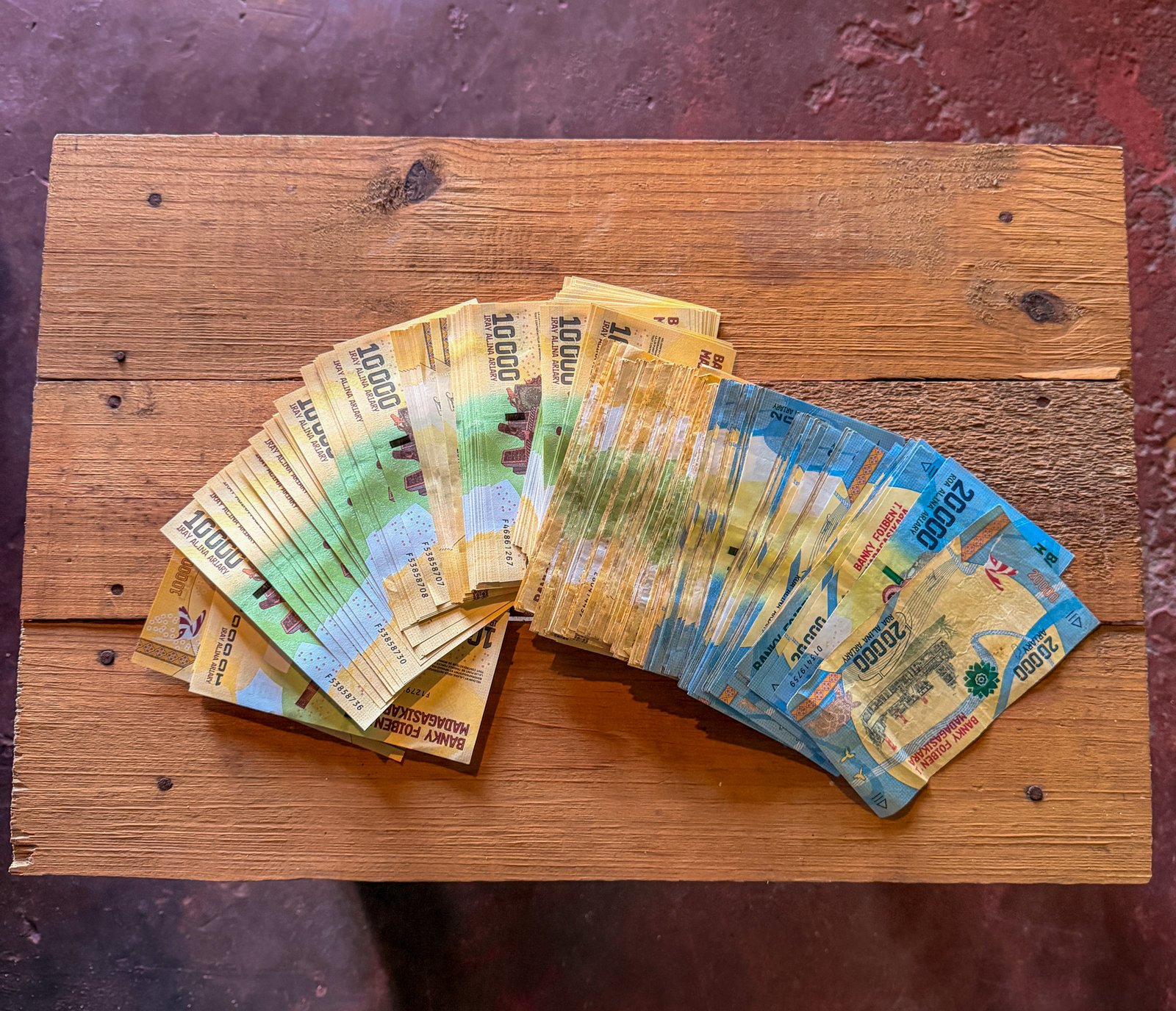
Madagascar's currency is the Malagasy ariary, currently standing at 4,284 Ariary to equal 1 USD. This can make calculations difficult and we are sometimes dealing in very large currency amounts into the millions when paying for things such as a tour operator. Cash is expected around much of Madagascar, with some higher end hotels or restaurants taking credit cards. ATMs are not common place and must be sought out at the airport or bank. Locals rely on cash or money that can be loaded onto their phone via the popular app Tap Tap Send. We downloaded and used Tap Tap Send to pay for several of our travel deposits. Also, the ATM will let you take out up to 800,000 Ar at a time but will give it to you in the largest bill, which is 20,000, so expect a large stack of $5 bills.
Malagasy and French are the two national languages. Malagasy attempts to tie together the 18 different tribes that are part of Madagascar. French is leftover from the days of colonial rule. We heard a mix of both during our time in Madagascar. English is spoken very minimally but we managed to get around with a few very basic French phrases and you can always use Google translate to help! Our driver told us that modern Malagasy is actually a mix of four languages: French, Arabic, Javanese, and English! Roughly half the population identifies as Christian, while many people also maintain traditional ancestor-worship practices, since respect for ancestors is deeply woven into Malagasy culture. This shows up in customs like the famadihana, or "turning of the bones," a ceremony in some regions where families exhume and rewrap the remains of ancestors as a celebration of family lineage. Quite a unique practice!
Days 1 to 3: Travel to Madagascar
We discovered it takes a long time to get to Madagascar from Denver! Even though it actually only took us 3 flights, we left on Monday afternoon and with the time change of 9 hours, we finally arrived on the island of Nosy Be on Wednesday around the same time. In order to take one of the best most straightforward flights, we first flew to Washington DC and stayed overnight in the airport hotel. The next morning was our long flight on Ethiopian Airlines, which was a new one for us. They have one of their newer planes flying the route from DC to Addis Ababa, Ethiopia, which takes roughly 13 hours. We found Ethiopian Airlines to be pleasant with tasty food and great service. They were advertising Ethiopia as a new destination in Africa and all of the images had us bumping it up on our list of places we want to travel.
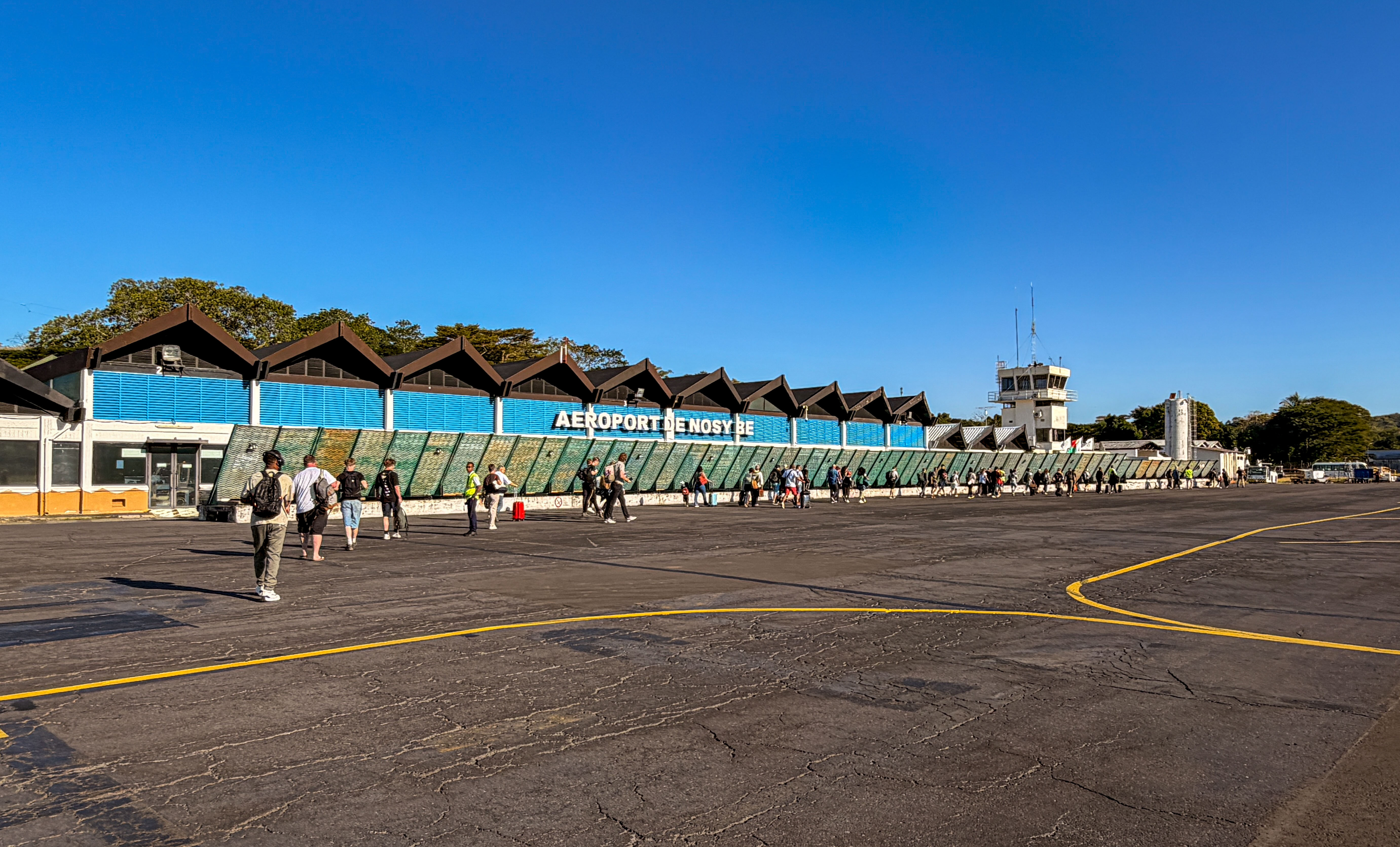
We didn't have our boarding pass for Madagascar, as we had booked it under a separate ticket, but we were able to show our ticket on email and make it to the transit desk without having to pass through immigration, which was a huge bonus. Keep in mind, you wouldn't be able to do this if you were checking bags, which is one of the reasons we prefer not to, as we purchase separate tickets quite often! A few hours waiting in the Ethiopian lounge and we were on our way to Nosy Be, also on Ethipian Airlines. Each of our 3 flights ended up being about an hour delayed, but luckily we had plenty of time in between. After 4 more hours of flying, we landed at the tiny airport on Nosy Be island. We purchased our visas on arrival for 35 EUR per person, a super quick process and they even took credit cards. One interesting thing that happened to us is that after placing the visa sticker in our passport and stamping it, the immigration officer asked us for a tip. It felt really inappropriate, but we gave him a 10 EUR bill and moved on. We were able to take out 800,000 Ariary each (about $185) of local cash at the ATM outside the airport where there was a security guard standing by who also asked us for a tip! We gave him a 2 Euro coin. A very interesting start to our time in Madagascar.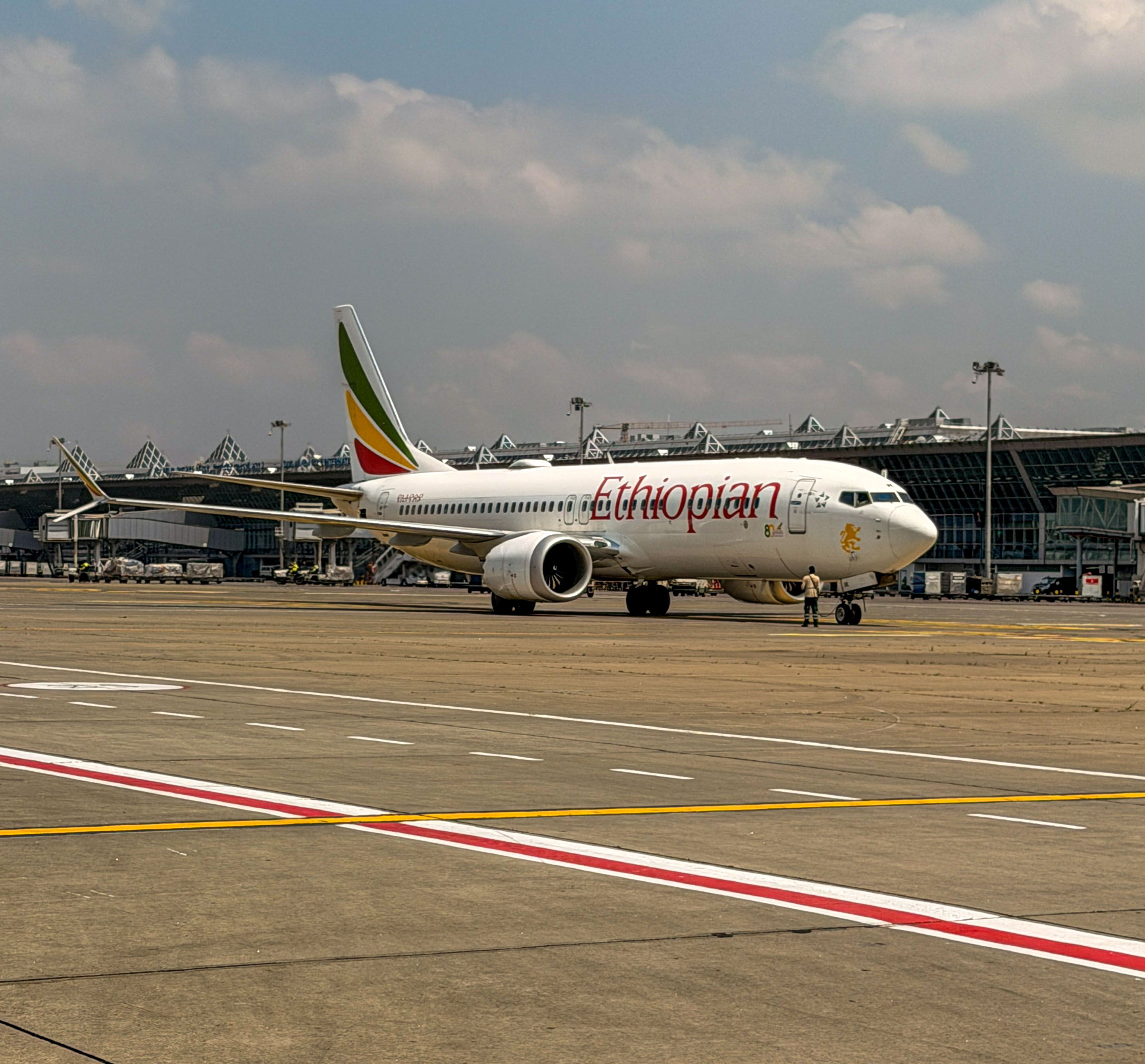
Back to Top
Link to Madagascar Photo Galleries
Days 4 to 6: Nosy Be and Nosy Iranja
The island of Nosy Be is a popular destination amongst Europeans with direct flights from Italy and now Poland a few times per week. We found this out later after running into a lot of Italian tourists. As French is one of the official languages of Madagascar, you will also find a lot of French tourists. The islands are on the Northern side of Madagascar and we got the feeling that a lot of people come only here without plans to see much of the mainland, as it takes too long to get around. Due to a flight change to 1 day earlier on our next leg of the trip, we only had 3 nights in this area. One quick night in Nosy Be, another 1 night stay on the much smaller Nosy Iranja, followed by another night on Nosy Be. You could definitely spend more time in this area as we had originally planned.
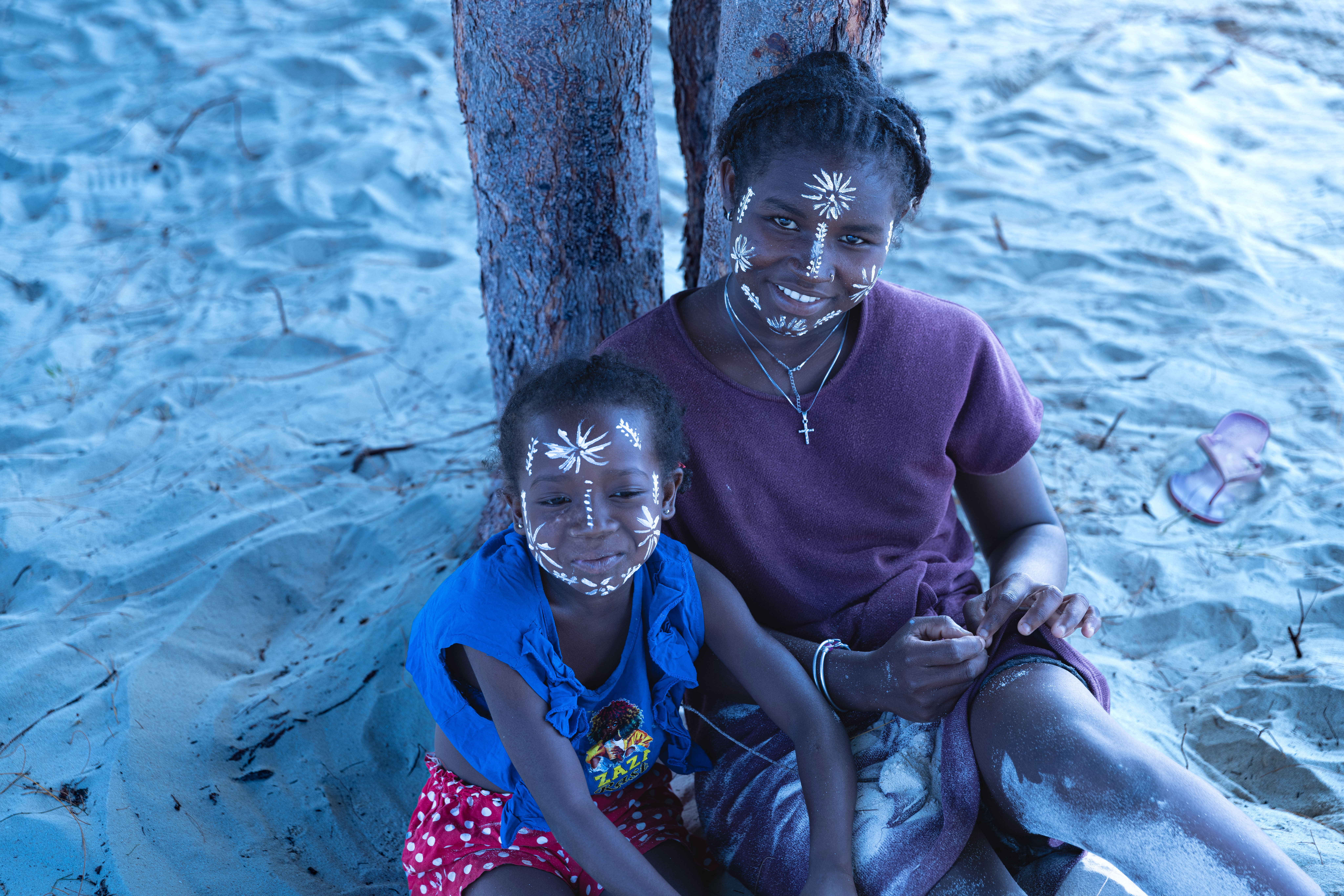
Nosy Be
Nosy Be is Madagascar's largest and most popular tourist island. It hosts a small international airport and has a bustling oceanfront town called Hell-Ville, which was interesting enough that we had to look up its origins. Apparently, it was named after a French admiral with the name Anne Chrétien Louis de Hell. We didn't get to spend as much time as originally planned on Nosy Be, but if you have the opportunity to come here, there is a lot to do. Not only can you take the trip out to Nosy Iranja like we did, but there are several other nearby islands to explore. The islands nearby host a lemur reserve, snorkeling with sea turtles, or you can visit a ylang-ylang or vanilla plantation to see how the perfumes are made. We could see how people can easily spend a week here.
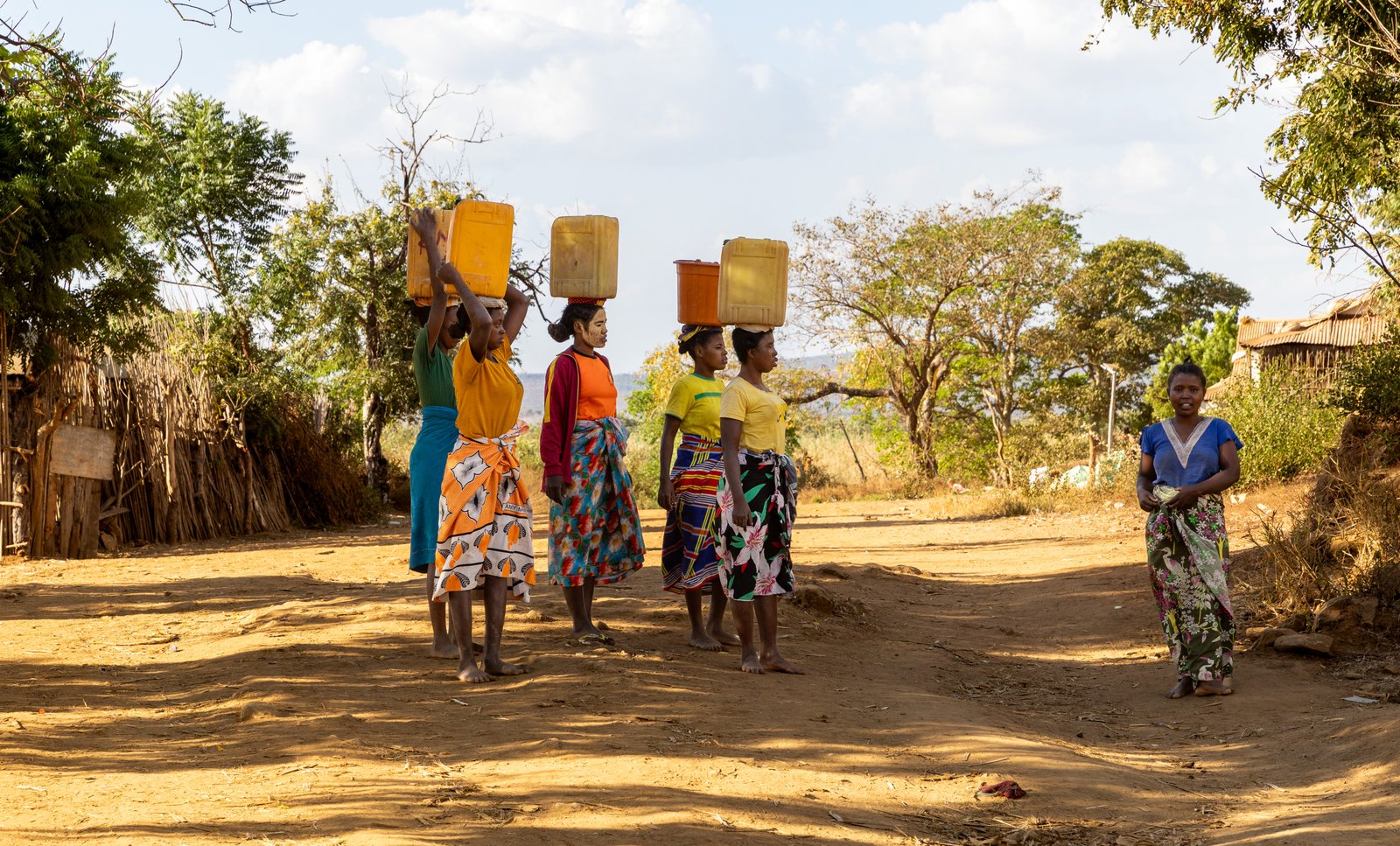
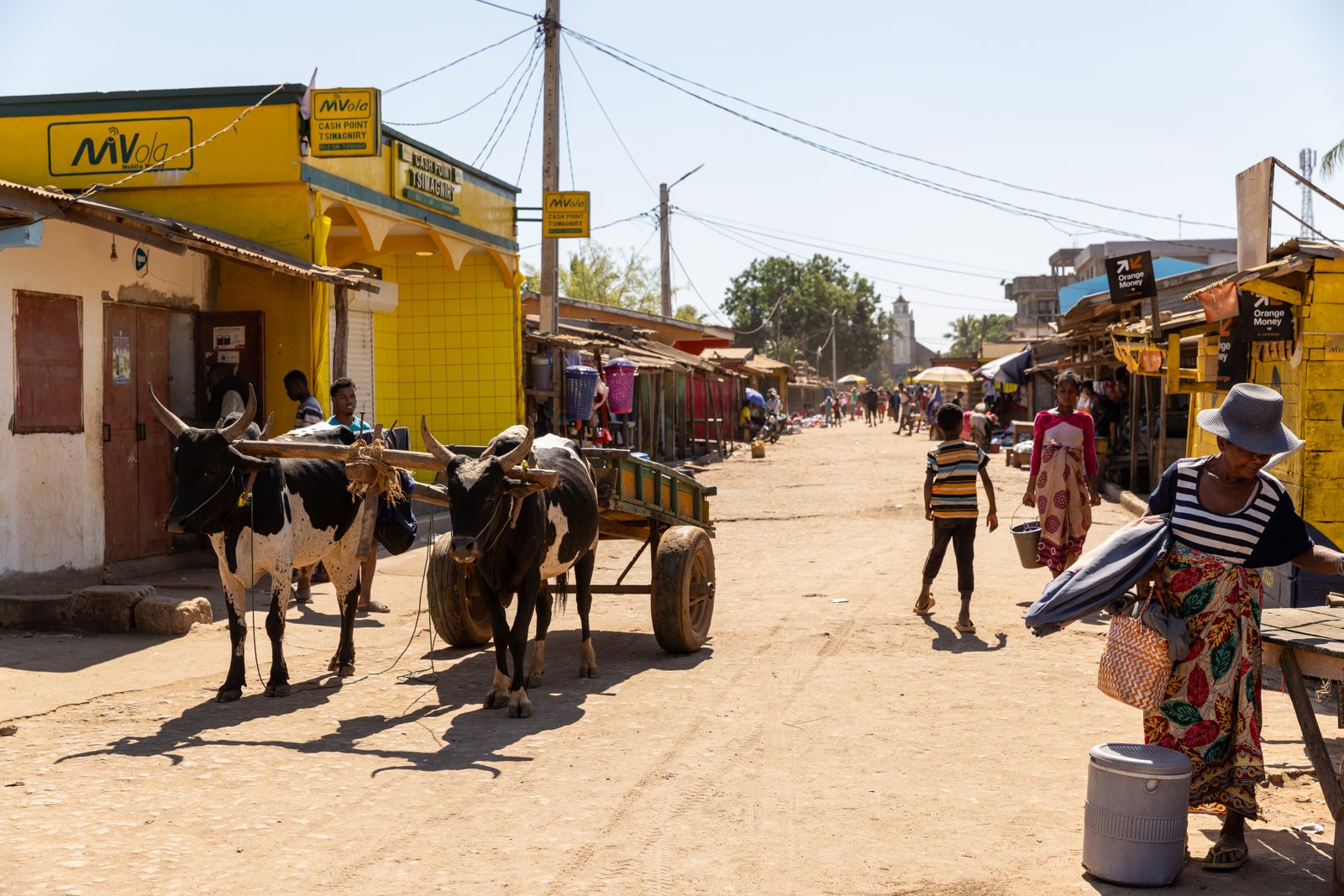
Despite all of the touristy excursions here, you are regularly reminded that this is still Africa. Along the roadside, you will find women carrying loads on the head, carts driven by the local zebu (a cattle with large hump), tuk tuks as a primary mode of transportation, and children selling bracelets and other goods on the beach. There are reminders all around that Madagascar is still a very poor country. The views of the sea from Nosy Be are spectacular and both of the small hotels that we stayed in were extremely warm and welcoming. On our first night there, we stayed at the Panorama Villa hotel and enjoyed their spacious rooms, sparkling clean pool and sweeping views. After returning from Nosy Iranja, we stayed another night at the Maison Le Reve. The rooms seemed brand new and the hosts made our stay special with their kindness. It felt like we were part of their family! Both hotels were located about a 15 minute drive North from the hustle of Hell-Ville which made for a quieter and more peacful stay.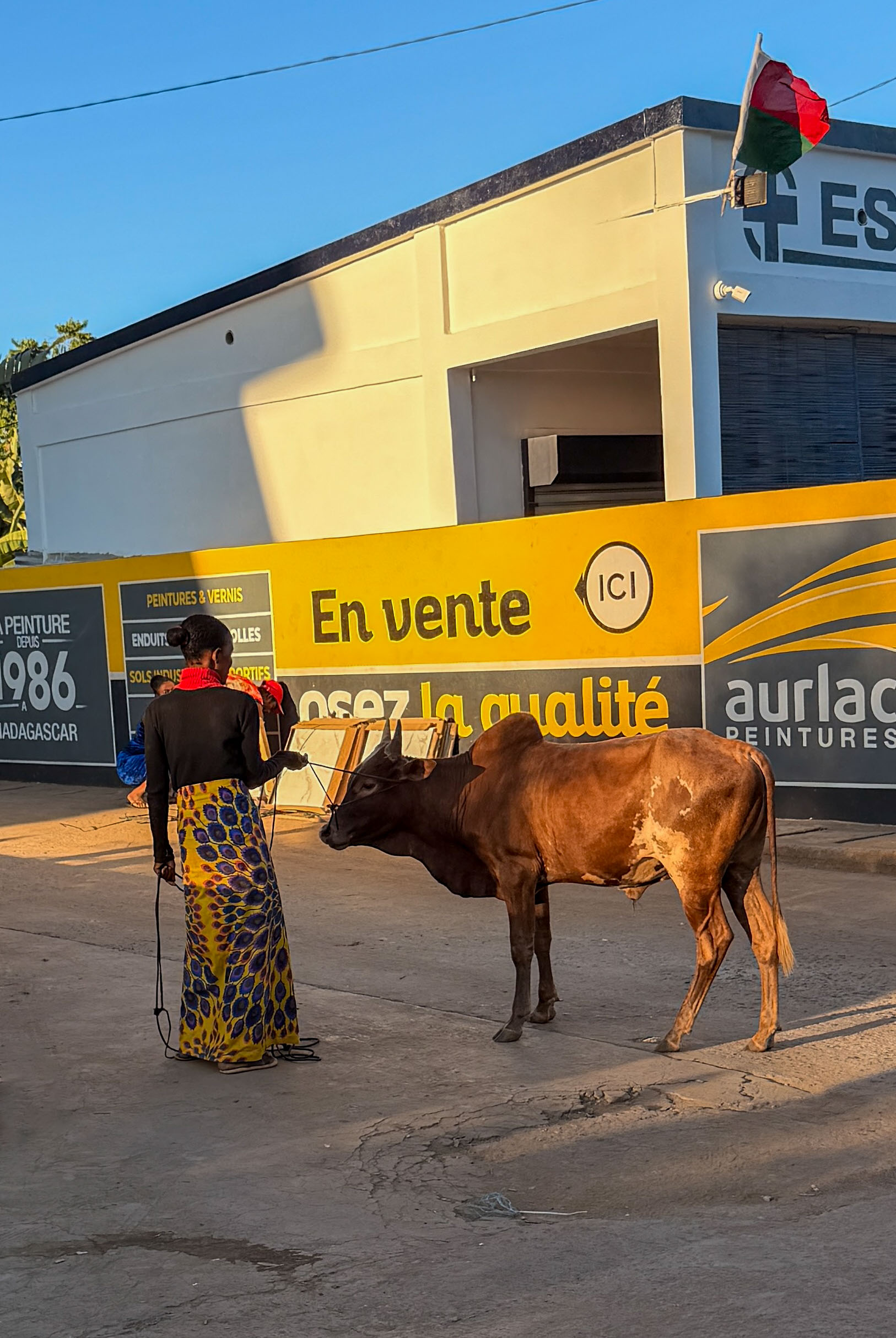
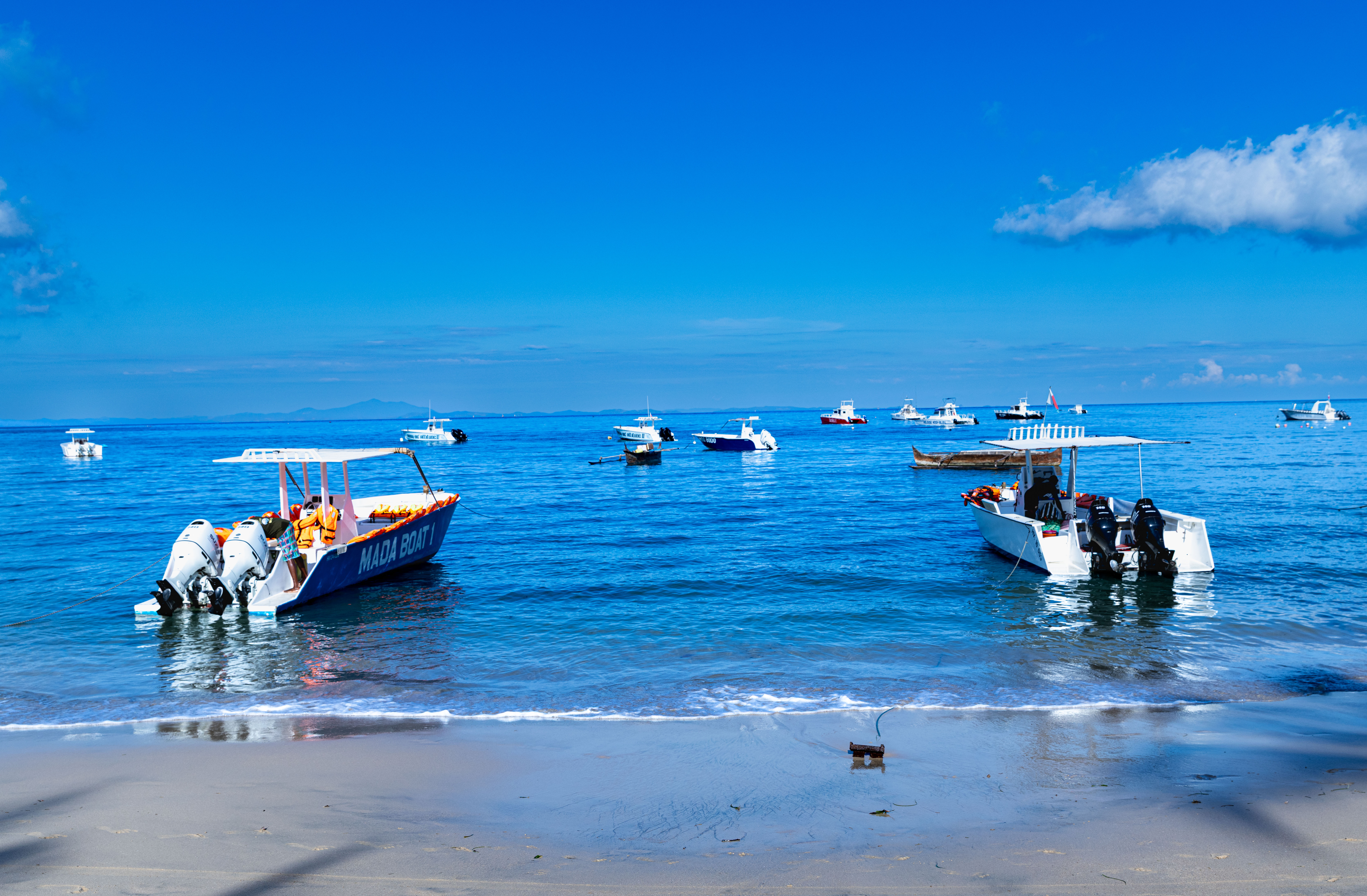
Nosy Iranja
We found paradise! Nosy Iranja is a small island gem that most people only visit for a quick day trip. Instead, we had arranged to stay on the island for the night in a small bunglow on the beach at Hotel Chez Olivia. We had a guide who picked us up from our hotel and brought us to the boat where we basically joined a day tour but we were the only ones who showed up with our luggage. The ride on the speedboat was just over an hour long and bumpy. Nosy Iranja is known for its 1km long sand bar that is exposed between 2 small islands, depending on the tide. When we arrived, it was low tide and you could walk out into the white sandy bottom for what seemed like forever.
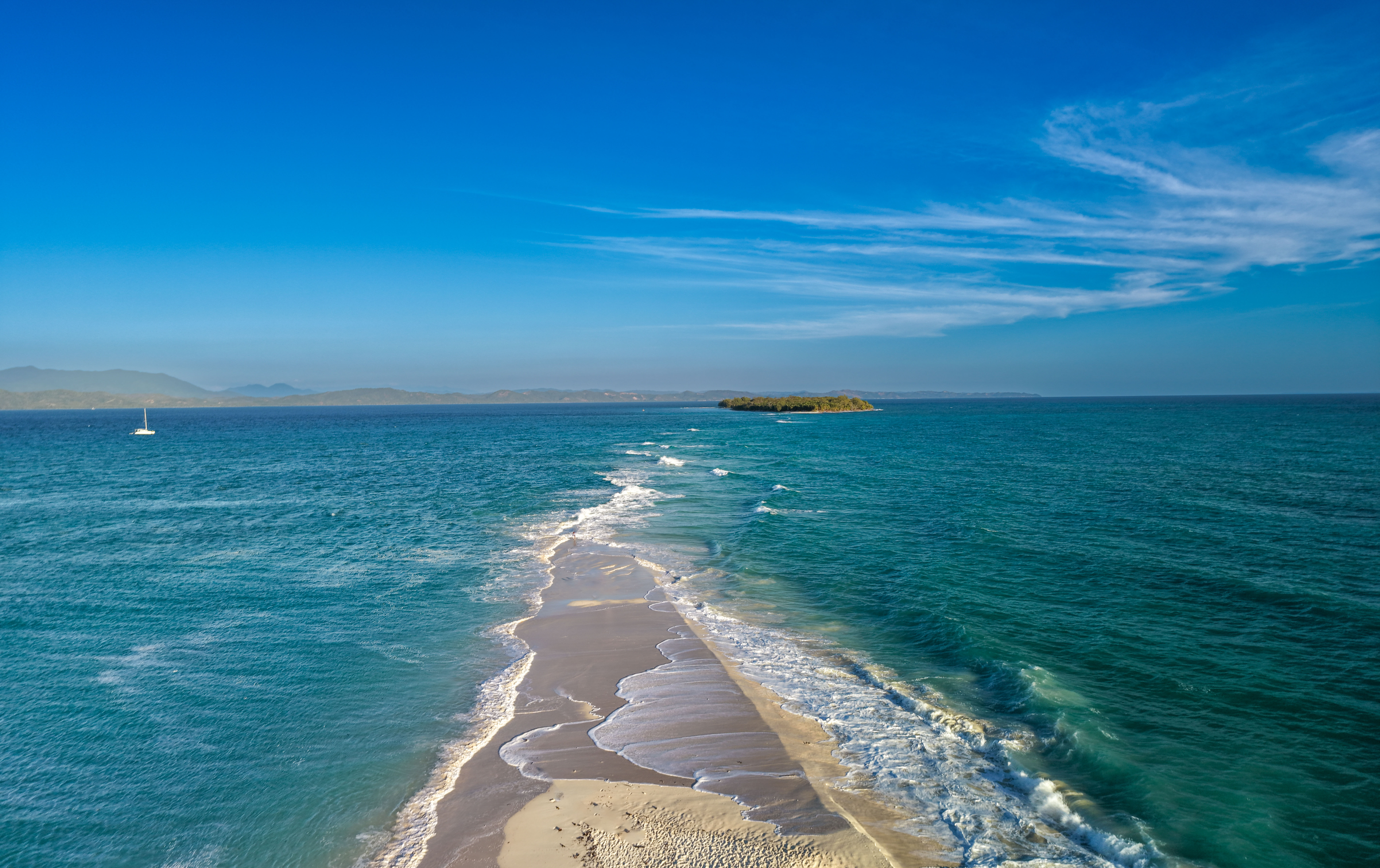
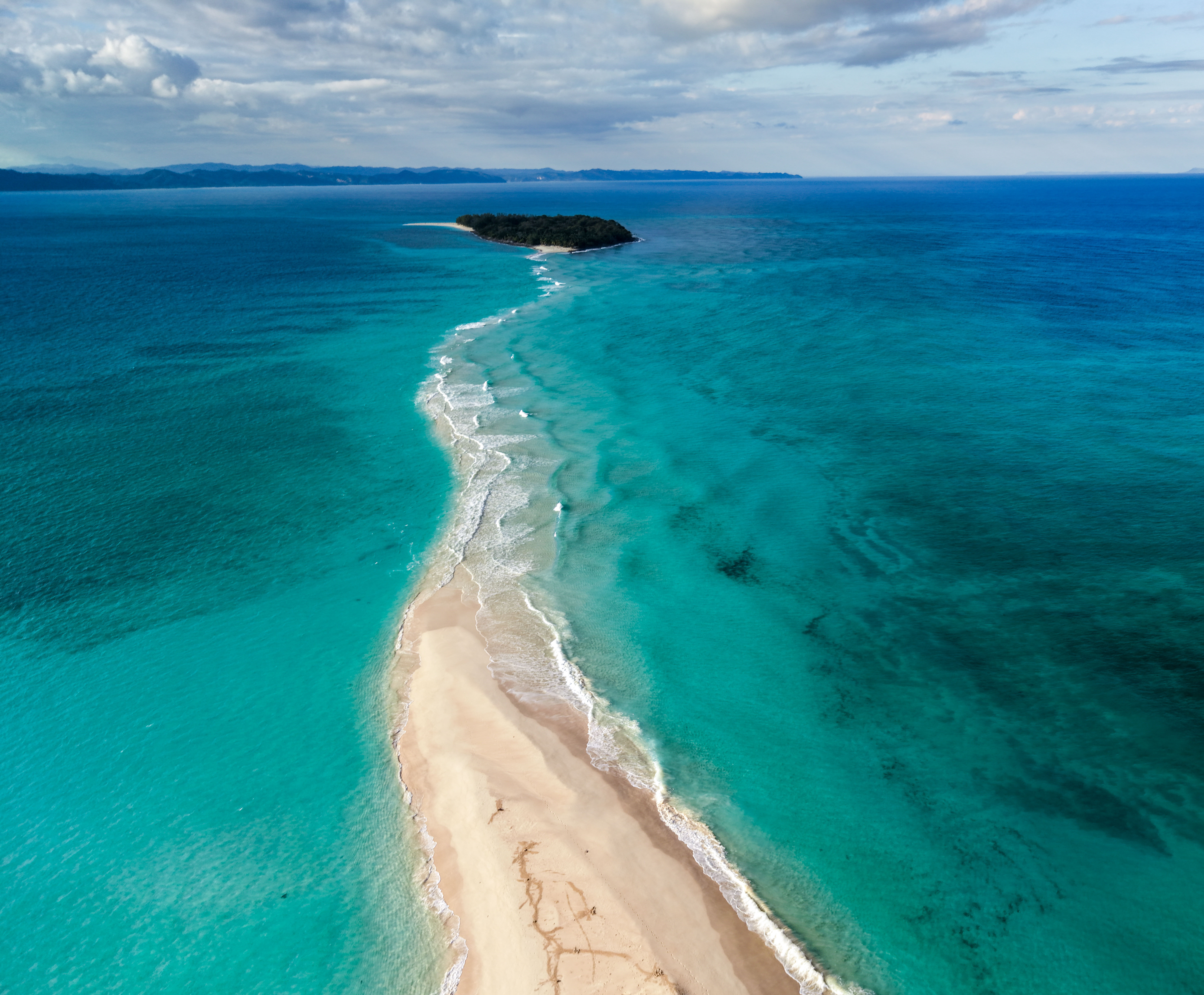
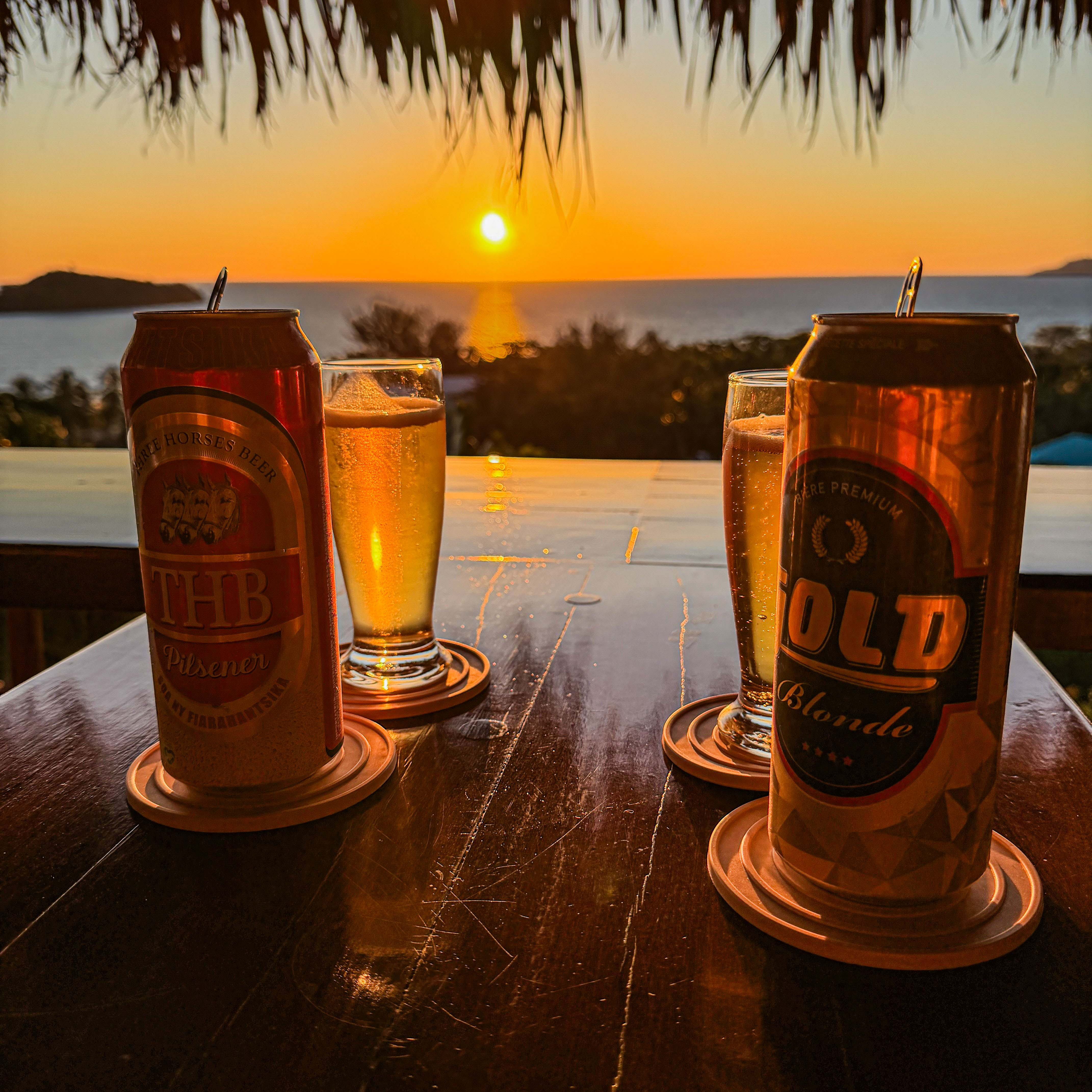
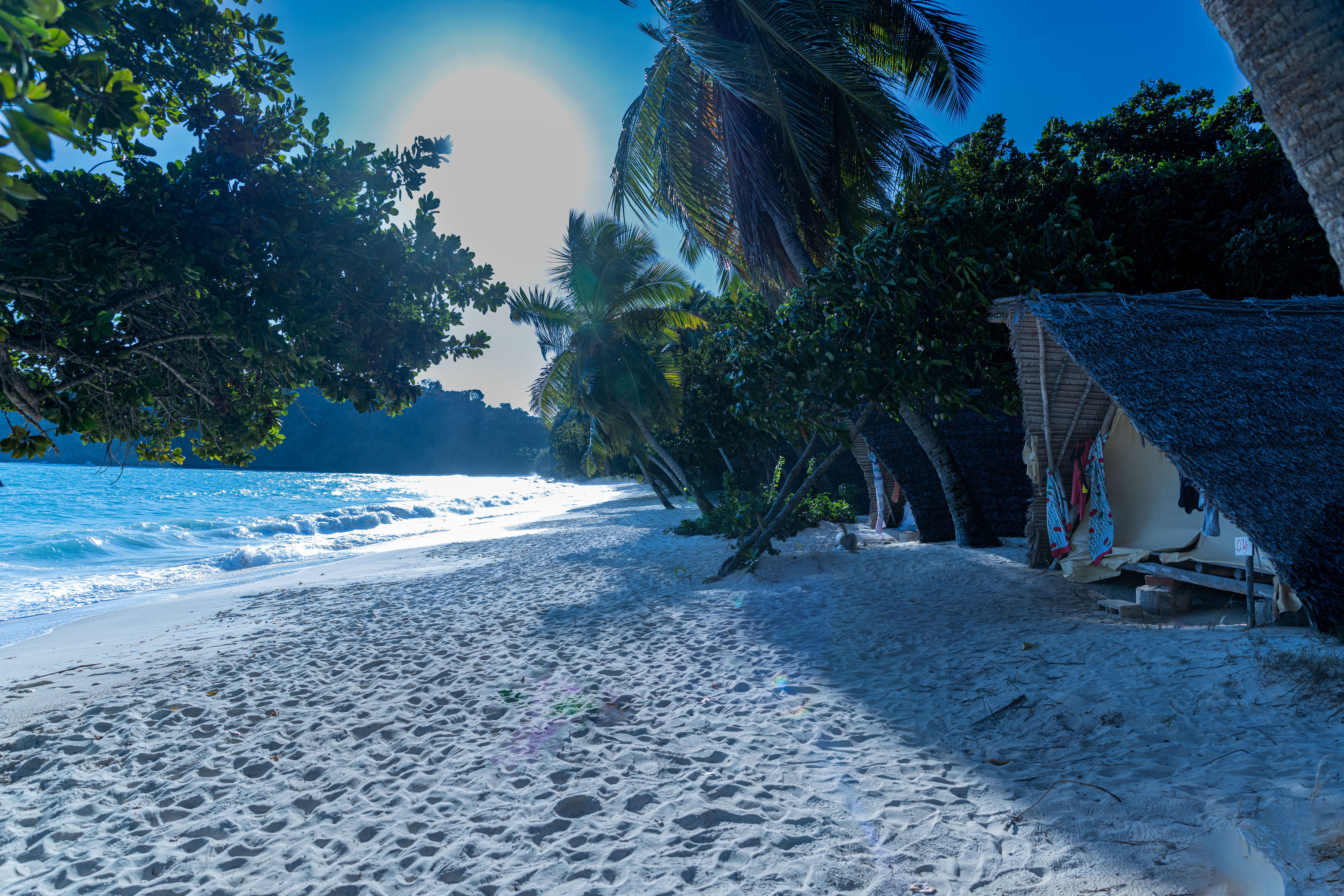
Only 2 hours later, parts of the sandbar were already disappearing! Our time on the island included all meals, drinks, the boat round trip, the guide, and our stay in the bungalow. The cost was 120 Eur per person. For lunch, we ate with the group, and it was the biggest feast! We had potato salad, rice, fresh crabs, shrimp, whole prawns and steak bites, and an enormous fresh fish, followed by fruit. It was by far superior to any other tour lunch we'd ever had. After lunch, our guide walked us through the local town and over to the bungalows set on their own white sand beach. We couldn't get over how beautiful it was. Our bungalow was a simple A-frame with bed, shared toilets, and a curtain for a door, but it was lovely and had a nice breeze the entire time. We had snacks and beer while watching the sunset back on the sandbar, which was almost gone due to high tide. It was cool to see the waves crashing in from both sides. Dinner was pasta, chicken skewers and cucumber salad back at the bungalows.
The next morning we ate breakfast quickly, packed up and walked over to see the sandbar, as we had not seen it at the premium tide yesterday. We were able to walk on the sandbar just as it was emerging from both sides of the waves and we were the first ones there, exactly as we had hoped! After walking all the way across and back, we explored another hidden beach and did some snorkeling before having another full lunch and ride back on the boat at 2:30pm. We wished we could have stayed for another night on this beautiful island!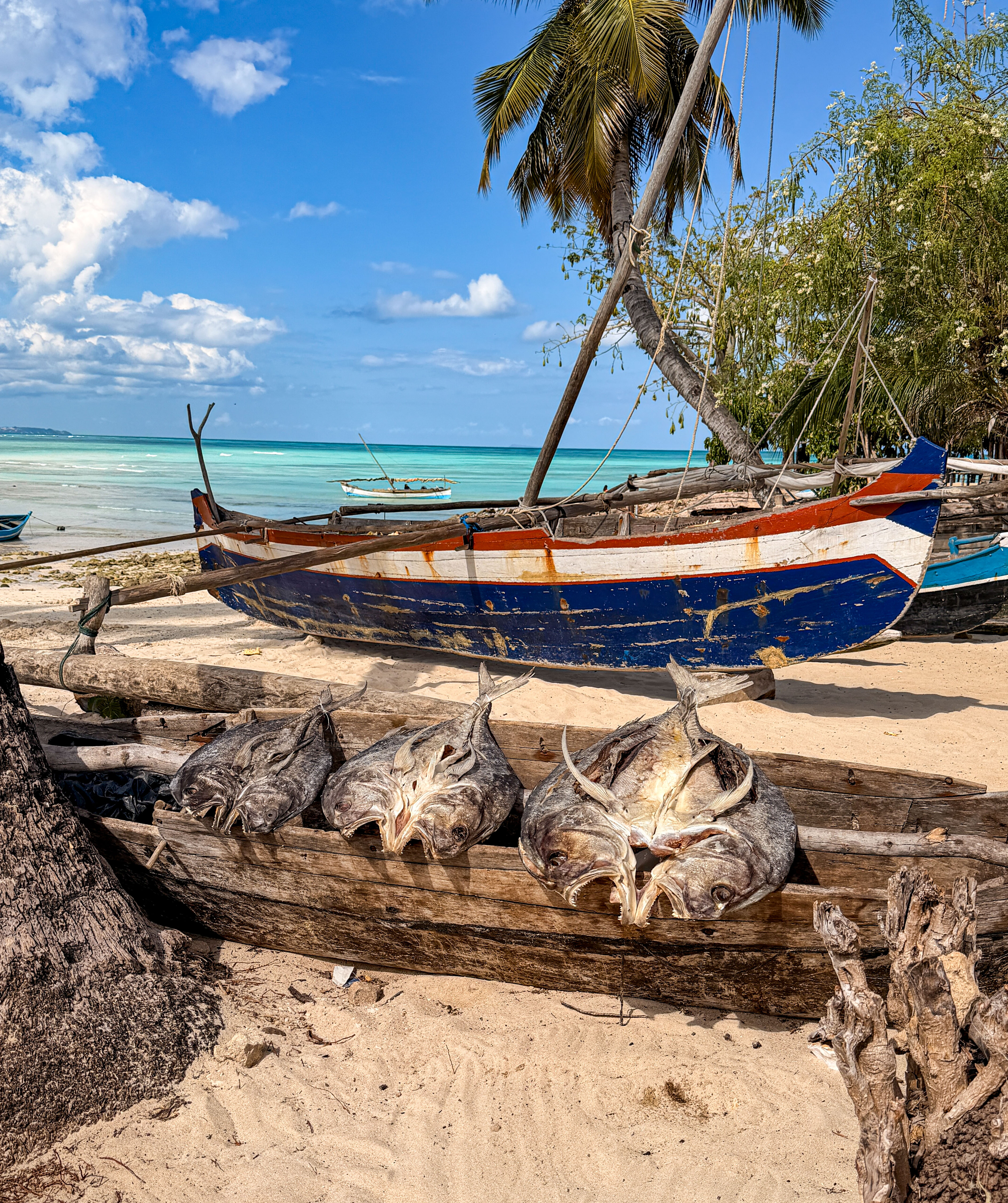
Back to Top
Link to Madagascar Photo Galleries
Day 6-7: Antananarivo and Toliara (Tulear)
We ended up spending more time on the phone on our last night in Nosy Be due to a flight error where both of the tickets were purchased in only one of our names! It was a bit stressful but finally got worked out. However, we had to request a refund for one ticket that might or might not get refunded and purchased an additional ticket. We were really lucky that there were still a few seats left on both of our flights! Our hosts on Nosy Be brought us to the airport and we boarded our first Madagascar Airlines flight to the capital city of Antananarivo. Madagascar Airlines is a bit unreliable and difficult to book as they don't accept credit cards on their website. They also seem to change their flight times on a whim as we had experienced for 2 out of our 3 flights. We arranged airport pickup from our Antananarivo hotel and got our first taste of the city.
On our way from the airport we passed a variety of things from people working and living in huts on the remote fields, to the rough and congested streets of the city. It was already getting dark by the time we reached our hotel, La Varangue, which seemed like a little oasis. The hotel features an extensive collection of old cars and antiques covering the walls and tables. The next morning we explored a small part of the city by foot before leaving for the airport. We paid 80,000 Ar each way to the airport, about $18. Depending on the traffic, it can take anywhere from 20 minutes to 60 minutes. We were lucky that both of our flights were on the weekend, so not too bad. Our next flight to Toliara airport went on time and we spend the remainder of the evening walking around the small town of Tulear.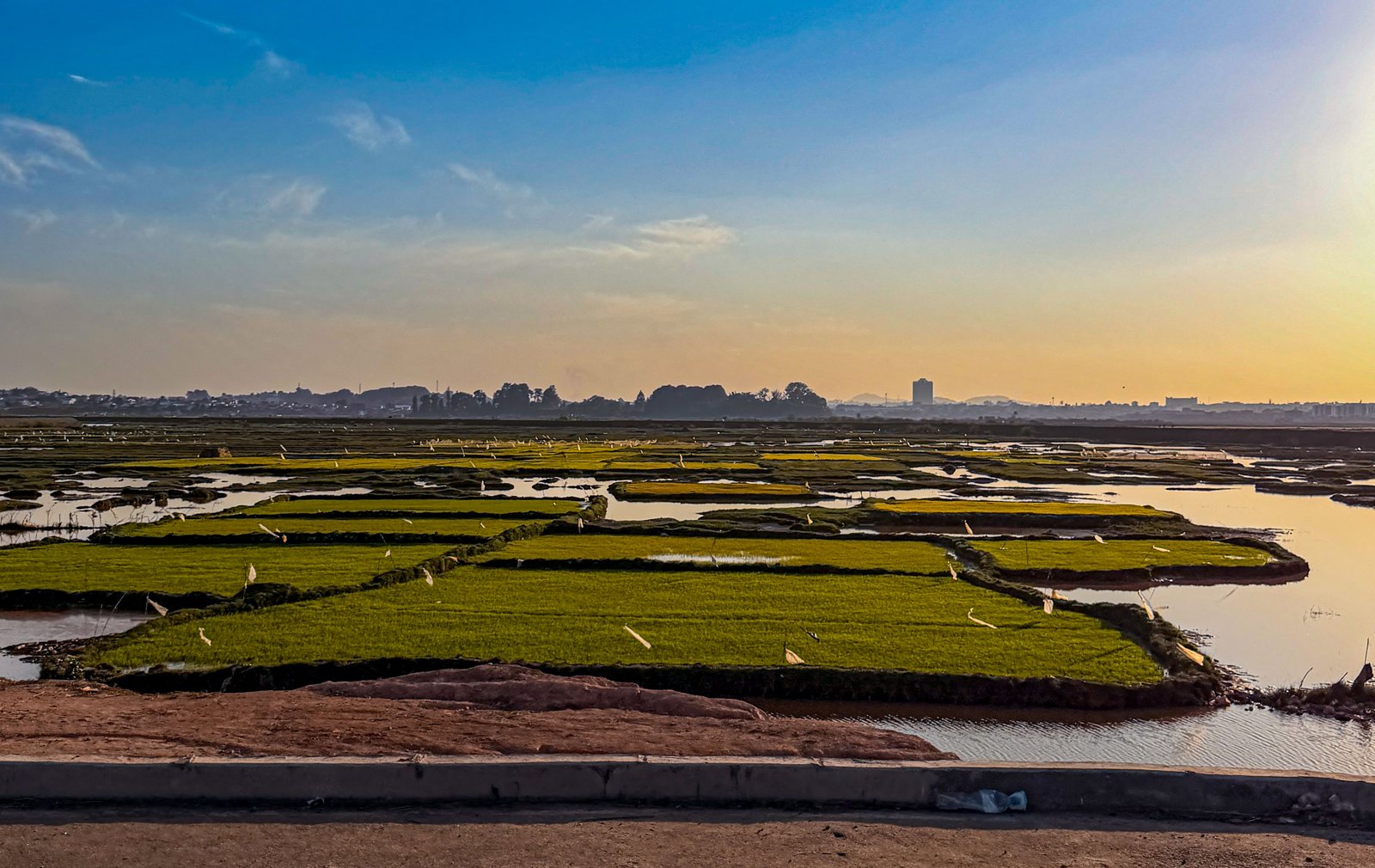
Antananarivo
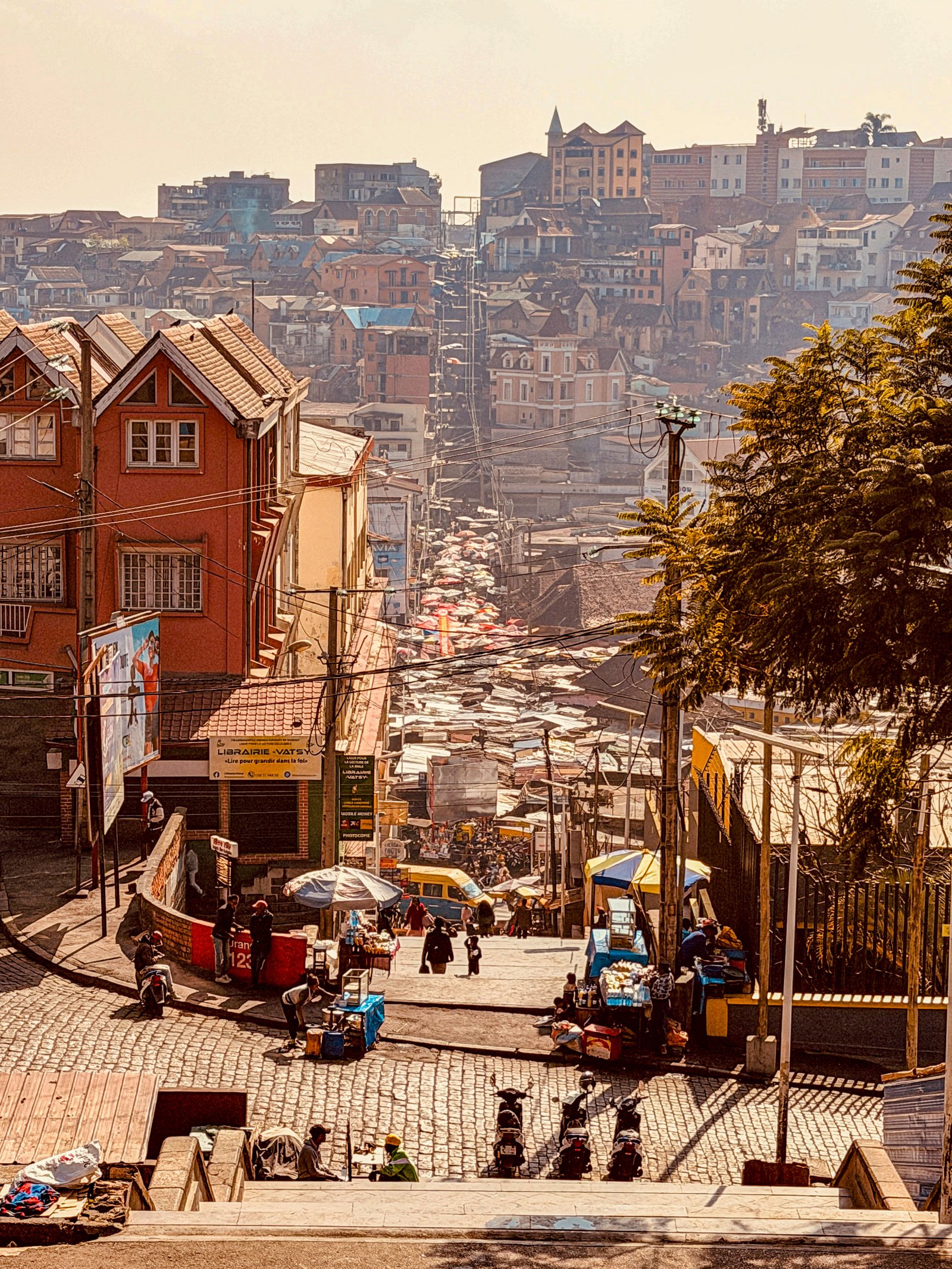
Antananarivo, or Tana for short, is the most populated city in Madagascar, with somewhere between 3-4 million people. The elevation is higher in Tana and nights are chilly. There isn't a whole lot to do for tourists in the area, and we really only had one morning to explore, as it was already evening when we arrived. We had dinner at our hotel which was mostly French cuisine and one of the nicer places to eat in the area. All of the hotel reviews recommended eating there, and it is not recommended to walk around the city at night. You get a sense of how poor Madagascar is when driving around Tana, a lot more trash and run down housing. Yet, on our morning walk, everyone was friendly and walking around in the daytime seemed fine.
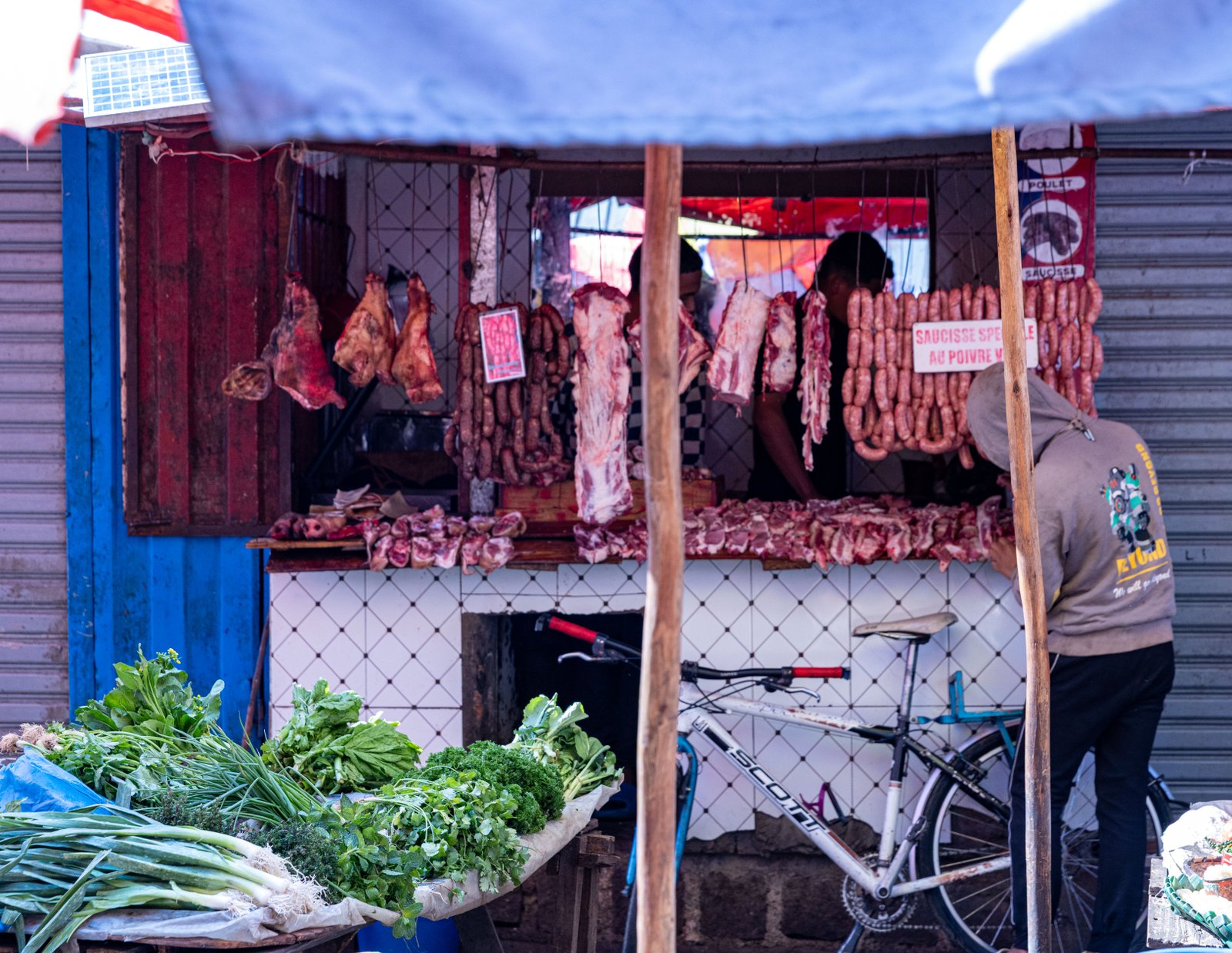
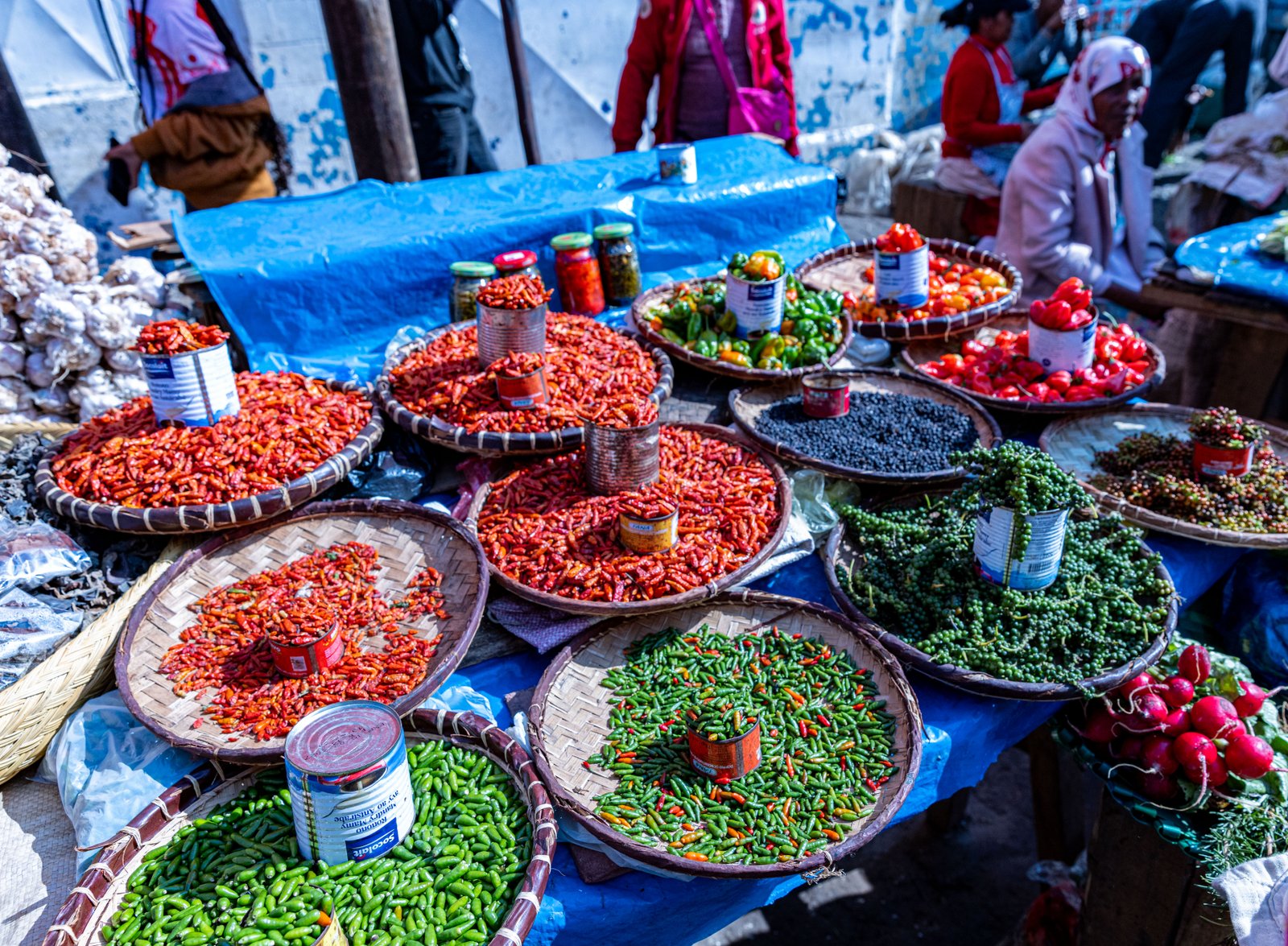
We walked from our hotel down many stairs leading to the Analakely market area. Being Sunday, we think parts of the market may have been closed, but there was still a lot to see. We walked through many stalls of fresh produce, fish and meat. Many of the other stalls were set up selling clothing or other essentials. People were very friendly and we weren't bothered much as we walked around. We made our way back up the stairs and ended up purchasing a small framed piece of art with a map of Madagascar made out of different types of wood for about $9. If we had more time in Tana, there is the Queen's Palace ruin, now a museum, on top of the hill that many people visit, as well as a further excursion to a lemur park.
Toliara
We landed in the small airport of Toliara, formerly known as Tulear, located in Southwestern Madagascar. From the plane, the area looked very remote and desert-like with scrub brush, flanked by the sea. There weren't many transportation options at the airport, so ended up taking the one taxi, after trying to negotiate. We paid 40,000 Ar for the trip from the Toliara airport to town. After getting into town, we noticed that the number one mode of transport were bicycle rickshaws, which could be found everywhere. We checked into the Moringa Hotel, where we would stay for 1 night. The hotel was comfortable and modern and didn't seem very busy. We set out to walk around the town, making our way to the waterfront. On our way, we stopped by 3 ATMs trying to get more cash, as we still had yet to gather enough money for our guide. The ATM situation here is not good, and we were only partly successful with one. They are either out of money or rejected our transaction for other unknown reasons.
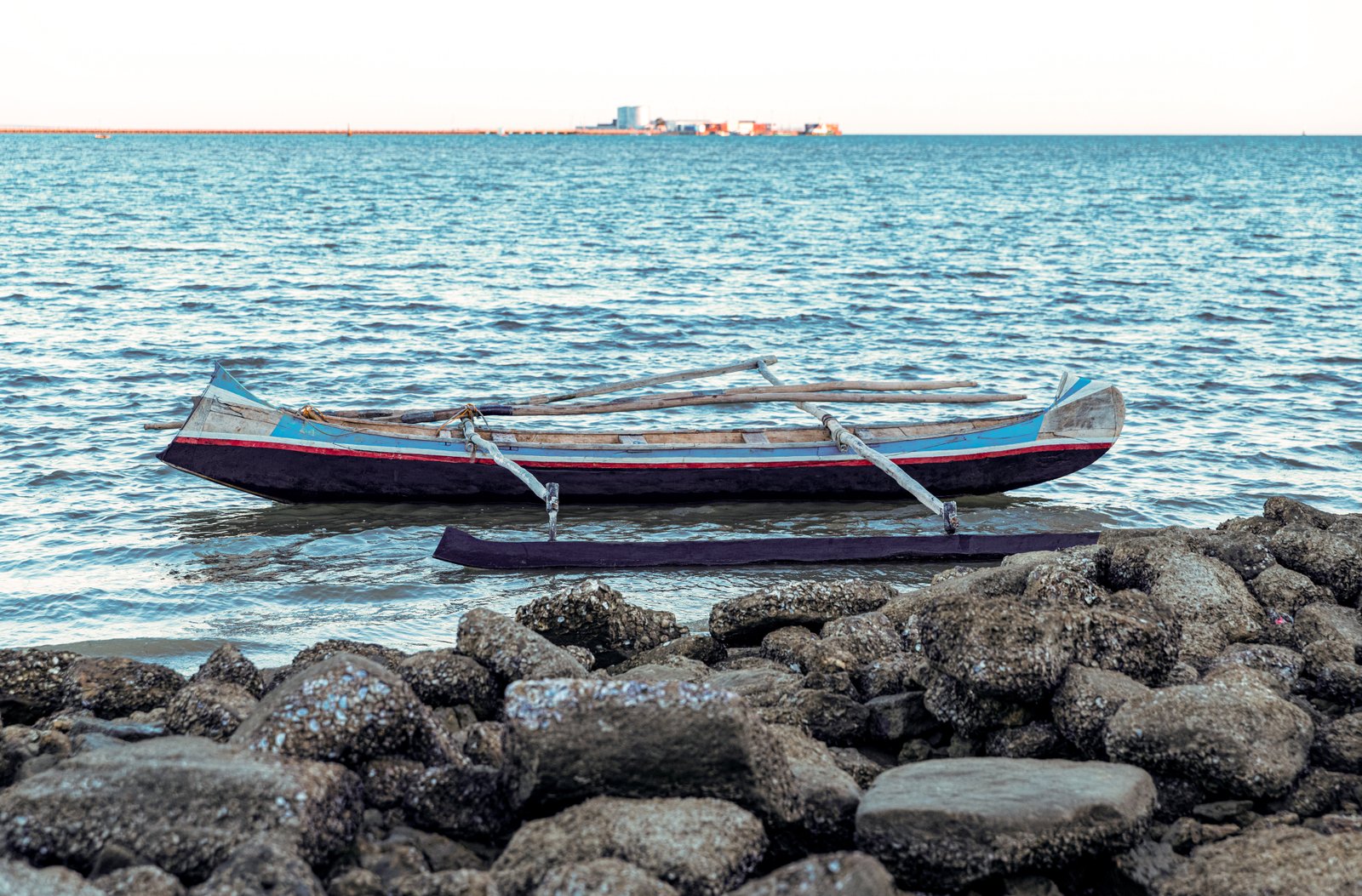
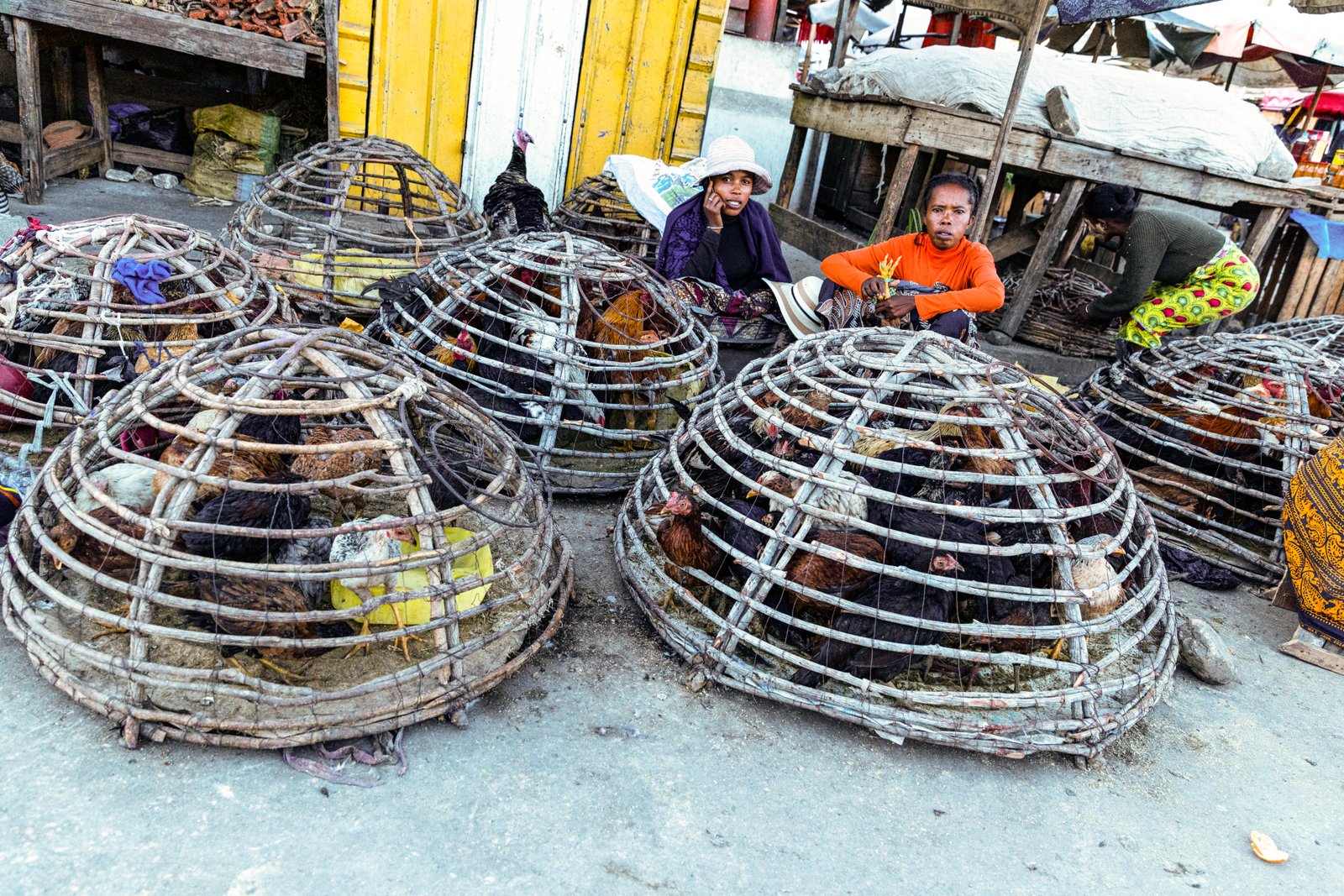
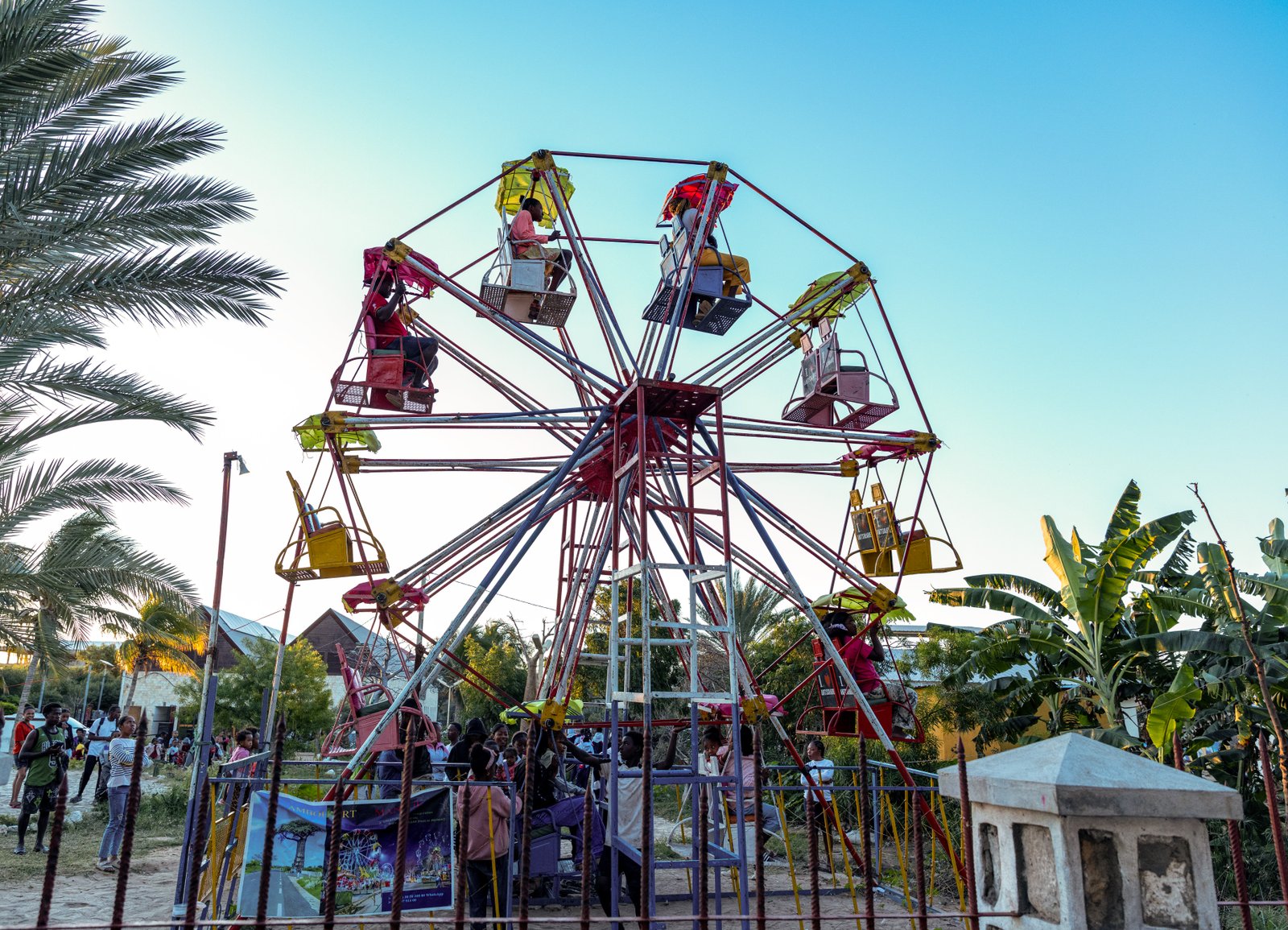
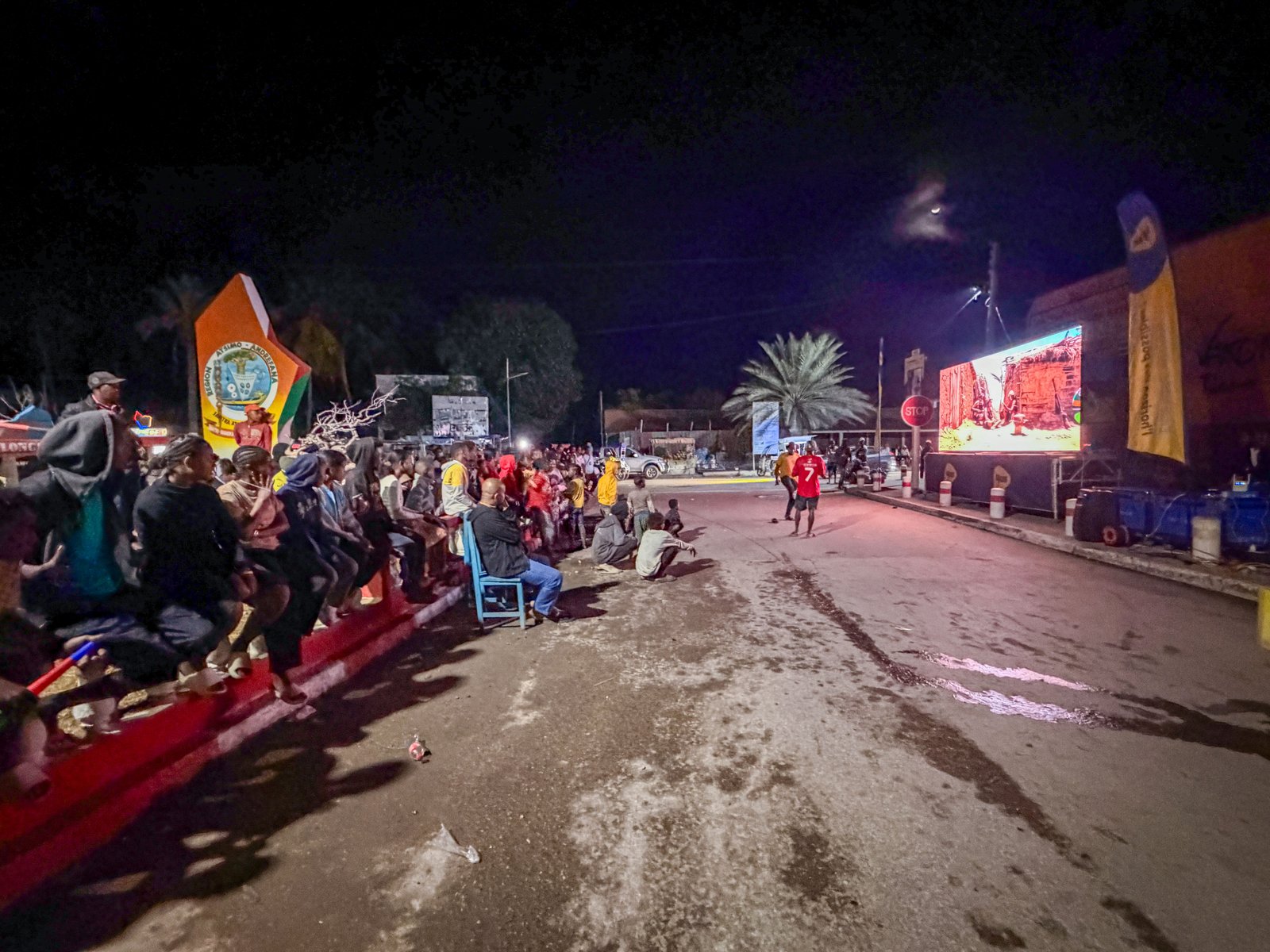
Toliara is known for its nightlife, and lots of people were out, especially getting ready for multiple large screen watch parties around the city for the World Cup final! We walked out on a rocky pier to catch the sunset and then stopped at one of the many bars to have a beer where they were also grilling up meat skewers. For dinner, we stopped at a well rated restaurant called Chez Alice where we ordered the mixed seafood plate that came with a whole fish, crabs, a small slipper lobster, shrimp and ocotopus. We had to finish off the meal by sampling the local infused rum and a friend banana with chocolate ice cream. All of this plus 2 large beers cost us about $25. Right next door, one of the World Cup watch parties was in full swing. People had already been there for hours and the game hadn't even started yet! We enjoyed watching the locals take part in soccer competitions and then got a bicycle rickshaw back to our hotel to watch the game in our room.
Back to Top
Link to Madagascar Photo Galleries
Day 8-9: Anakao
Our final beach destination in Madagascar, we had arranged to visit Anakao, a remote strip of beach really only accessible by boat. Its still on the mainland, just south of Toliara, but there are no roads to take to get there. We were due to meet at the Anakao Express boat at 9am, but first visited the local Bank of Africa, the nicest looking bank in town, to try to exchange some USD to Ariary. The money exchange places at the airport had horrible rates, where we were going to lose about $180 if we had exchanged there. The Bank of Africa was willing to exchange for close to the real rate, but we needed to have a special proof of stay from our hotel, which we didn't have. Running out of time before the boat, we planned to return there with the form after our trip to Anakao.
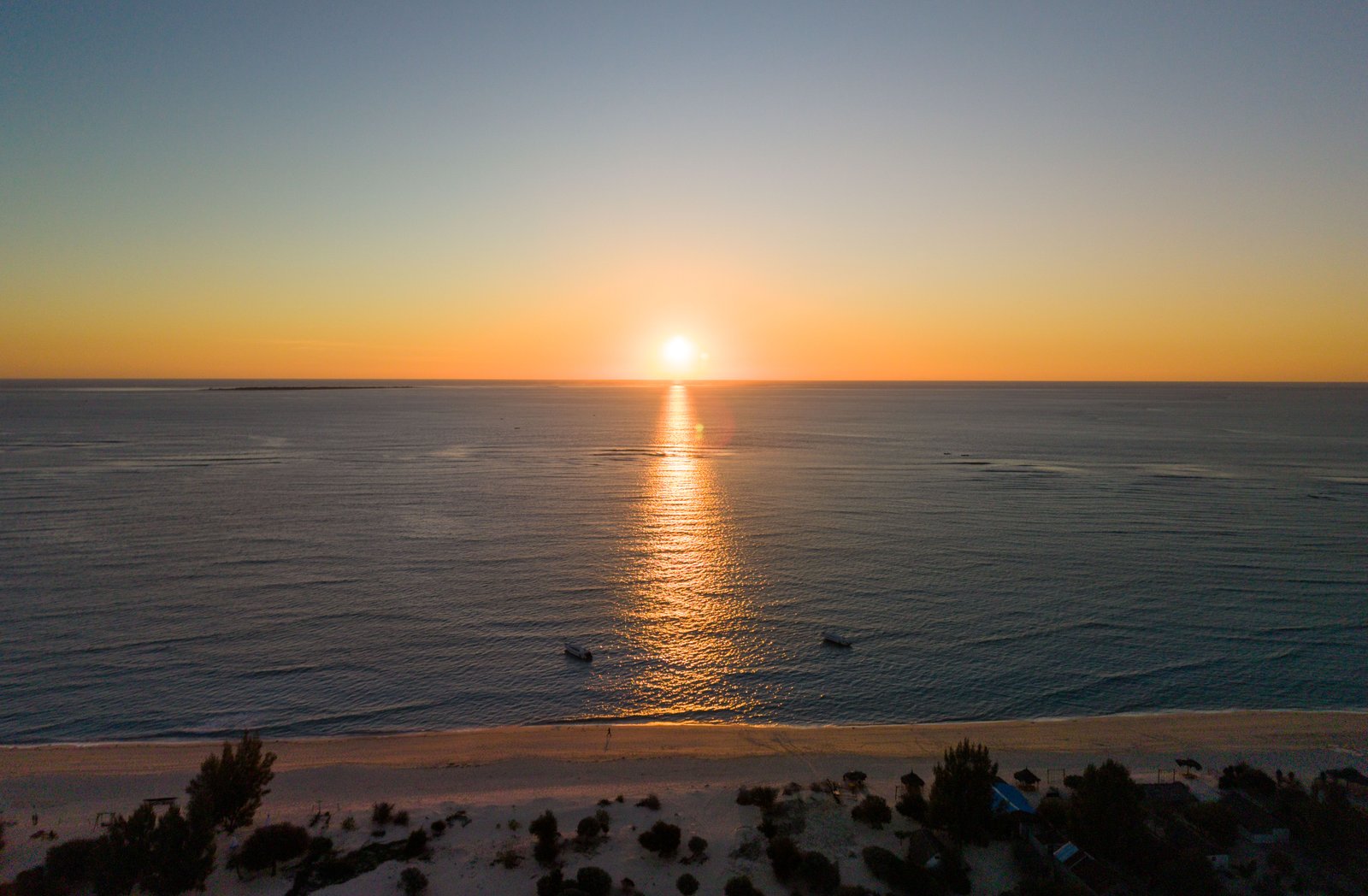
We spent the next two days on Anakao beach, with its white sands and turquise blue waters, resting up before the remainder of our journey in Madagascar by car!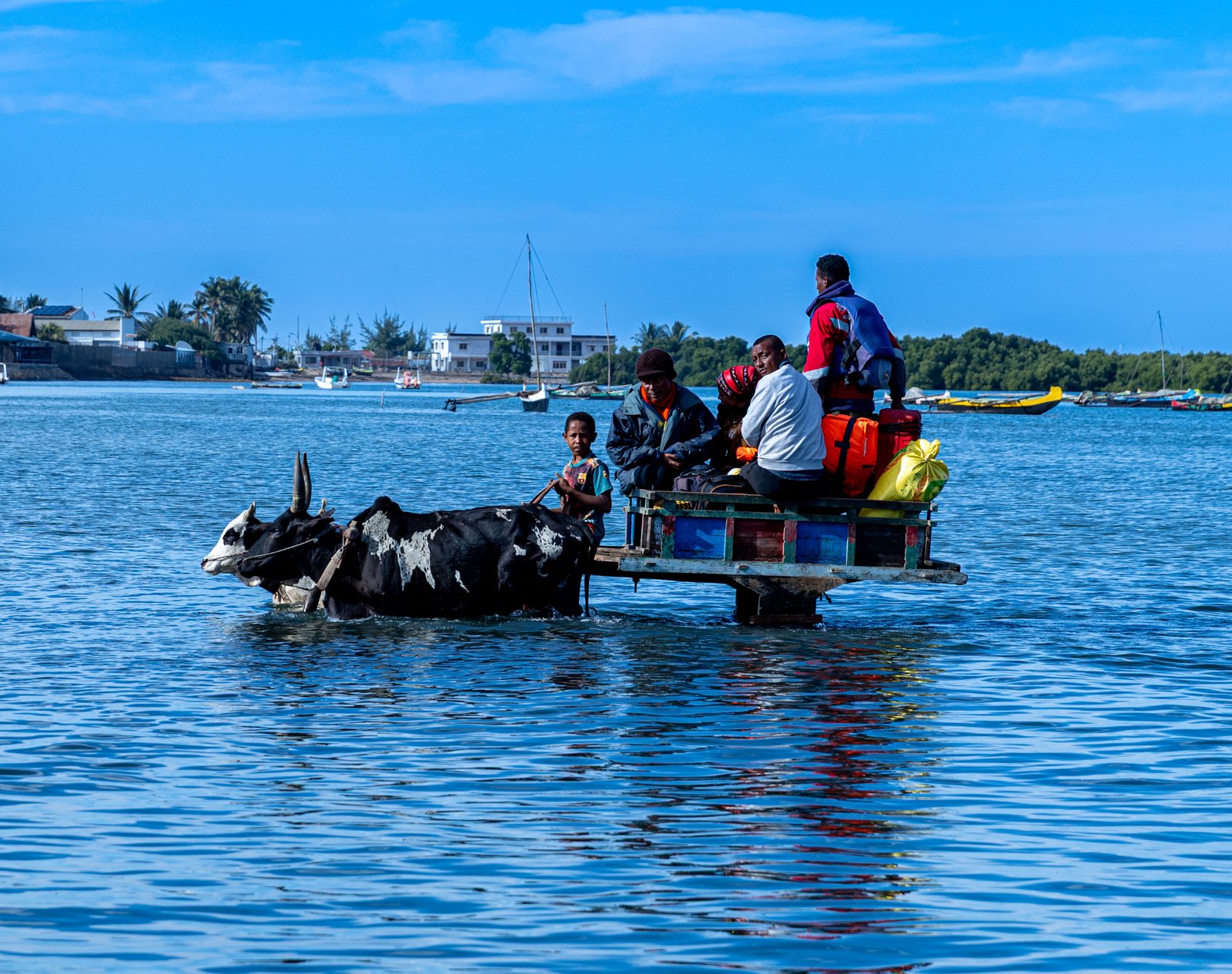
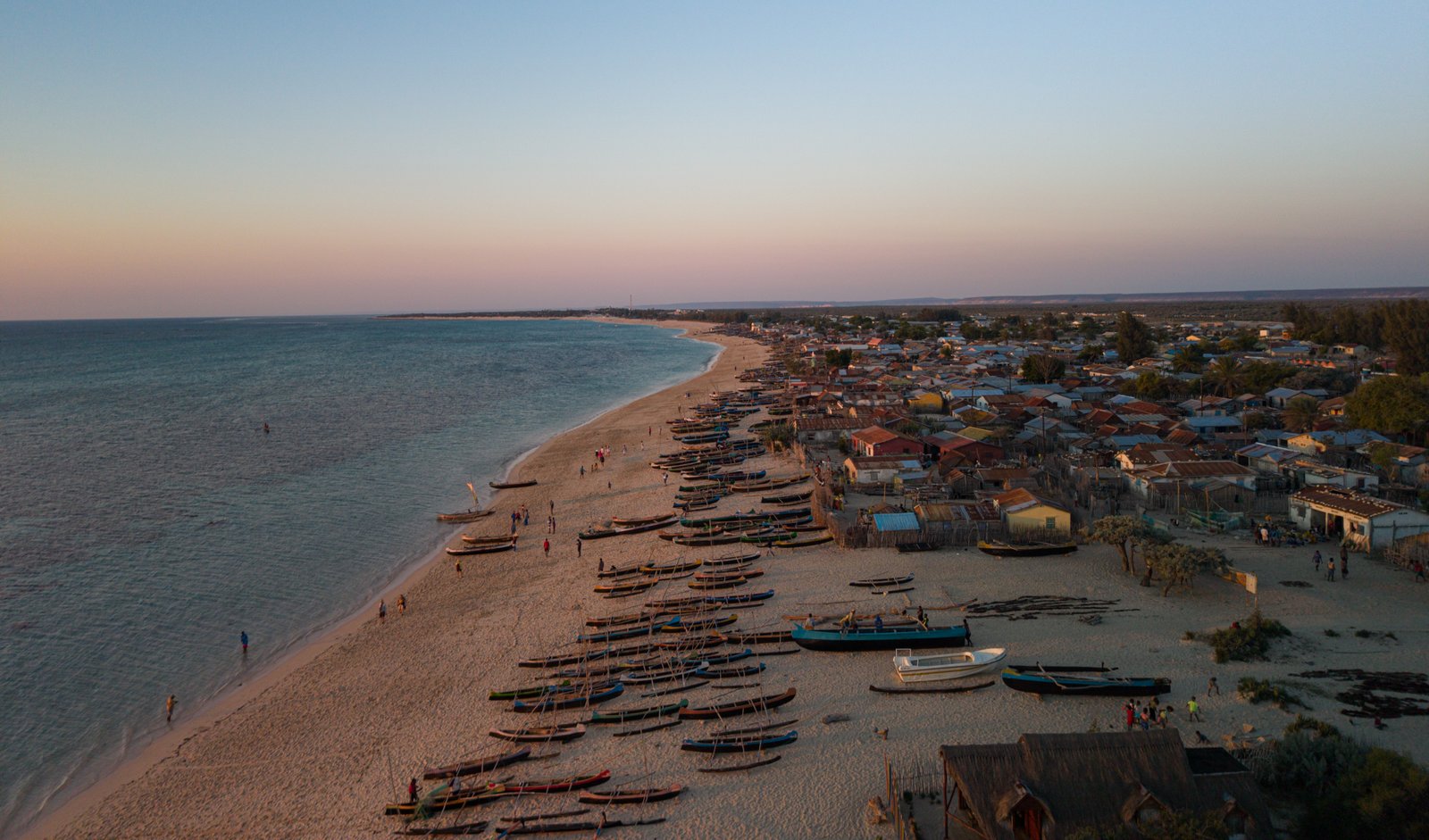
Anakao Beach
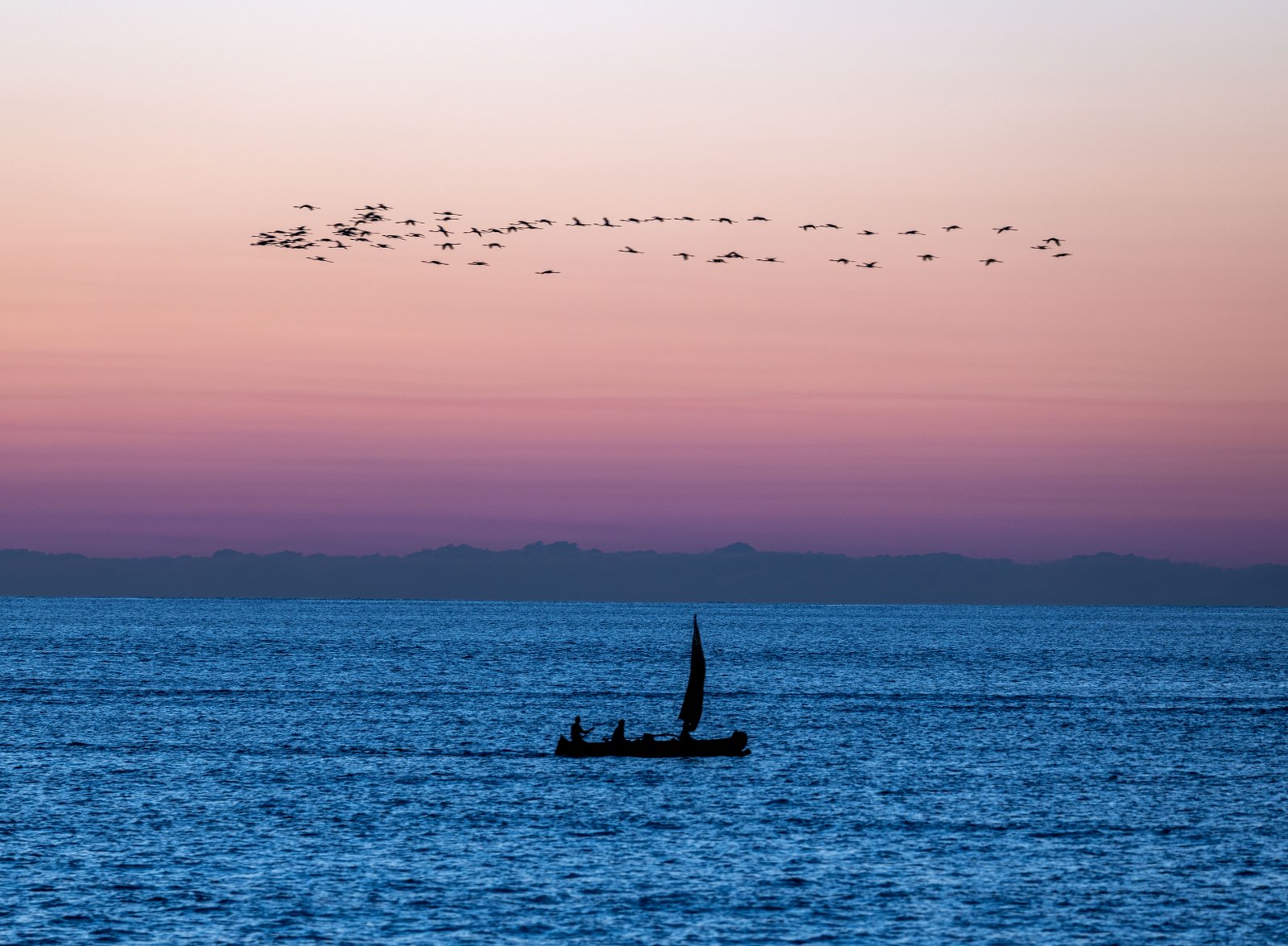
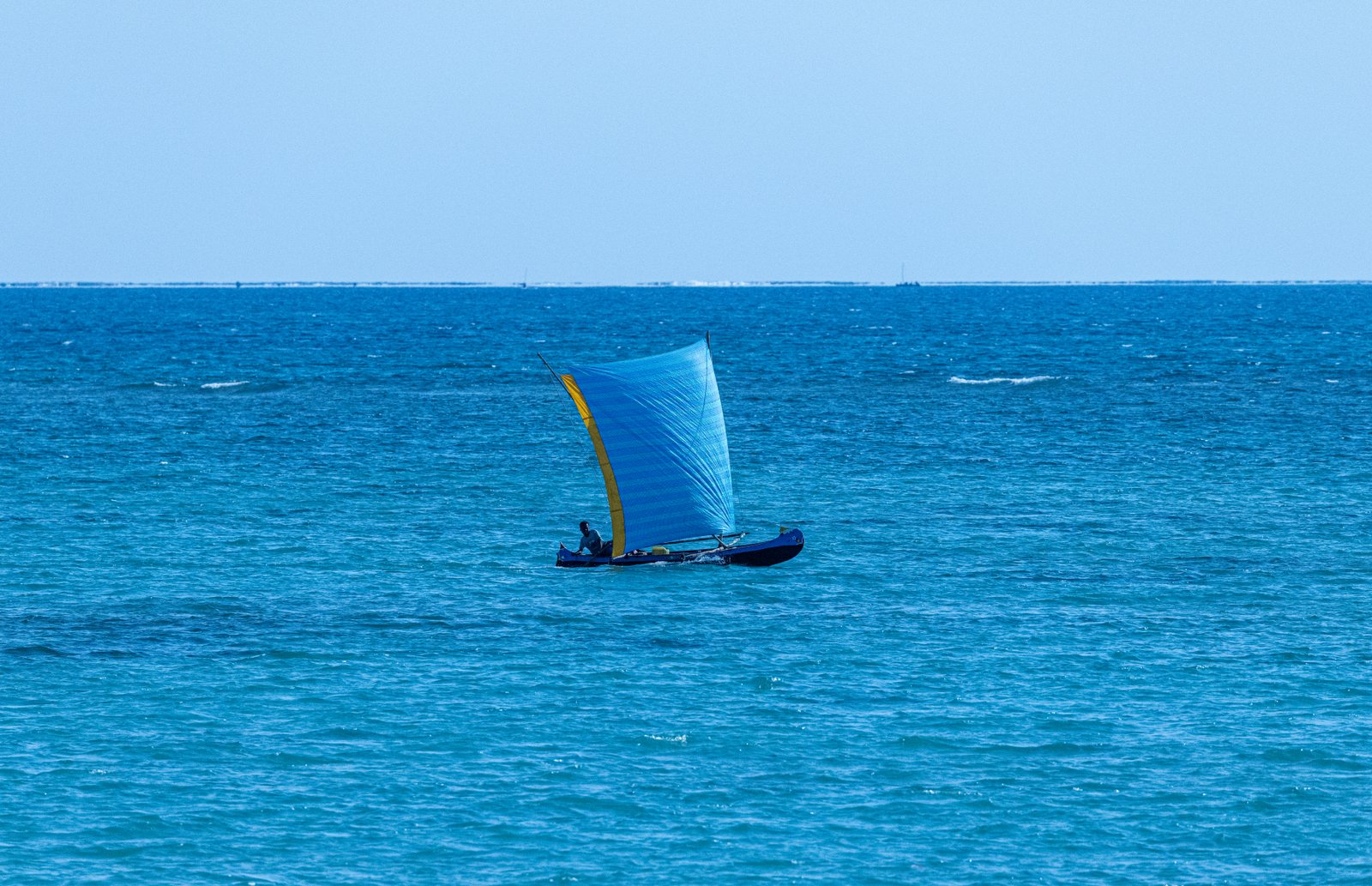
Only accessible by boat, Anakao is home to a fishing village and is an up and coming beach and surfing destination. The Vezo people local to this area are known for the style of fishing where they take out small dugout canoes, called pirogues, and either paddle or attach a large square sail. We took the Anakao express boat directly to our hotel, the Maneva Beach bugalows, set on a quiet pristine section of beach away from the town. Our home for 2 nights, a small bungalow (with electricity!), beach chairs and a restaurant run by the family that lives here. On our first night, we were the only ones staying there. For $35 a night, we loved everything about it except for the bed, which was perhaps the hardest bed ever!
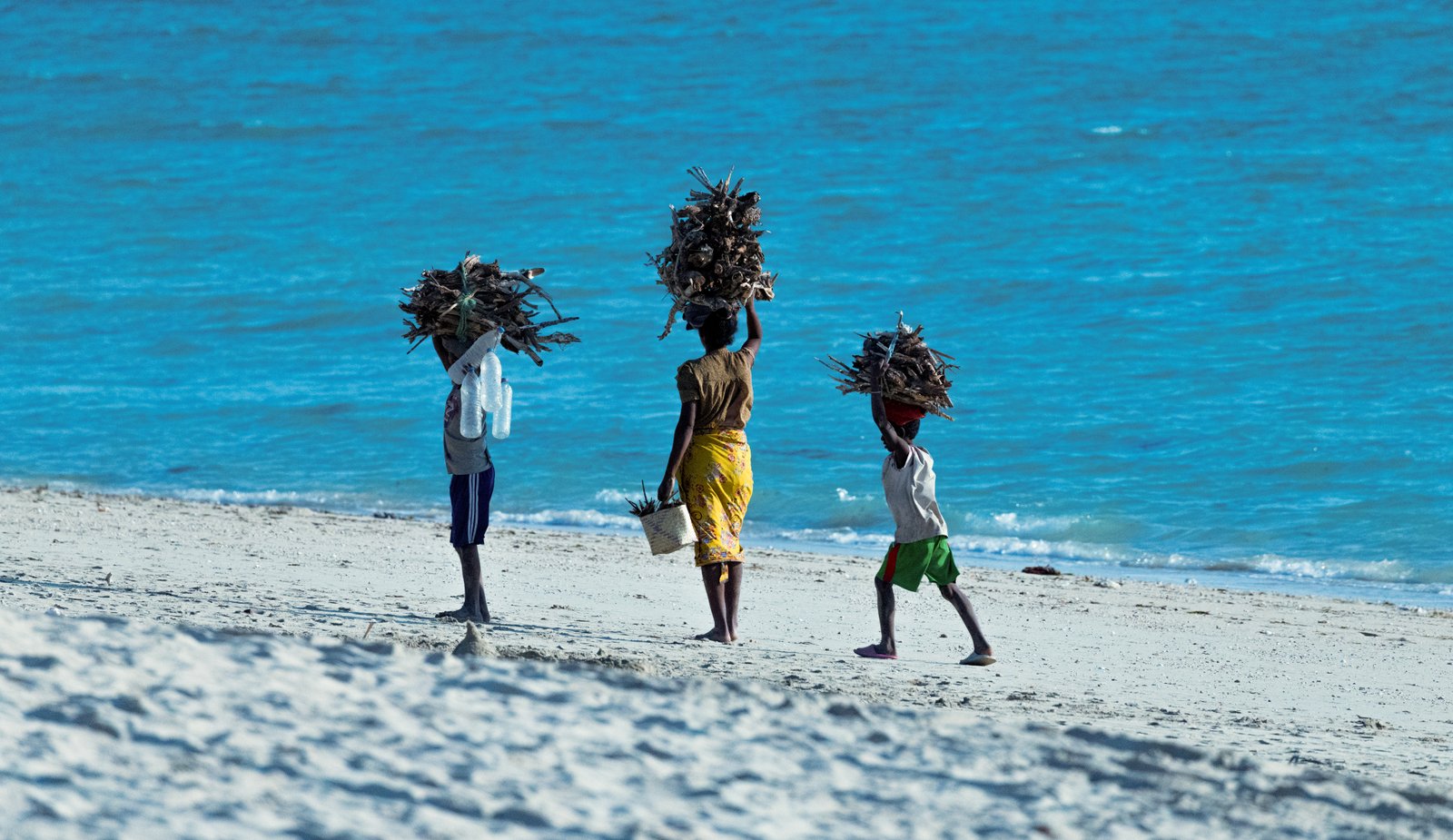
On Anakao beach, you can sit back and watch the local life, women walking down the beach with a basket of fresh fish on their heads, boys driving the ox carts on the sand, and fishermen sailing on the canoes. There weren't too many people trying to sell things but if you engage with them, you're in for an entire store of souveniers being set up on the sand in front of you. The women wait on the sand until they catch your eye and then there is no stopping them. A lot of the crafts are the same as what we've seen so far, mostly wood carved or shell items made into boxes, lemurs, baobab trees or jewelery.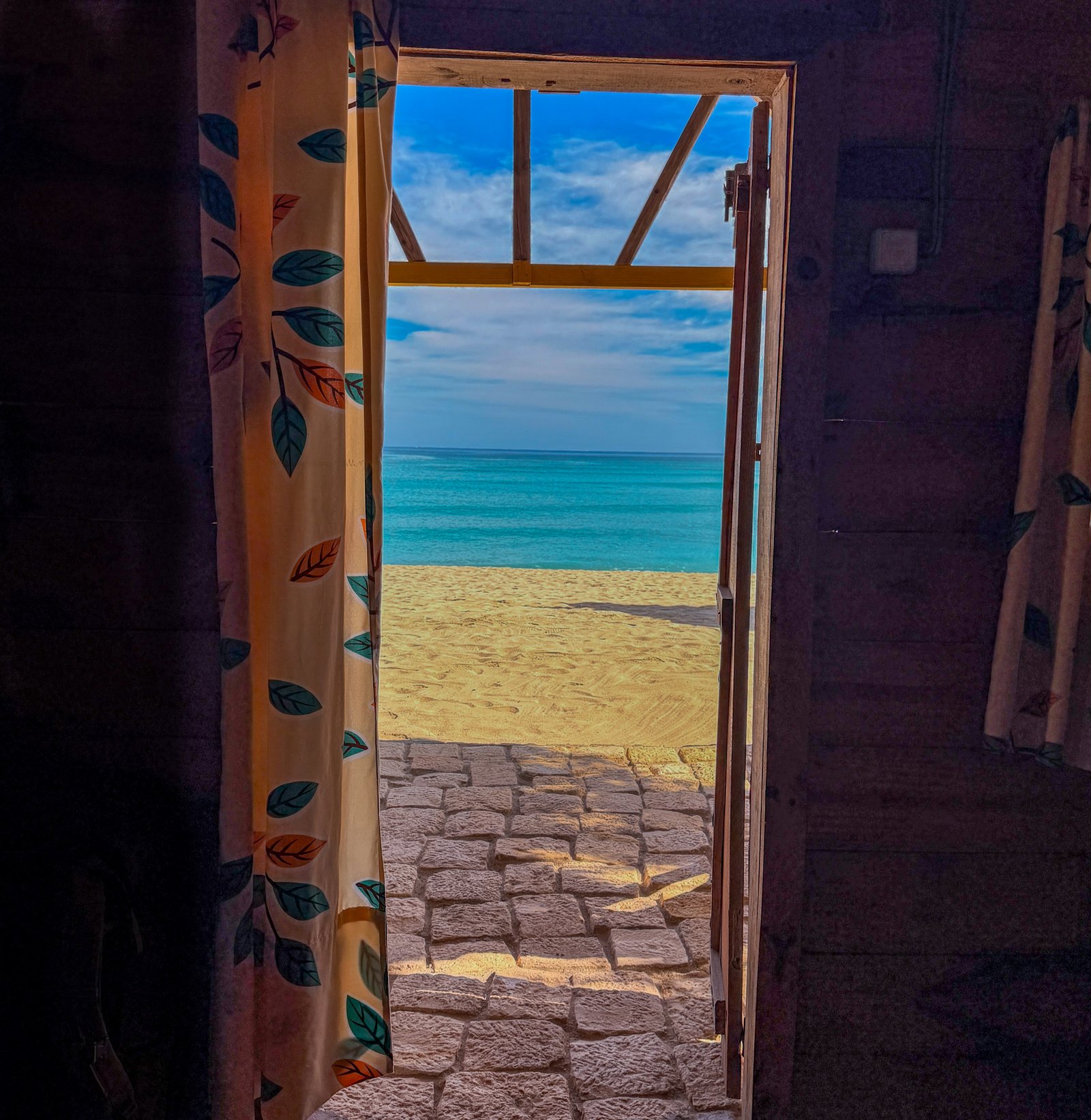
On our second day, we relaxed at our bungalow and caught up on some writing. Then we sat in the sun and were once again approached by someone selling souveniers. This time we entertained her and ended up purchasing 2 silver bracelets and a set of three mini carved baobab trees, costing us about $23 total. After our shopping, we walked down the beach past the entire fishing village to the other side where we enjoyed the sunset. It was about a 20 minute walk from one end to the other. The village had row after row of fishing canoes lined up on the beach. A lot of the local kids were out playing games or making sand castles. All were very friendly and some wanted their pictures taken. After our walk, we made our way back to our bungalow where we had dinner, tasted their local rum, and called it a night.
Back to Top
Link to Madagascar Photo Galleries
Day 10-11: Driving & Isalo National Park
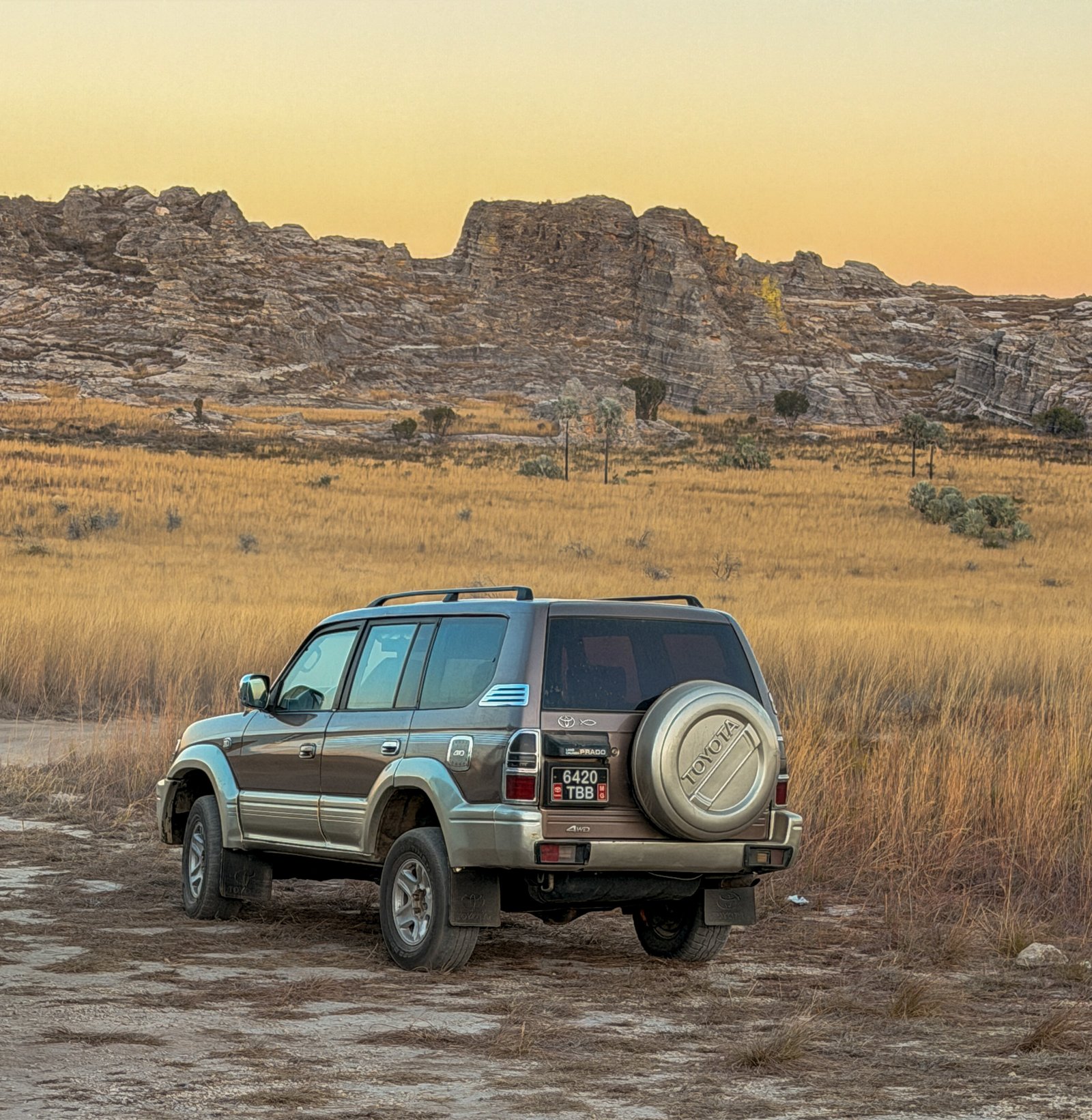
We took the Anakao Express boat back to Toliara, where our guide, JB, and driver, Michel, were waiting for us. We were all glad that the plans had worked out, as they had left several days ago to drive from their home town to meet up with us. We found JB because of his trekking company, JB Trekking, in the town of Ambalavao, near the mountains where we will be hiking and camping. He was so helpful about the hiking, and when he learned about our other travels and the fact that we didn't have a driver yet, he made a proposal for the entire drive. Since we planned to find someone (as Madagascar is not one of those countries you can really navigate on your own), and his price seemed fair, we went with it. Both of them can speak English and we could tell right away that we could get along very well!
After getting in the car, we returned to the Bank of Africa to exchange our USD and this time were successful - we had the proper form! We made a quick stop for snacks and drinks at the grocery store before starting our long drive. We settled in for what would be a lot of hours in the car from this point on. JB and Michel did a good job of keeping their eye out for things to see along the way or making quick stops to break up the journey.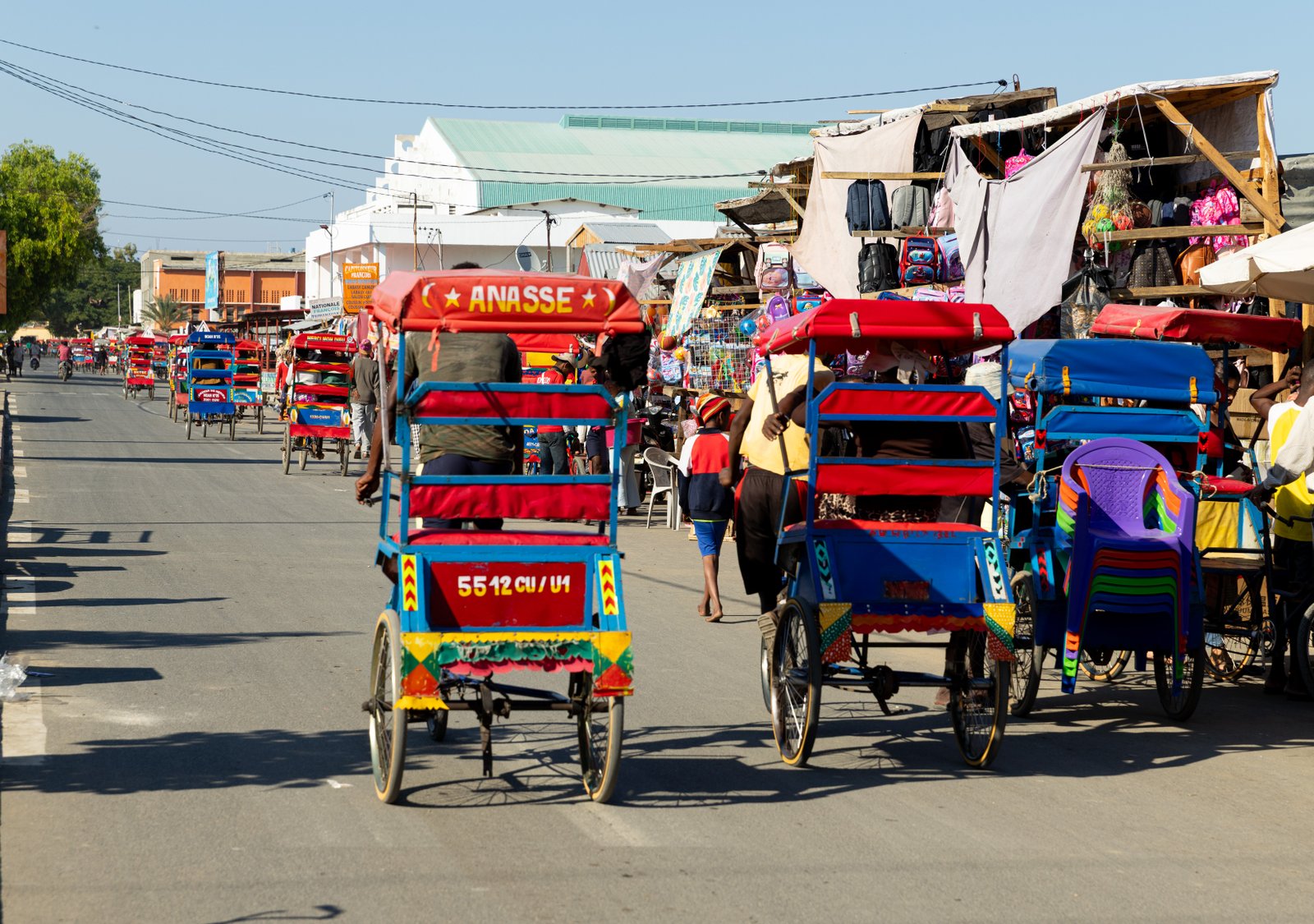
Driving from Toliara to Isalo
We left Toliara and followed the national route, RN7, one of the main roads cutting across central Madagascar. We were told that the drive would take us roughly 6 hours, which ended up being accurate. It was a little closer to 7 hours after we made a few stops. The road conditions varied greatly, from dirt or gravel roads, to paved roads with many potholes and ragged edges, to sometimes a little bit of normal pavement. About 2/3 of our trip was dodging potholes and weaving on the road to avoid damage. We quickly realized that a good tactic was to drive half on and half off the road, straddling the edge, and using the dirt for half the car. We were sharing the road with very few actual cars, but had to avoid things such as pedestrians, children begging for money or candy, bicyclists carrying huge loads, ox carts, herds of goats, local busses packed with people, and huge semi-trucks transporting things.
Our first stop was for a break at a small restaurant. JB told us it would be better off if we didn't eat anything there, so we believed him and just got a beer and ate some bananas he had bought us from the side of the road. Our next stop we were told that we would stop at a local rum distillery. We both had to laugh when we pulled up to the side of the road, no buildings in sight. We had pictured a commercial type distillery, rum tasting, etc. This was truly a local distillery, making rum right there on the side of the road using large vats to ferment the sugar cane pulp combined with water and tamarind. They leave it in there for 2 weeks and then distill it by heating with fire to boil and evaporate out the alcohol. They used a hollowed out tree with water to cool the pipes of rum. We got to taste it and it wasn't bad. The funniest part was that they are selling it in bottled water bottles, and the rum is clear, so it looks like they are just selling you water. JB purchased a bottle of it for later.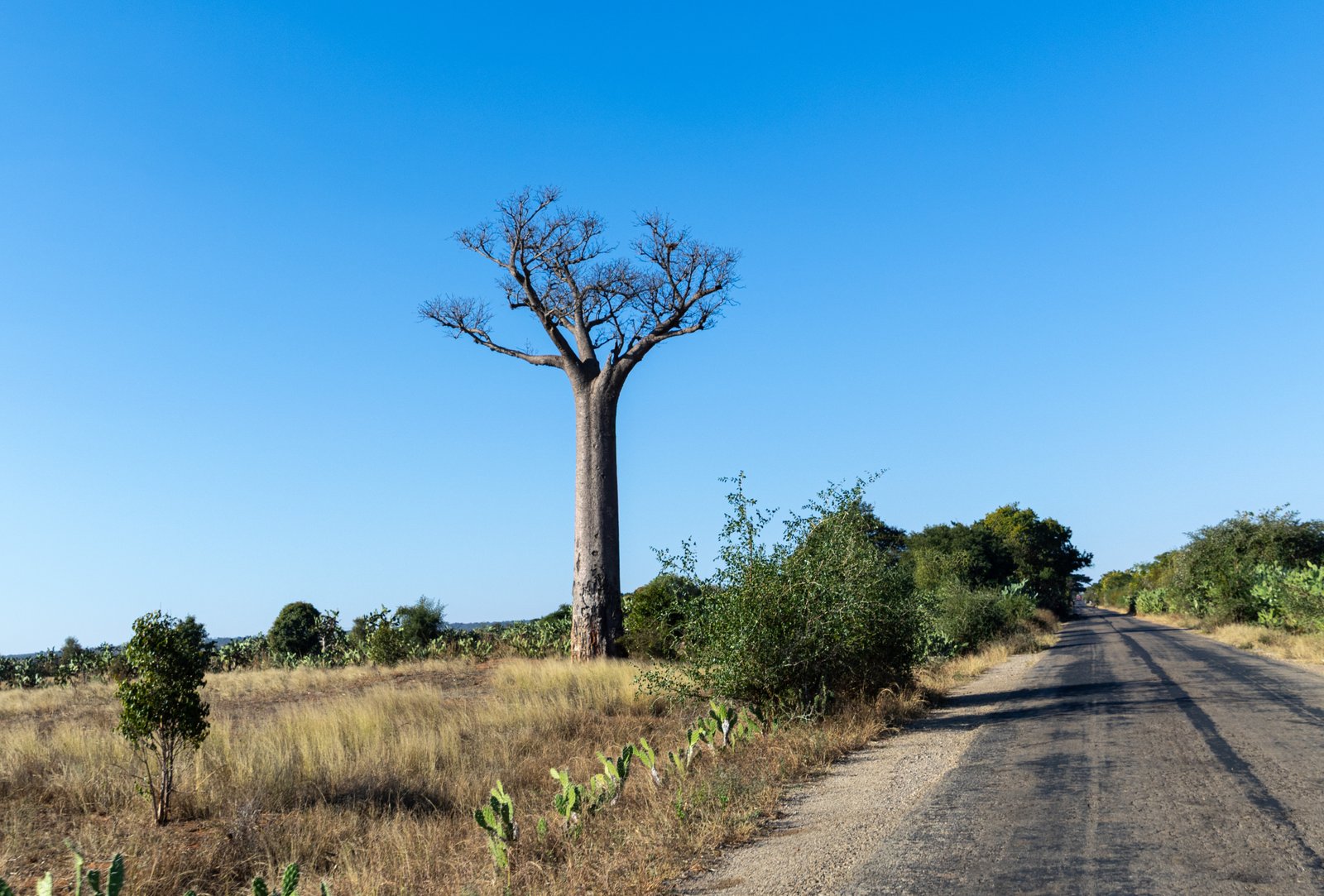
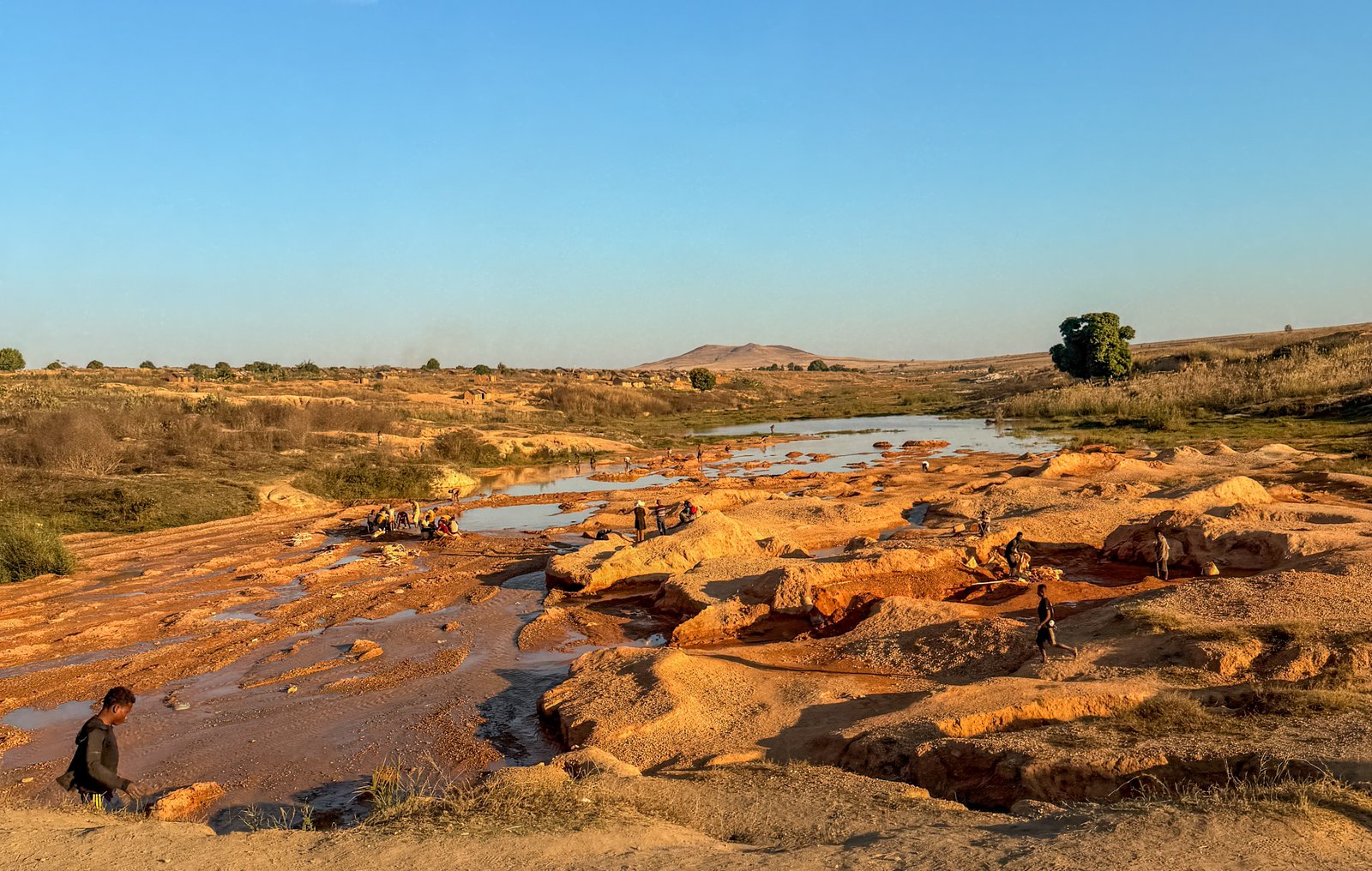
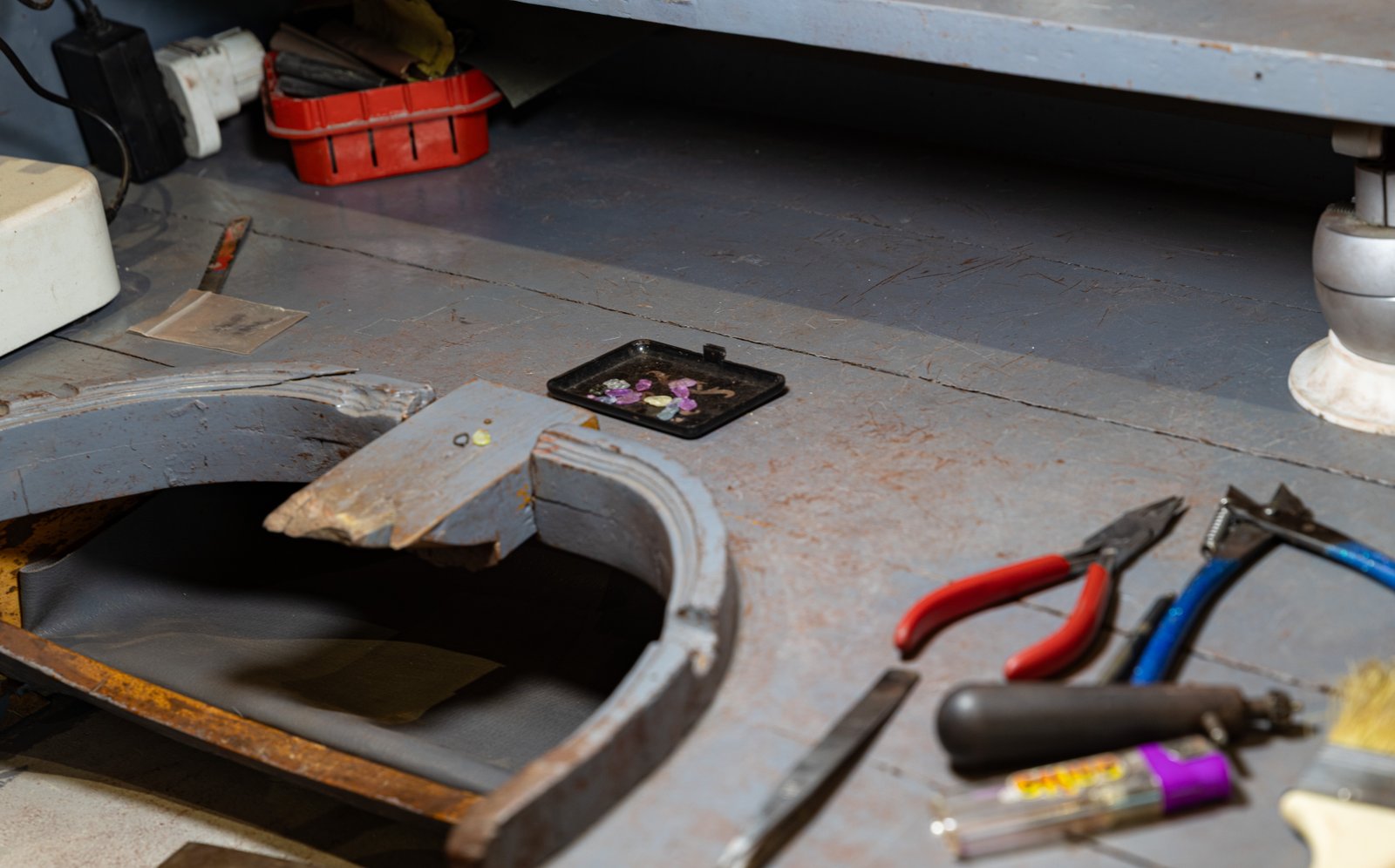
As we drove further on RN7 we started passing through more small towns, many of them with large signs and storefronts for gems. We learned that this area is really big for mining sapphires. Did you know that sapphires come in a whole rainbow of colors? This area is known for some of the rarest colors which are pink, violet and light orange. We stopped in the town of Ilakaka, where one of the world's largest deposits of sapphires was discovered only as recently as the late 1990's. The town boomed from a population of less than 100 to over 50,000. We could see the land was pitted with holes and workers out with their axes and shovels. We stopped at a gem shop that had a detailed display explaining how the stones are mined and later turned into gems. They also had a showroom of many different color sapphires for sale. It was interesting to learn about the process but we had mixed feelings, even though they claim their working conditions are ethical.
We ended our day, making it to the Isalo National park area just before sunset. We checked into our lodge for 2 nights, one of our more upscale stays, at the Hôtel le Relais de la Reine. We said goodnight to JB and Michel who are provided accomodation on the property, as is custom here since all tourists come with a driver and guide. After dinner at the hotel, we got to bed early as we had to be ready by 7am for our day in the park tomorrow.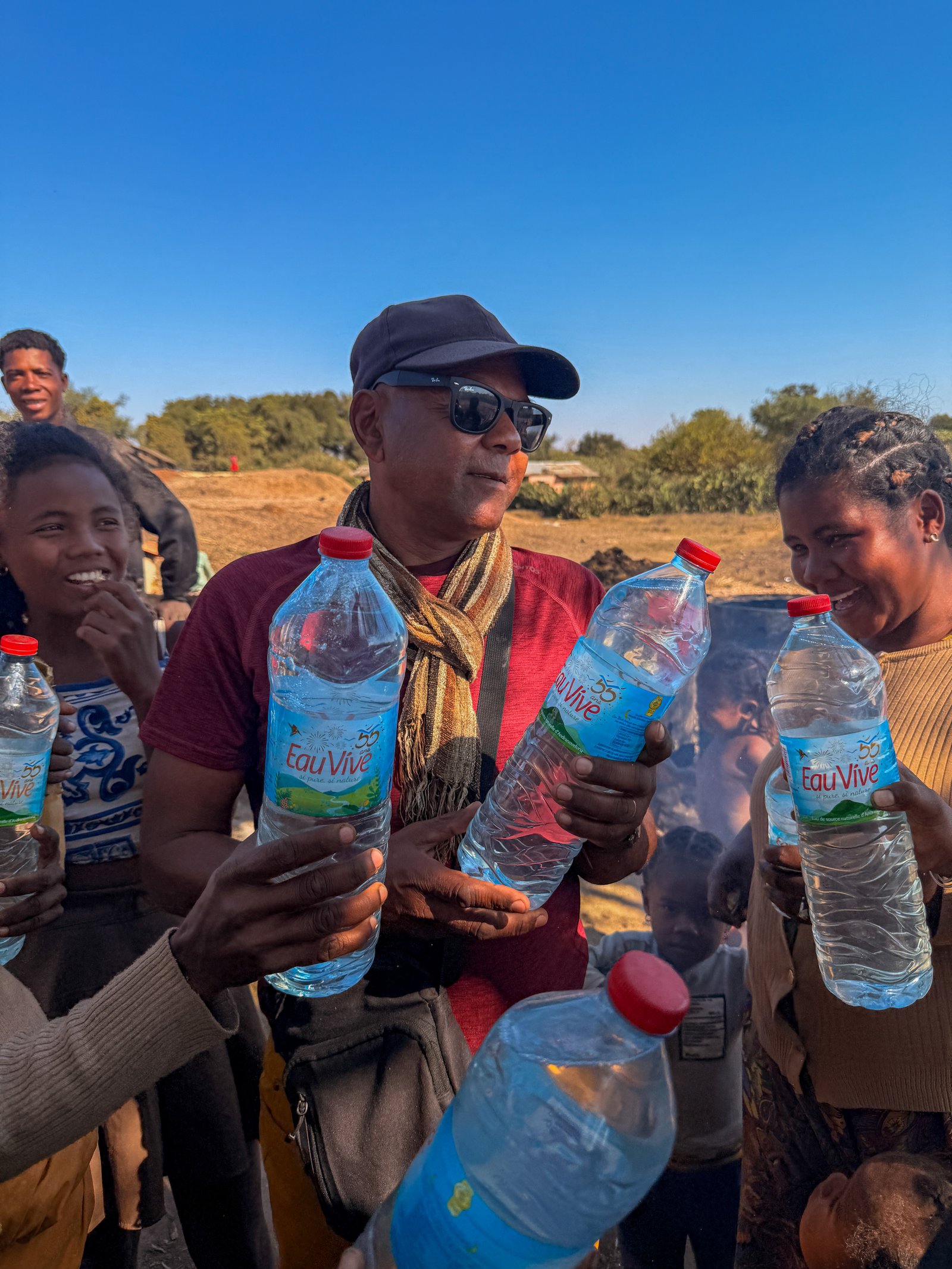
Isalo National Park
Today was a full day of seeing the beautiful Isalo National Park! We left early, at 7am, and seemed to beat most of the other tourists into the park. First, we had to stop at the park office to register, pay and get the required NP guide. These fees had already been included in what we paid for JB's proposal. Soon, we were on our way with our guide Denis, who spoke excellent English. He's been guiding these tours for 20 years and knew so much about every plant (including its uses in traditional medicine), birds, insects, and the lemurs. We had no idea how long our hike was going to be today, with mixed reports online about the loop we were doing.
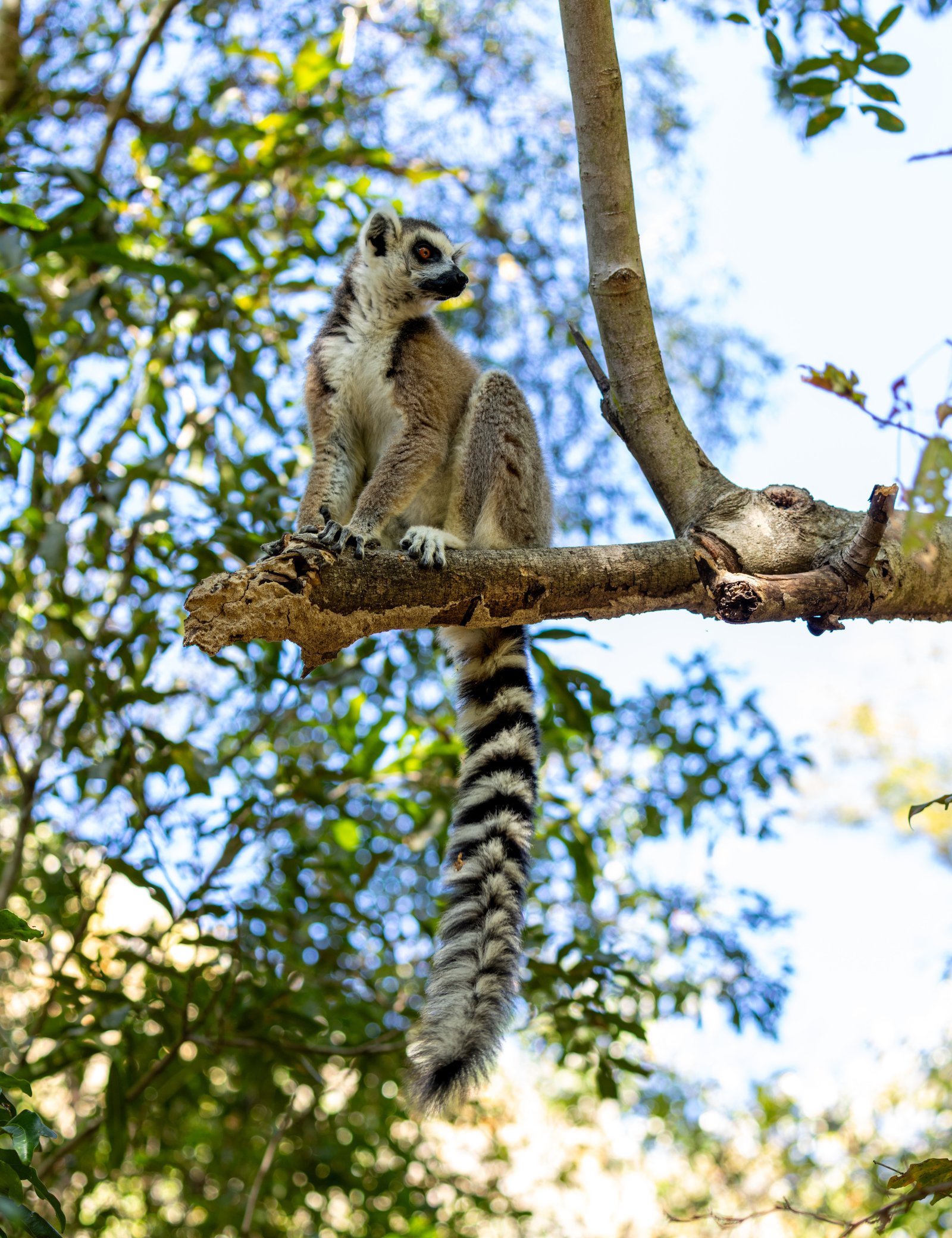
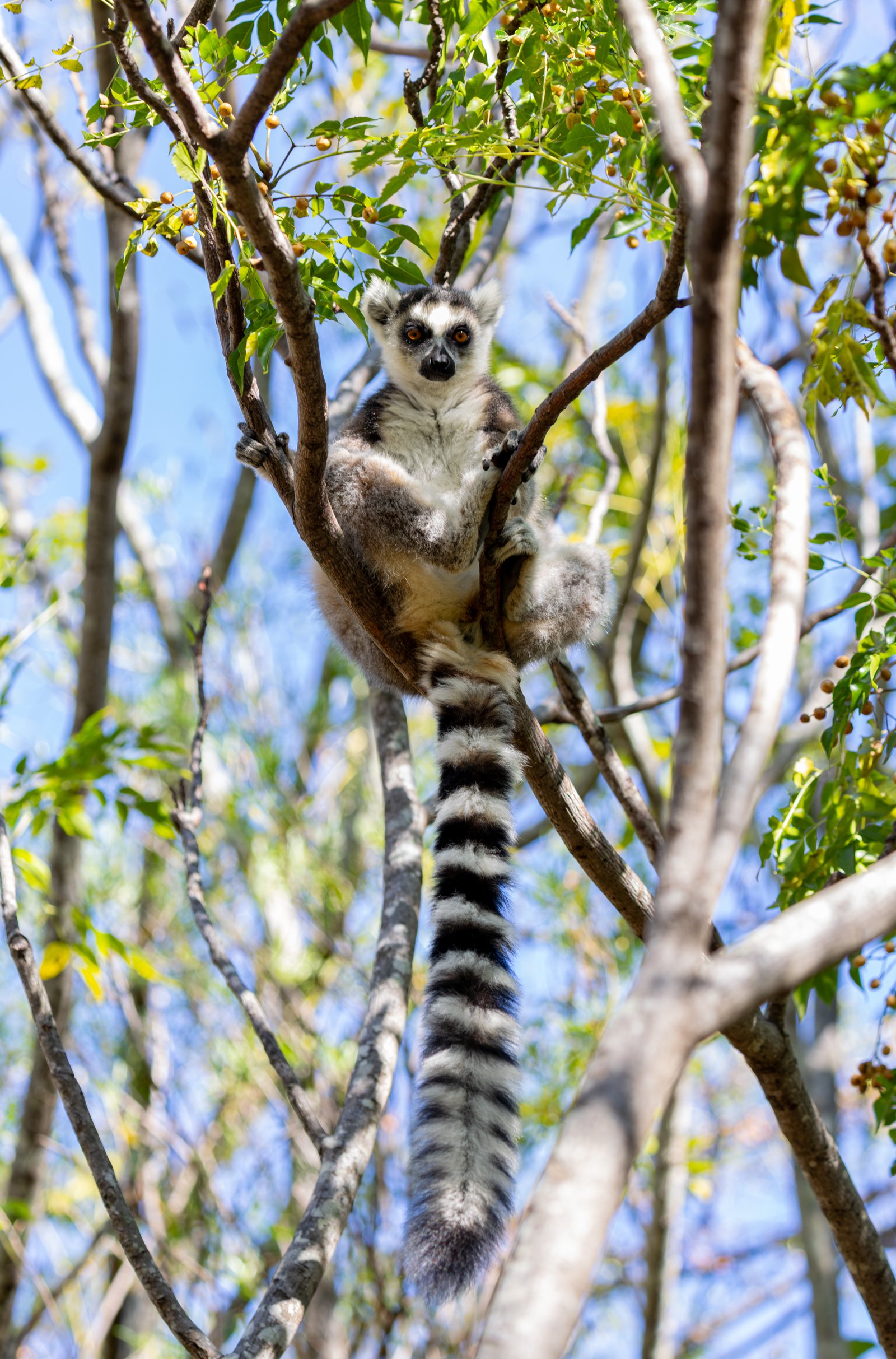
The landscape was beautiful and Denis called it the "Colorado of Madagascar" but we find it is similar to Western Colorado and also Utah. We hiked up to a viewpoint to see the area and then made our way down across a desert-like terrain where we arrived at an oasis where there was a clear fresh water pool and waterfall with many palm trees. We were offered to take a swim but it was only 9am, so we just enjoyed it and then moved on. We hiked for a while across more desert where the temperature was already rising. We reached the edge of the canyon wall and descended into a lush valley with very different types of trees. This is where we saw our first group of ring-tailed lemurs! The made the cutest noises and hopped from one tree to the next.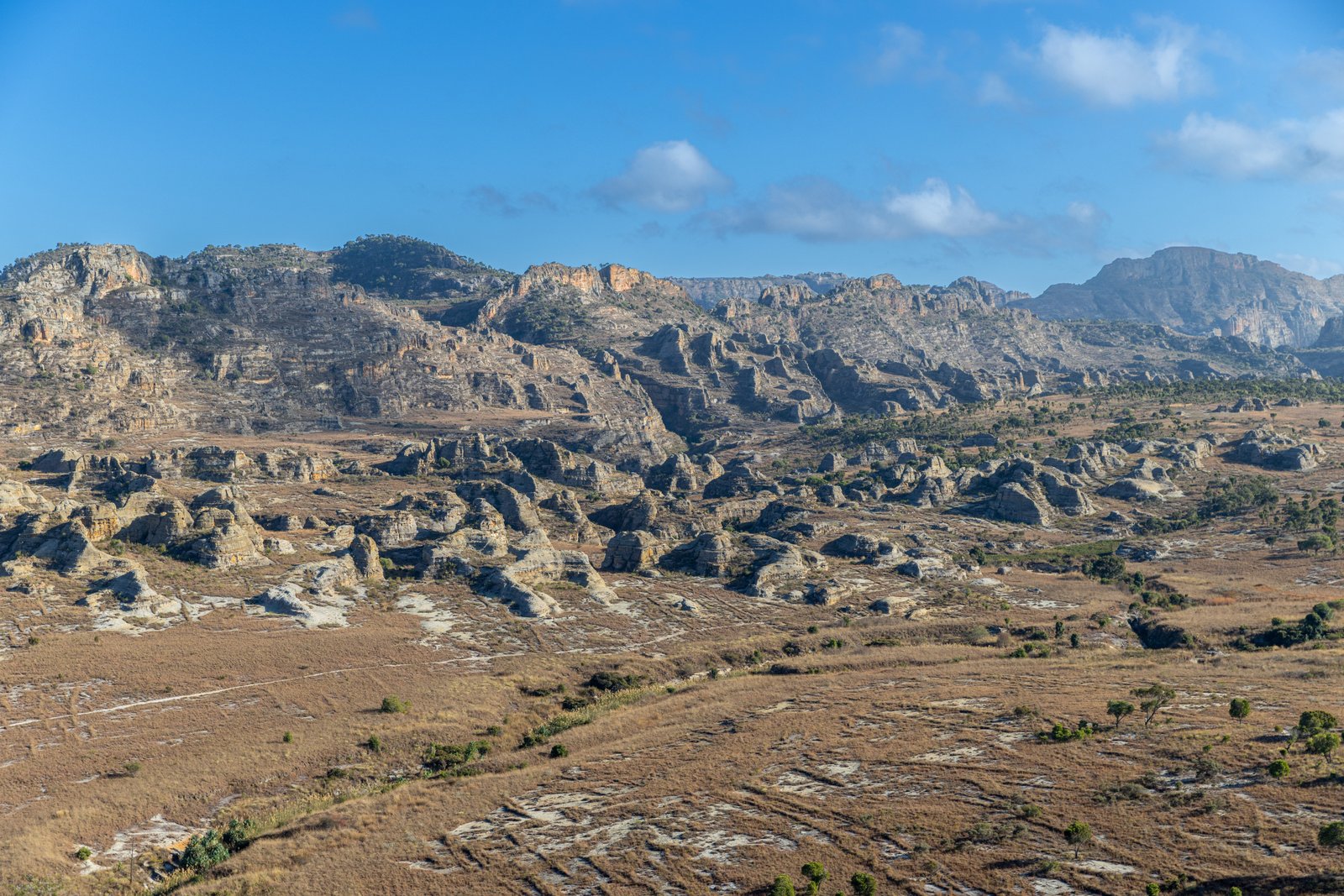
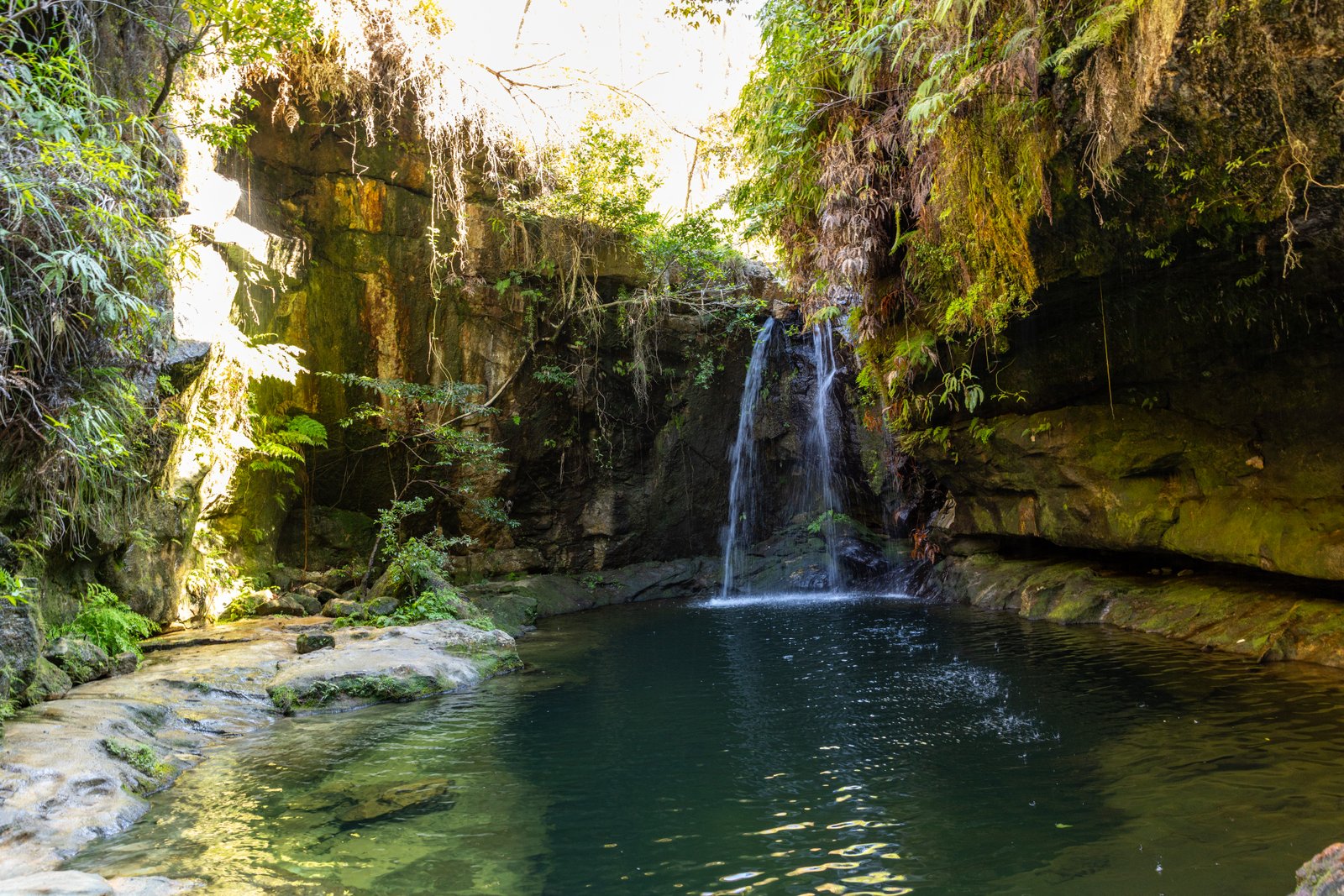
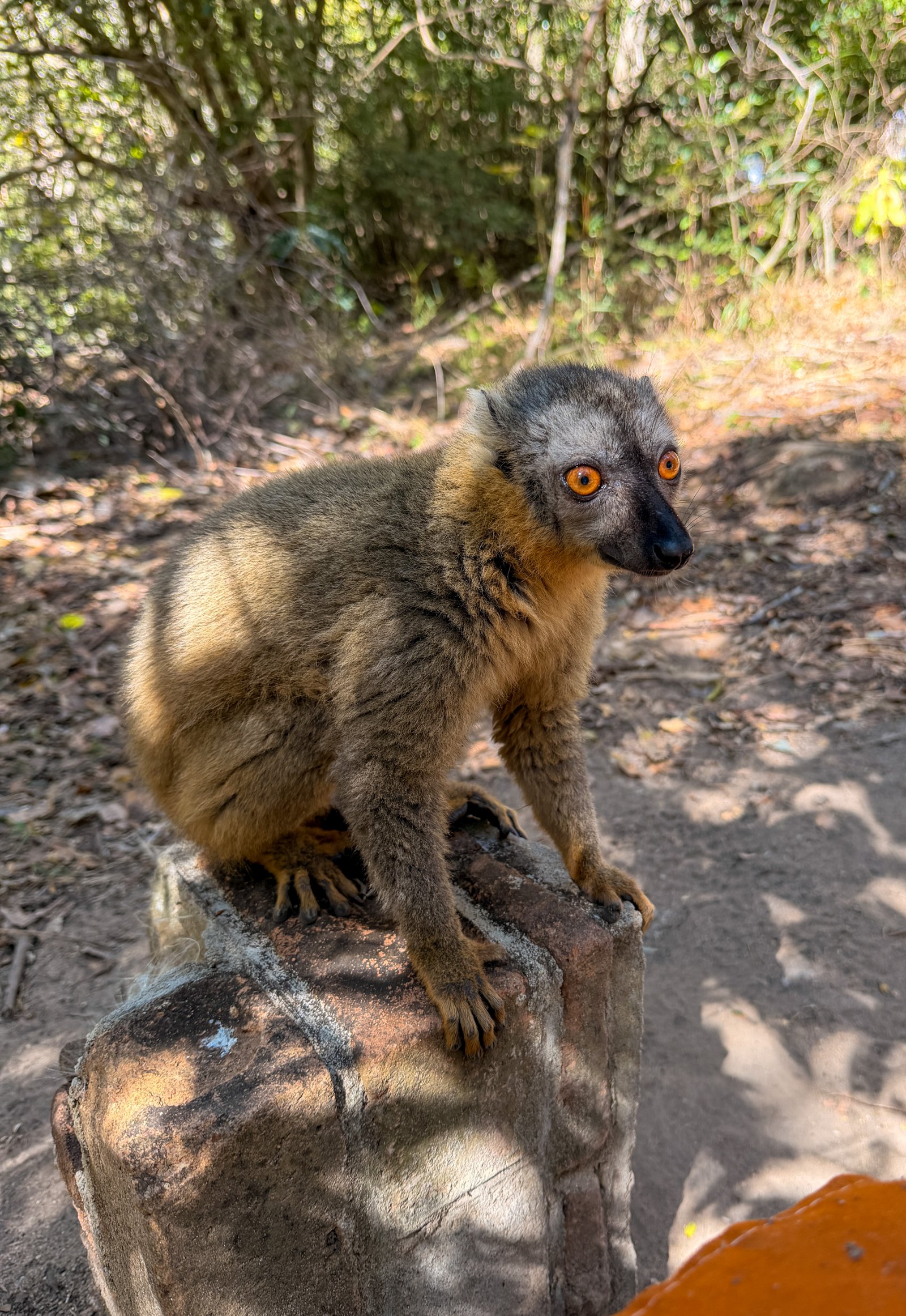
We passed through a campground where we would return for lunch, and on to see the blue and black pools. By then we were tired and hot and eager for a swim. After another 30-40 minutes, we reached the pools and swam in the cold water before returning to the campsite for our lunch. We're pretty sure the lemurs know about lunch time at the campsite because they were all around and very aggressive once you had your dessert of banana and pineapple delivered the the table! We had to fend them off while trying to take up close photos of them and the brown lemur even tried to jump on and grab Bryan! After lunch was a short hike out where our driver was waiting. All in all, the hike ended up being 6.75 miles, starting around 8am and finishing around 1pm. We rested up for a bit at the hotel and then went out to see the sunset at the Isalo window, a popular spot with many tourists trying to see the sun setting through a natural rock window. We had the best tour guide however, as we were the only ones with rum drinks mixed with ginger and a vanilla flavored tree bark, made from the rum purchased at the roadside distillery yesterday!
Back to Top
Link to Madagascar Photo Galleries
Day 12: Driving to Ambalavao
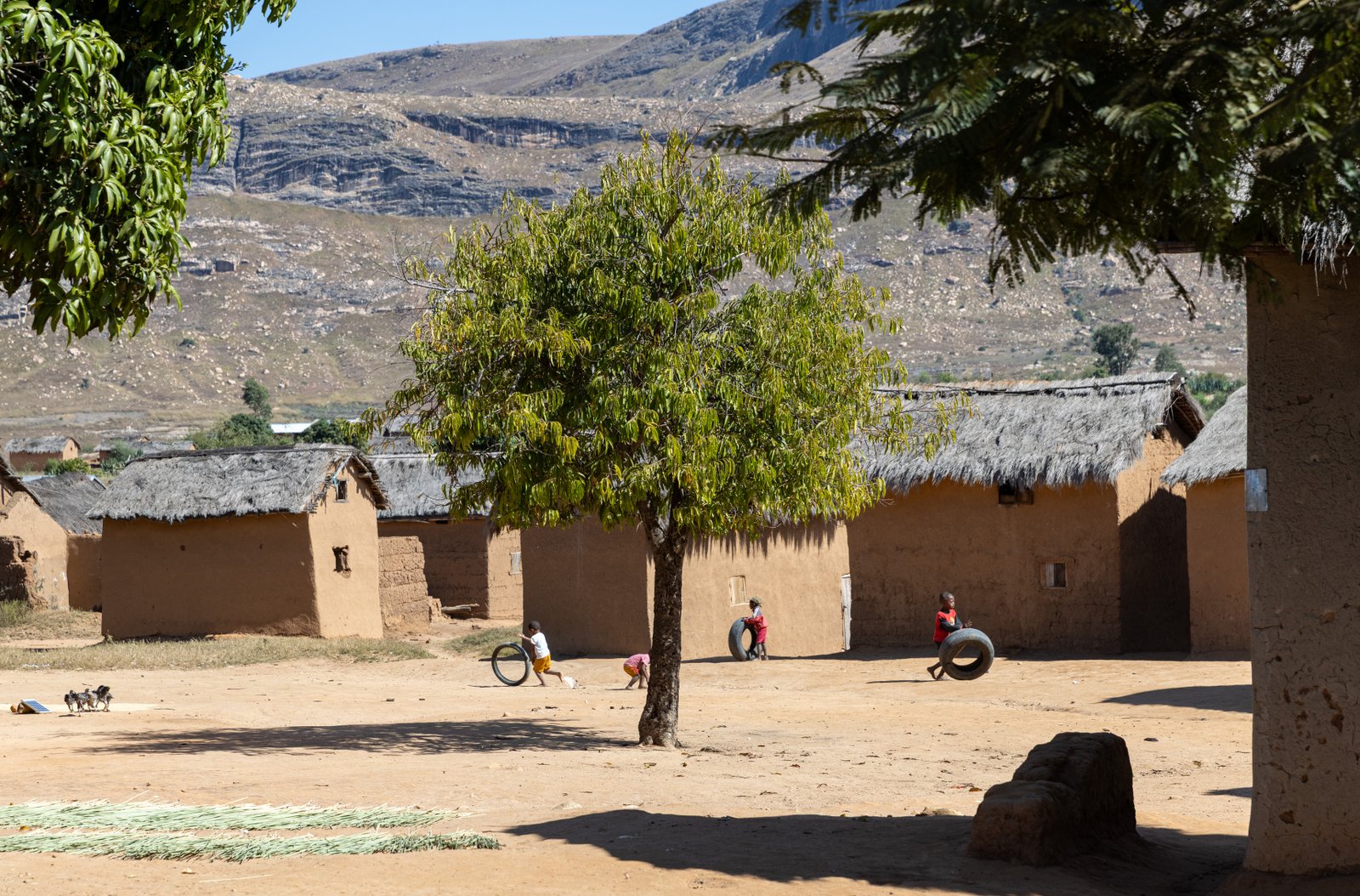
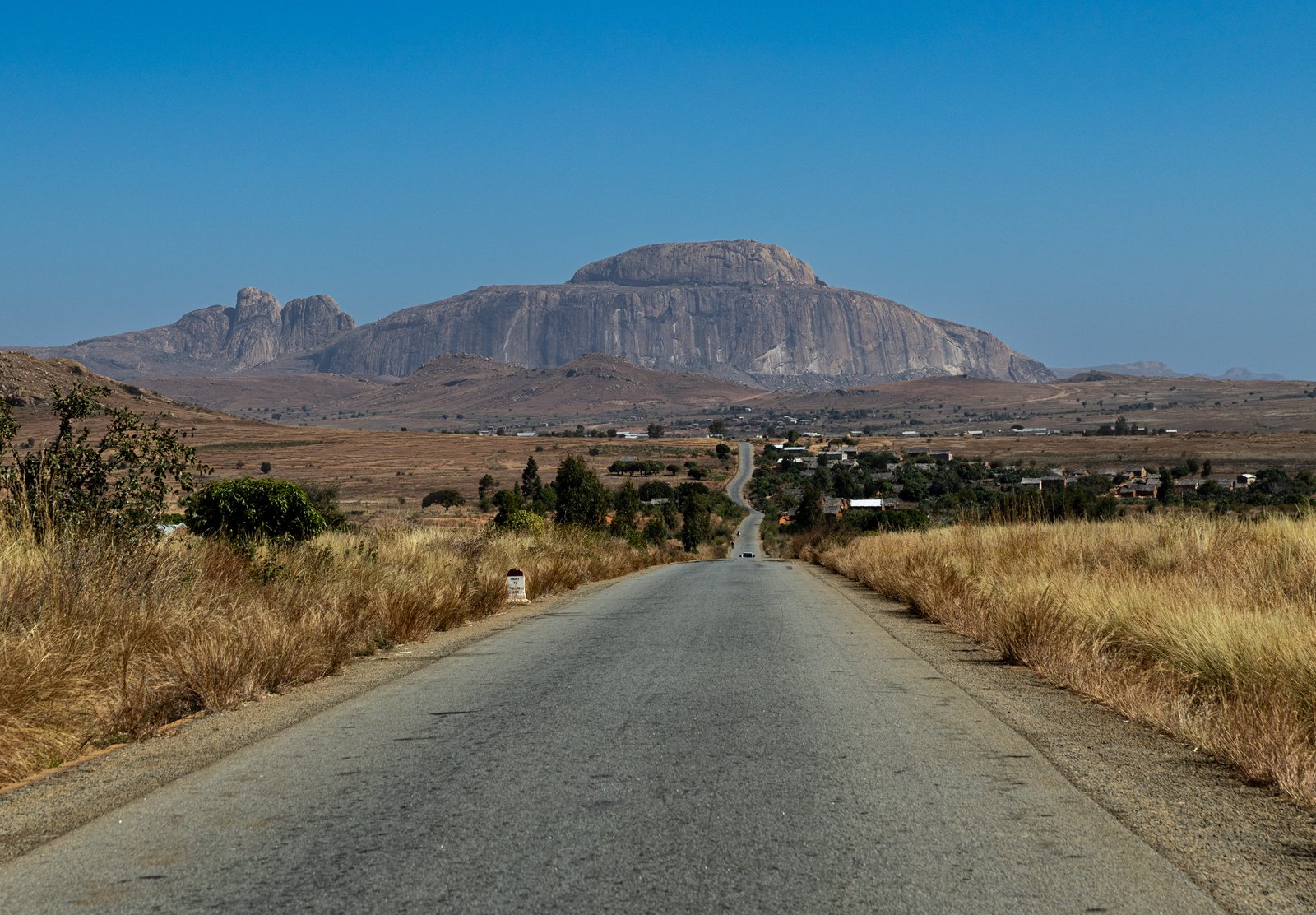
We had a shorter driving day today with only about 4 1/2 hours to get from Isalo to the town of Ambalavao. Ambalavao is the home base where JB and Michel reside and is a good middle ground for many of the destinations in Eastern Madagascar. We left the sandstone of Isalo and soon were surrounded on all sides by rural plains. It felt like we had just crossed into Kansas. From there, after nearly 2 hours on some of our best road conditions yet, the landscape changed again with granite peaks rising all around. We passed very few towns on the plains but had more and more towns as we got further East. We even pulled over on the side of the road once to take pictures where there were no cars passing by for many minutes, only one man on a bicycle. On the way, it was interesting to see that many people are hand making bricks using the red dirt and mud of the area. This was something we have seen throughout a lot of our driving, not just unique to one area. Many rural homes are made from the bricks and covered in clay mud with thatched roofs on top.
As has been typical in Madagascar, there were several police stops stationed along the way. They seem to be at the entrance and exit of some towns. Usually they may check documents of the driver, but near the end of our day today there were two who needed Michel to get out and have a conversation with them. It turns out, they were upset about the back window tint on the car, as it is not allowed. He explained to us later that you need required paperwork for each area and that he explained to the police the window tint was for security of the tourists baggage. We were able to pass after a small delay. Near Ambalavao, we stopped to have lunch and visit a lemur reserve for about 2 hours. After reaching Ambalavao, we were able to visit several unique workshops with local artisans, where we learned a lot.
We checked into our hotel at the Tsienimparihy Lodge where we had a basic but comfortable bungalow room. We had dinner with Michel, which was a treat, as we learned so much from him during that short time. We had a lot of questions about Madagascar's history which he was able to clear up, as well as general knowledge on how the tourism industry works. Ready for bed, we got some sleep before our big hiking days which will begin tomorrow!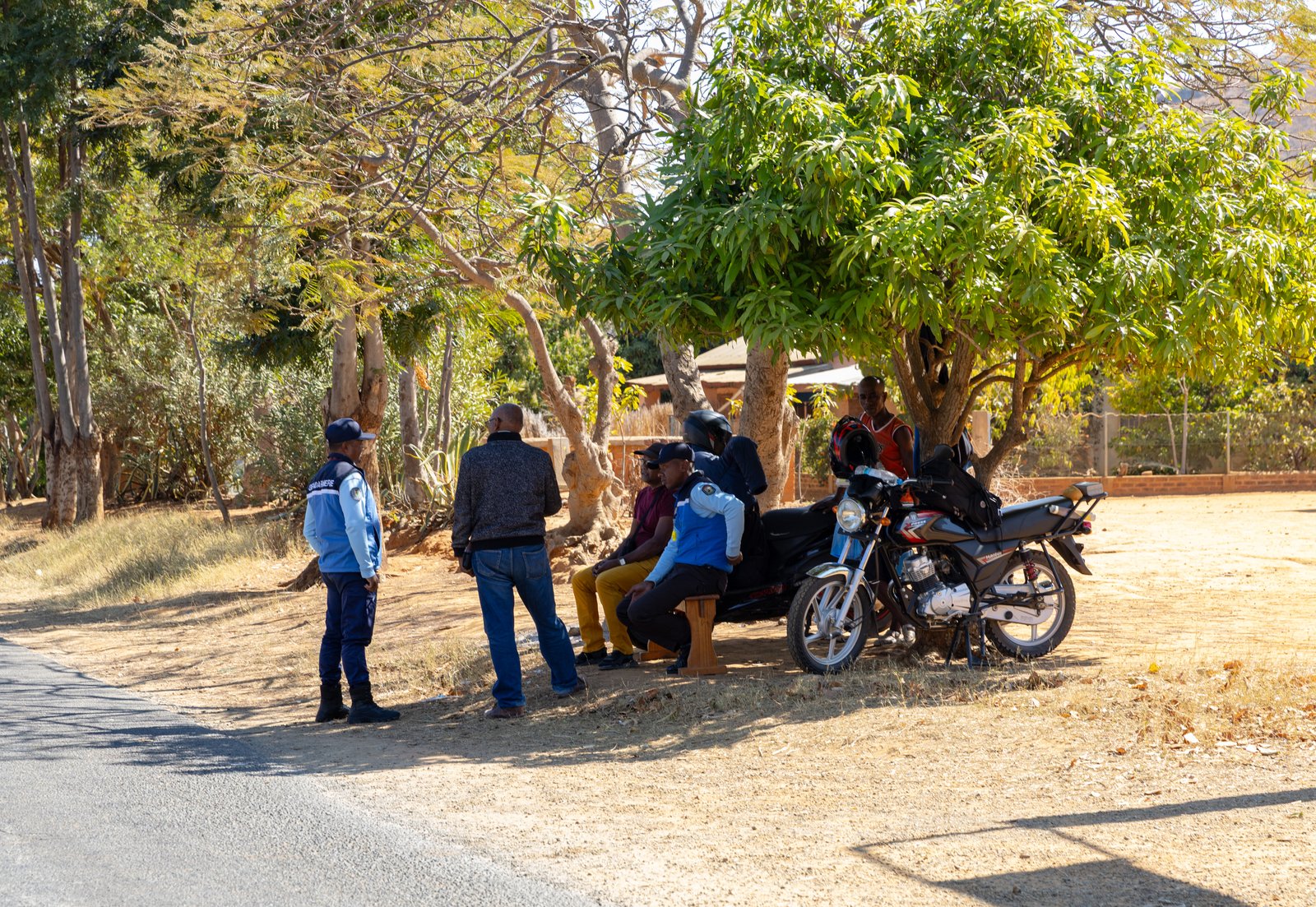
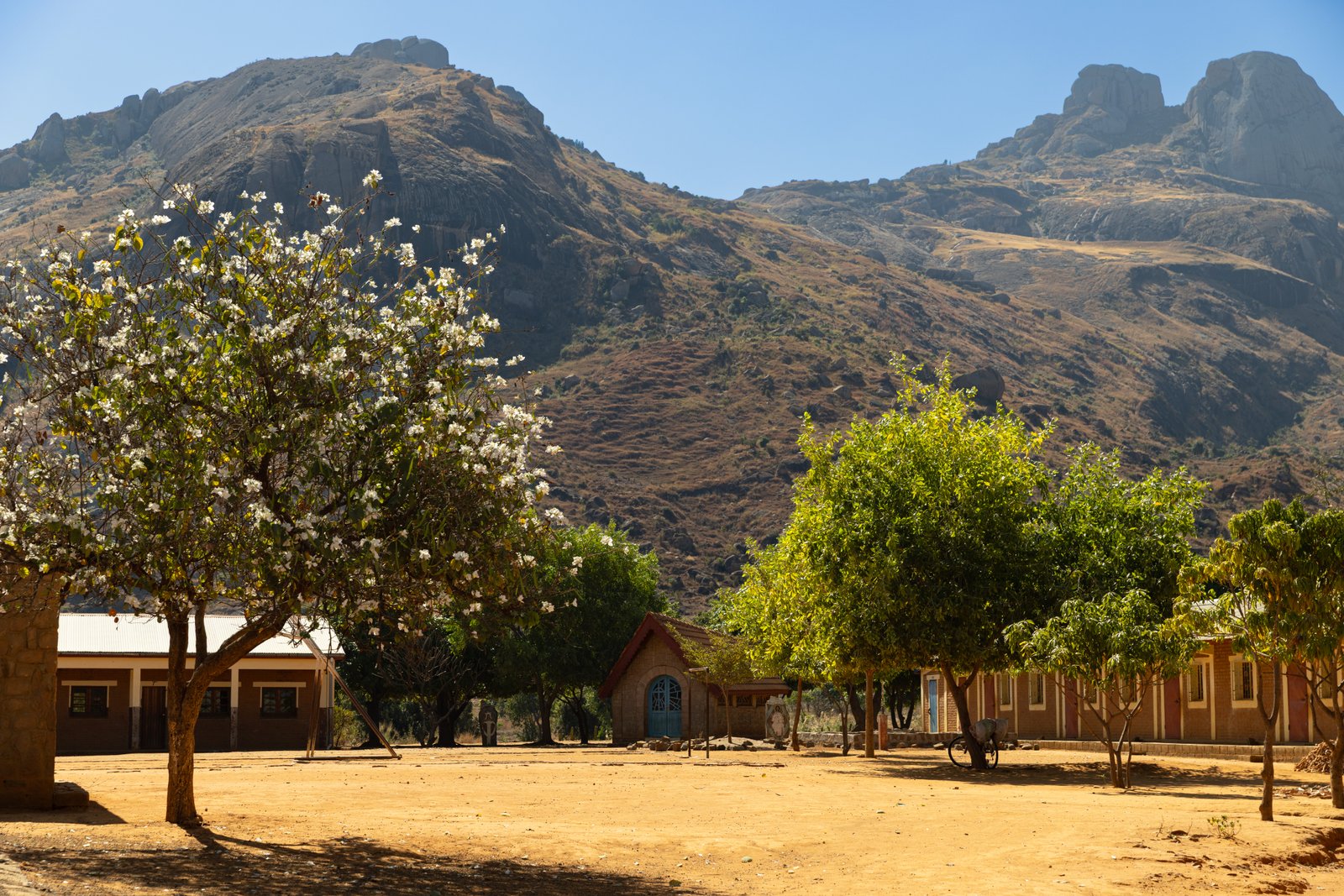
Anja Lemur Reserve
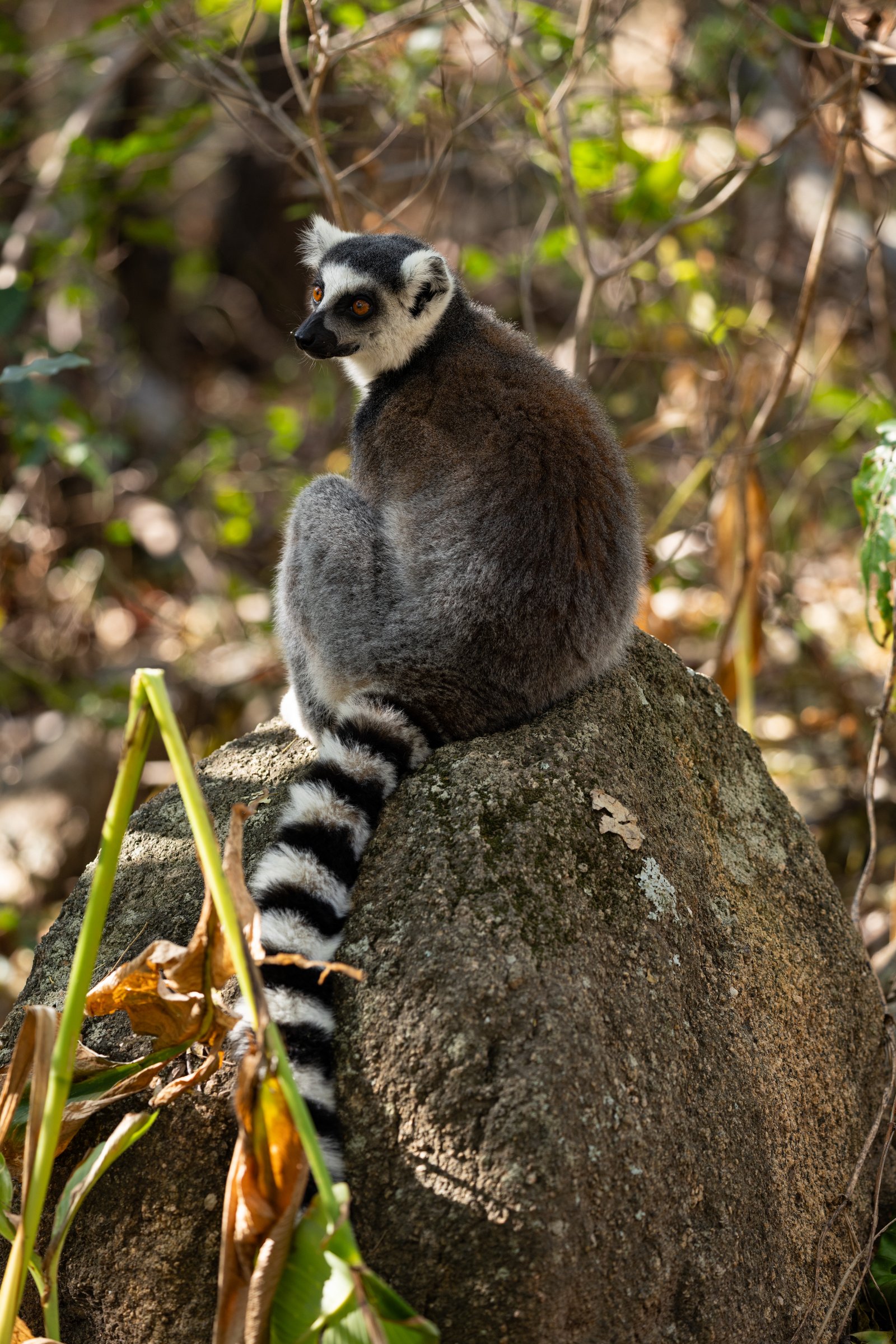
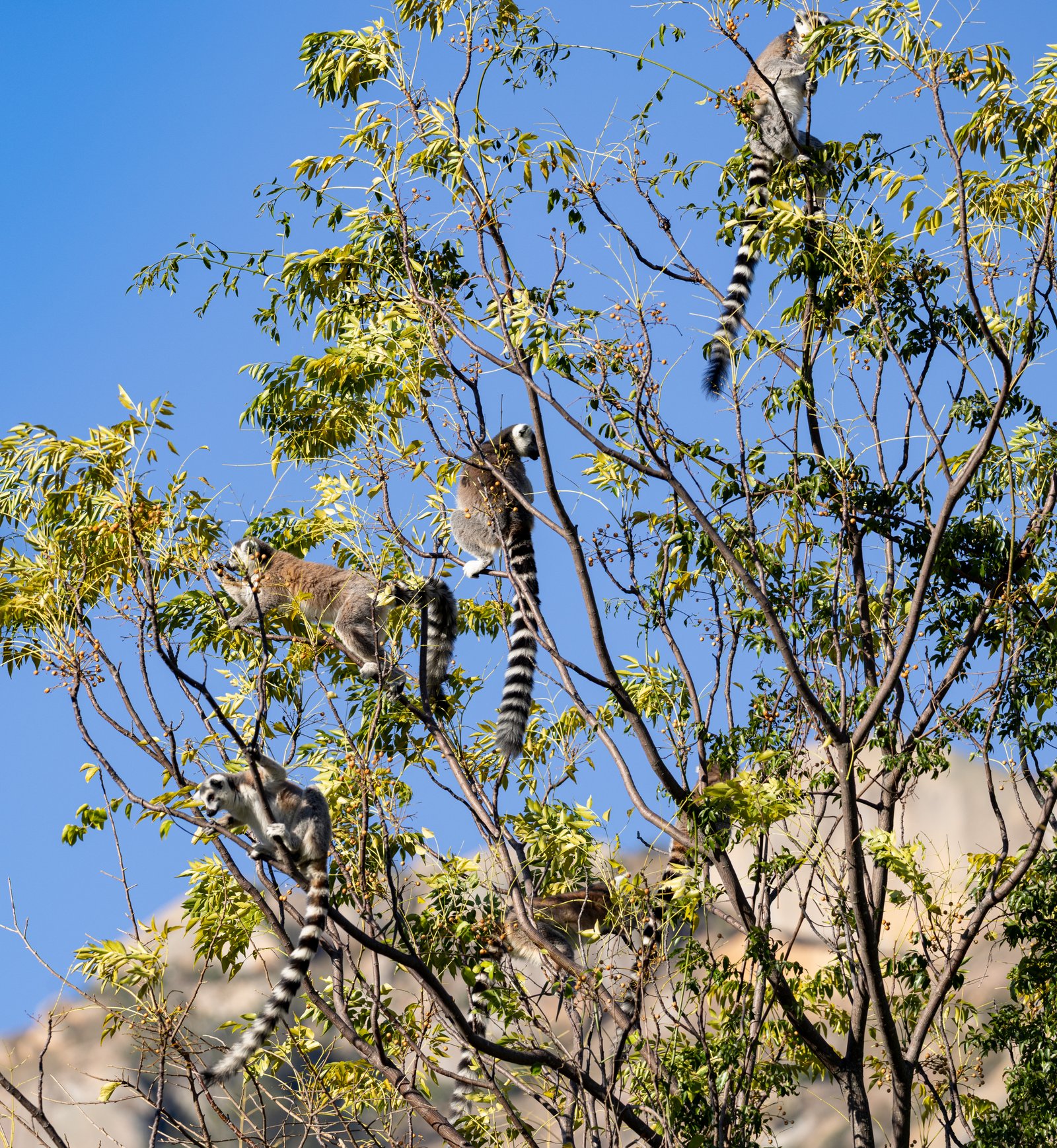
The Anja Community Reserve is located just outside of the town Ambalavao, and is a low-key experience in a small forested lemur reserve hosting ring-tailed lemurs. JB had called ahead to reserve our lunch and guide for the park. When we arrived, lunch was ready in minutes and we ate before heading out on our walk. We were paired with a very experienced guide named Adrian, who has been working there for 26 years! Also joining us were two younger spotters who helped locate the smaller hard to find animals such as the chameleons. Adrian had a vast wealth of knownledge and spoke very good English. We learned all about the lemurs habits during different seasons, who their different predators are (boa snakes and birds mostly), how they form tribes and that they usually give birth to one at a time. A fun fact we learned is that the ring-tailed lemurs all have 14 rings on their tails.
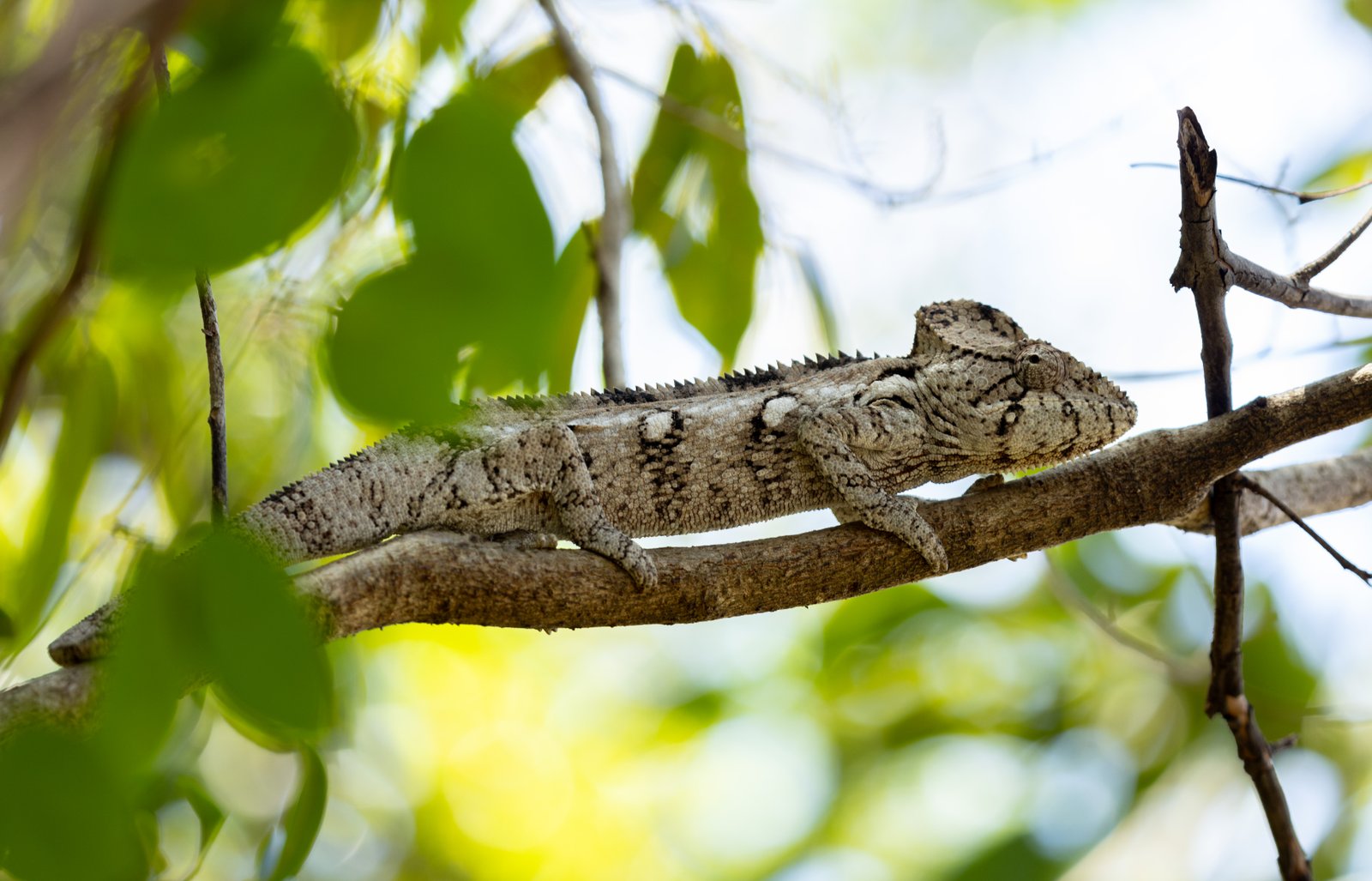
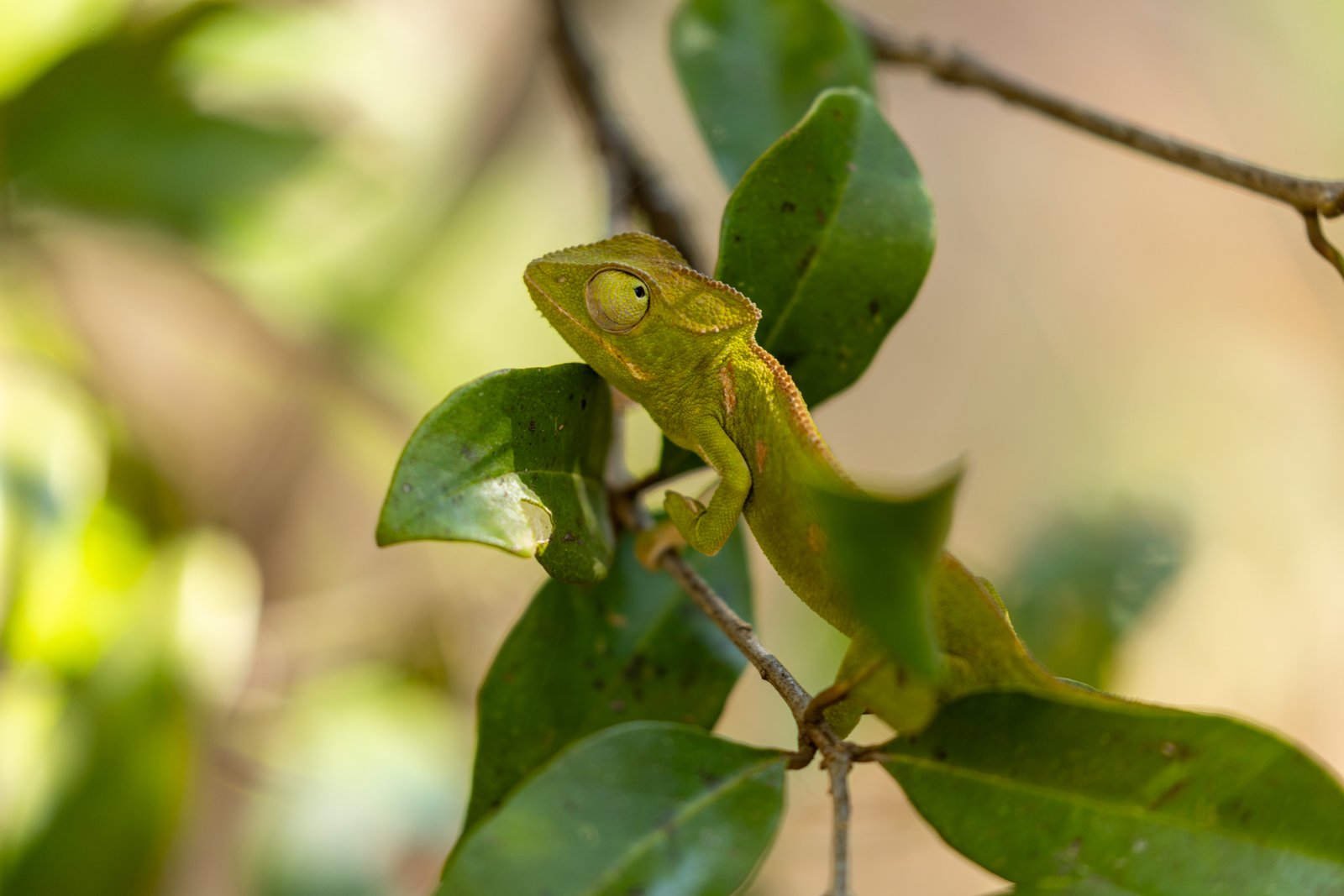
The Anja community was once known for hunting the lemurs because they destroyed their crops (apparently, lemurs love tomatoes!), but we learned that the reserve was formed in exchange for providing the farmers with special tactics on rice farming to increase their yield. The community promised to preserve the lemur population and it has grown significantly since then. On our walk, there were many ring-tailed lemurs about, and we were able to watch them as they snacked on the tree leaves and berries, and sunbathed. There were also several species of chameleon, very hard to spot unless you are looking very closely. There were several green chameleon and the others were brown and white. It was an enjoyable walk in the reserve which also backs up to stunning granite cliffs, perfect in the late afternoon sun. For the tour guide and entrance fees, we paid 120,000 Ar ($28) plus tips to the guides.
Ambalavao Artisan Workshops
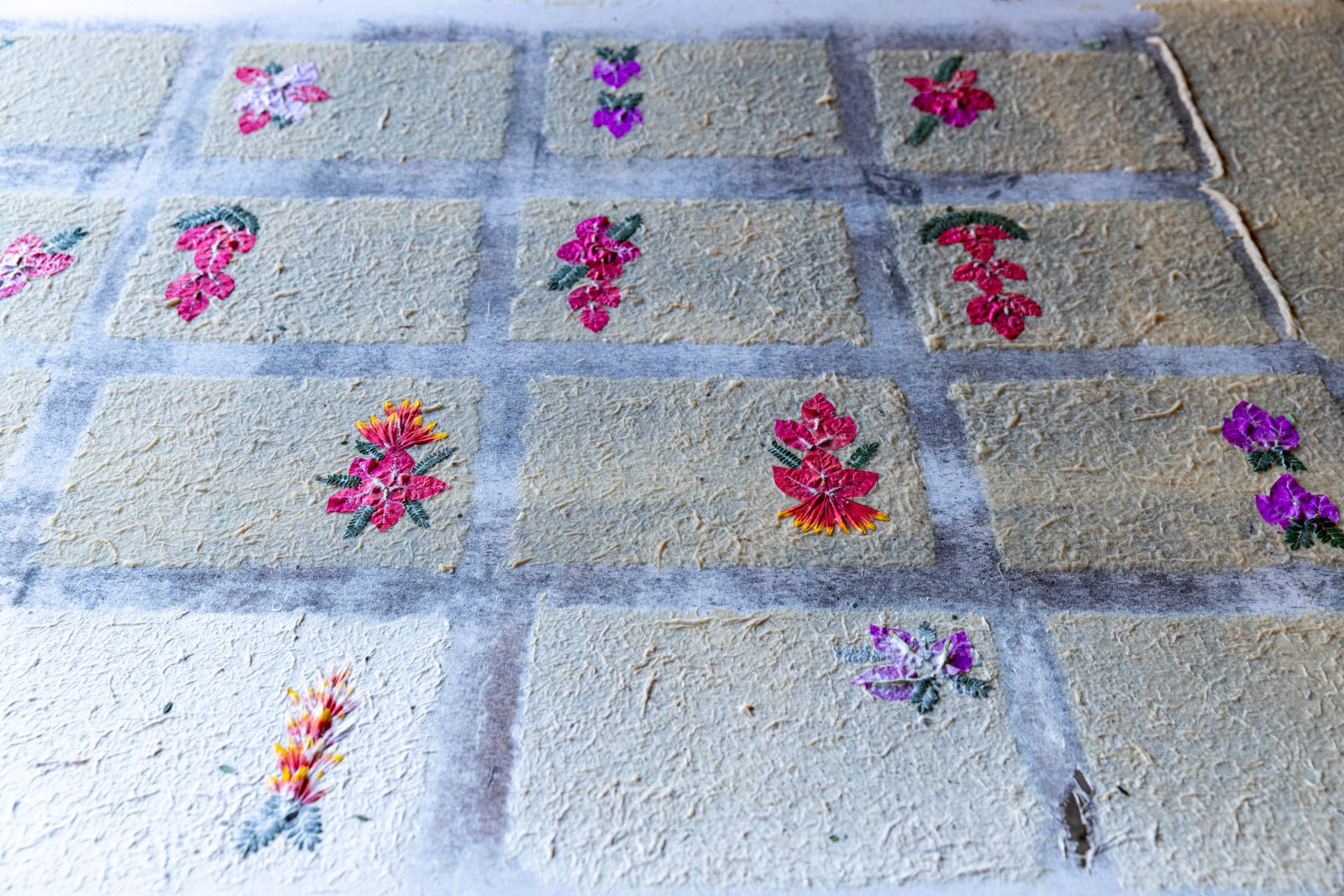
Once in Ambalavao town, we made three quick stops to see different types of handicrafts produced in the area. This was all led by Michel, as we dropped JB off to go prepare everything for the hiking tomorrow. First, we stopped at a paper making workshop. The paper making here was first introduced by the Arabs, in order to make special papers for their Koran. It was later discovered and adopted by the French and made into more of a tourist production. Here, they make paper using the bark of a tree. They need to simmer and smash the pulp, then spread it out on mats, cut it and then decorate it with fresh pressed flowers before drying it. The paper workshop was already closed for the day but Michel did an excellent job of describing all of the steps to us.
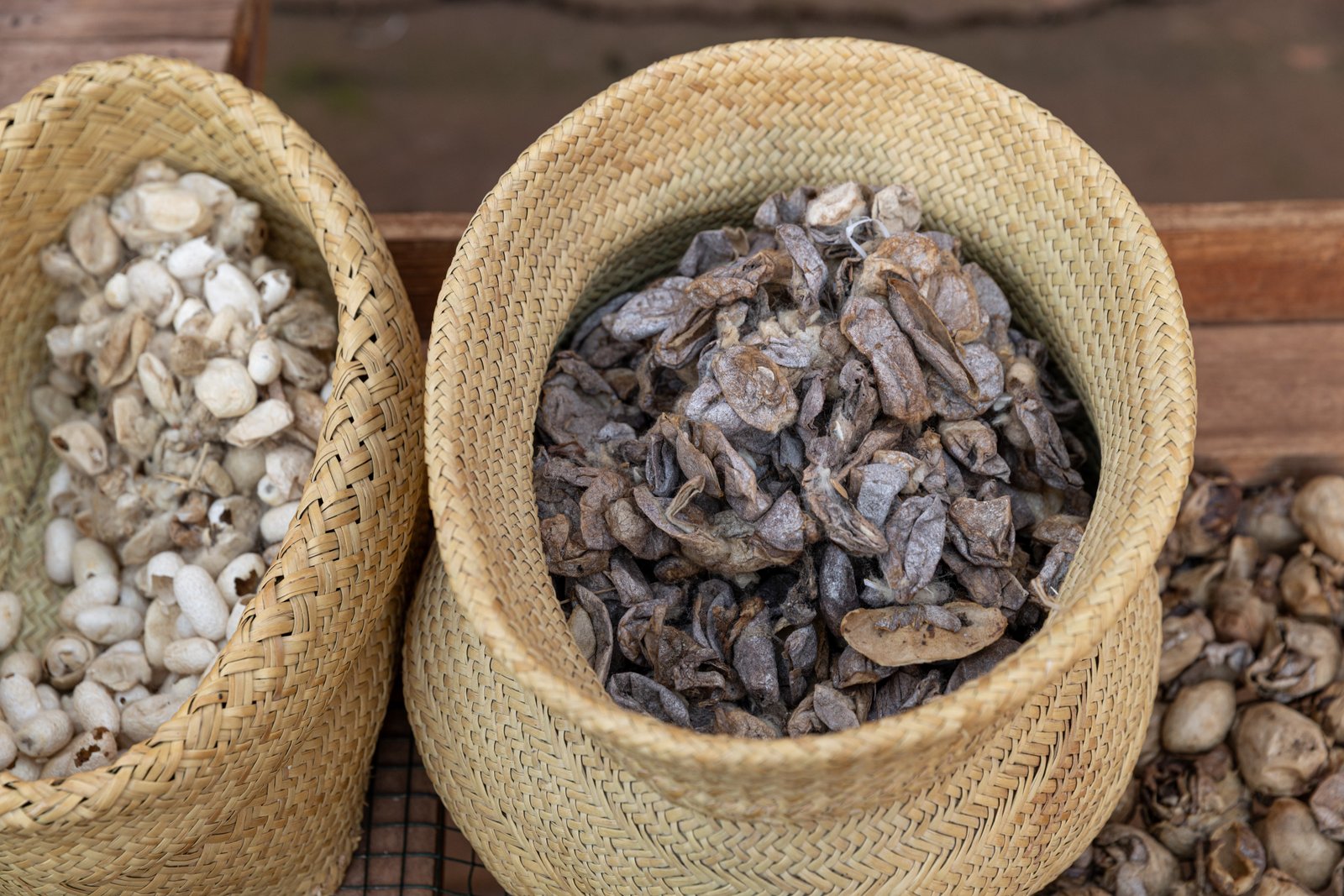
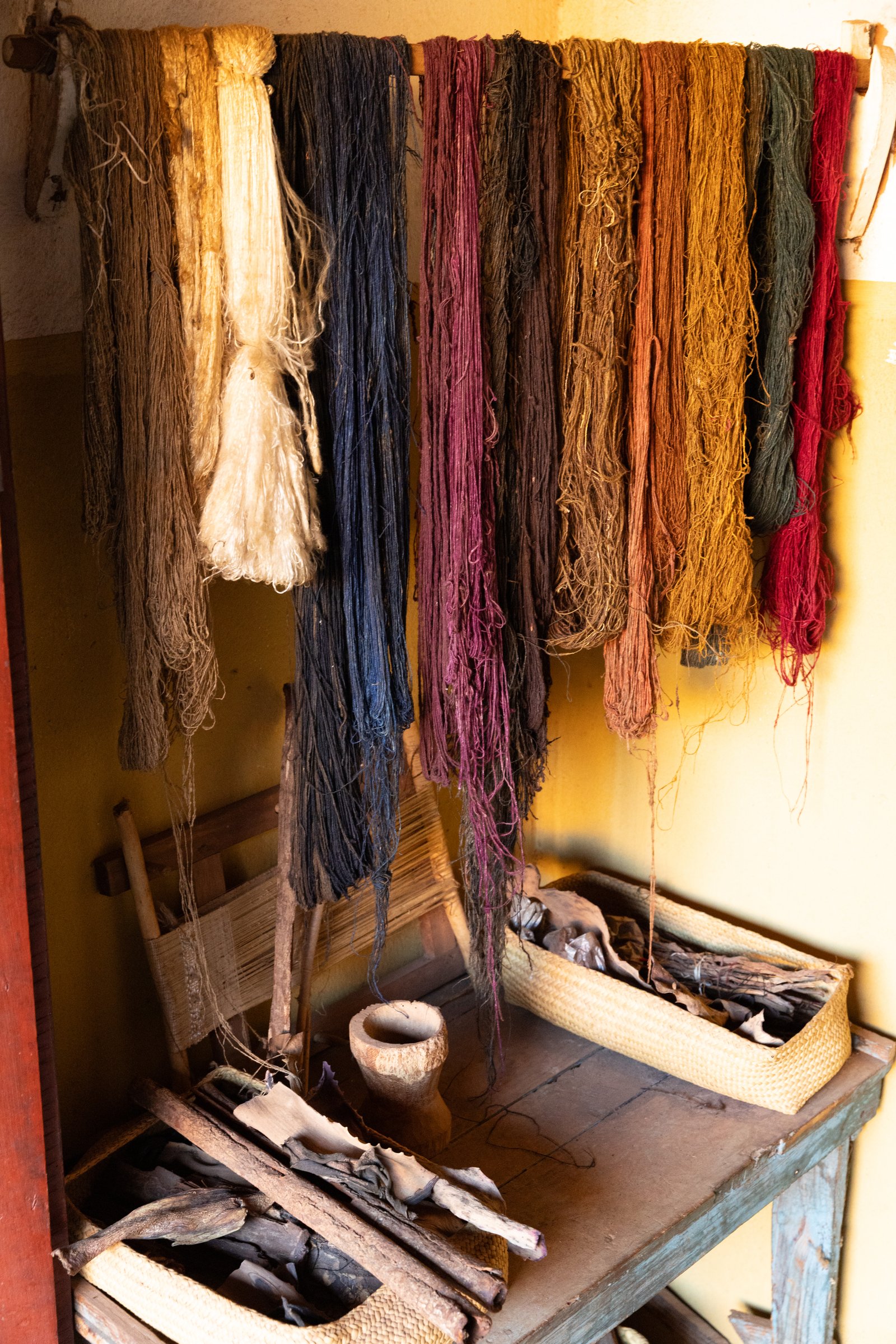
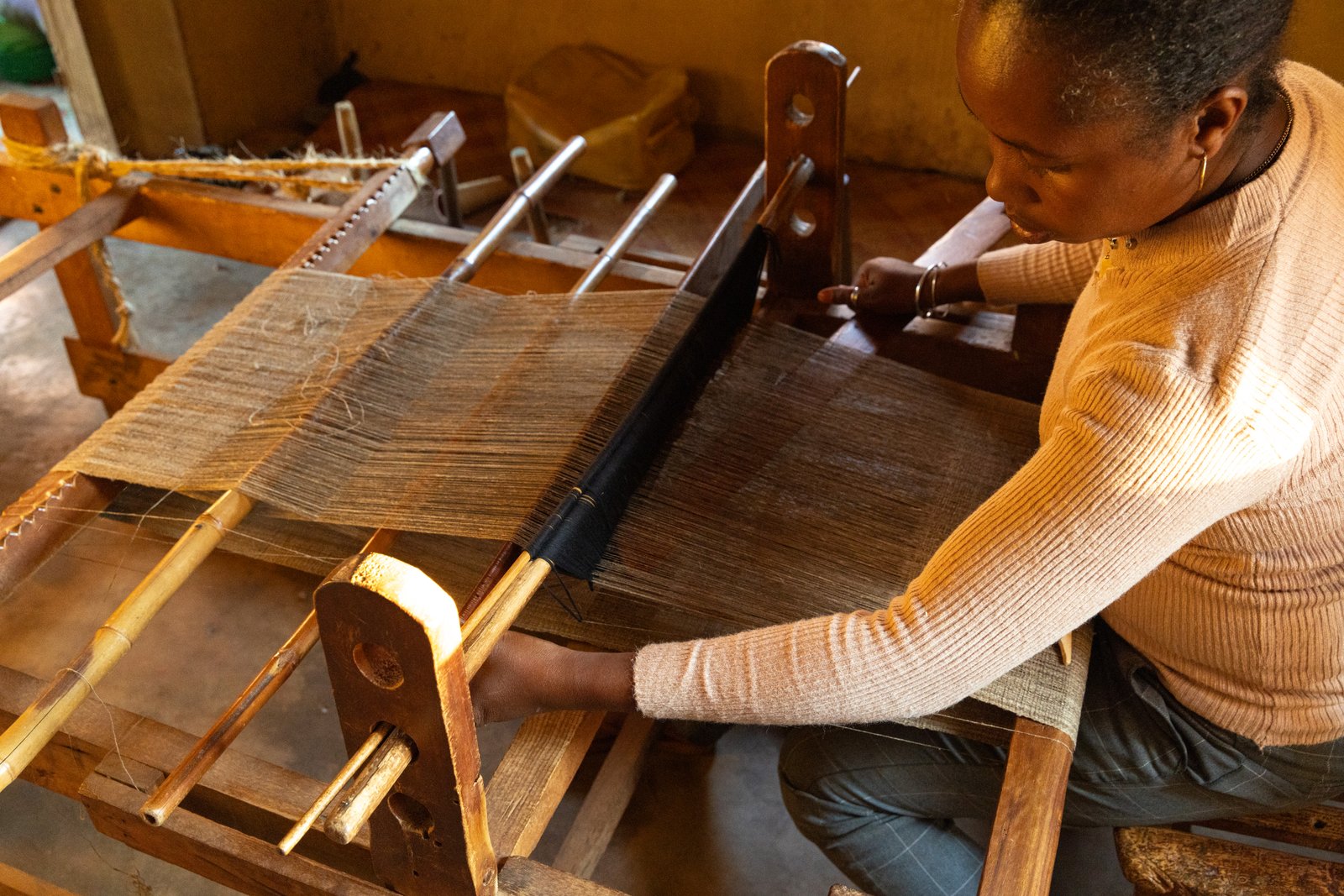
Next up was the embroidery workshop. It was a quick stop to visit a storefront for handmade embroidery products. We were impressed by the workmanship and found a small embroidery square to purchase and plan to frame it at home. The cost was 60,000 Ar ($14) and we didn't try to negotiate. Our final stop was to visit a silk workshop. For this one we got the full tour of the different kinds of silkworms, naturally found and farmed. The two types are actually quite different and the process very long for the naturally found silk worm cocoons. The natural ones are processed and then cooked for several days, then taken out, washed and dried before being hand spun into the actual thread. We were able to see all of these steps in process. After the thread is made, it is dyed into a handful of colors all using natural techniques such as rosewood bark for red or papaya leaves for green. The dyes are fixed using natural methods and hand woven using a hand loom. Very impressive! We left there with a scarf, which will come in handy during the cold nights on our upcoming camping trip! The scarf was 150,000 Ar ($35) and we didn't argue about that price after seeing the entire process of natural silk making!
Back to Top
Link to Madagascar Photo Galleries
Day 13-15: Trekking in Andringitra National Park
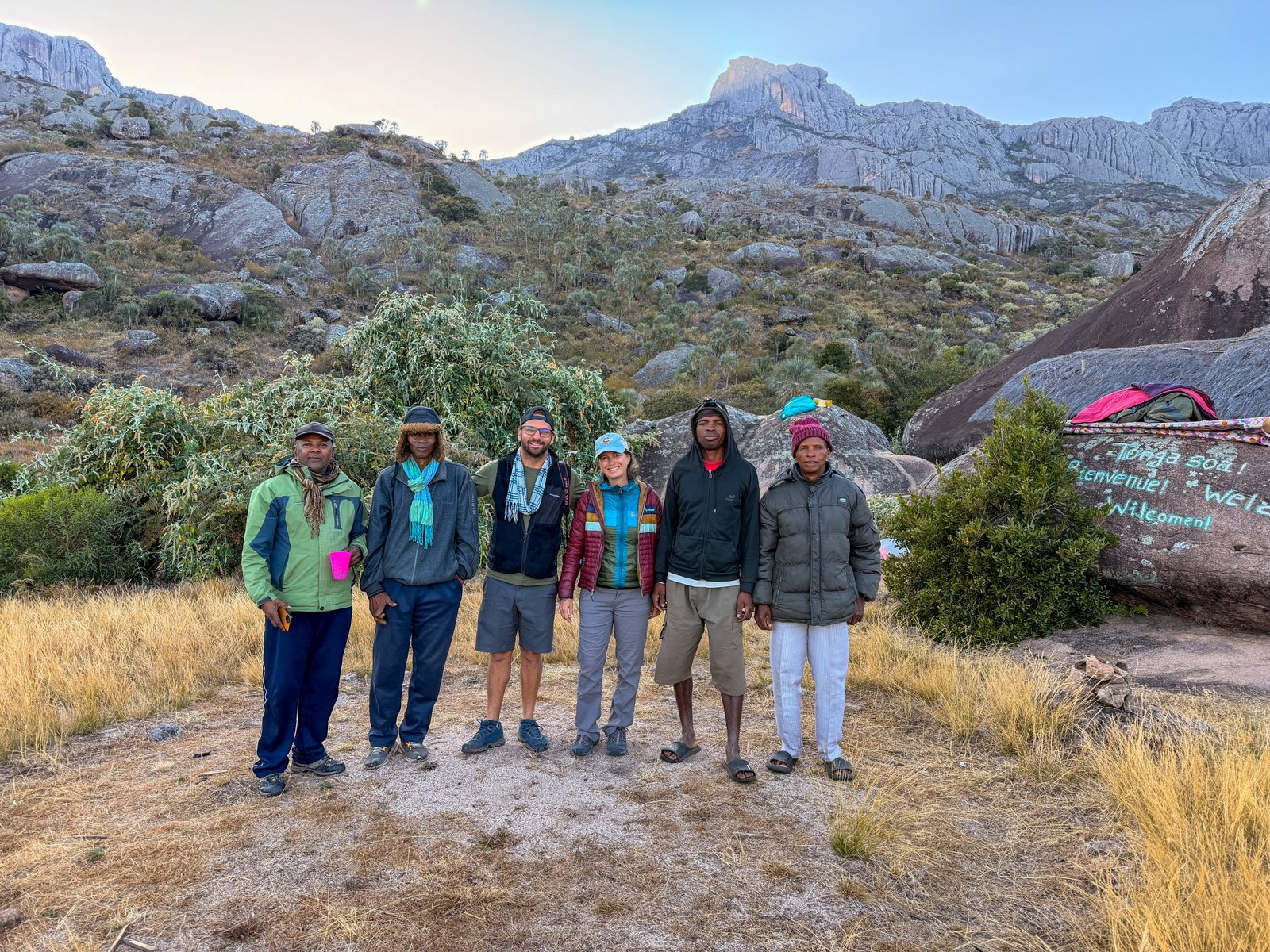
We were looking forward to our trekking in Andringitra National Park, a more off the grid destination. This is JB's specialty, as he has his trekking company set up in his nearby hometown. JB has all the equipment needed such as tents, sleeping pads, and cooking gear. We figured less tourists would be up for the multi-day hike, even with porters carrying the heavy load, and we were right. It made our time there special that we had an entire team of several porters (they also do all of the food prep, cooking, and setting up of the tents), plus we had a NP expert guide and JB to oversee and direct everything! All of the expenses associated with this (other that tips) were already included in our overall price of our two week journey.
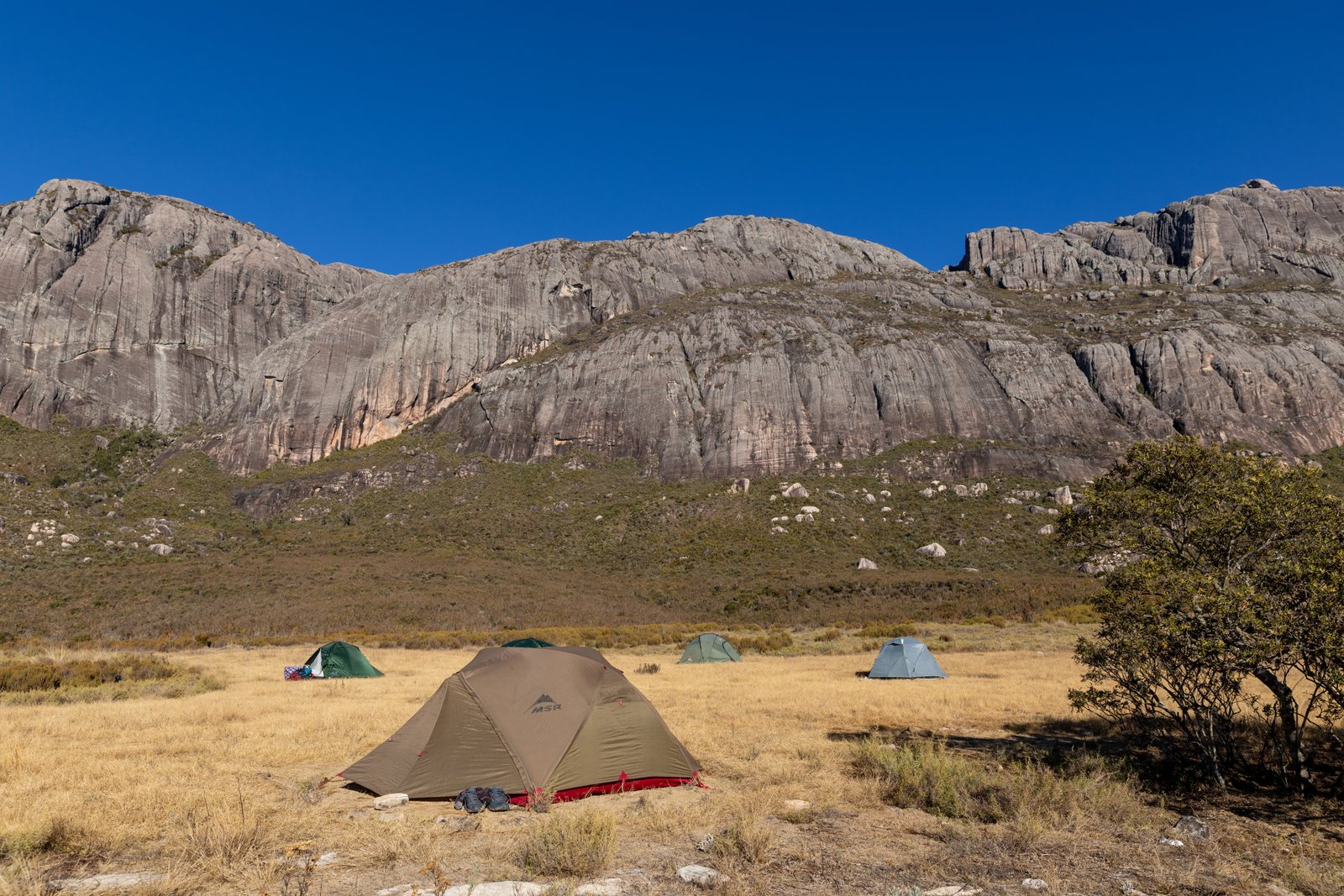
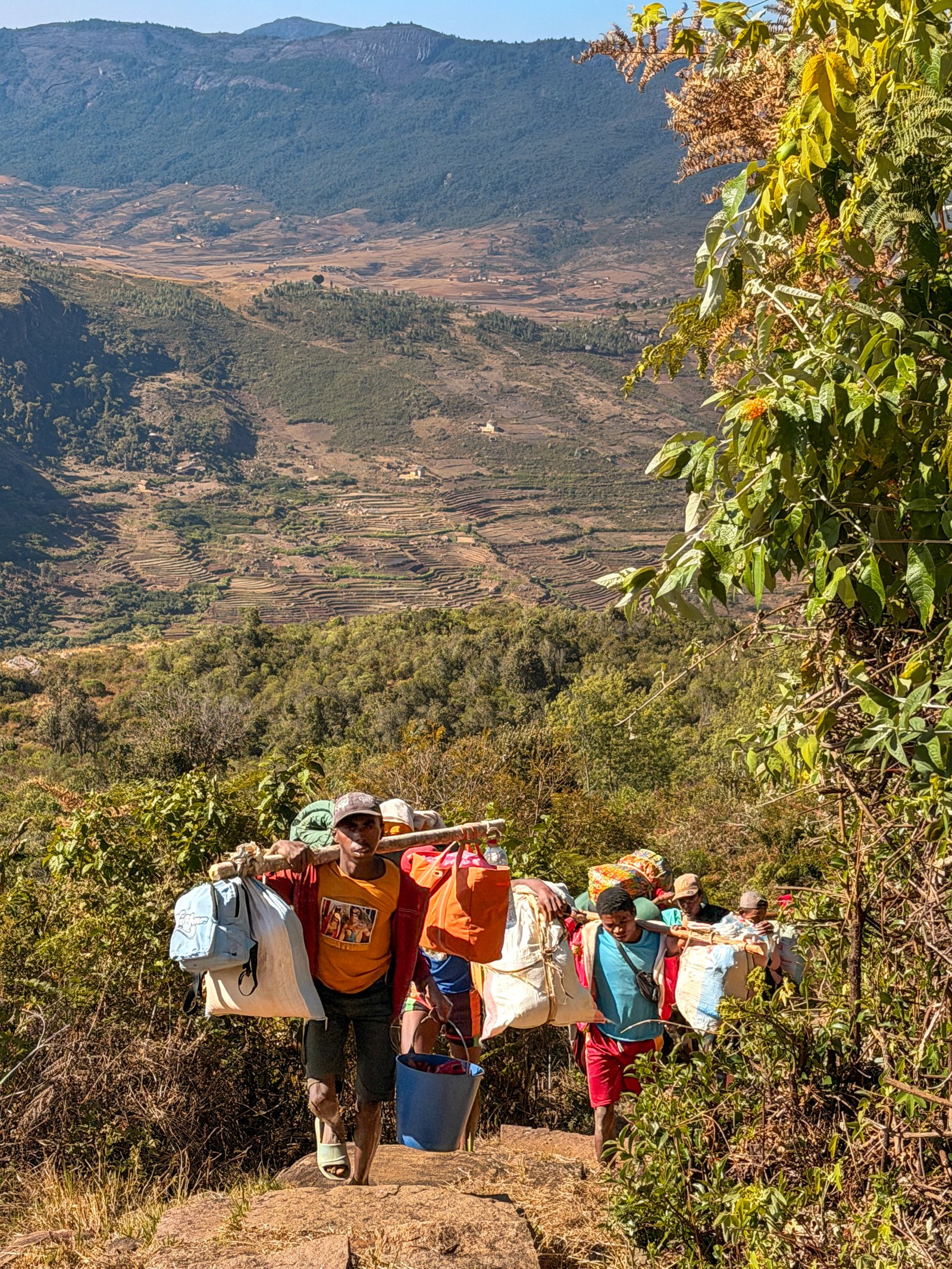
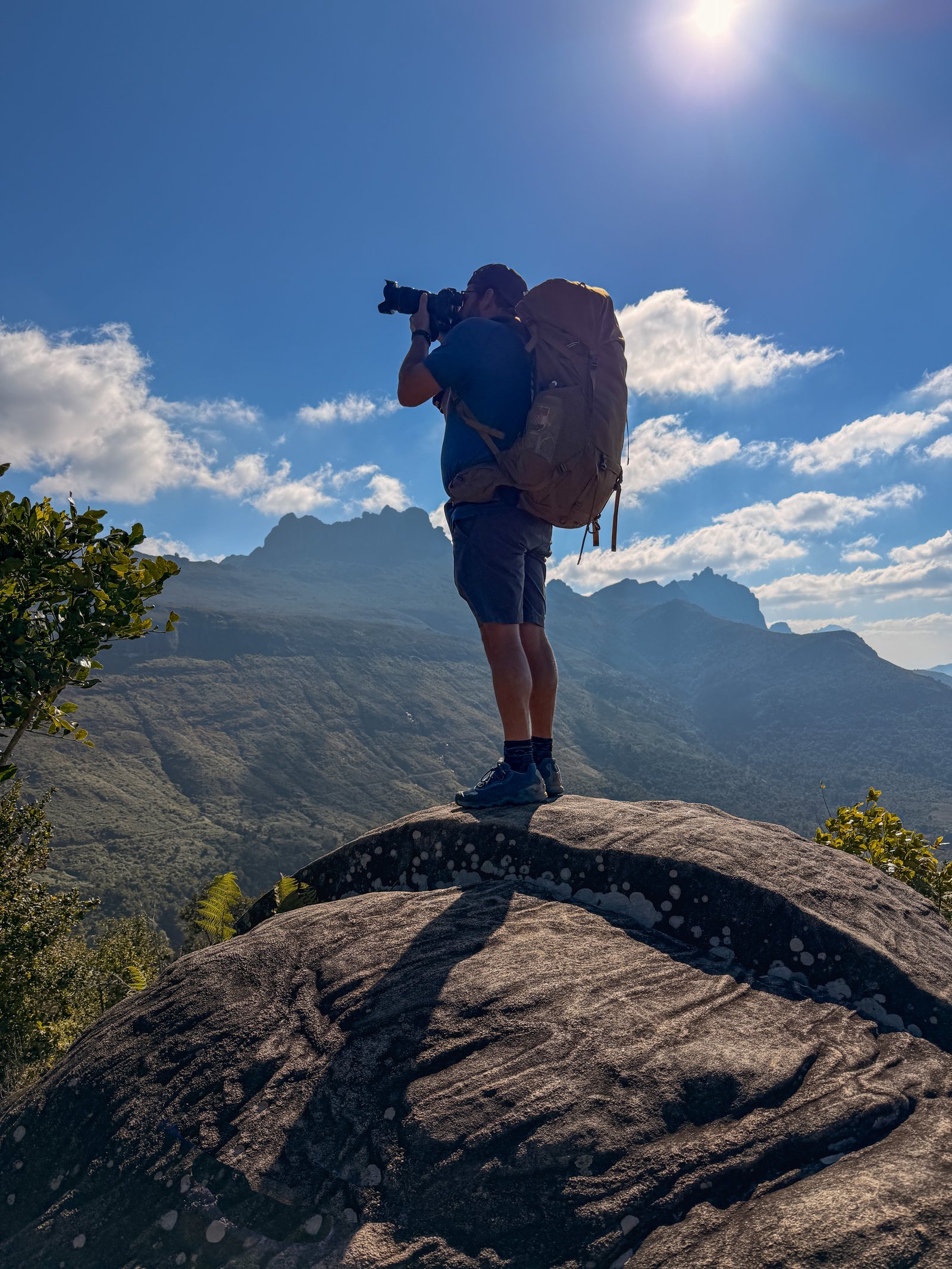
We didn't have many specific details about the 2 1/2 days of hiking, so we are excited to be able to provide that below! One warning to anyone doing this trek, we considered it to be quite strenuous overall, with a lot of elevation gain and miles each day. In fact, Bryan had to be the doctor on our 2nd night of camping to an older German family when the father collapsed after dinner. The diagnosis was a seizure due to exhaustion and lack of elecrolytes. It was very scary for the family and we were happy to have been there or they might have panicked and needed to porter him out of there. With many miles to go and no medical attention for several more hours of rough driving after that, it was not ideal! Overall, we were very pleased with the trek and the surrounding mountains were like nothing else we had seen in Madagascar! If you're up for the trek and adventure, we recommend visiting this area and using JB Trekking company. JB is so organized and goes out of his way to add little perks along the way.
Andringitra NP Trek
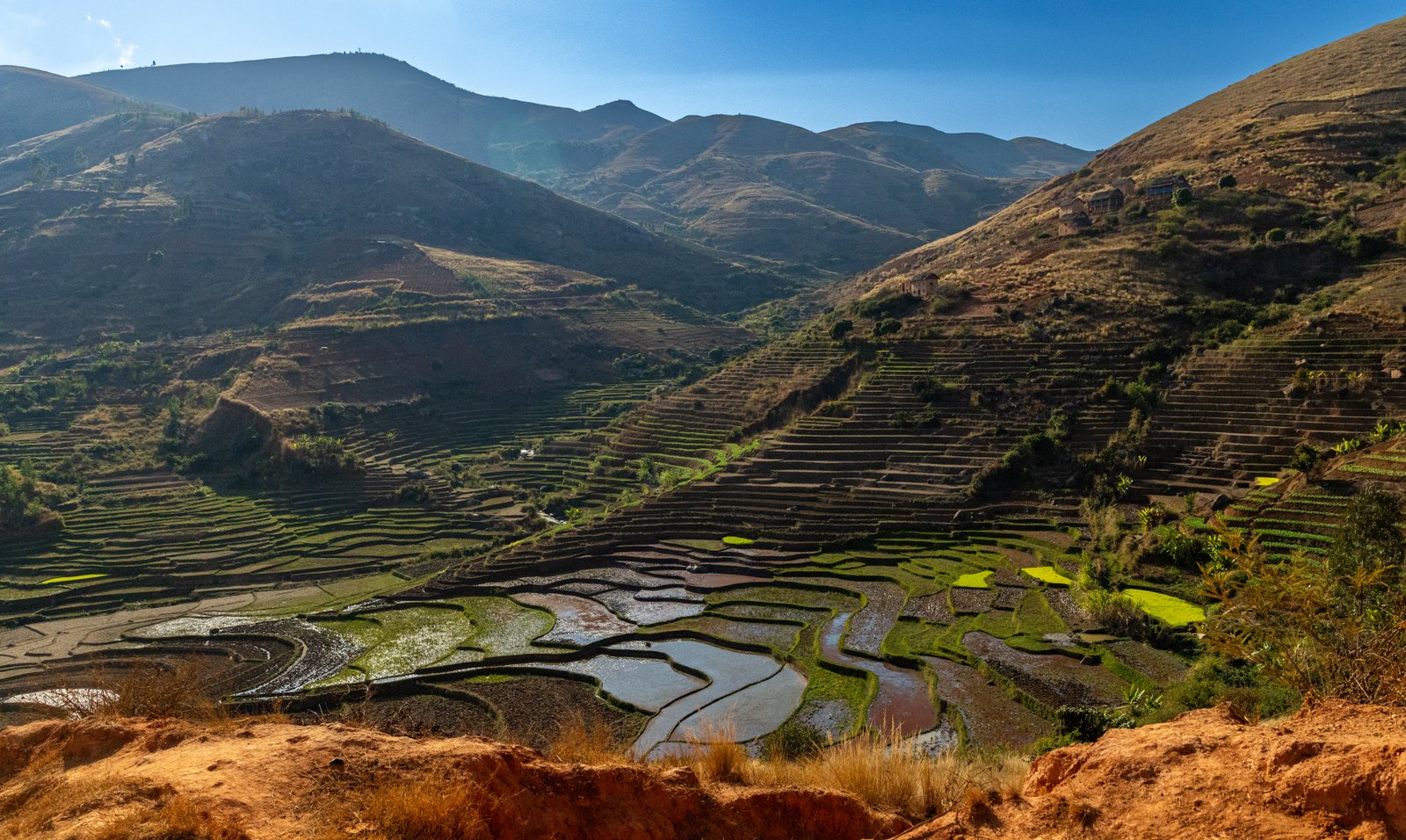
We had an early start to our first day of hiking and camping in the Andringitra National Park. We had reorganized our things the night before to try to minimize what we needed to bring on the hike with us (the rest would stay in the car). We had breakfast at the hotel and set off in the car by 7:30 AM. we were surprised to find out that our drive would be about three hours long to get to the starting point. We soon realized that this was because of the road condition, a very rough rugged dirt road through a few very small villages and into the mountains. On our way, the locals were doing a lot of farming of rice on elaborate terraces. We had to cross over a few sketchy but short bridges made out of wood planks.
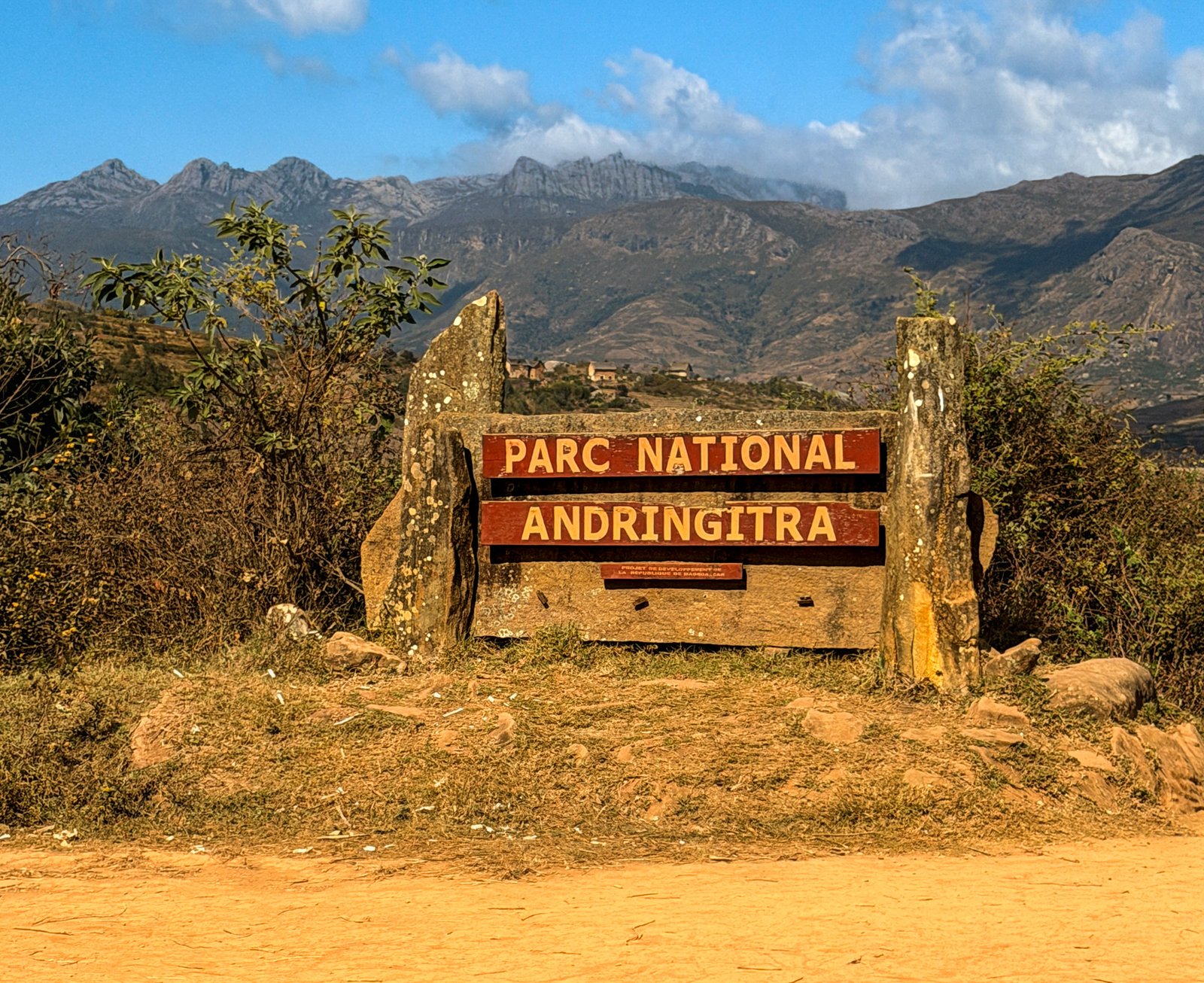
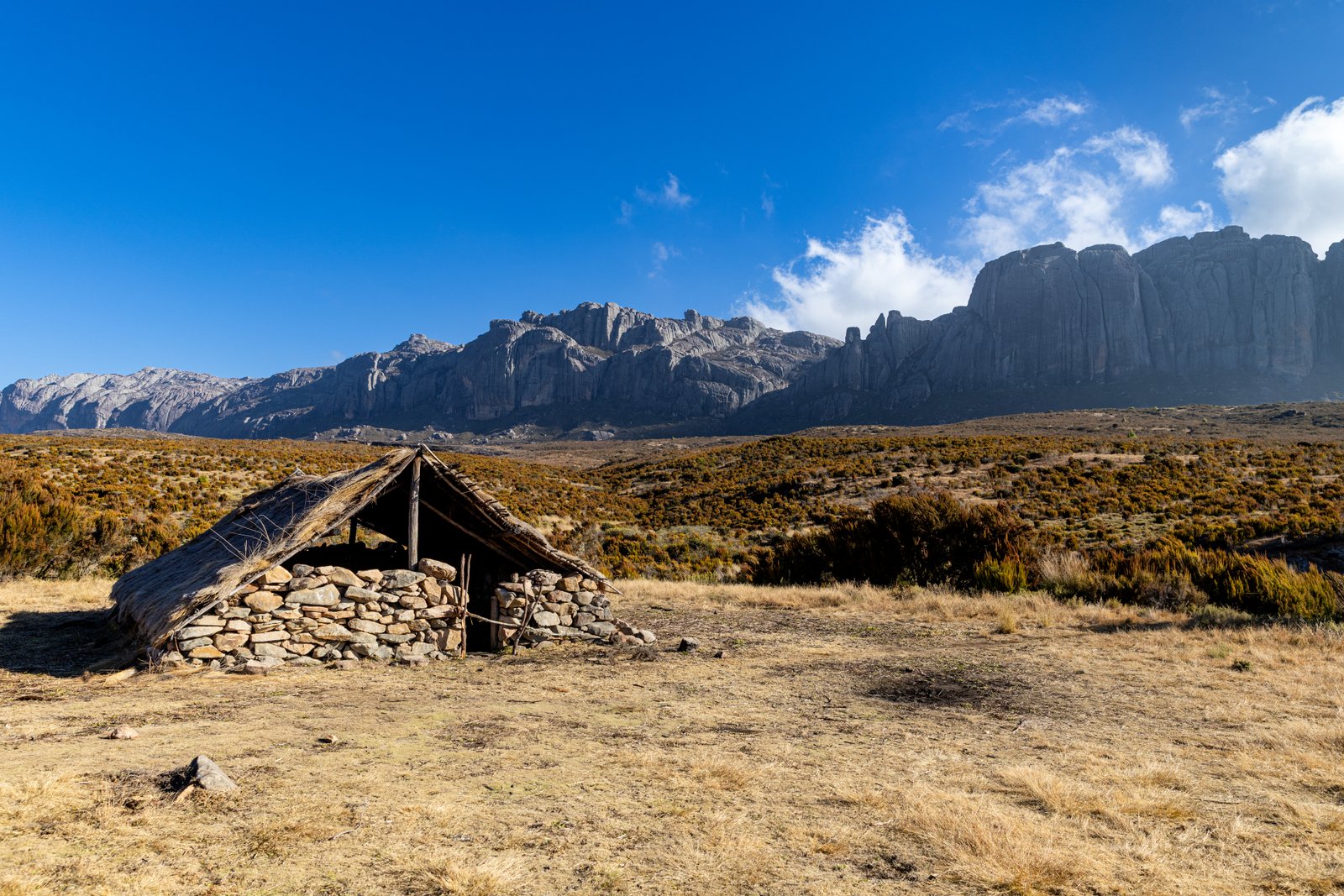
We finally arrived at the national park entrance and it didn’t take long before we met our guide the Volalahy. He spoke very good English and was ready to go, so we started the hike around 11am. We had mixed reports on how long the hike would be, so we weren’t really sure what we were in for in the hours ahead. The hike started out from the village where we hiked up a up the hillside and got our first views of Peak Boby. There are many such granite peaks in the area, making for a very scenic view. Peak Boby is the second highest peak in all of Madagascar and the one that most people hike up to. There were a few other hikers, and everyone had their own set of porters and a guide.
After 3 miles of hiking, we arrived at our lunch spot set along a small creek bed. JB had not been with us during the hike, but soon arrived and gave us sandwiches, avocado, and some of his delicious homemade peanut butter. After lunch, we started a long climb. The slope wasn’t too steep, but it kept going for a long time. Then, we got to a set of rock stairs and finally to a lookout where we could see two large waterfalls coming down from the valley above. The route flattened out a bit and we arrived at what we were told was a swimming hole. We had been told to bring our swimsuits and towels, but it was pretty windy and the water was freezing, so we ended up just putting our feet in and taking a break.
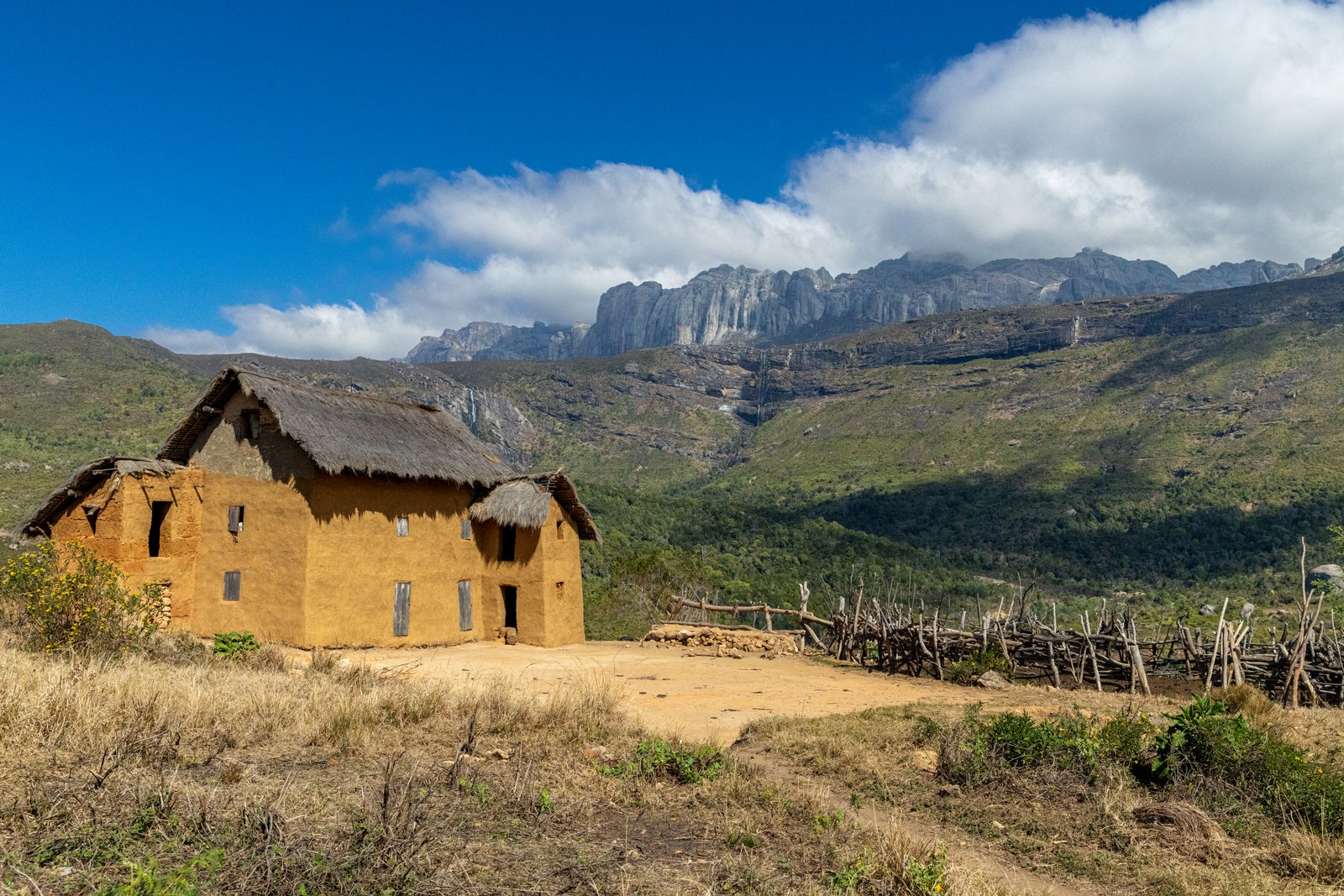
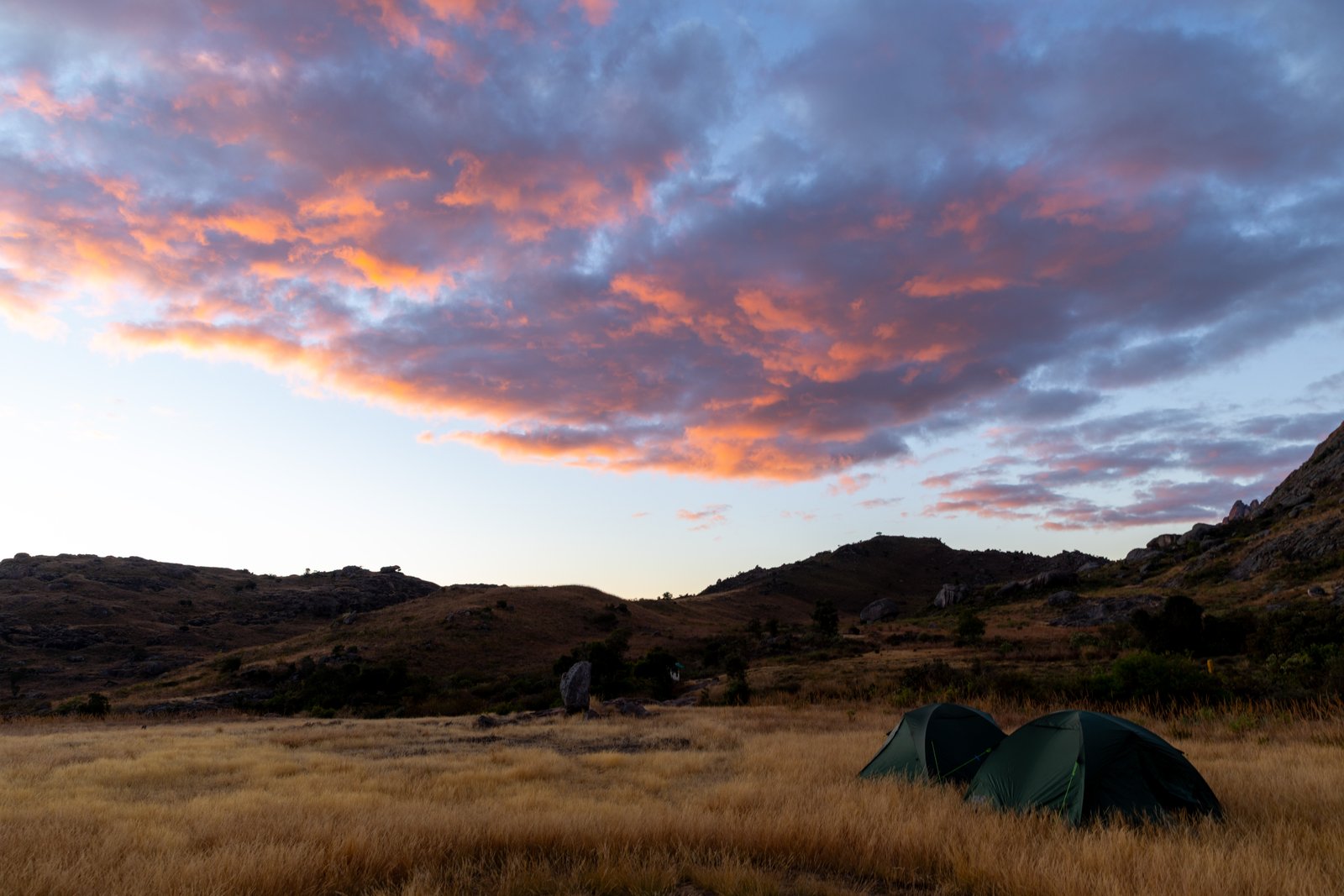
There was about an hour left of hiking, mostly flat, to get to our camp. When we arrived there, we had just hit the 8 mile mark on our hike and 3200 feet of elevation gain according to our Apple watches. The sun had just gone behind the mountains, making it much colder, and we quickly needed to change into our warmer clothes. Our tent was already set up and we spent the next hour and a half warming up and resting. JB brought us hot tea and snacks and some of his rum mixture to enjoy while we waited for dinner. We were extremely cold and offered to have our dinner in the tent, but we decided to get up and move to the kitchen cooking area, which ended up being much warmer. Dinner was a feast starting with huge portions of homemade vegetable and potato soup. Next up, we watched as they made a homemade sauce and boiled the chicken. By the way, this chicken was brought with us on the trip by the porters, alive, and prepared just for us. Even though the chicken was pretty tough and not the best meat, we felt like we should eat as much as we could! They also made an enormous pot of rice and caramelized bananas over the fire, a common and tasty dessert here in Madagascar. In fact, everything here was cooked over the fire in a small kitchen hut with all of us gathered around nice and cozy.
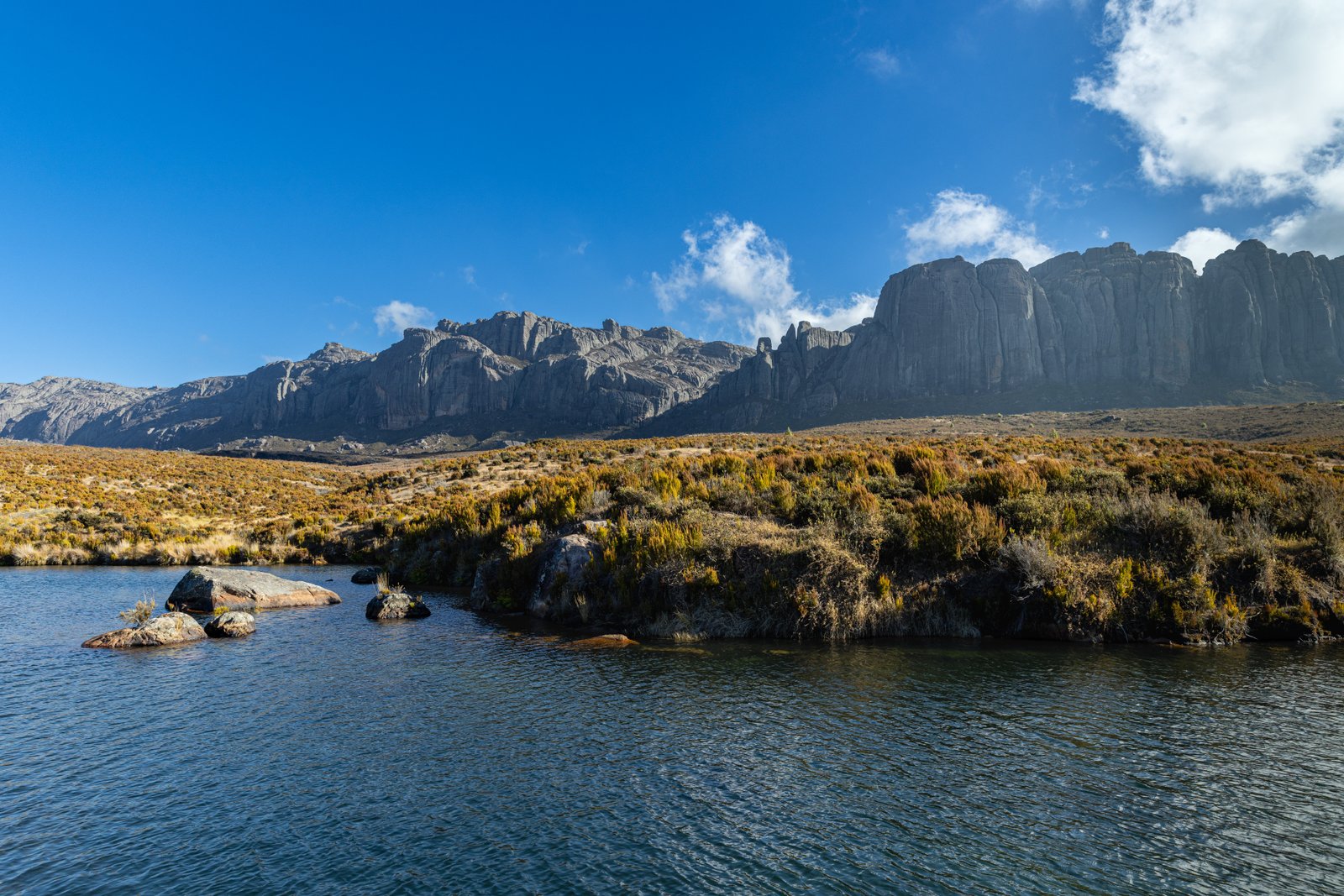
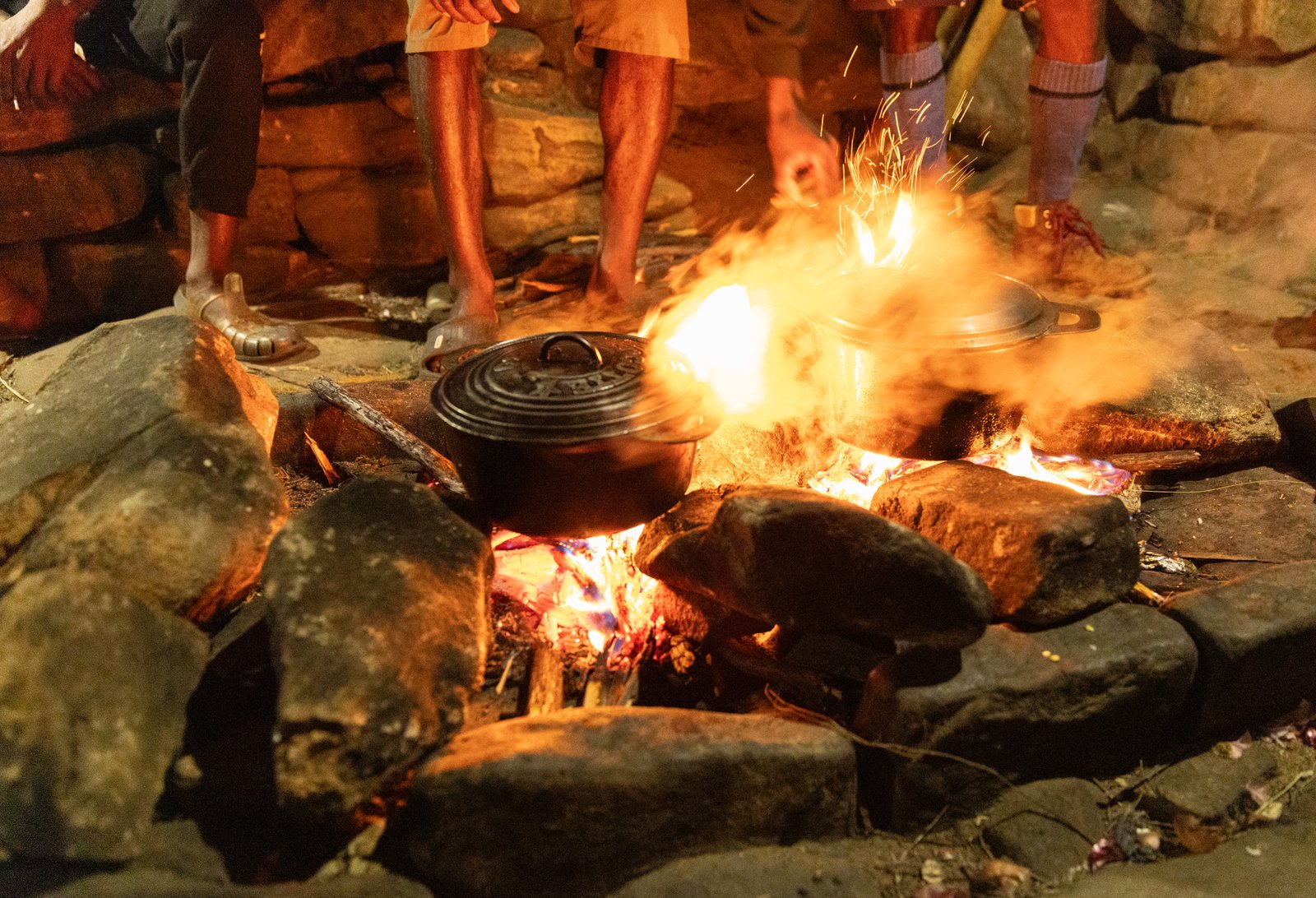
Stuffed from dinner, we headed to the tent put on as many clothes as we had and tried to get to sleep as fast as possible, knowing that we were likely waking up for a sunrise hike. We were told that we would need to leave at 3 AM, but in case of bad weather, we would do it at 6 AM. The night was very cold and we definitely needed all of our clothes. It was a little hard to sleep due to the temperature, but the sleeping bag and mattresses were more comfortable than the hardest bed that we had in Madagascar, so we were actually pleased.
We set the alarm for 2:45 AM in order to prepare for our early sunrise hike. Promptly around that same time, Volalahy came knocking on our tent to make sure we were awake. He told us that the sunrise hike was on and the weather was good. It was hard to get out of the warm sleeping bag, but we went over to the kitchen where there was already a fire going. The porters actually sleep in the kitchen hut, which seems rough, but perhaps maybe ends up being a bit warmer because they keep the fire going during the night. We had some hot tea as quickly as we could, and set out on the hike in the darkness with our headlamps.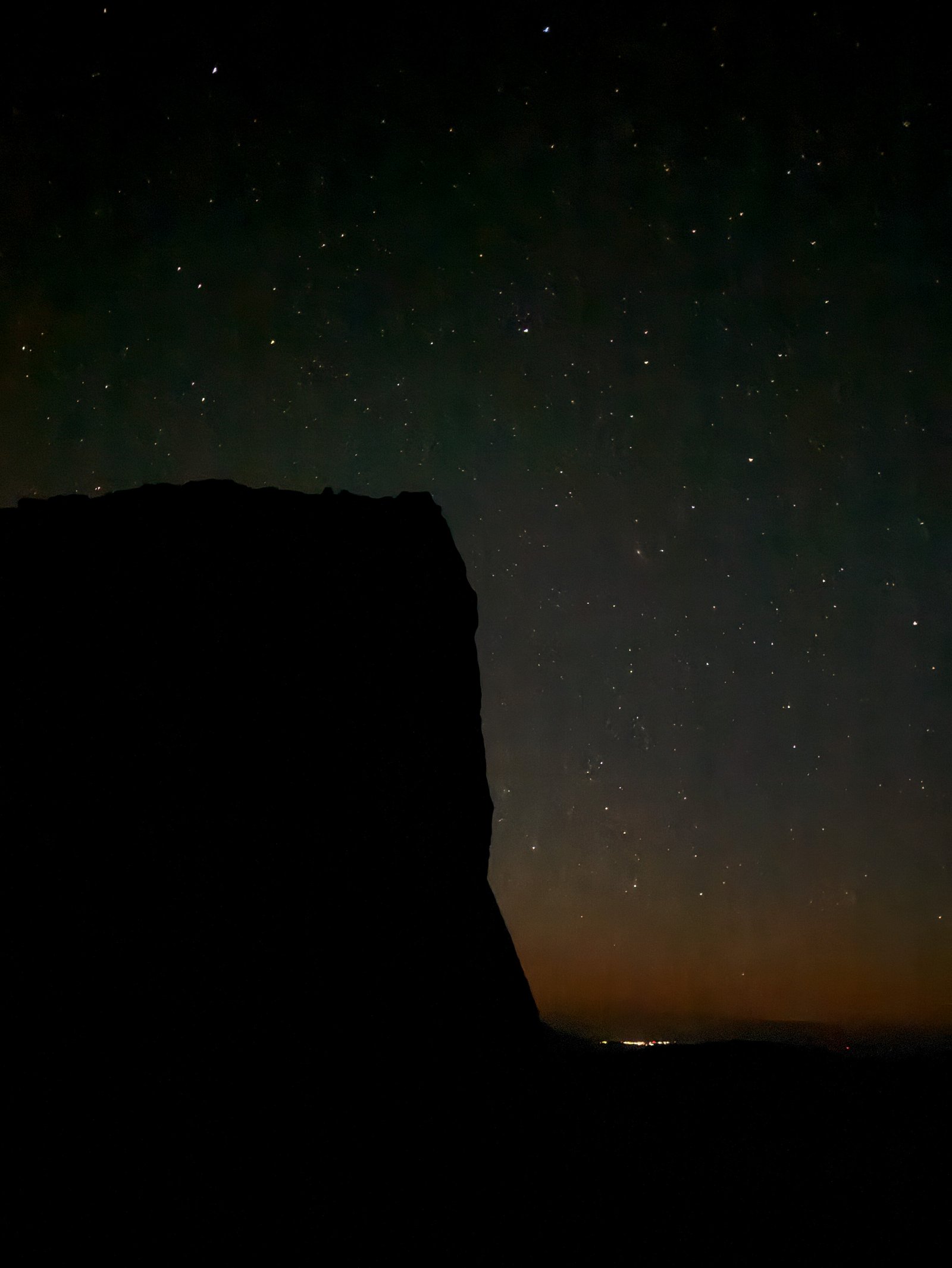
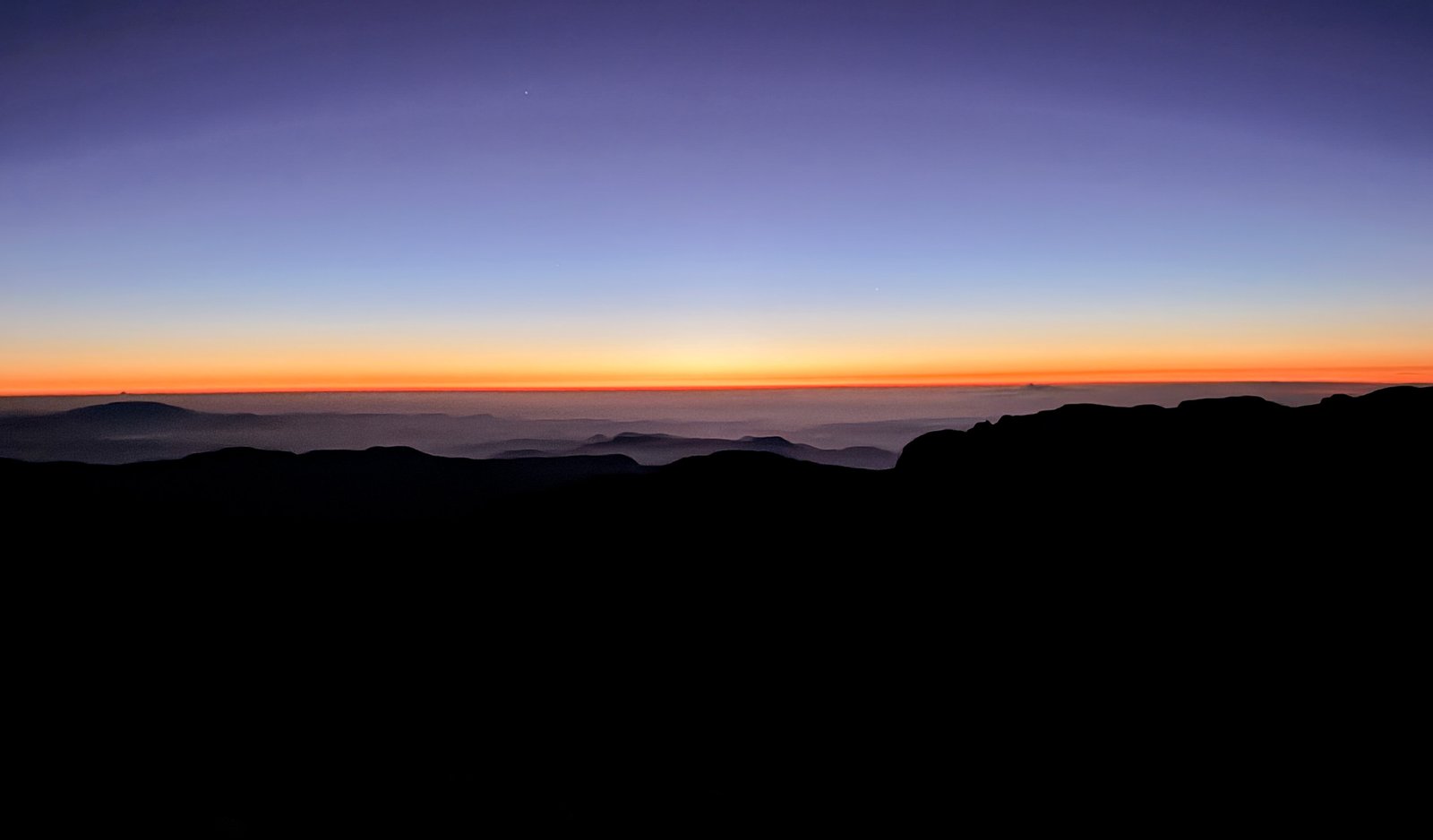
We had no idea how long the hike would be, only that would take us to the top of Peak Boby. At ~8700 feet high, it was almost exactly 2,000 feet higher than our base camp. It was somewhat of a blessing that we couldn’t really see around us and what was in front of us, and just kept going up, up, up lots of stone stairs. We were in the darkness the entire time and the hike ended up being just over 3 miles to reach the top. We were glad to have our guide with us leading the way, as it felt like we were wandering around up and down and over the rocks. We finally arrived at the top and were the first ones there at 5:45 AM. It was cold and a bit windy but we think it could have been a lot worse so we were lucky. Still, we put on all of our layers of coats and scarfs and settled in to wait for the sunrise. There was a small layer of clouds to the East which delayed us seeing the actual sun come up, but we waited until it rose above those clouds, which happened around 6:20 AM, and the view of the surrounding granite peaks was amazing!
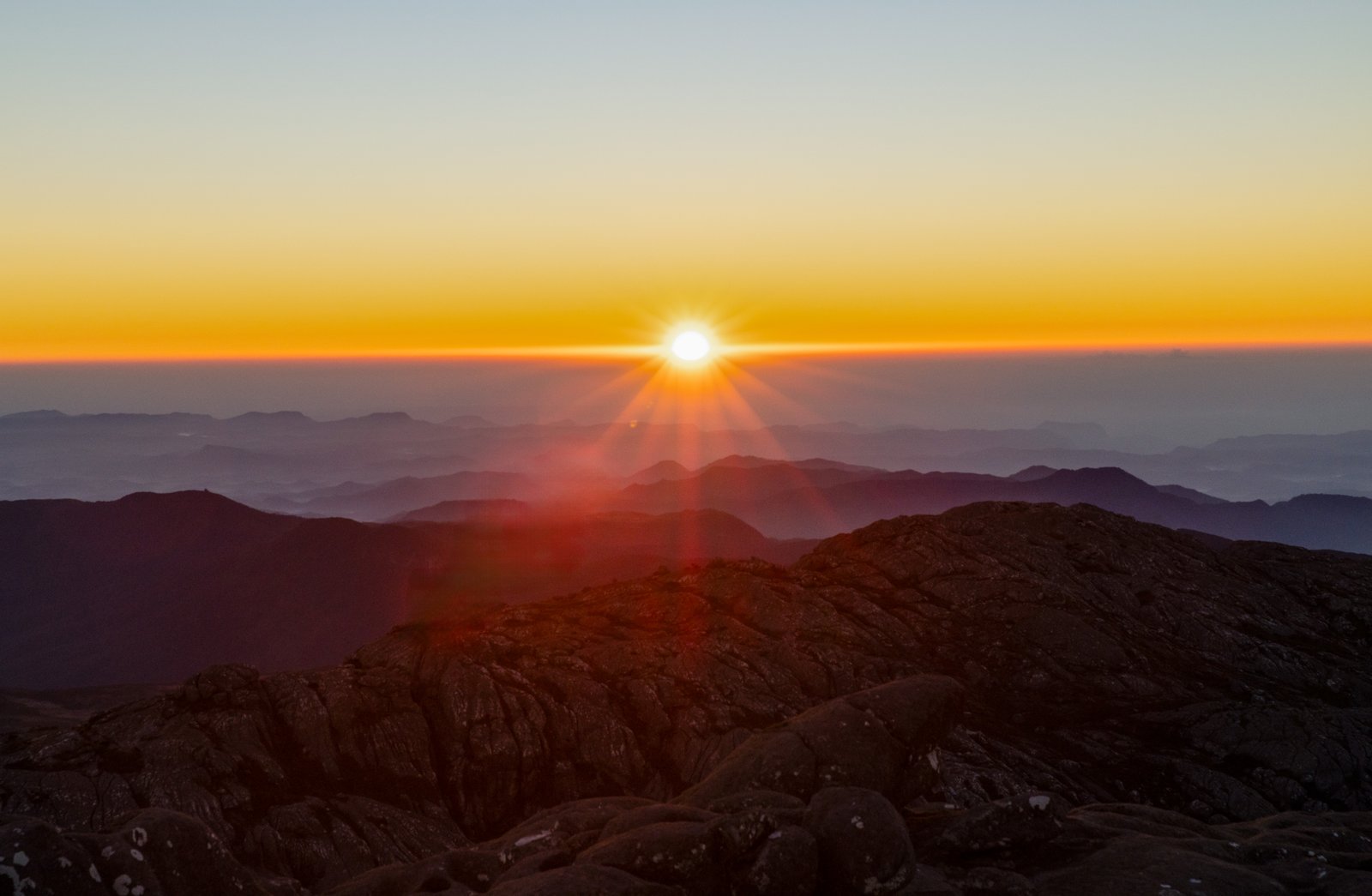
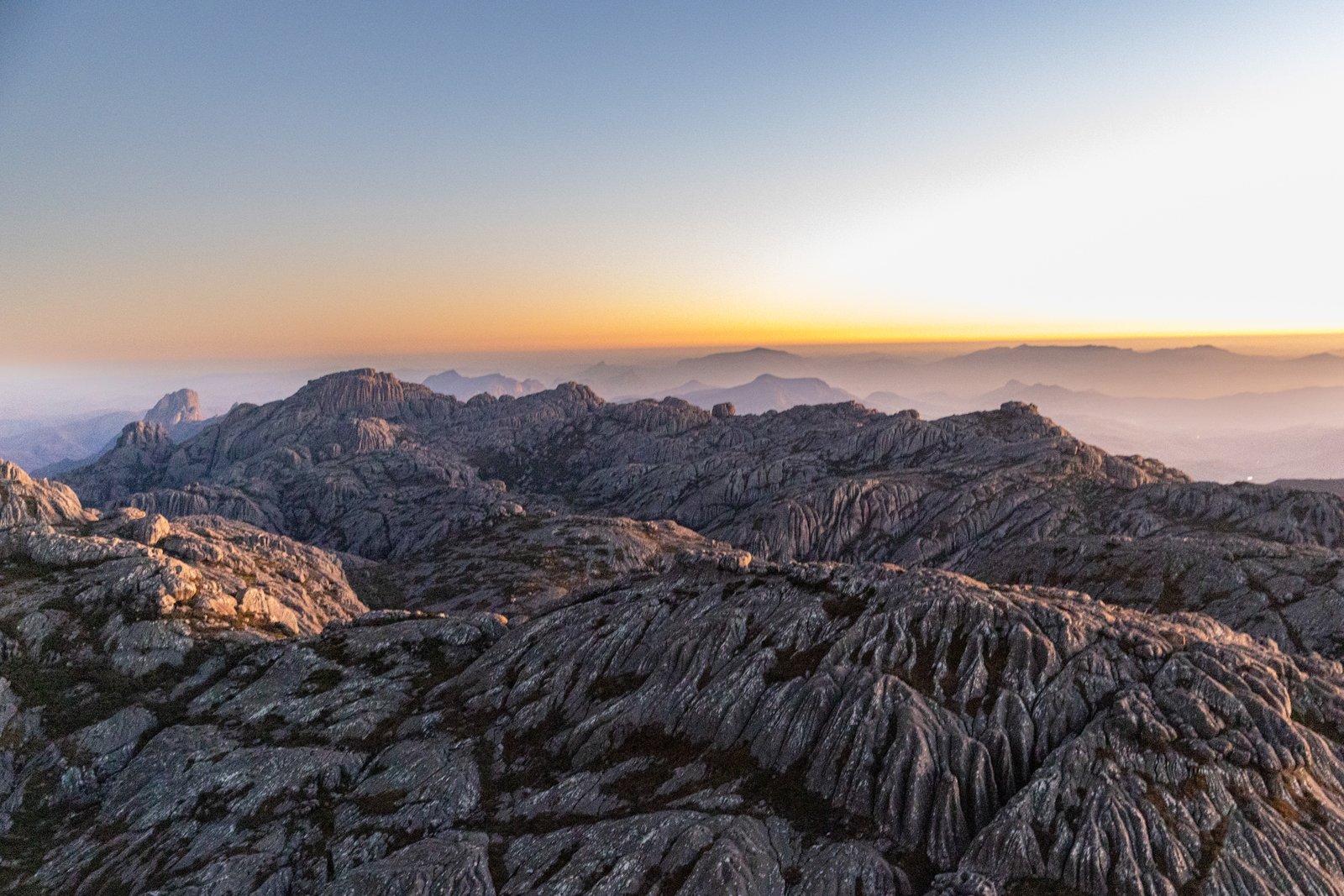
With the sun up, we could finally see everything around us, which was a beautiful landscape of rugged granite rocks, and peaks all around. A few other hikers arrived just in time for the sunrise. We headed down, this time able to see, and were in awe at what we had walked through. It was much different than what you imagine in your mind when you’re walking blindly in the dark. On our way down, we took off each layer at a time. We were hot by the time we arrived at camp. It took us about one hour and 45 minutes to get down, and breakfast was waiting for us when we got there. The highlight of breakfast was the freshly made beignets with JB's homemade pineapple jam. We also had yogurt, egg and juice.

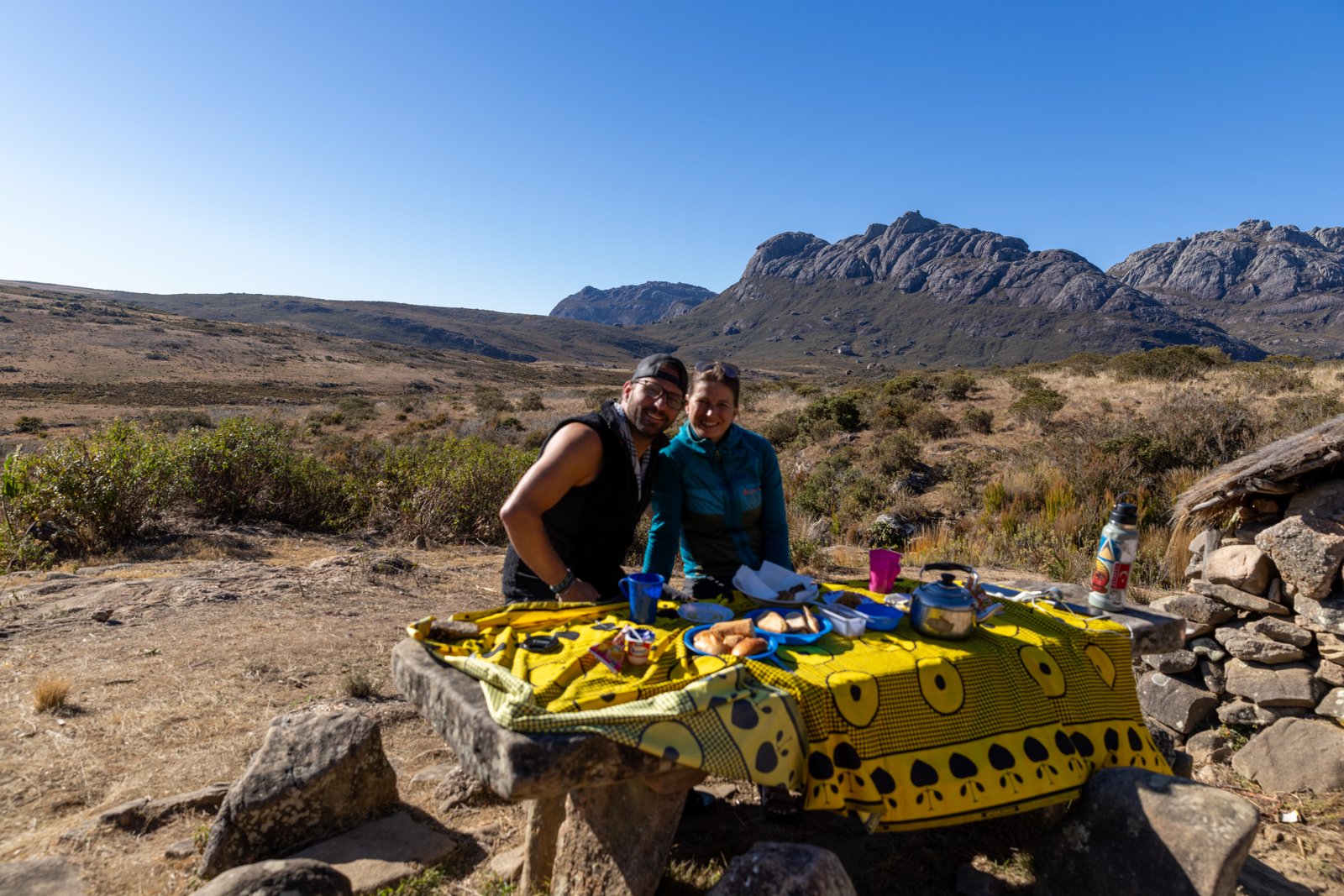
We attempted to rest in our tent, as we were very tired, but after only a short time, the porters came and needed to pack up the tent. We flew the drone quickly and got ready for our second hike of the day. We again weren’t really sure how long it was, but our guide told us that it was going to be four hours of walking. From this, we calculated it would probably be about 8 miles again. The first several miles of the hike were easy over a flat grassland with the beautiful granite mountains to our left. We had a steep incline, the only major incline of this hike, but we were really feeling it after the early morning. At the top, there were more granite peaks on all sides which are guide called the moon landscape, saying it was his favorite part of the park. We made our way through the moon landscape and over to the edge of where we would start going down to our campsite. We had lunch there and got to relax for a while, warming in the sun and resting.
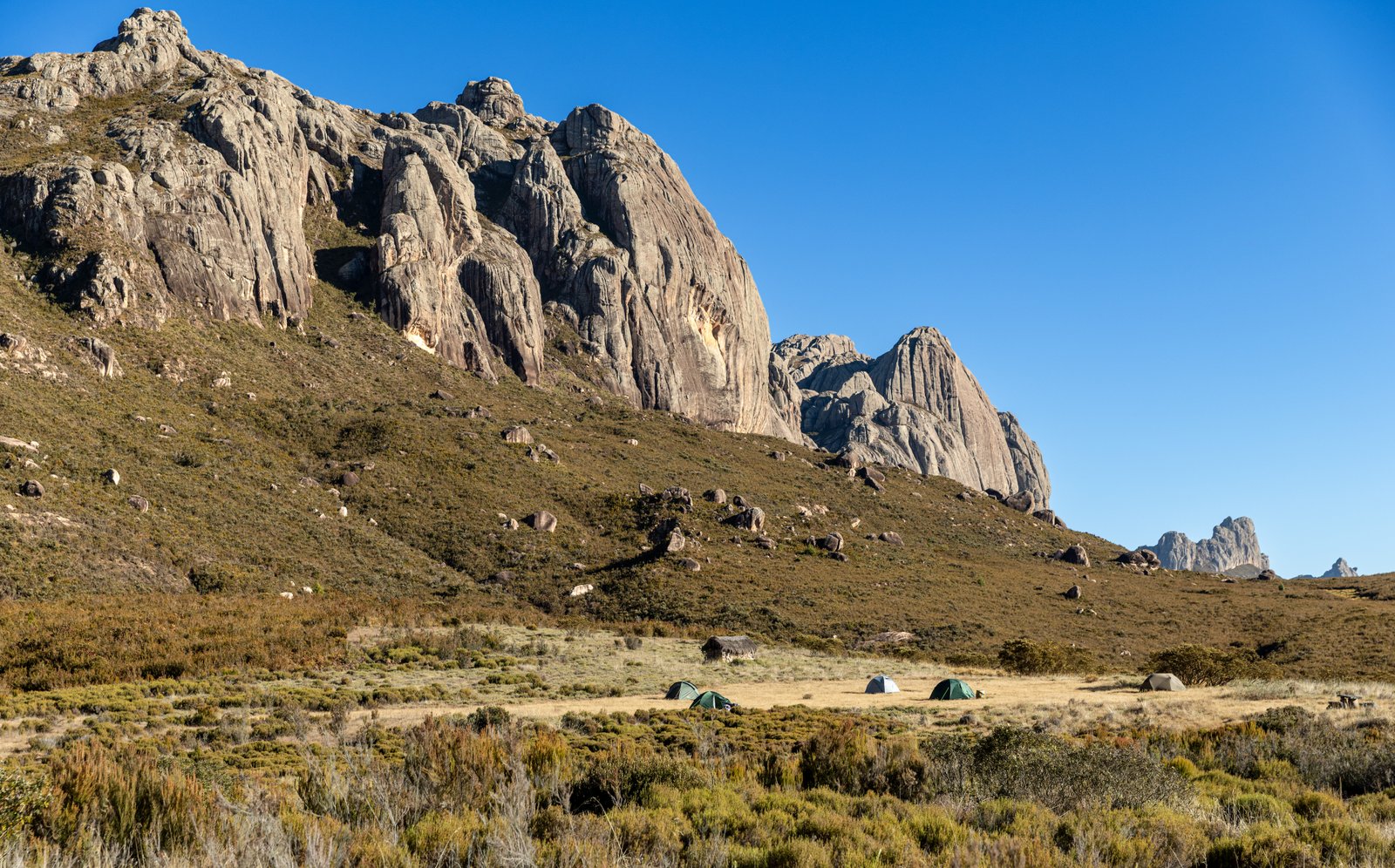
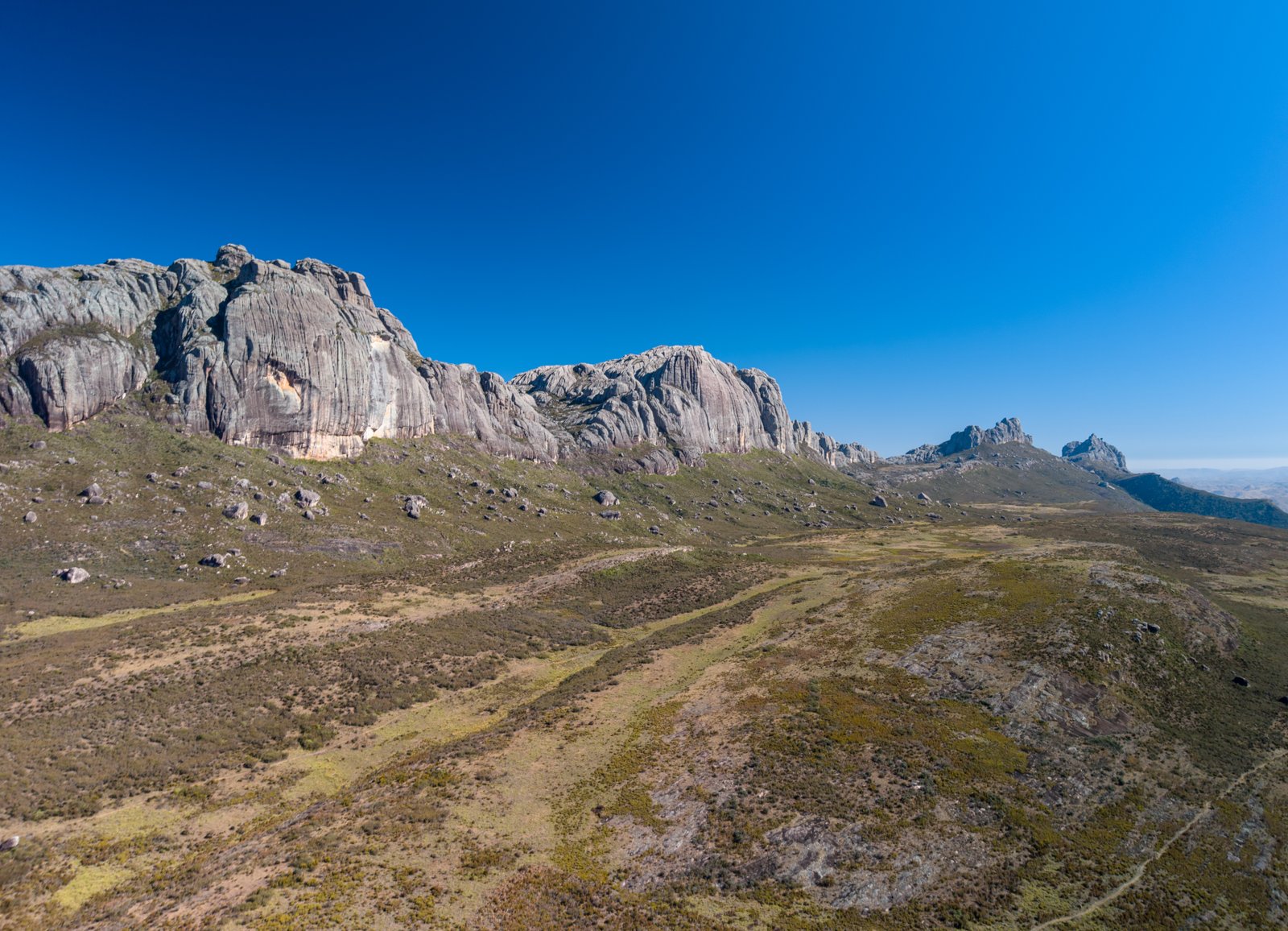
The last part of the hike was brutal for us as we made our way down nearly 1800 feet of steep rock stairs that seemed to never end. We could finally see our campsite below, but we were counting down every step. When we made it to the campsite, our hike had been roughly 7 more miles for the day. It was hot there, and we cooled off in the nearby river and swimming hole before having some tea and then resting in the tent as the sun was setting. It was warm enough to have dinner outside and we were served chicken, zebu meatballs and sausages, pasta with cheese, and grilled vegetable skewers, with a starter of chicken noodle soup. All was delicious and filling. We went to sleep, with a 6am wakeup time, as JB told us we needed to be packed up and ready for breakfast by 6:30am.
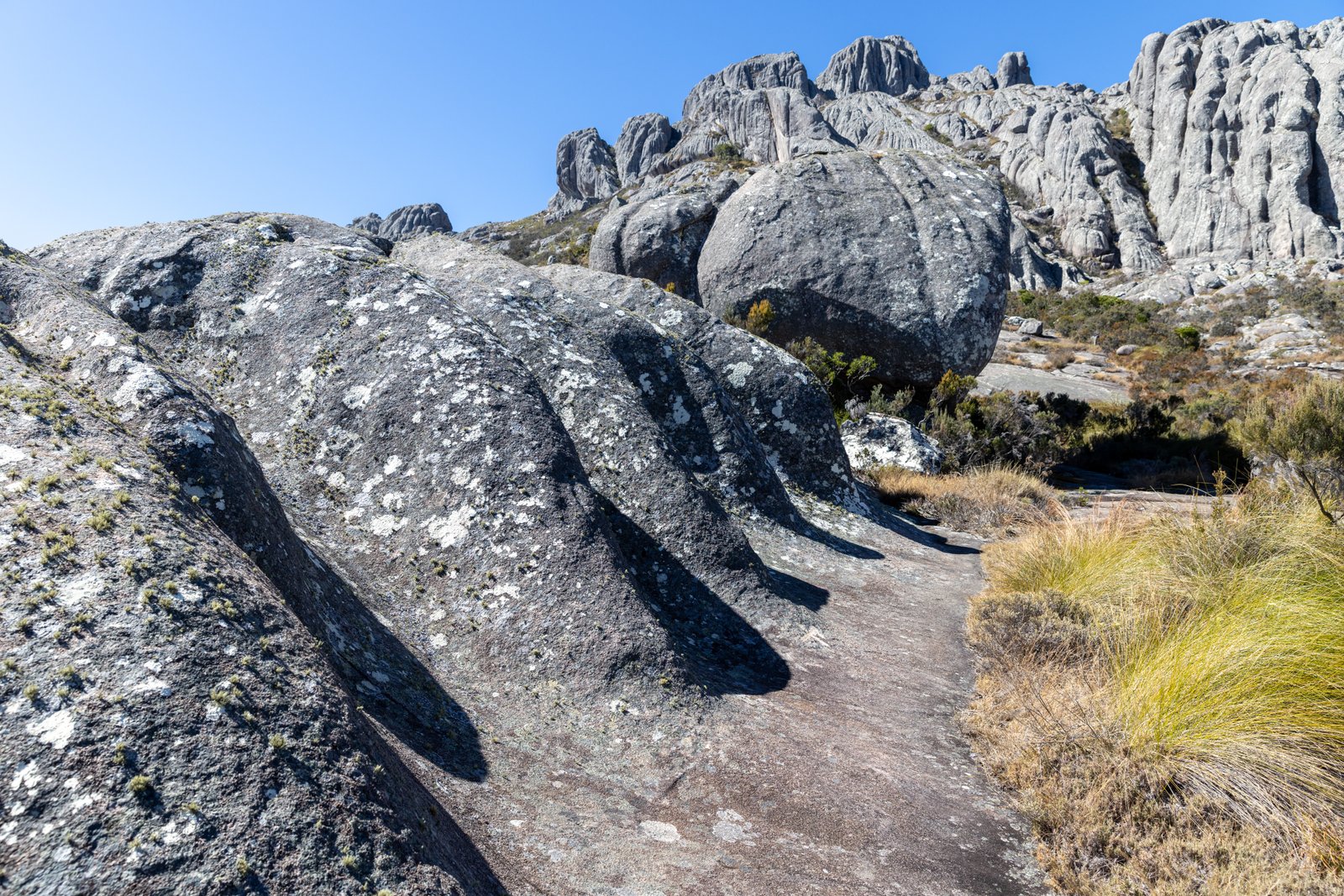
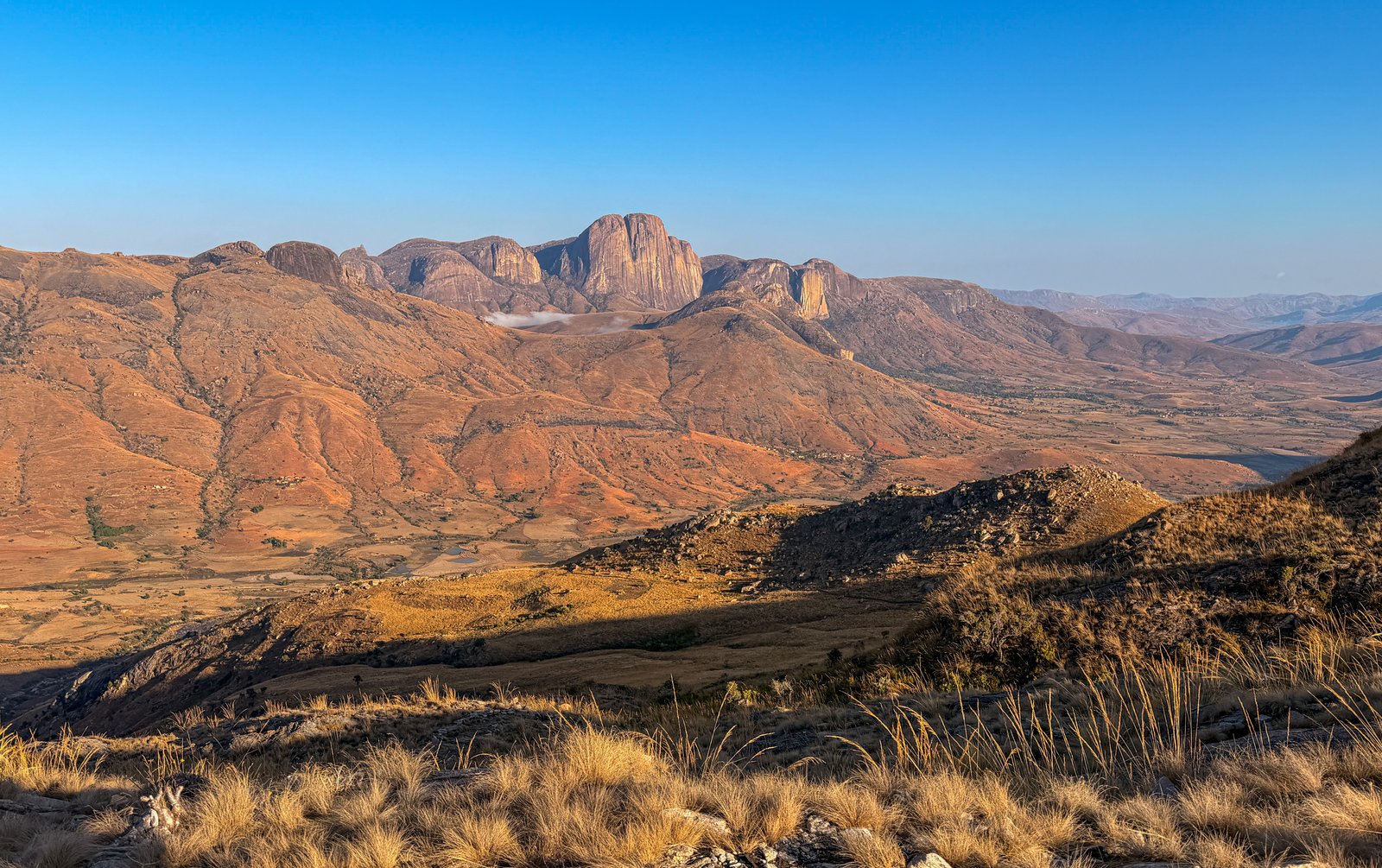
On the 3rd day, our hike out started around 7:20am and we crossed into the next valley and then on with spectacular views all the way. We started to make our way down and could see the village in the distance where Michel would be waiting with the car. We had some good conversation with Volalahy, and he seemed overly pleased with our experience on the trek. He said goodbye to us just before the final descent to the village and we walked the remainder of the way with JB. Volalahy would have to hike back up the way we came, thousands of feet up, and then cross over to get back to his village. It would take him 5-6 hours of hiking to get home! We reached the village after 4.5 miles and more than 2,000 feet of descent, where we got in the car for the 1 1/2 hour dirt road out of the park followed by another drive on regular road back to Ambalavao. We had an excellent lunch at the paper making workshop area, exhausted but grateful for our last 2 days in the amazing Andringitra National Park.
Back to Top
Link to Madagascar Photo Galleries
Day 15-16: Ranomafana National Park
After finishing our trek and lunch, we still had another 3 hours to drive to get to Ranomafana National Park. We had anticipated the roads improving, but they turned out to be rather slow and filled with potholes. There also seemed to be more road traffic, mostly local passenger vans and transport trucks that we had to work around. We stopped on our way out of Ambalavao where there were many wine shops on the side of the road. JB purchased us a local red wine from the region and we soon saw some of the wine fields in the valley. The road was curvy and bumpy, so any napping attempt was unsuccessful. We passed a lot of farming villages and then into the largest city since Antananarivo, the capital of the south, Fianarantsoa. The city was busy with more actual cars than we had seen in a long time. We finally made it to Ranomafana where we were suddenly in the dense and protected jungle of the national park.
We checked into Hotel Chez Gaspard, where we would stay for 2 nights. Again a simple but comfortable bungalow style room, we had a very good dinner at the hotel restaurant and were excited for bed. Our time in Ranomafana would consisted of two guided walks, the first was a night walk the evening we arrived and the second was a longer walk the next morning. We also visited the Ranomafana thermal pool area, unique to this area.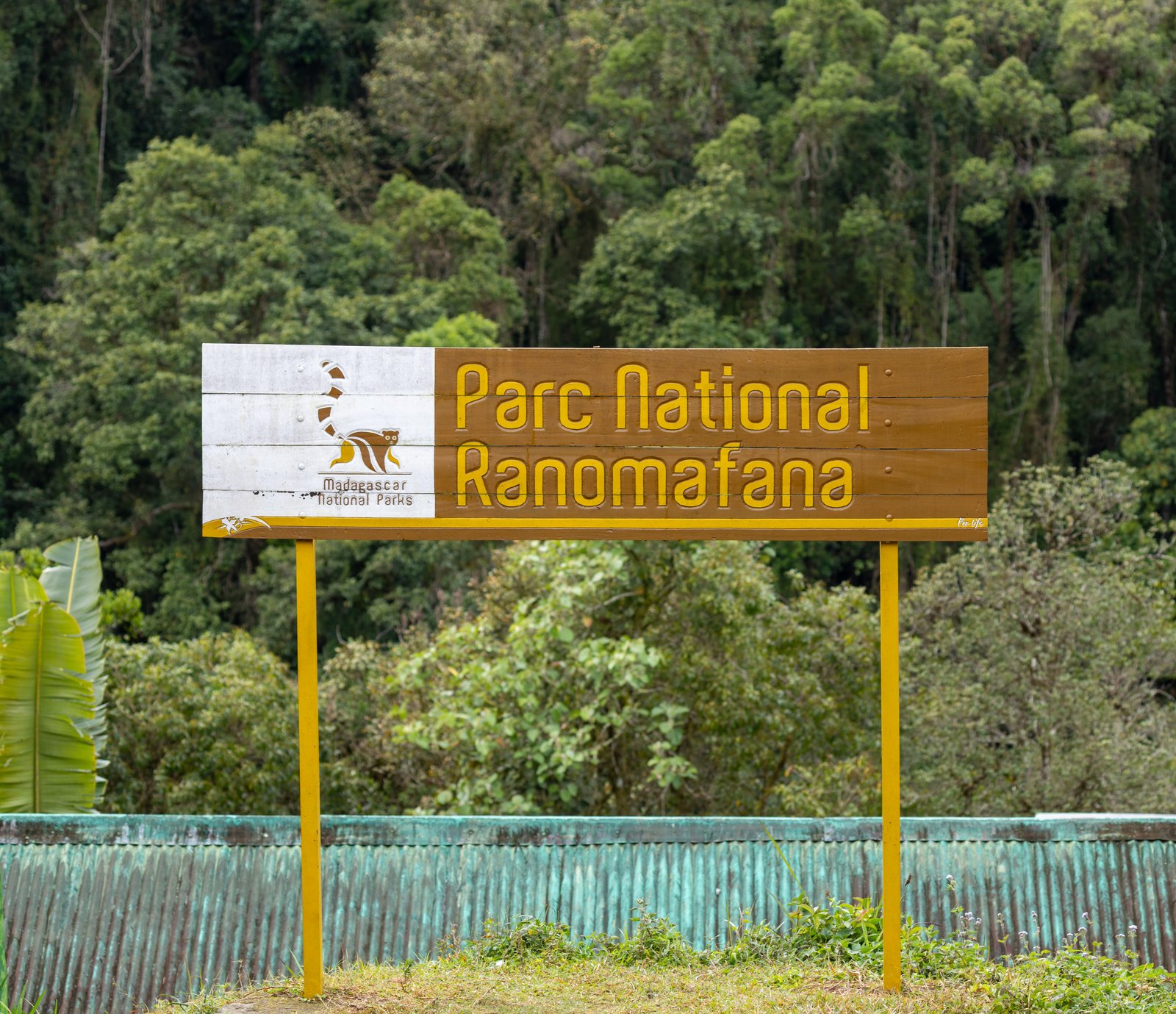
Ranomafana Night Walk
Our arrival in the area was planned so we would arrive just as it was getting dark. We met our Ranomafana NP guide by the side of the road. The national park is closed during the evening time but a lot of tourists show up on the side of the road for a chance to spot the nocturnal mouse lemur. When it was fully dark, our guide took some banana out and rubbed it on a tree at the edge of the road. We waited patiently and finally a very timid mouse lemur came to investigate. It was hard to take photos because the lemur would get scared at any passing cars or even if the light was too bright. Only a few ounces in weight and about 10 inches long, the mouse lemur is the smallest primate. Like all lemurs, they are found only in Madagascar.
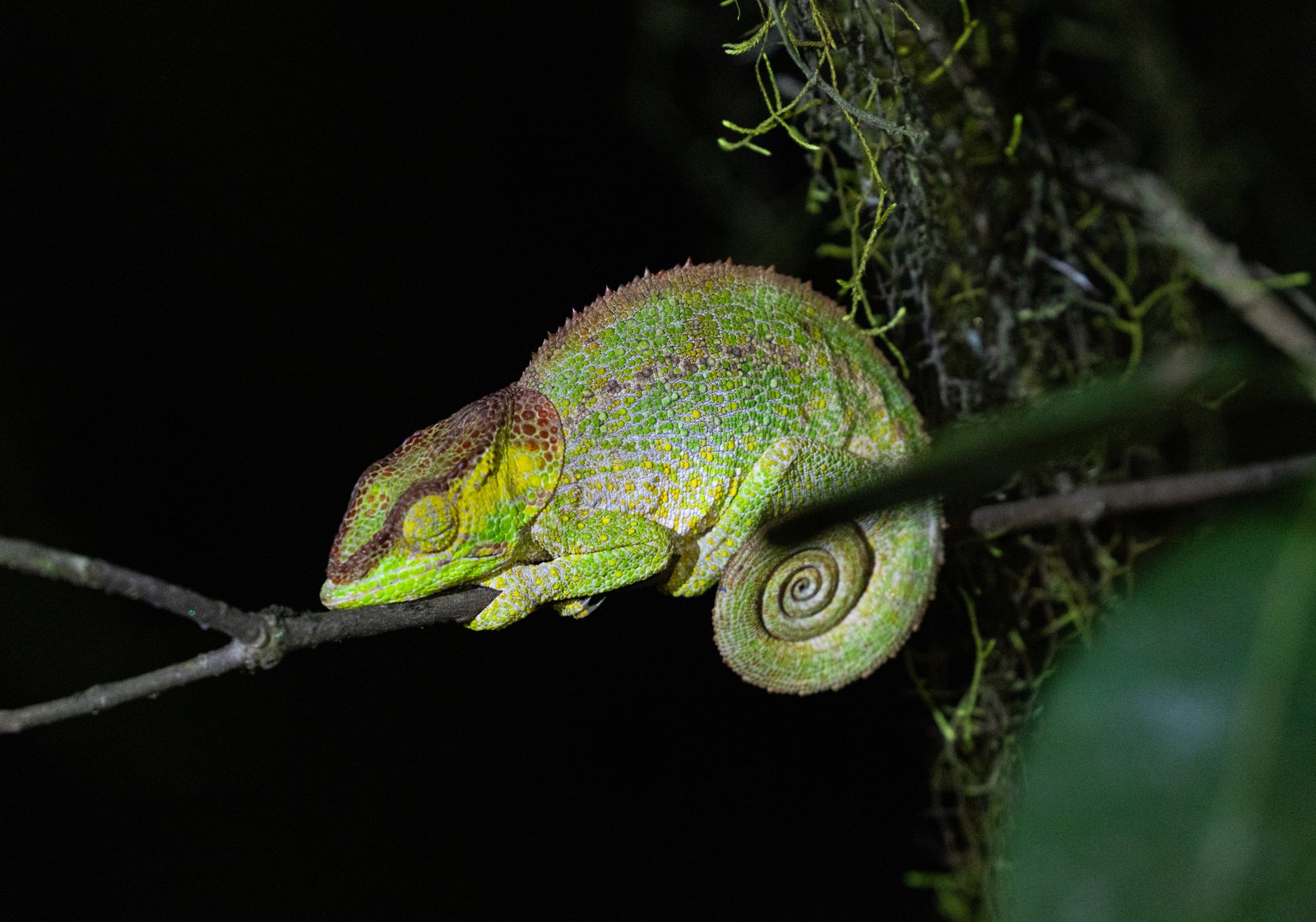
During the remainder of the night walk, we walked along the side of the road looking for chameleons. Apparently, they are much easier to spot at night with a flashlight, although we were still amazed our guide was able to spot them. We saw several different species of chameleons including the nose horned and globe chameleons. The night walk lasted about an hour. A lot of the tourist groups didn't bother looking for chameleons, only the mouse lemur.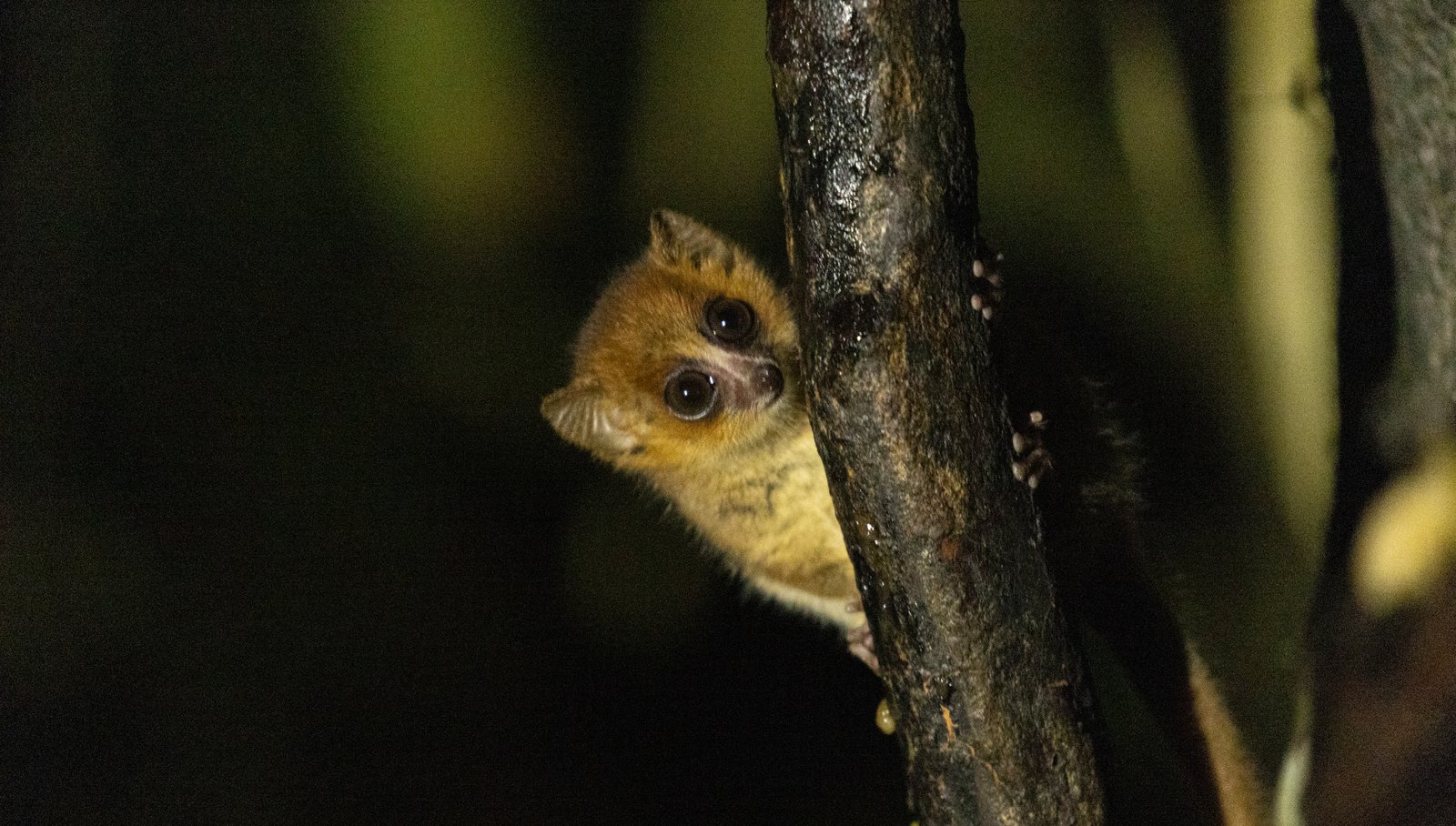
Ranomafana Day Hike
Our same guide met us at the hotel at 8am, where we took a short drive to the national park entrance. After getting our tickets, we were on our way for our walk through the jungle. We had an additional guy with us who would run ahead to help spot the lemurs. We passed over the river on a long bridge and into the park where the trail was surrounded by dense jungle on all sides. The climate was so different from the other places we had been. We were told they get over 200 days a year of rain in this area. We soon had our first spotting of the very rare golden bamboo lemurs. We went off trail with our spotter, up a steep hill, and saw a group of 6 or so lemurs very high up in the trees. They were hard to photograph and looked like a big ball of fur!
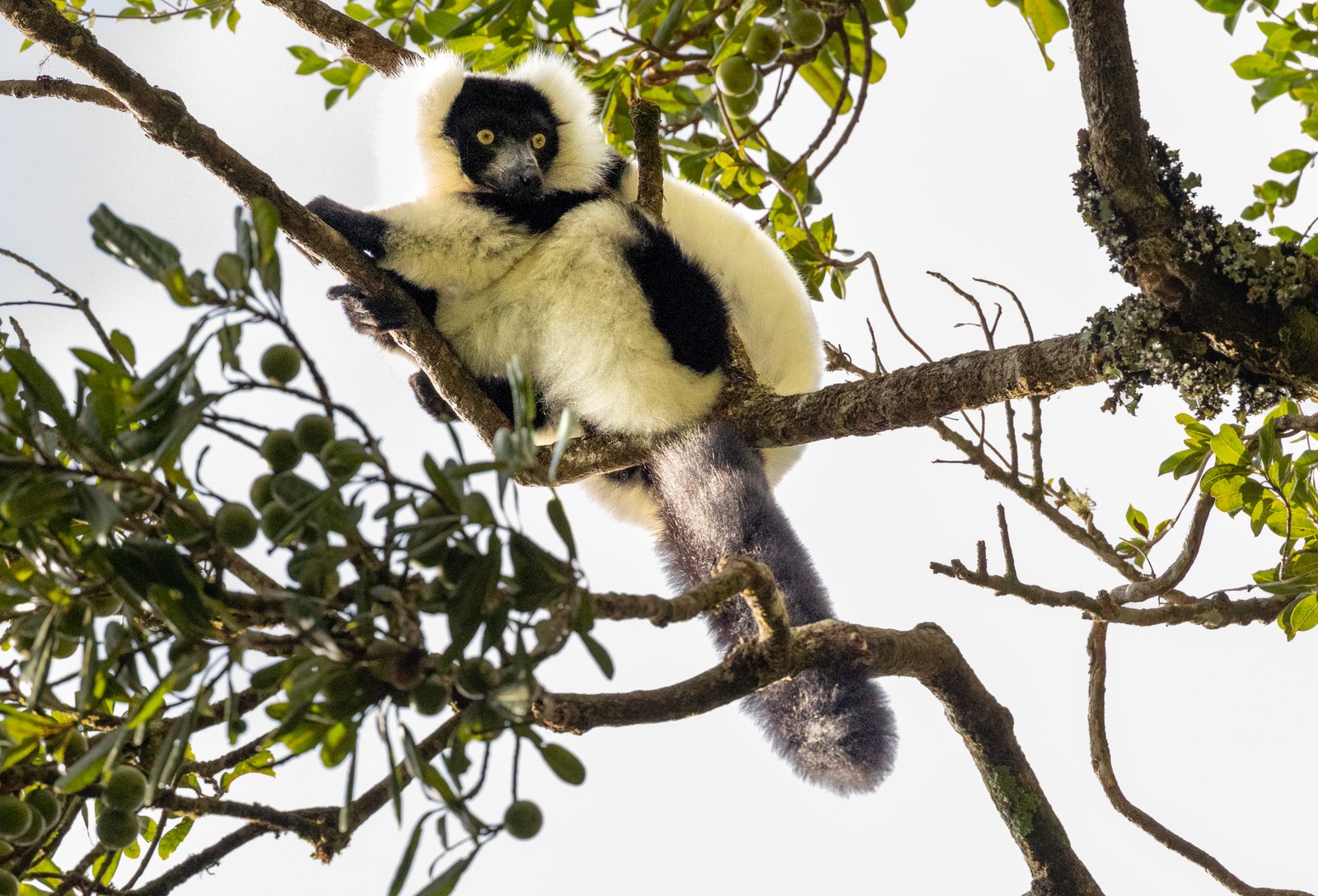
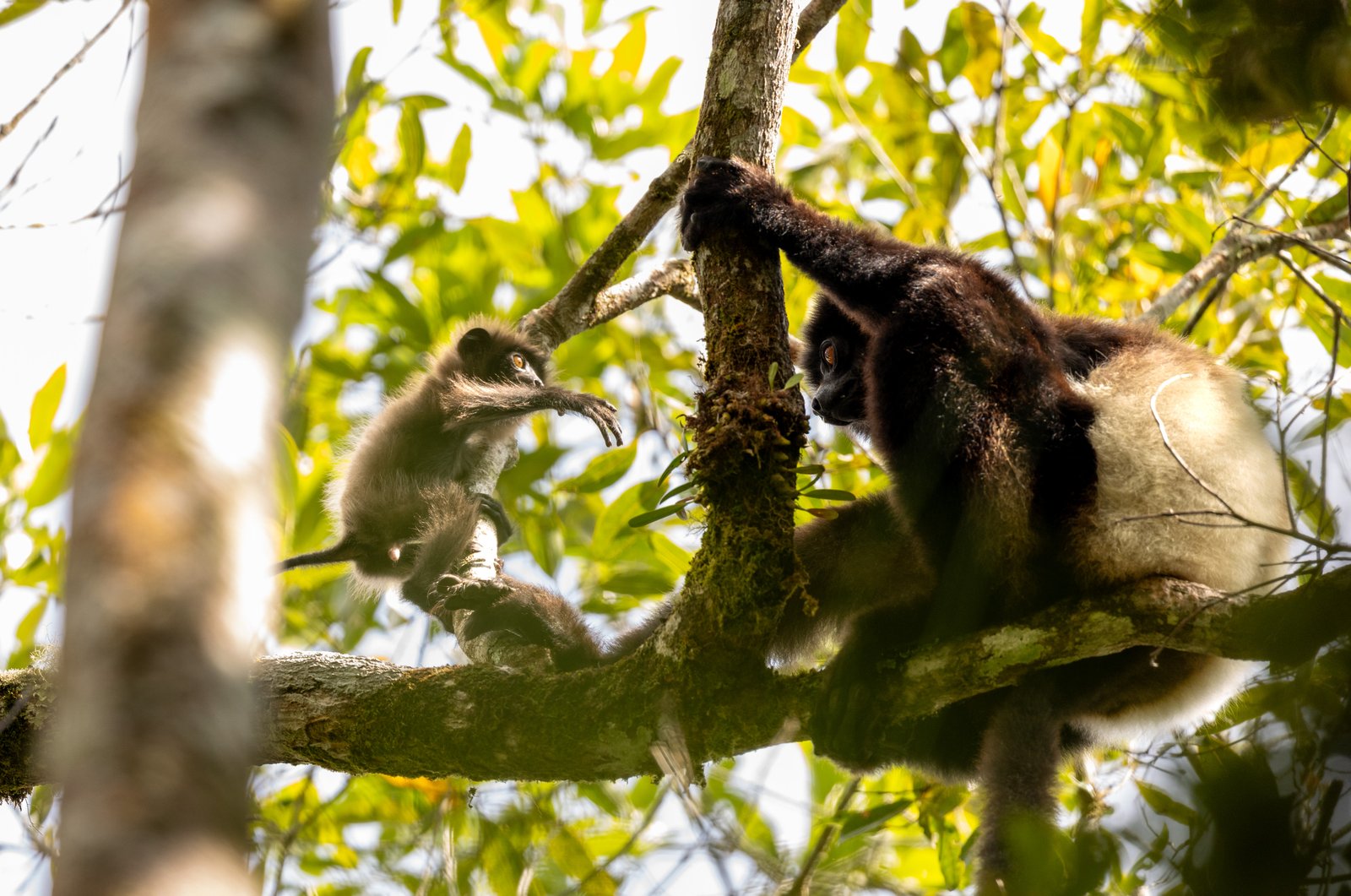
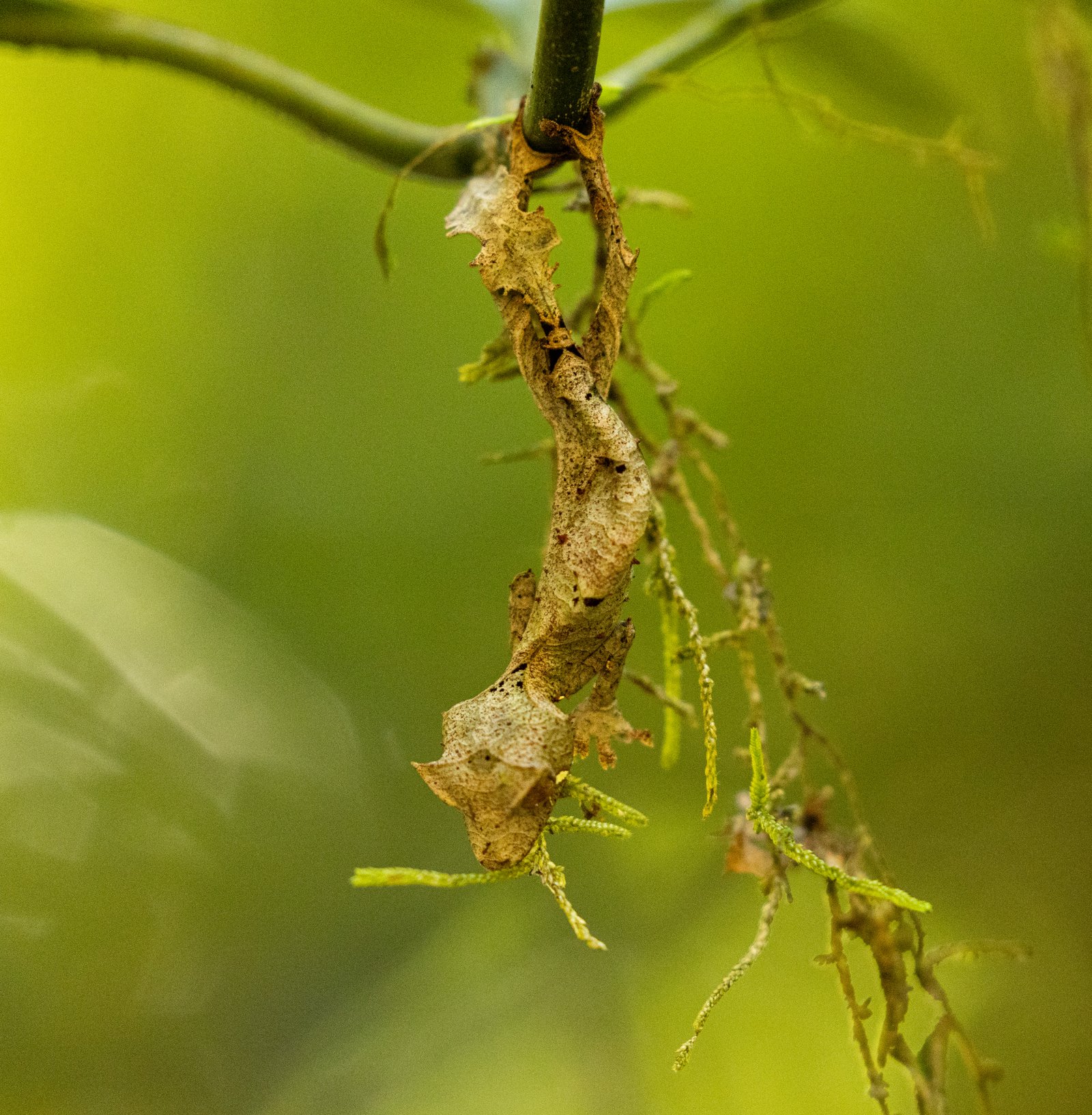
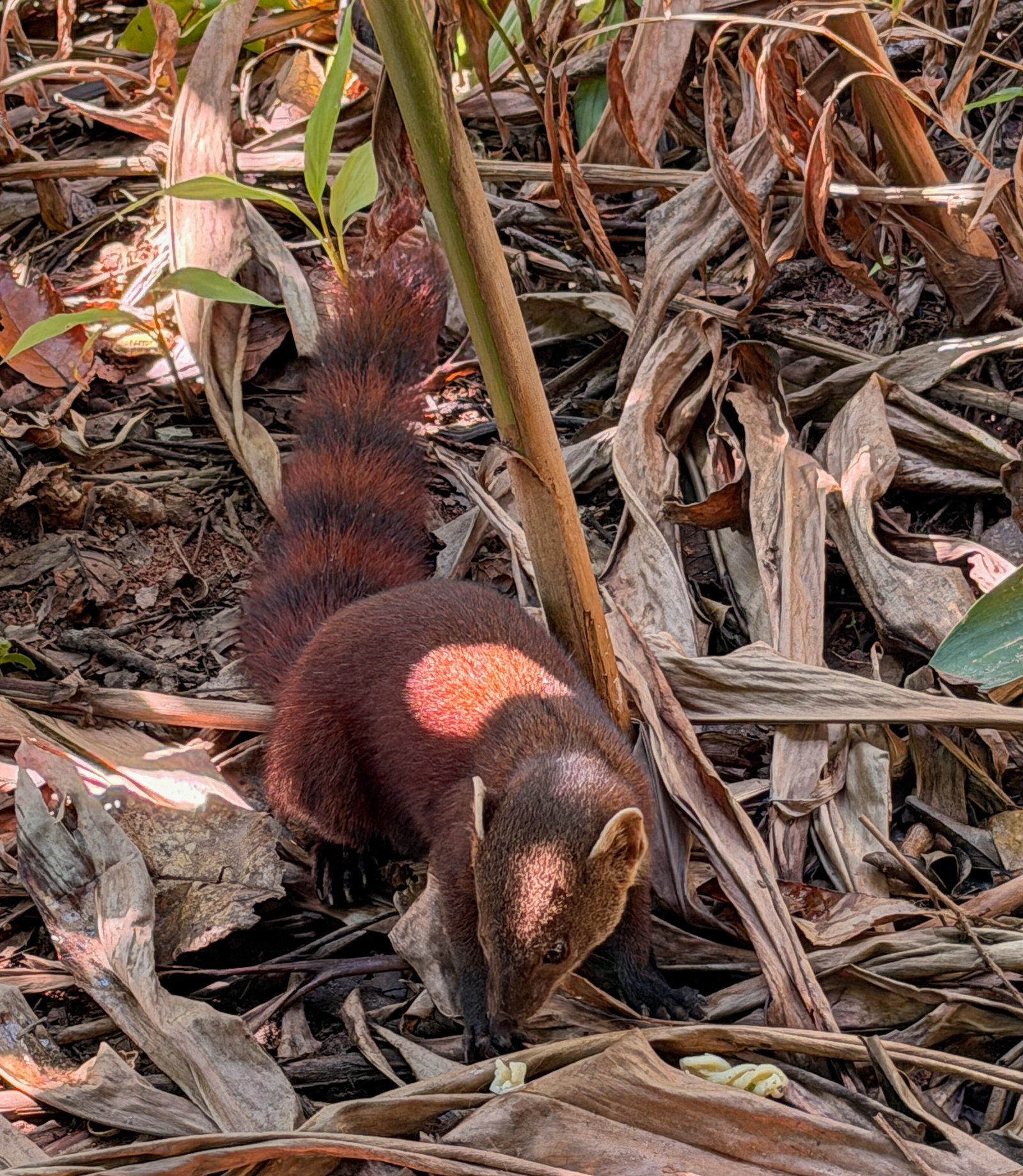
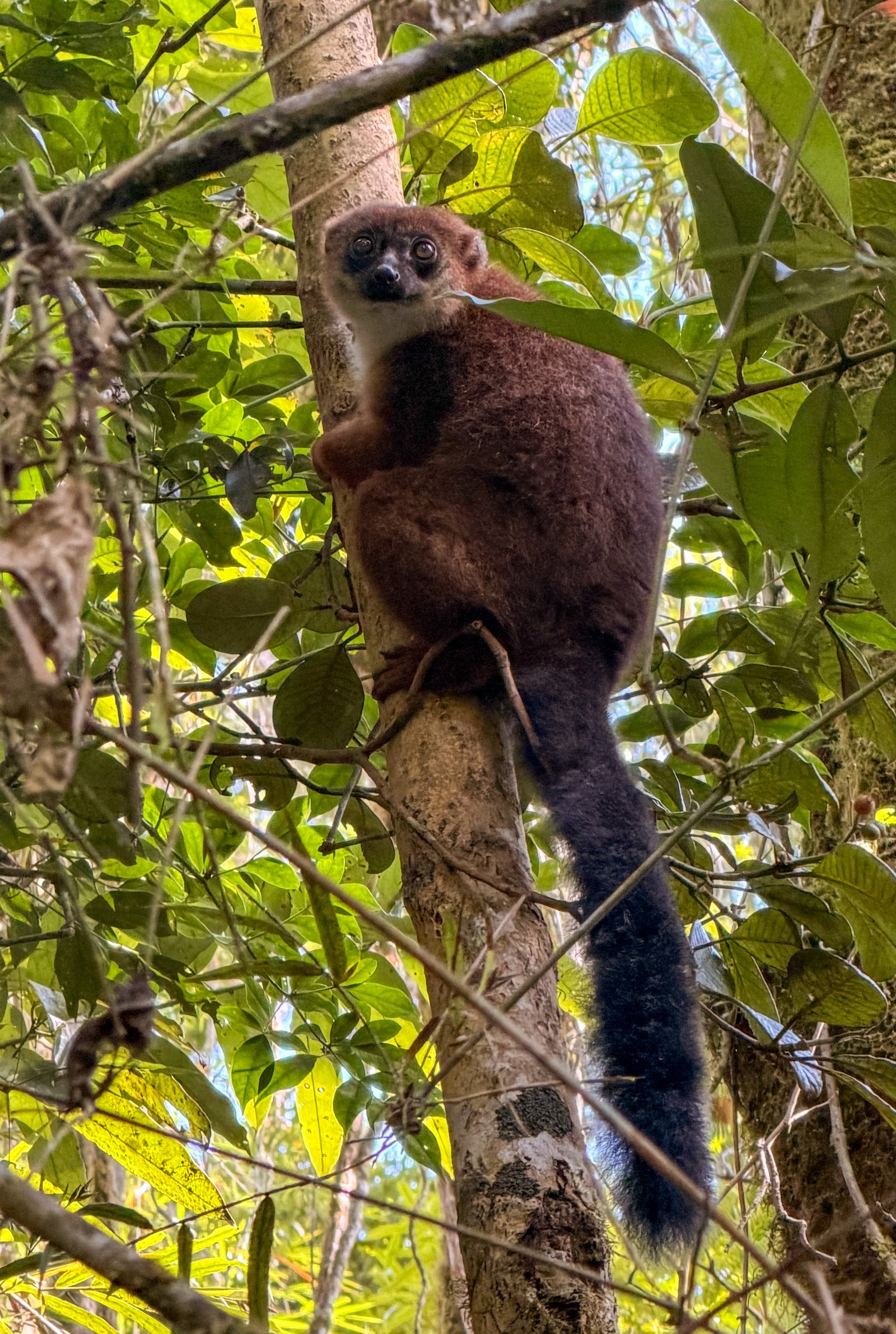
Next, we saw a nocturnal lemur sleeping in the trees, the Ooly lemur. We followed some red-bellied lemurs, found only in a strip of Eastern Madagascar, as they hopped from tree to tree. Our spotter was agressive in his off trail hiking, taking us through the dense growth of vines and trees. We struggled to keep up and felt as if we were running up and down steep hills chasing the lemurs. It was turning out this hike was not just an easy walk in the park! We had a very good sighting of a group of black-and-white ruffed lemurs and they were so cute sunning themselves in the trees. We saw more red-bellied lemurs and again went off trail chasing down better views. After a quick break at the lookout, we saw a group of Indri lemurs, the largest lemur species. There were several females with babies only a month old, clinging to their backs and sometimes being brave enough to experiment with climbing on the tree. We tracked down a leaf-tailed gecko, very camoflauged and clinging to the edge of a leaf. After that we were pretty much done with the spotting and started hiking out. In all, we ended up hiking about 4 miles.
Ranomafana Thermal Pools
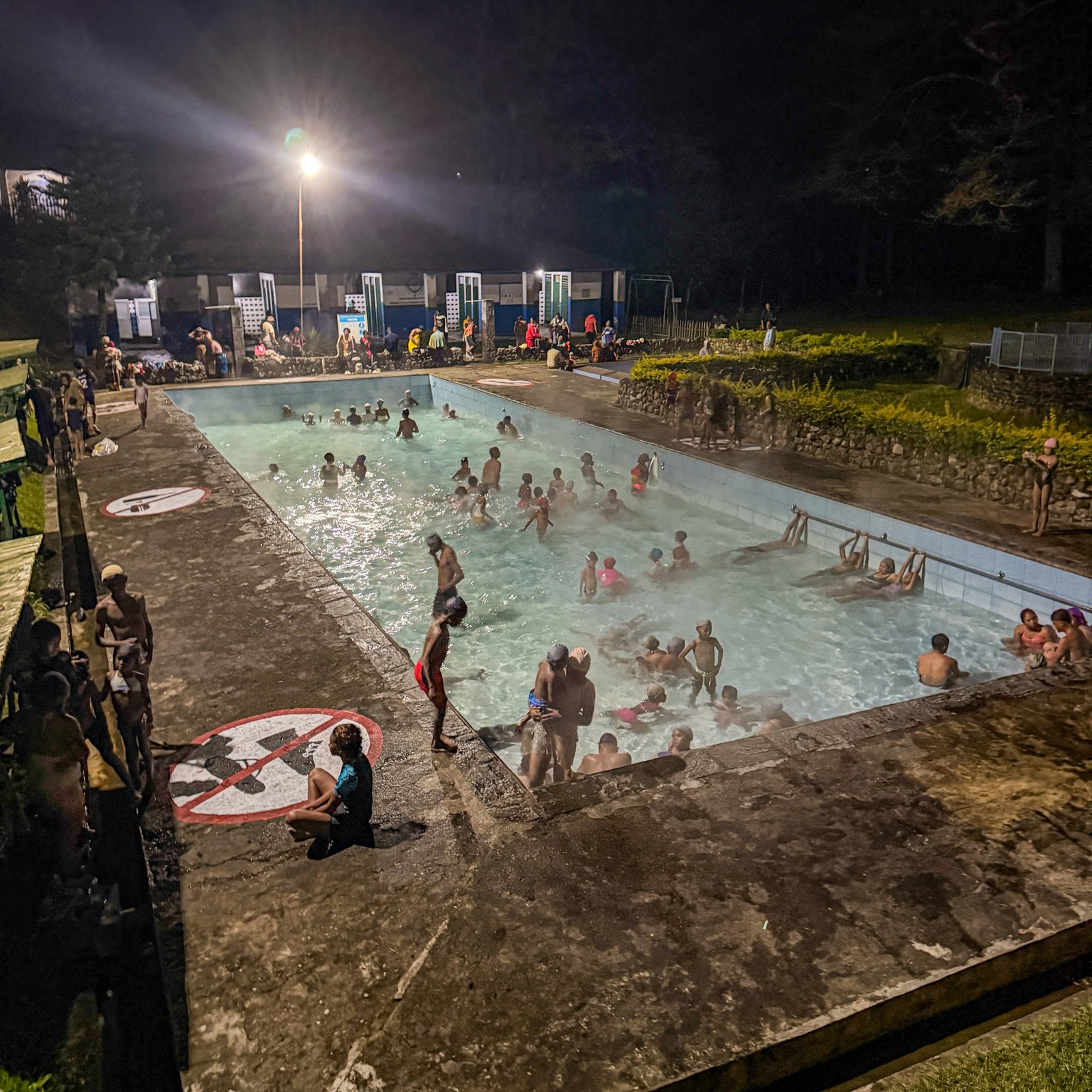
Ranomafana town is known for its large thermal pool. It is a popular spot with the locals to enjoy the warm thermal water. Since we were there on a Tuesday, we had heard that the pool is closed for the majority of the day because they empty it to clean it and refill every Tuesday. However, it is open on Tuesday evening later than the usual closing hours to make up for the cleaning time. We decided this was lucky, because at least the pool would be clean! There were mixed reviews on what time the pool would open (we heard 6pm and also 7pm), with closing at 9pm. We ended up going around 7pm and there were definitely people there. However, the pool was still in the process of filling, so it wasn't as deep as we would have liked.
We paid the 10,000 Ar per person foreigner entrance fee and had to rent bathing caps for 2,000 Ar each, as they are required in the pool. We got in and immediately noticed there were a ton of small flies in the water. Like, a LOT of flies. We think it was because they were attracted to the bright overhead lights around the pool. We continued on and found a place to relax in the hot water, swishing the dead flies away every few seconds. The pool was very crowded but the locals seemed to be having a very good time. We were 2 of only a handful of tourists there. We stayed for about an hour and then walked back to the hotel where we had our dinner.
Back to Top
Link to Madagascar Photo Galleries
Day 17-18: Driving Days & Antsirabe Town
We had quite a lot of driving to accomplish over the next 2 days, with an overnight stop in Antsirabe, Madagascar's 3rd largest city. On our first day, we drove from Ranomafana to Antsiribe and our second day we drove to Miandrivazo where we would begin our river adventure. Each of the days ended up being 7ish hours in the car, with very little stops. Both days, we stopped for lunch and one other roadside viewpoint and a bathroom break. This is just the way of life when traveling around Madagascar and something we knew about when signing up for this trip. We enjoy looking out the window and seeing the changing landscape and daily life of the locals as we pass through the small towns.
Antsirabe Town
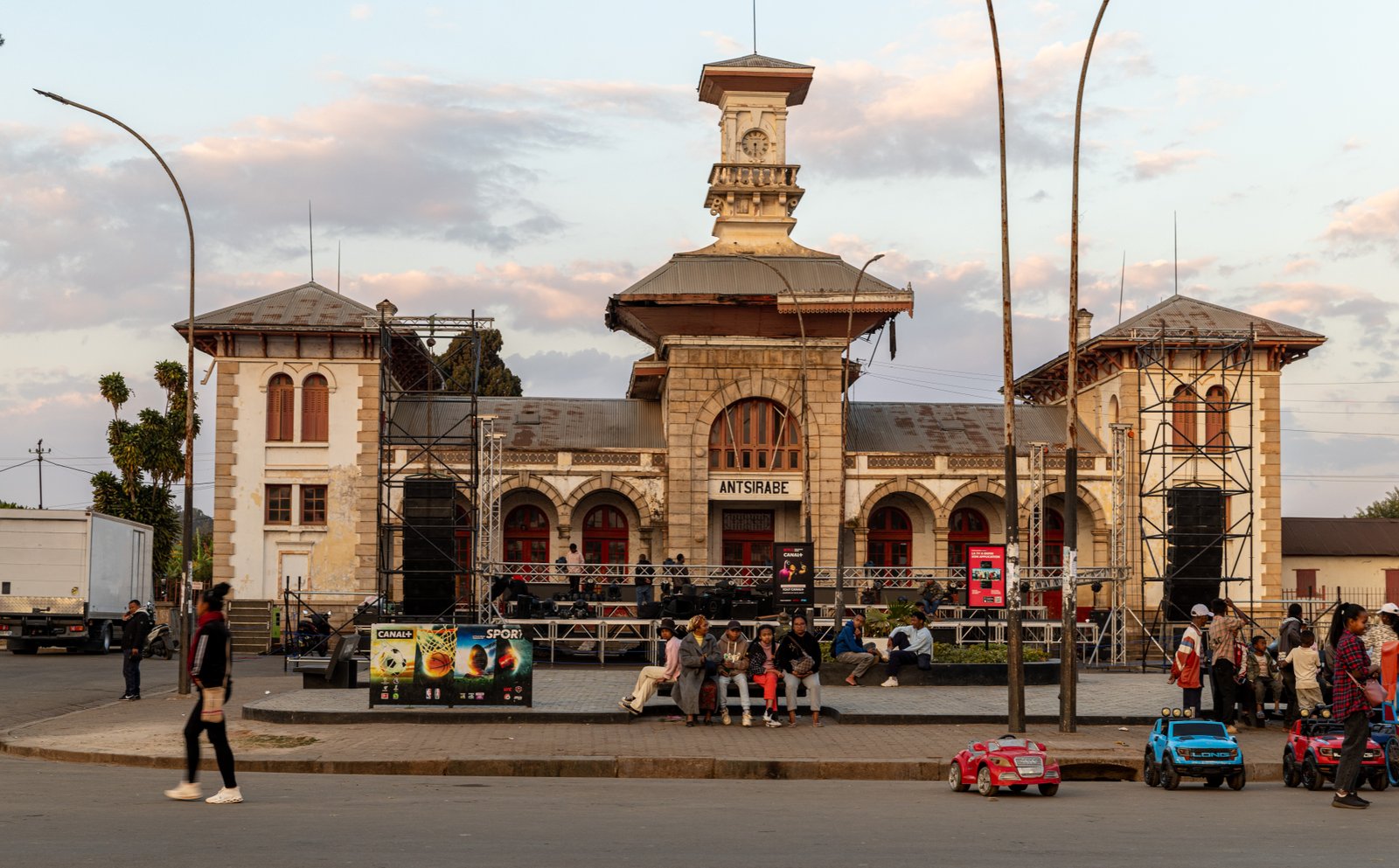
Antsirabe is known for another thermal spring and also a large manufacturing center. For example, on our way into or out of town, we passed the local beer production plant, a large yogurt / dairy plant, and a large clothing manufacturer. As early as the 1930's there was a railway connection from Antsirabe to Antananarivo. In recent years, the passenger railroad has been terminated due to lack of maintenance and destruction by cyclones. The colonial style train station still remains and is one of the touristy sites to see in the city. We arrived about an hour before sunset and checked in to our hotel at Badiane B&B, By L'anis Etoilé. Our room was nice enough but a little cold and turned out to not have hot water when we tried to shower in the morning.
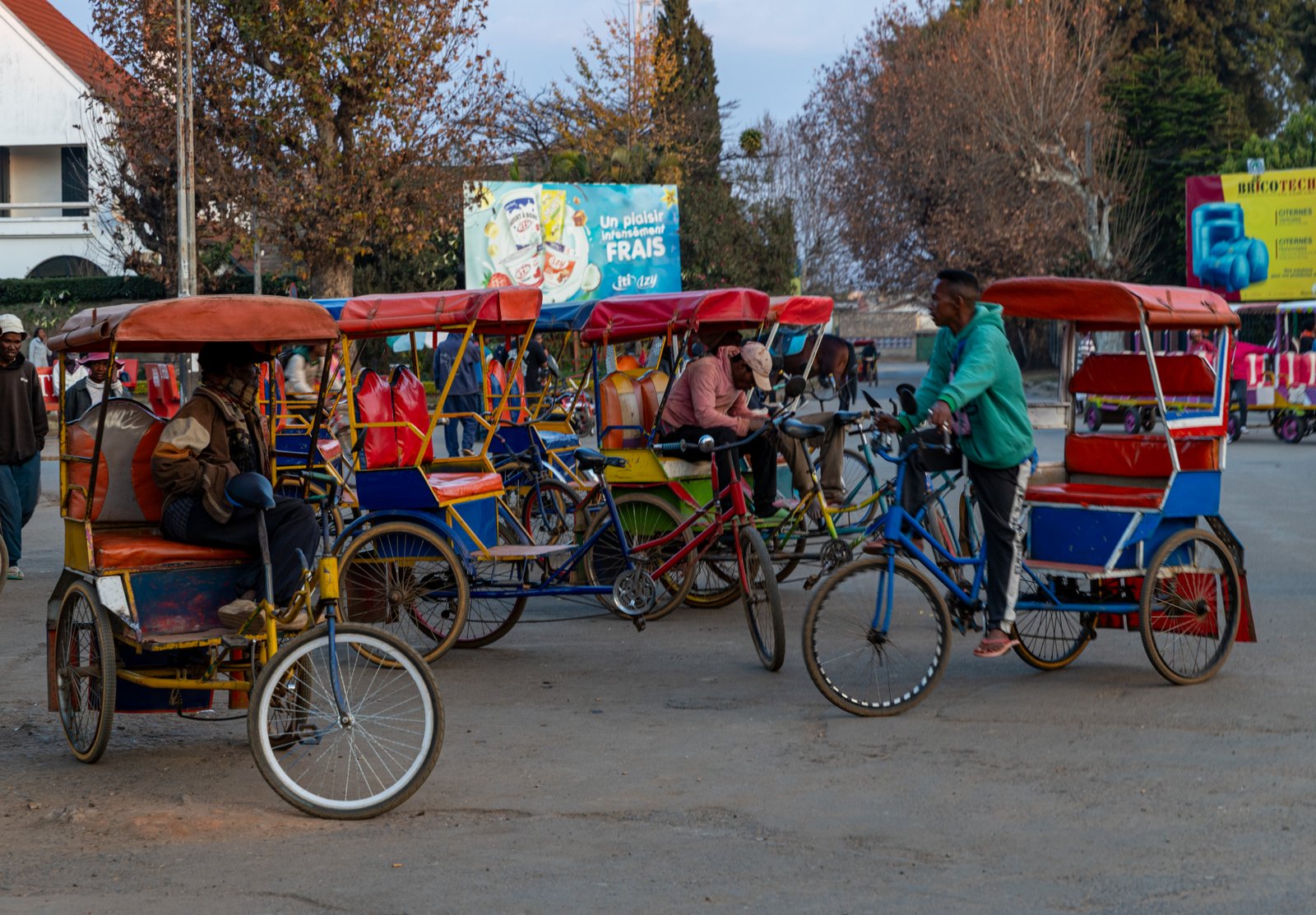
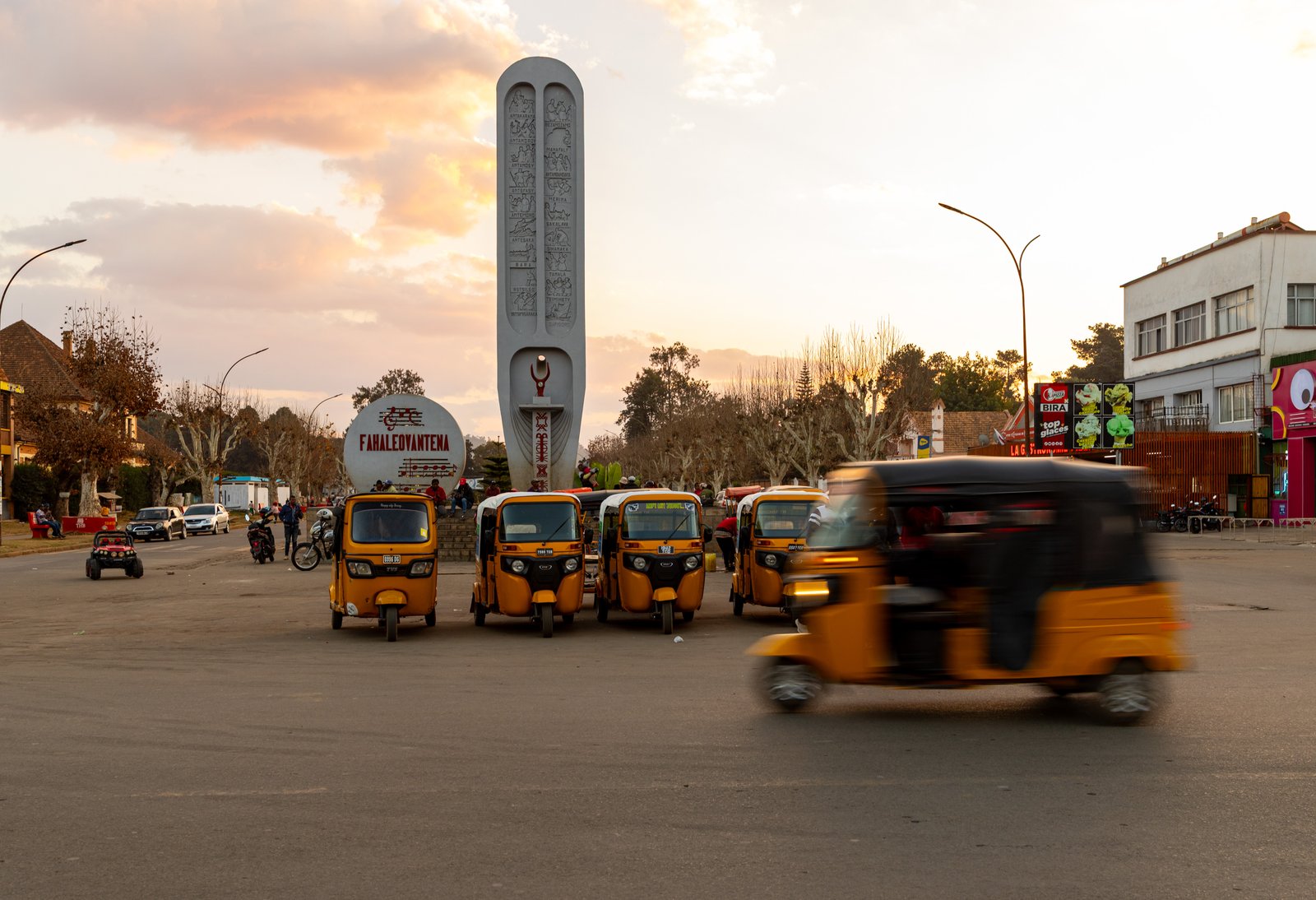
We walked around town to see the train station, catherdral and stop at the grocery store to get more snacks and drinks for our upcoming boat trip. The next morning, we had an early appointment to get a pousse-pousse (another name for the bicycle rickshaw we had seen in Toliara). Our rickshaw driver was persistant, asking us to come with him the night before and then being the first one there in the morning. He took us for a quick stop at the cathedral, then the thermal hotel, and then on a road where we passed through a local market area. The goal was to get us to an artisan workshop area where we got to experience a variety of crafts being made.
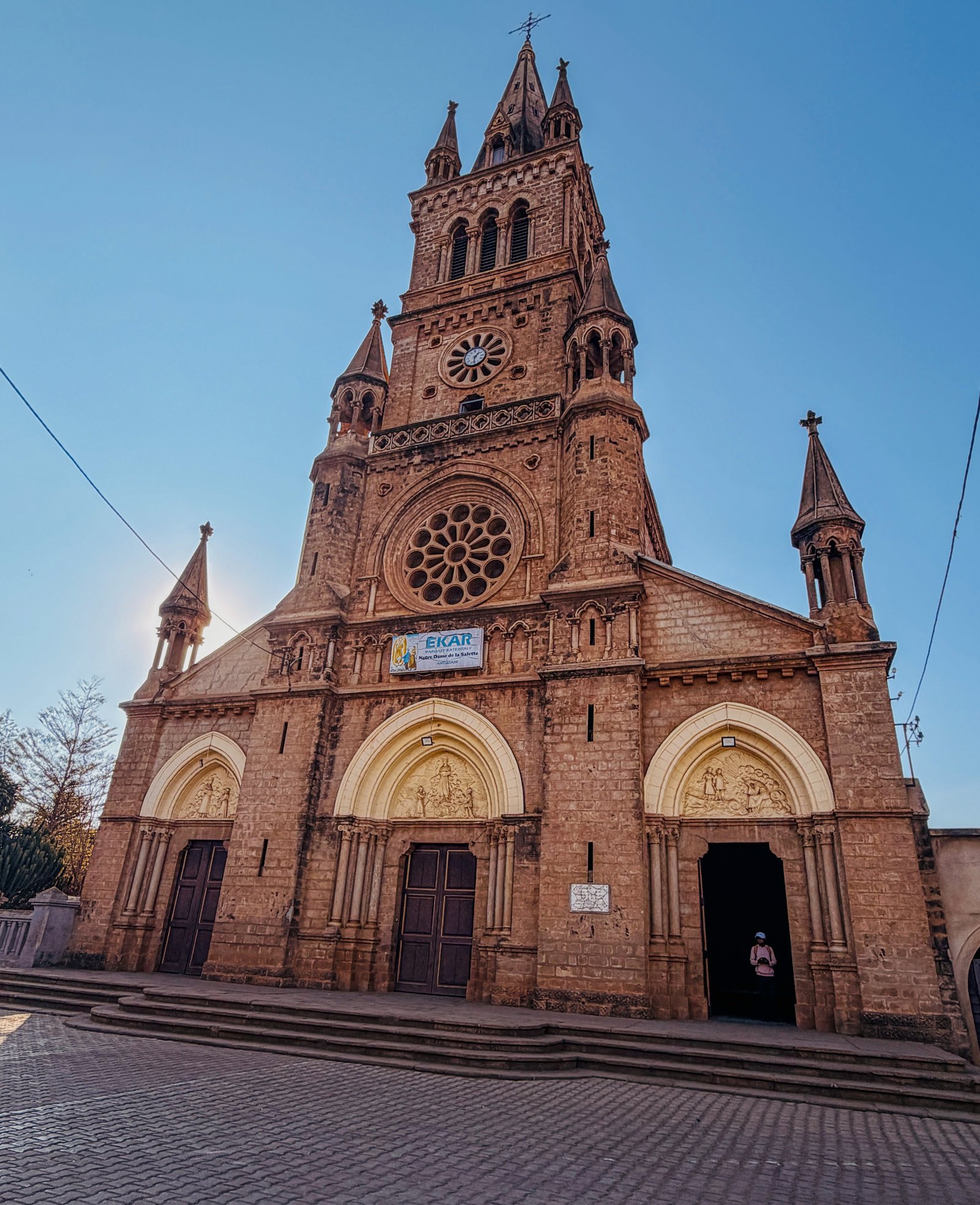
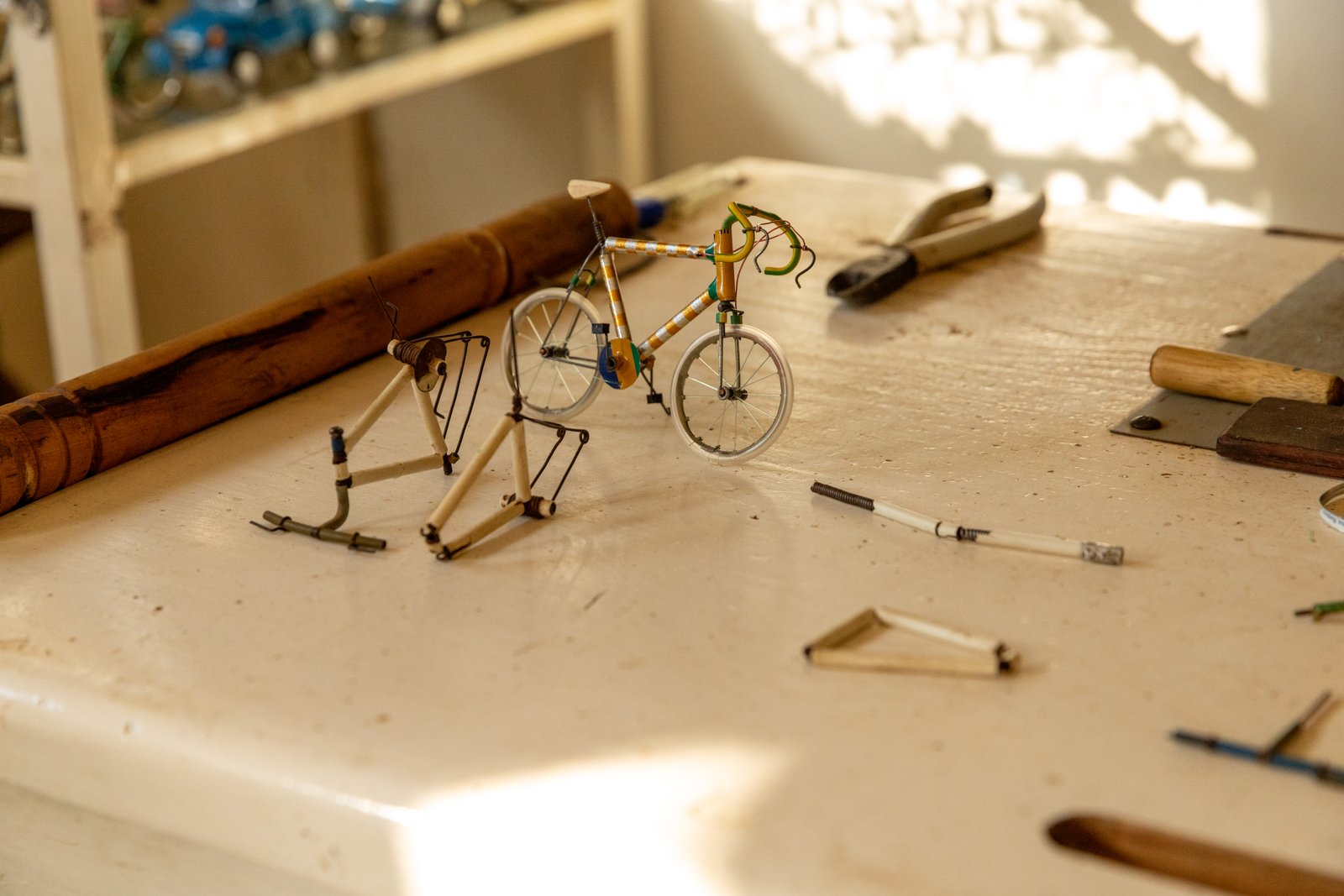
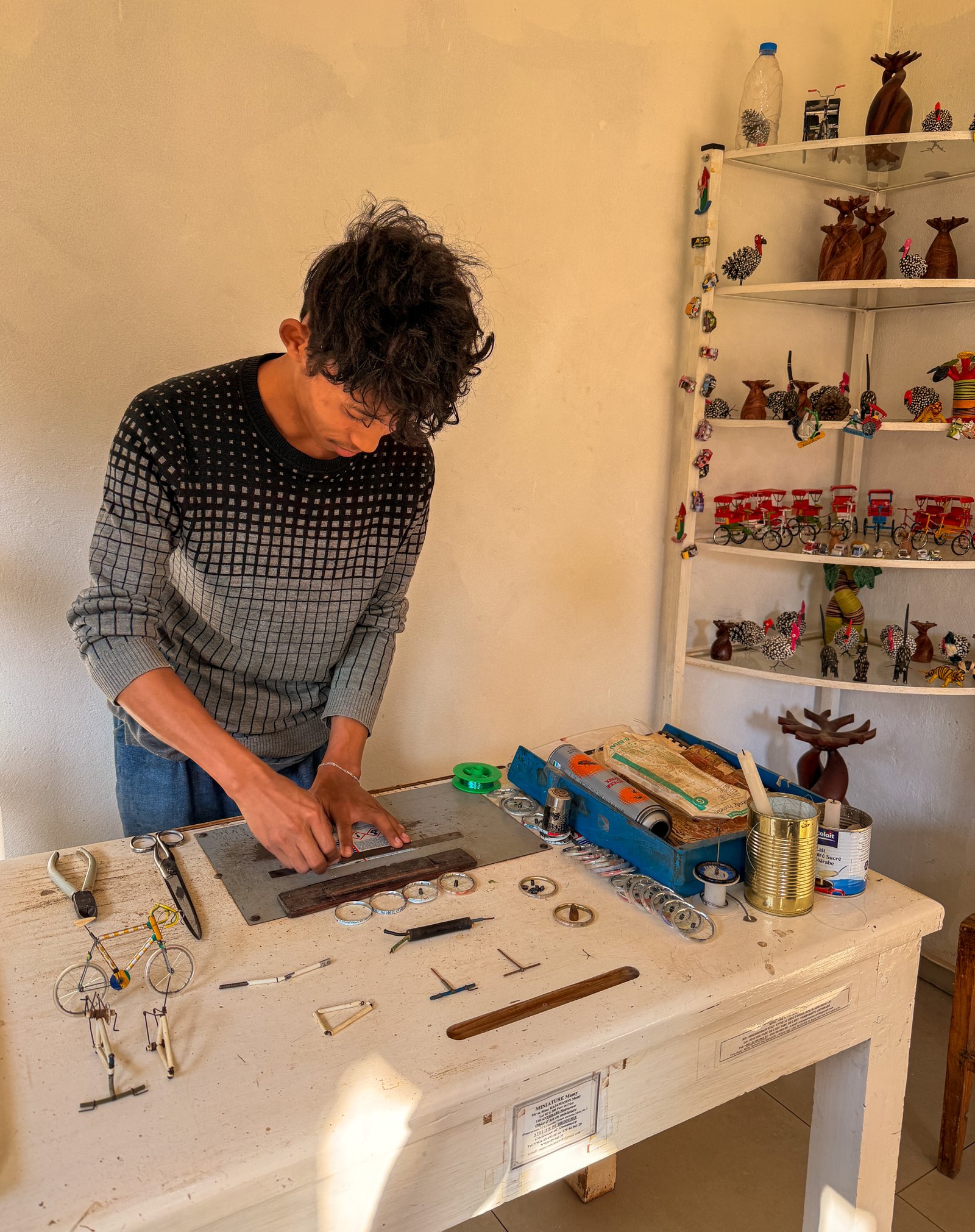
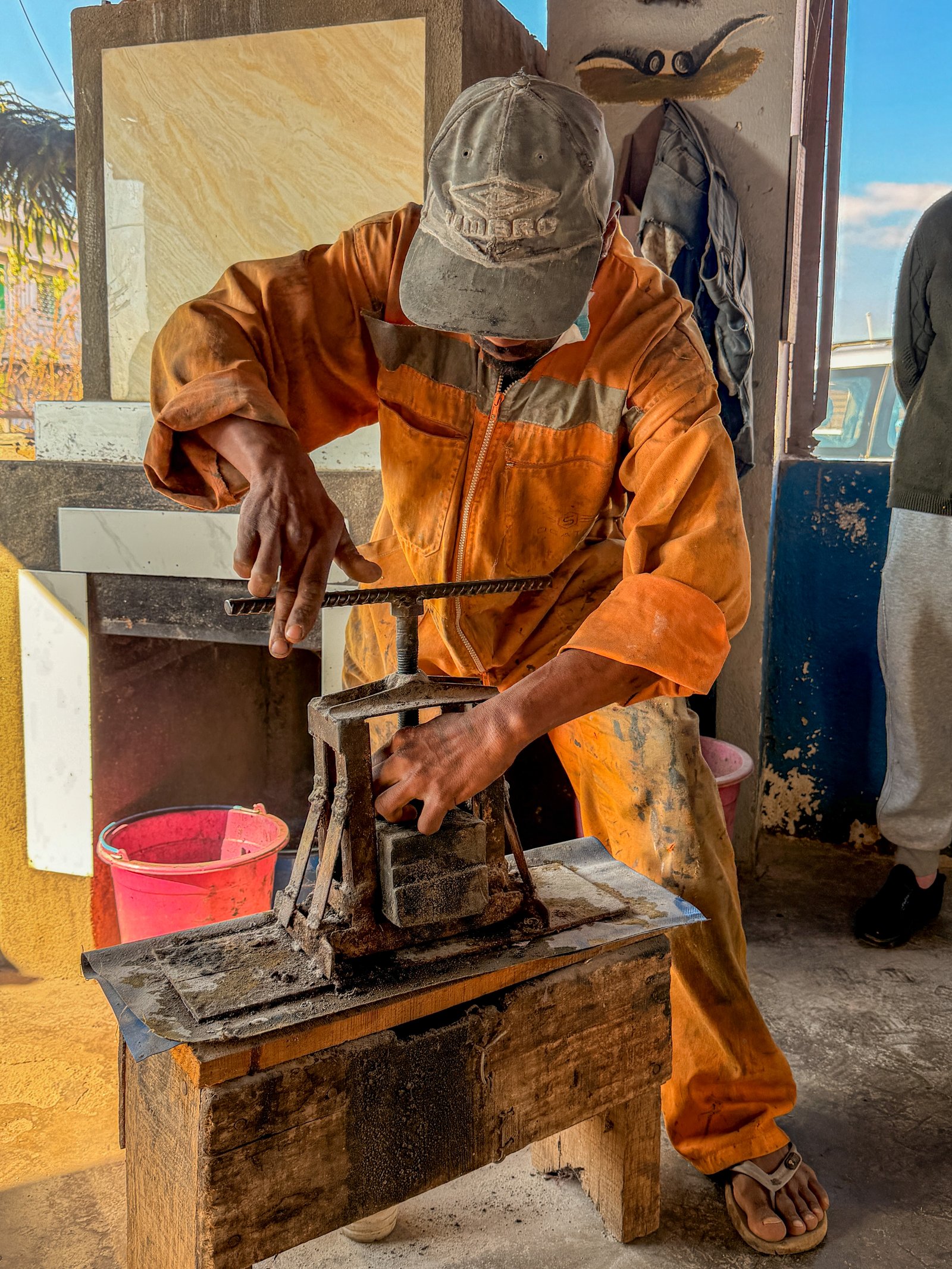
One thing you can say for sure about Madagascar is that the people here are experts at making their own crafts and souveniers. You won't find imported Chinese junk here, just pure handmade items, which we really appreciate so much more. We stopped at 4 workshops on our tour. The first was a miniature model making shop where they use recycled materials to create miniature souveniers of bicycles, rickshaws, taxi cars and more. The young man demonstrating showed us the entire process of making a miniature bicycle wheel, all in very well spoken English. Next, we stopped at a workshop using zebu horns to make products such as jewelery, spoons, boxes, or even chess pieces. We watched the entire process of making a spoon from the zebu horn. The 3rd shop was an embroidery workshop where they make table cloths, runners, t-shirts etc with hand stitched embroidery. Finally, we stopped at a batik workshop where they use wax to create the patterns on their artwork. We couldn't help but choose some of these products to bring home, as prices were reasonable and we were genuinely impressed with their handywork.
Driving Observations
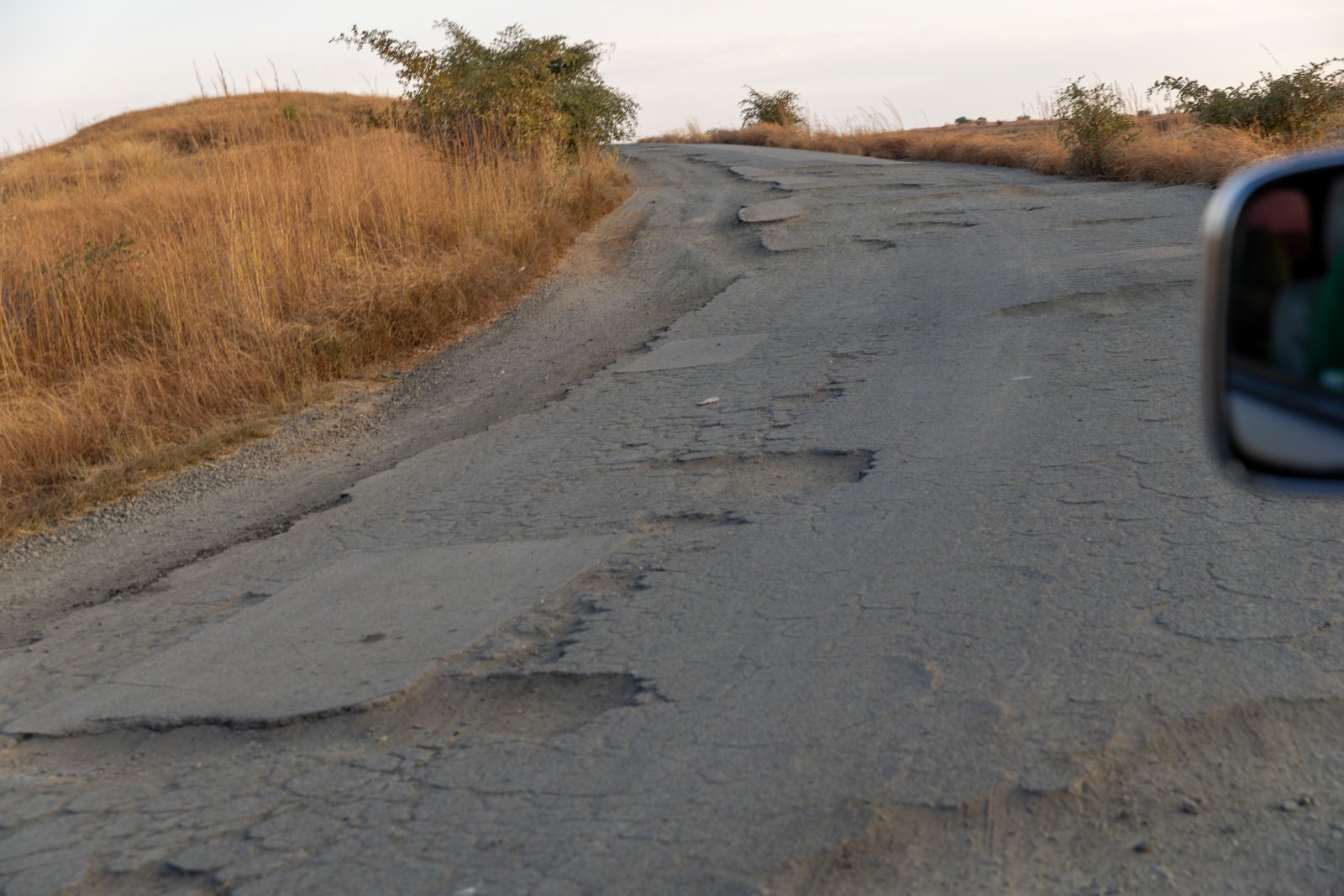
You can almost imagine what the road must have been like when it was first paved. Unfortunately, much of it has succomb to damage and weather, leaving a maze of potholes and ragged paved patches. Other parts are smooth and fast, but will change back to the former unexpectedly. Michel did an excellent job of navigating the roads saftely and sheltering us from as many bumps as possible. It was amazing that we only drove a little over 100 miles each day, but it took us 7 hours including short breaks. If you drive in Madagascar, you also need to be prepared with basic tools and auto repair knowledge. Luckily, we had no major incidents but Michel did pull over to do some fine tuning several times. The majority of other motorized vehicles on the road are local point to point vans (packed to the brim), and semi trucks carrying a variety of loads.
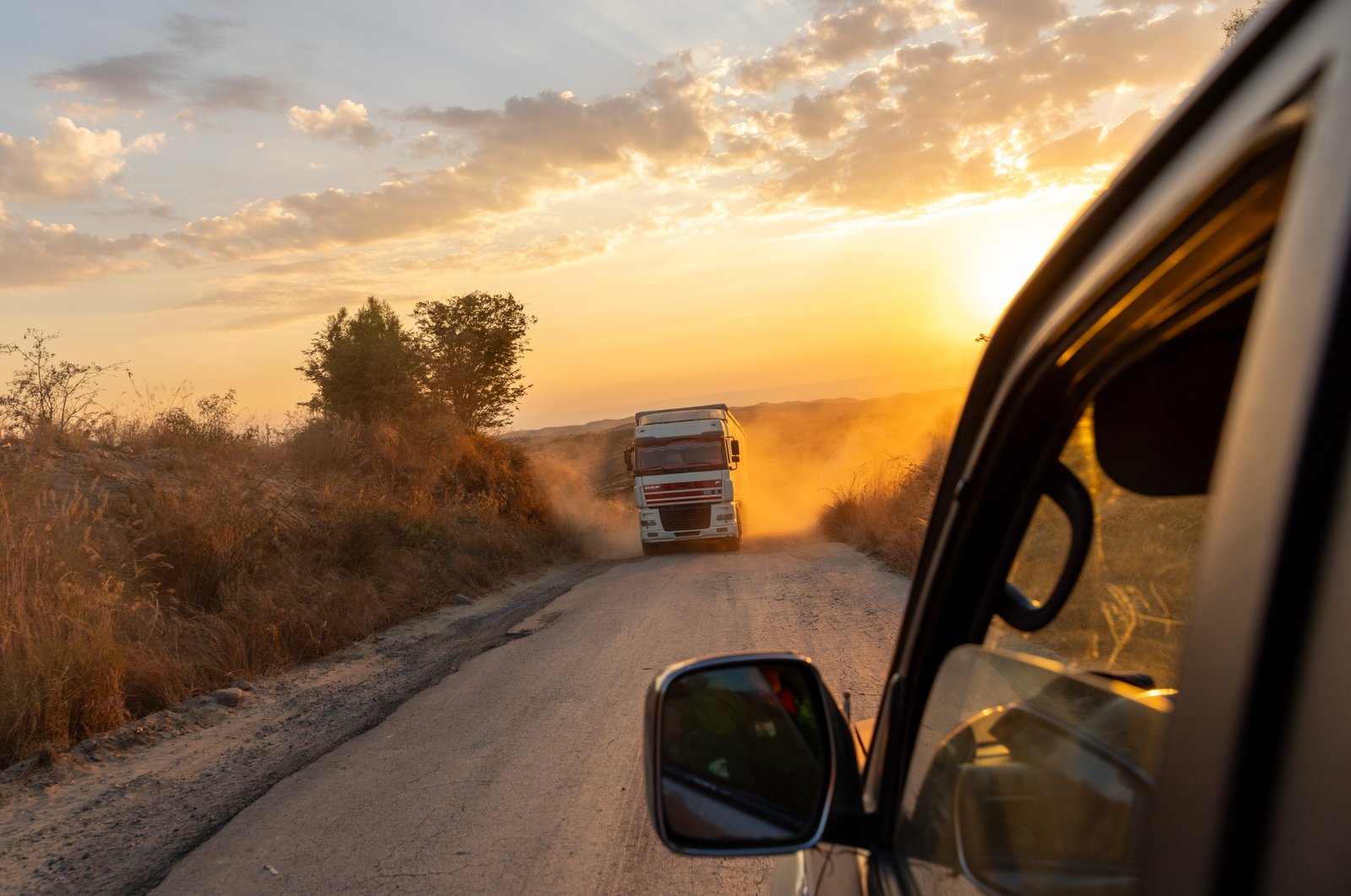
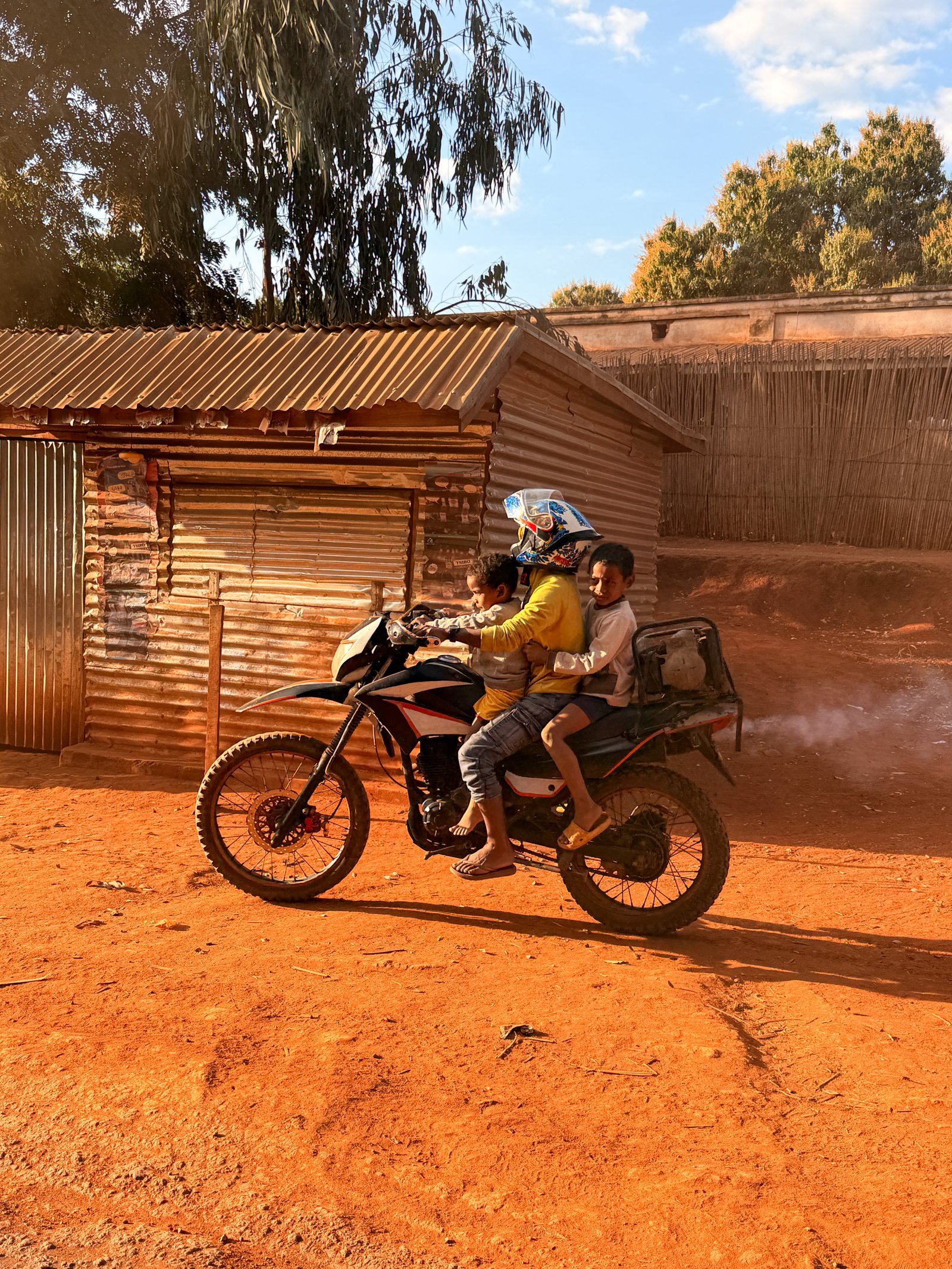
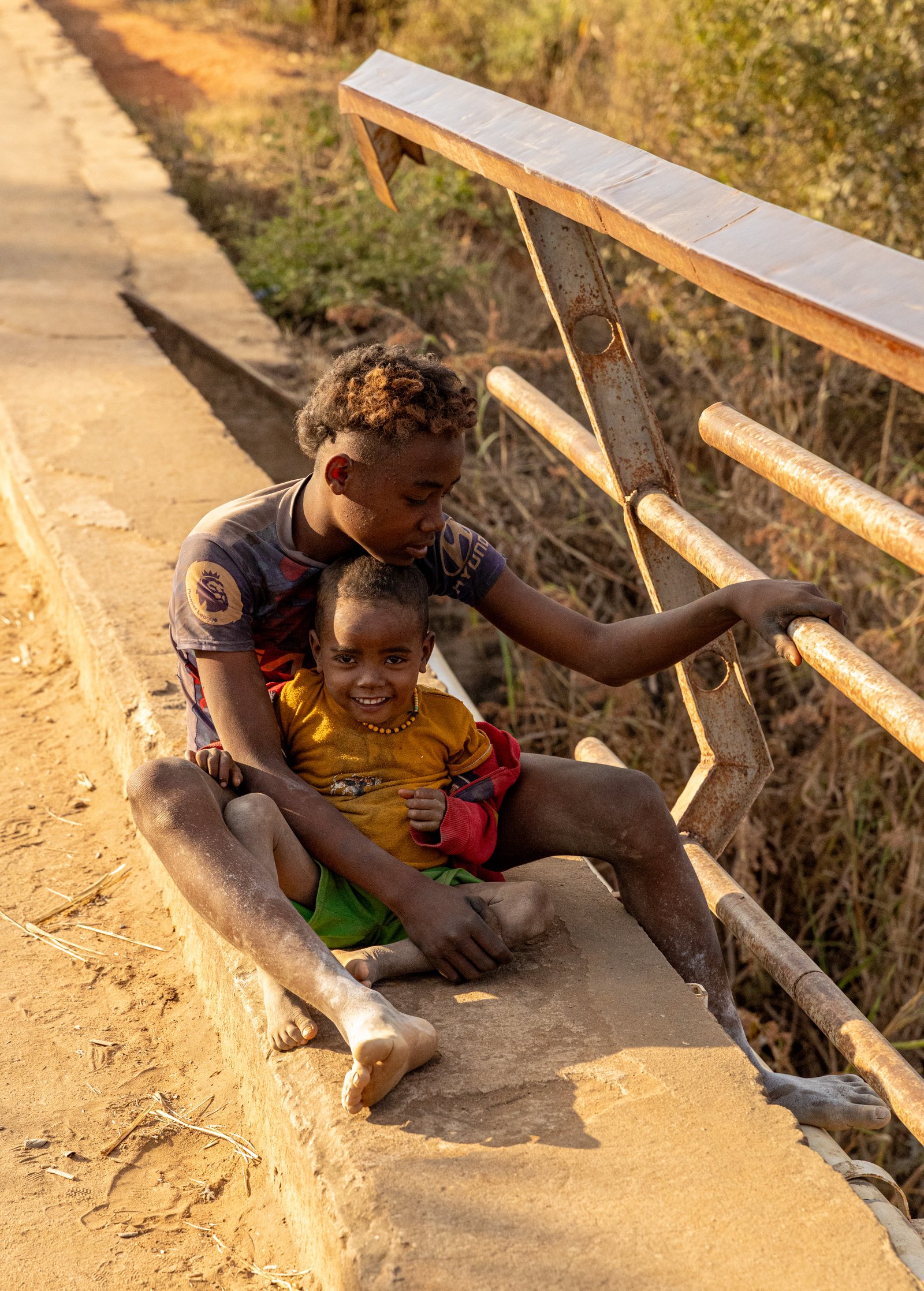
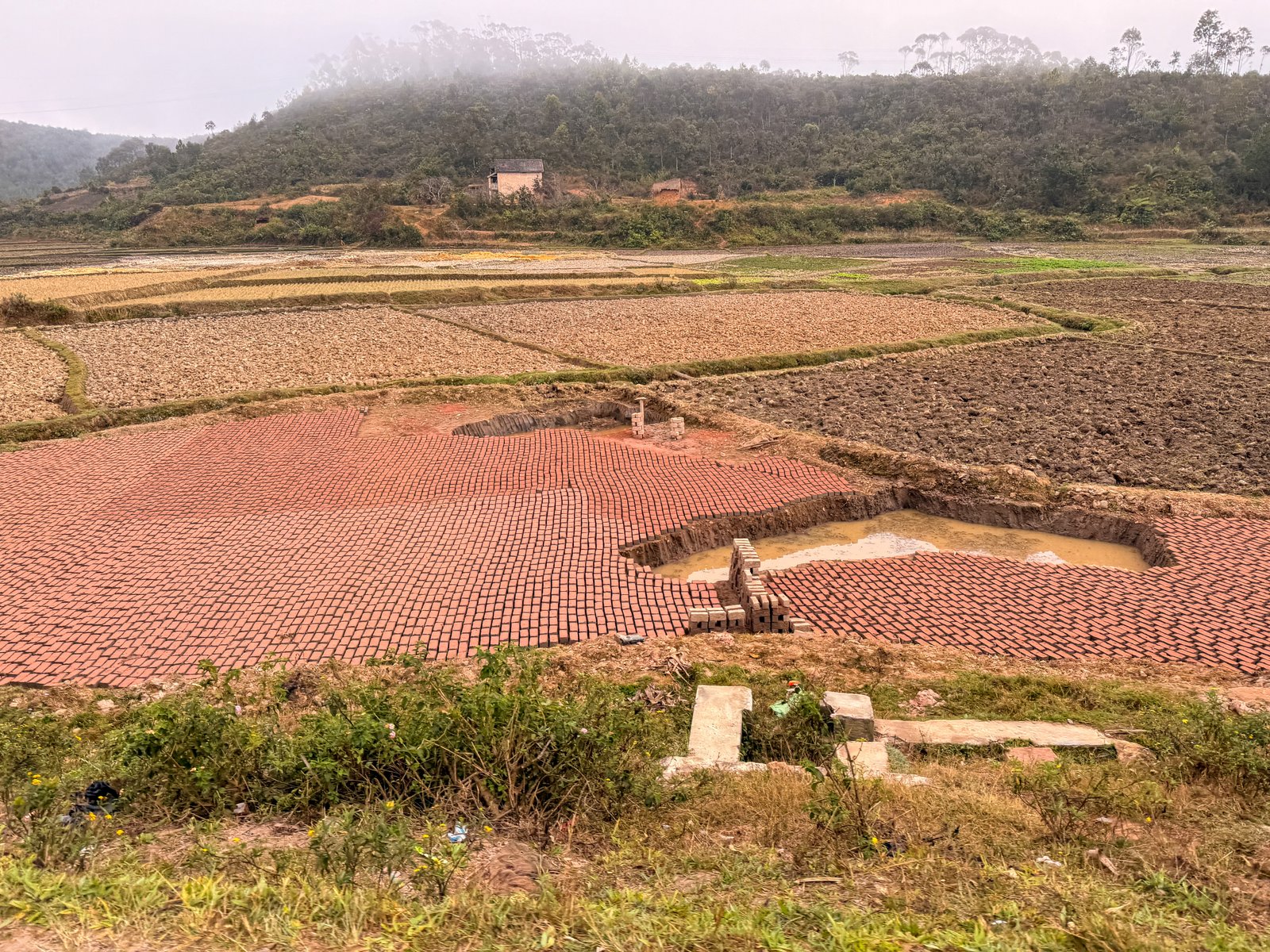
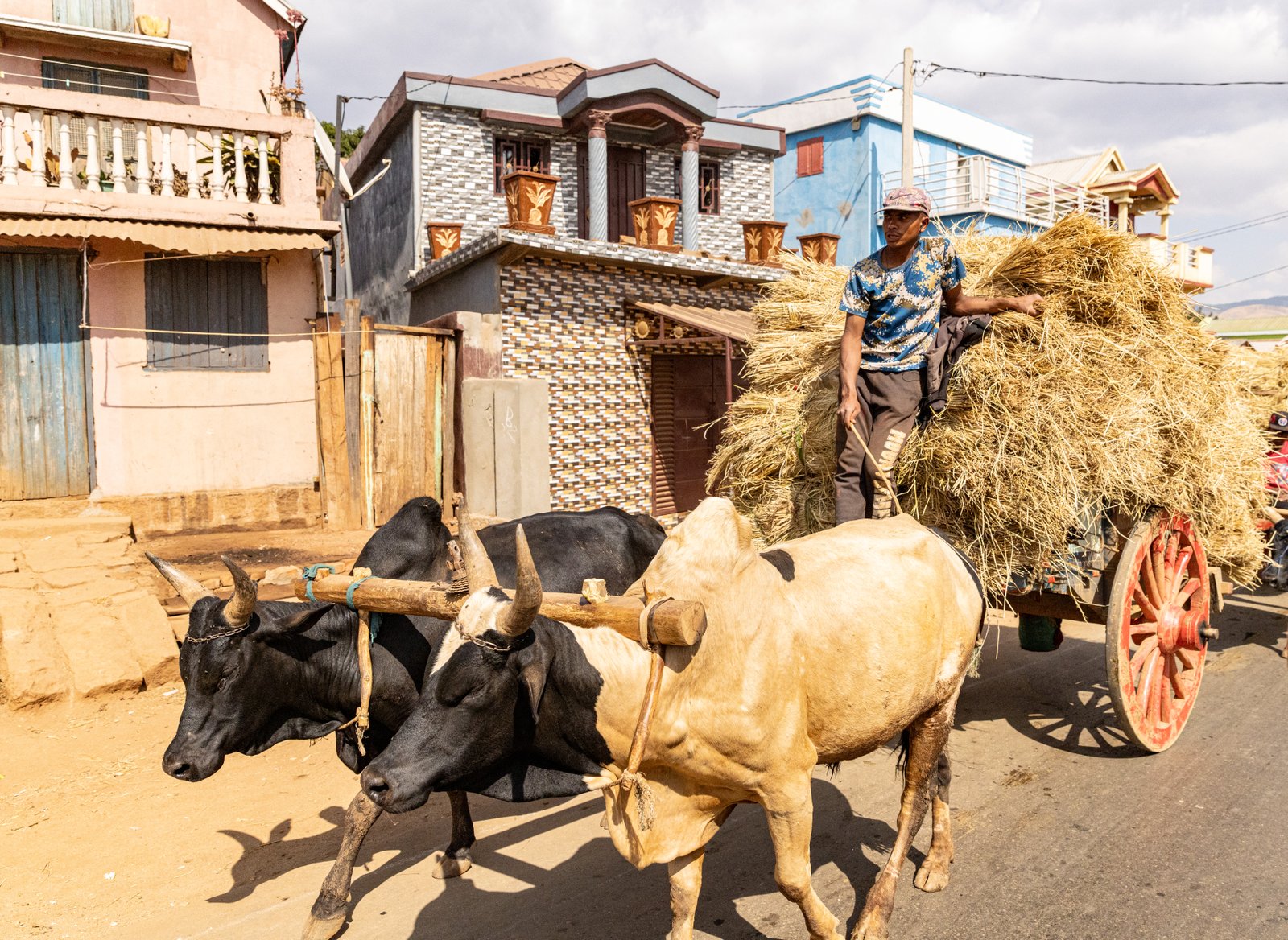
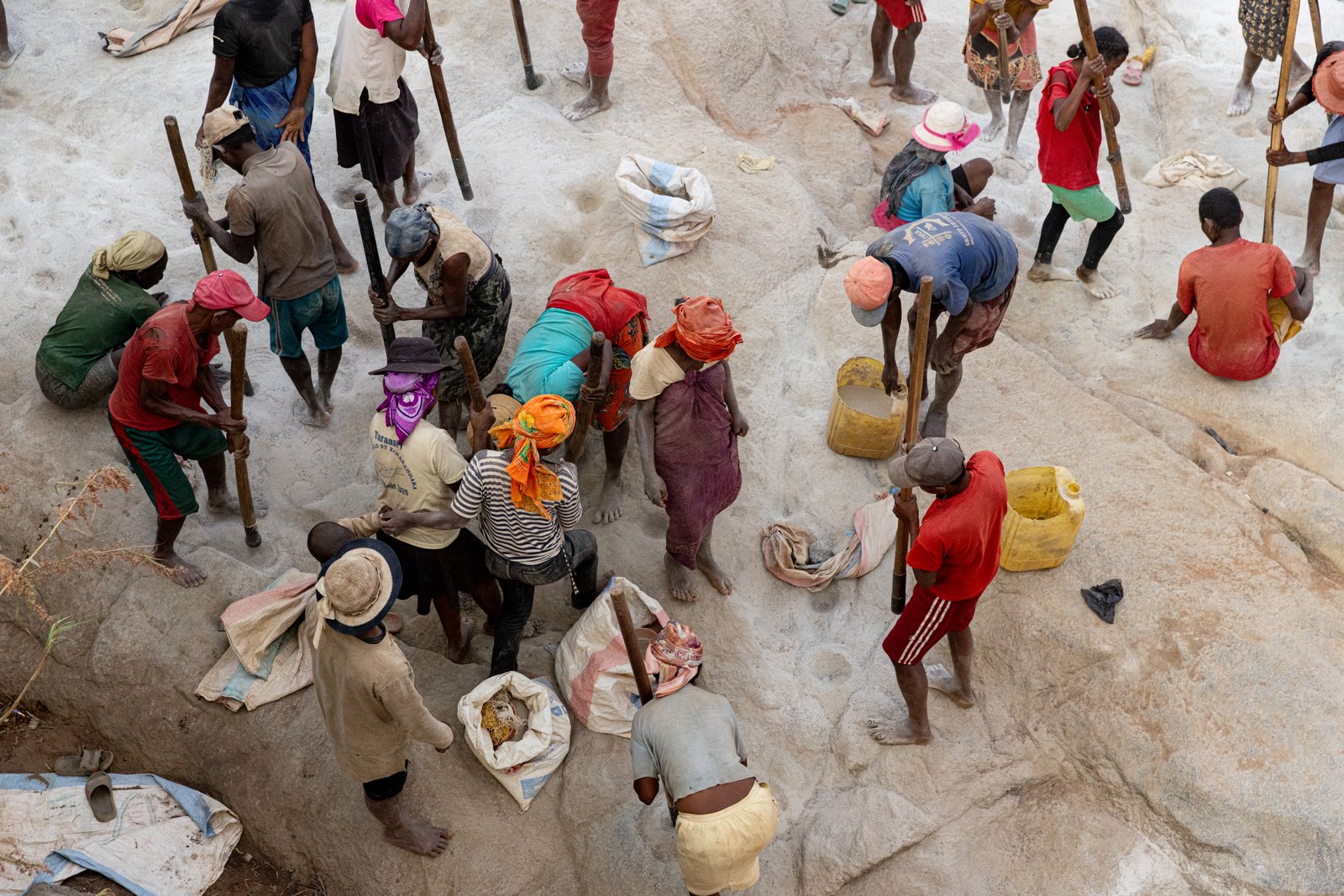
Each day, we settled in for a new adventure and since it is too bumpy to sleep, we were content to look out the window. There was so much happening on the roads that you could be entertained for hours. Some common roadside sights on these two days of driving included the many brick-making operations, locals working in the fields (turning over the soil with shovels, planting and watering by hand), bicycles with heavy loads of stacks of sticks, water, or sacks, men or boys walking their zebu or goats along the road, carts (either pulled by zebu or hand pushed) loaded down with all sorts of things, and women walking with baskets or sacks on their heads, groups of people pounding large rocks into small pieces, or people waiting on the side of the road for the local bus. We passed through many small villages where there would be crowds of people walking the town, stalls set up on the side of the road selling food, produce, clothing, etc. In the countryside, we would pass by sets of people selling their local products on the side of the road such as large bags of charcoal, firewood, or oranges. Depending on the town, the children would get excited over seeing a foreigner in the car and wave or come running up to see if you had candy. We had been slowly handing out from our large bags of candy as we went.
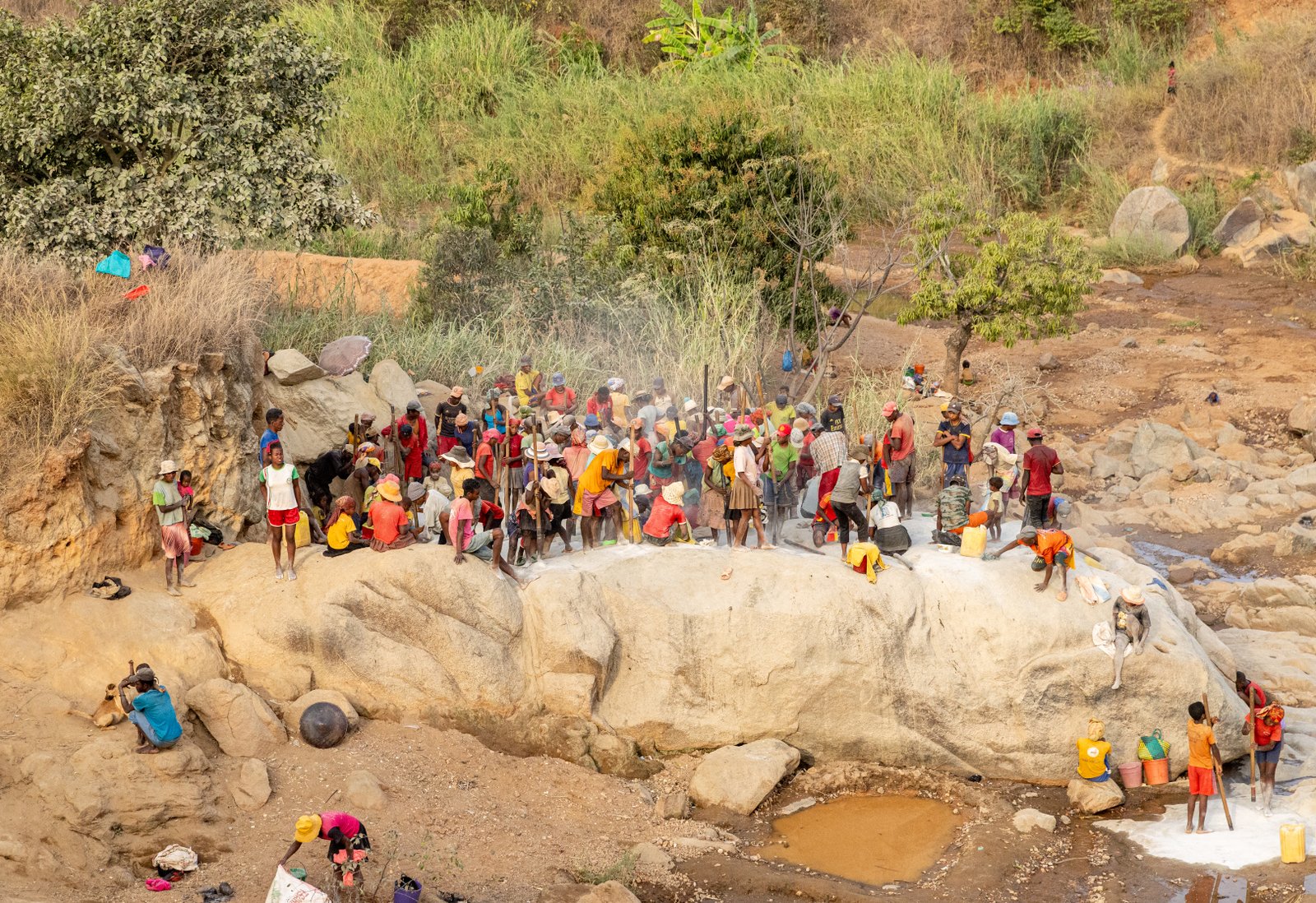
One place in particular that stood out was a gold mining area on our 2nd day of driving. Michel explained that gold was discovered here and people were contracted to extract it from the rock. They can make 100,000 Ar ($23 USD) per gram of gold. We stopped and got out to observe them in action and were in awe of the effort. They were pounding the bare rock to make dust and then taking it to sift in the water to find gold flakes. On this stop, many children rushed our car hoping for candy. Michel made them line up politely and sit and wait for us to be done taking pictures. When we got back, there was a line of ~25 kids! Luckily, we had enough candy and were able to give one piece to each. Overall, the locals are super friendly and curious, quick to give a smile or a wave as we pass by. Even though traveling by car in Madagascar can mean long days, we wouldn't trade it for any other way, as we have been able to observe so much of the local way of living.
Back to Top
Link to Madagascar Photo Galleries
Day 19-20: Canoe trip on Tsiribihina River
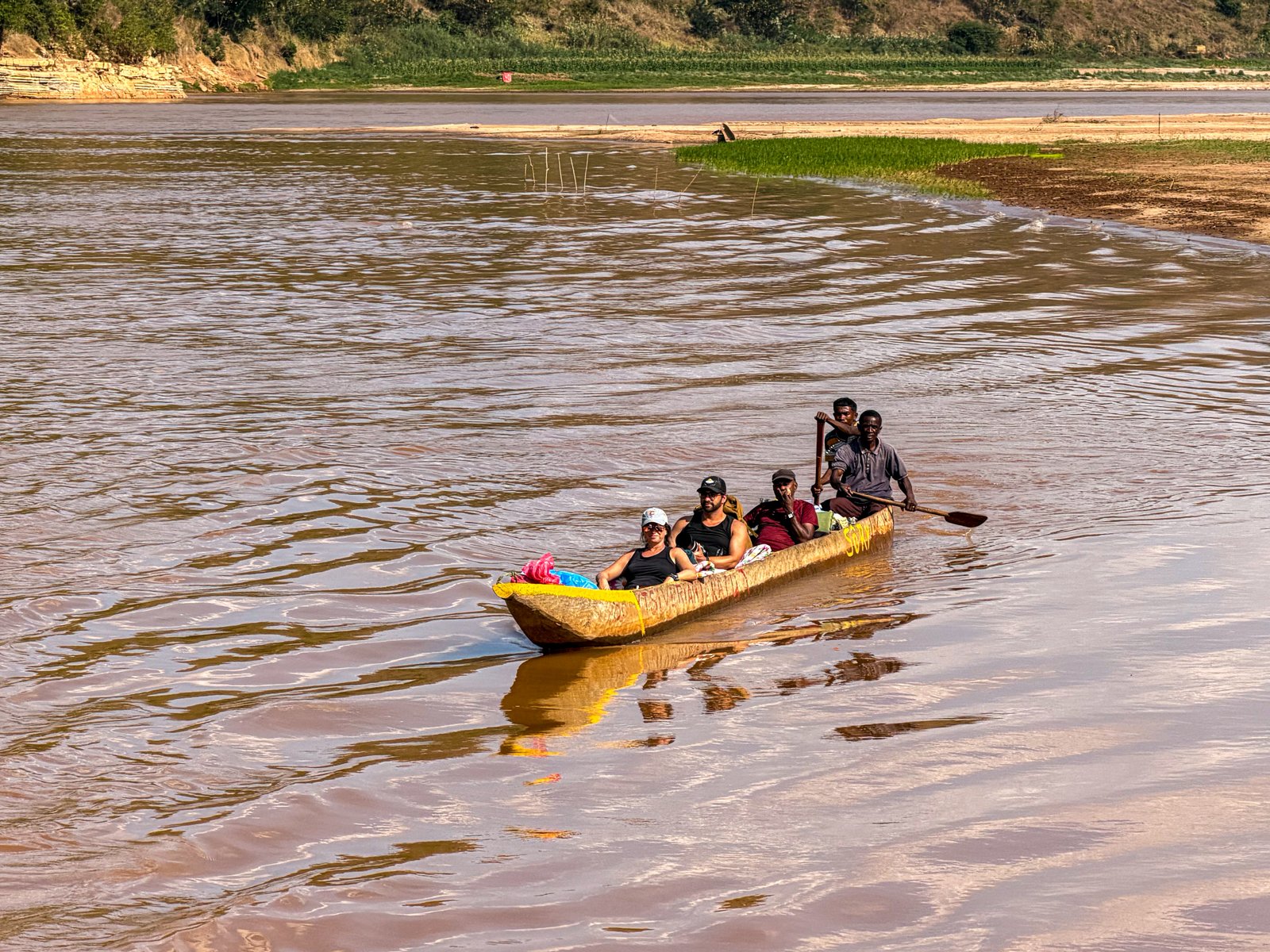
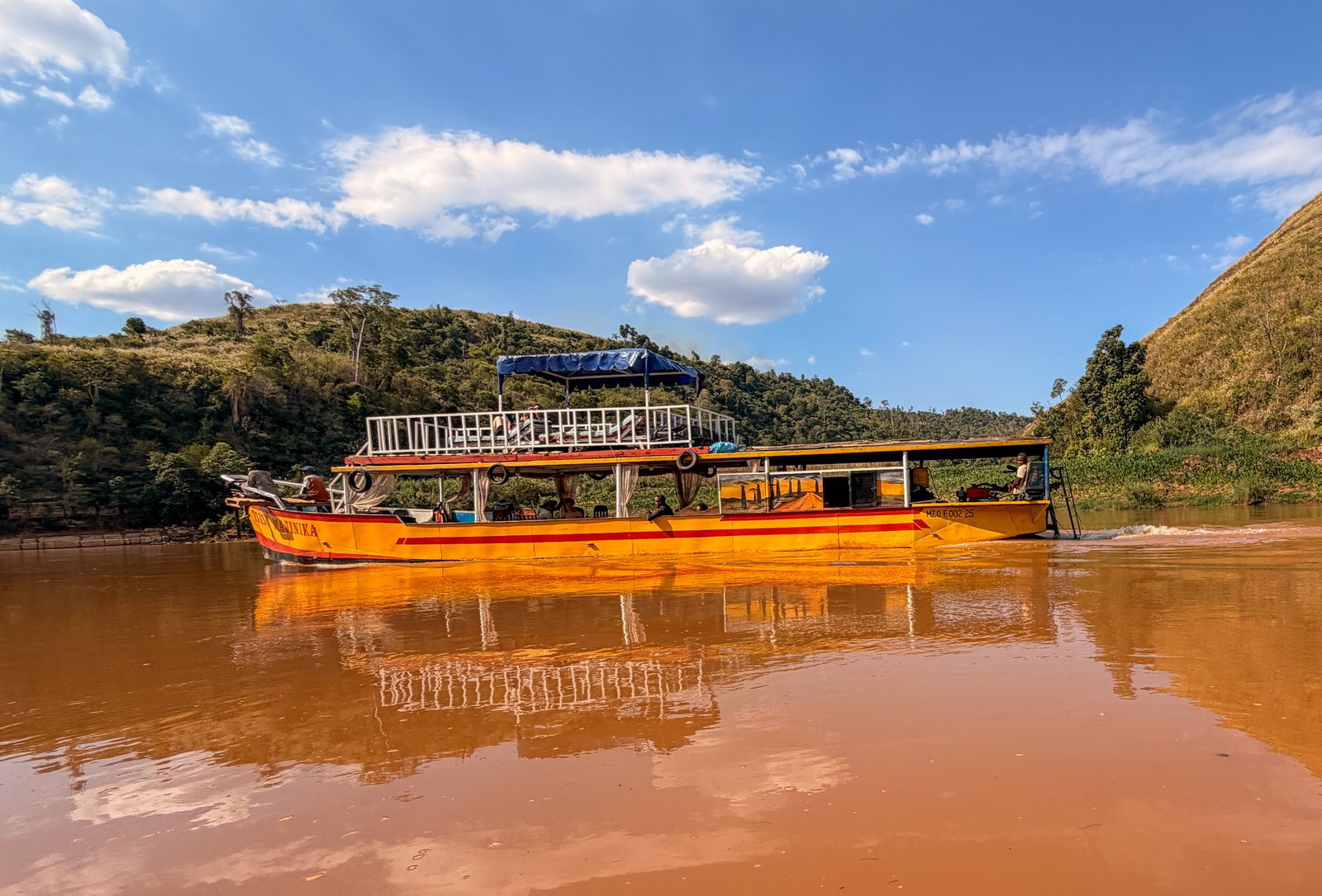
Our canoe trip down the Tsiribihina River was suggested by JB when first planning our itinerary. It was both a way to save us from driving many more hours in the car, and also a fun experience. We said yes and signed up for 2 days and nights of canoeing down the river. Michel would take the car all the way to Morondava and then up many more hours to meet us at the end. In typical JB style, everything was planned out and organized and we had a fantastic time. We were told that it was a popular thing to do, but after spending two full days on the river, we only saw one other tourist family from Belgium, and they were taking one of the extremely noisy motorized river boats. You could hear them coming from a long way off, while our time paddling in the canoe was peaceful and quiet. Even though the days were long, we were able to nap or just enjoy the view from our seats in the dugout canoe. It was definitely easier on the body than driving over the bumpy roads for many hours. We camped in the sand and had excellent views of the stars. Overall, it was a great decision and we feel like many tourists miss out on this experience.
Canoe trip on the Tsiribihina River
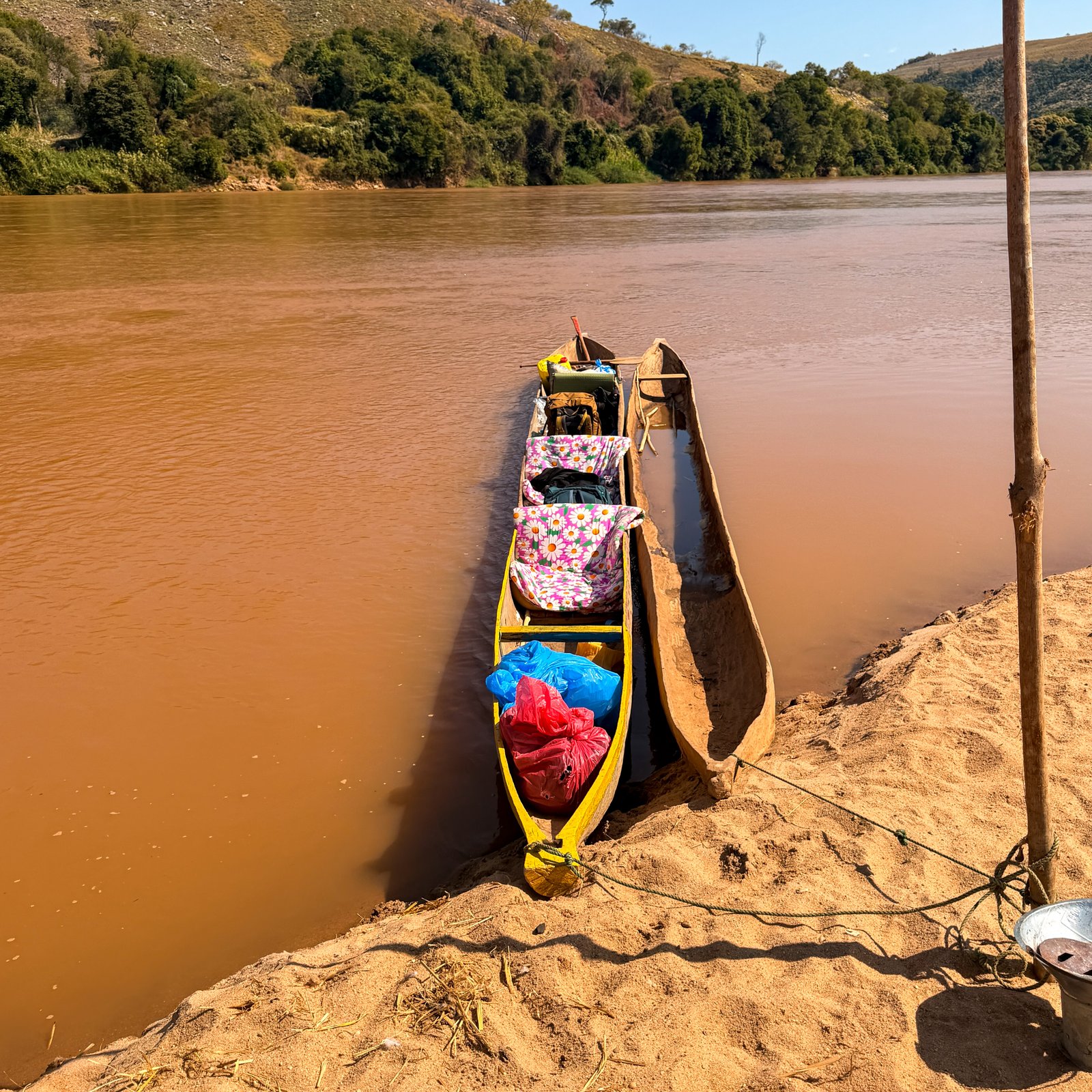
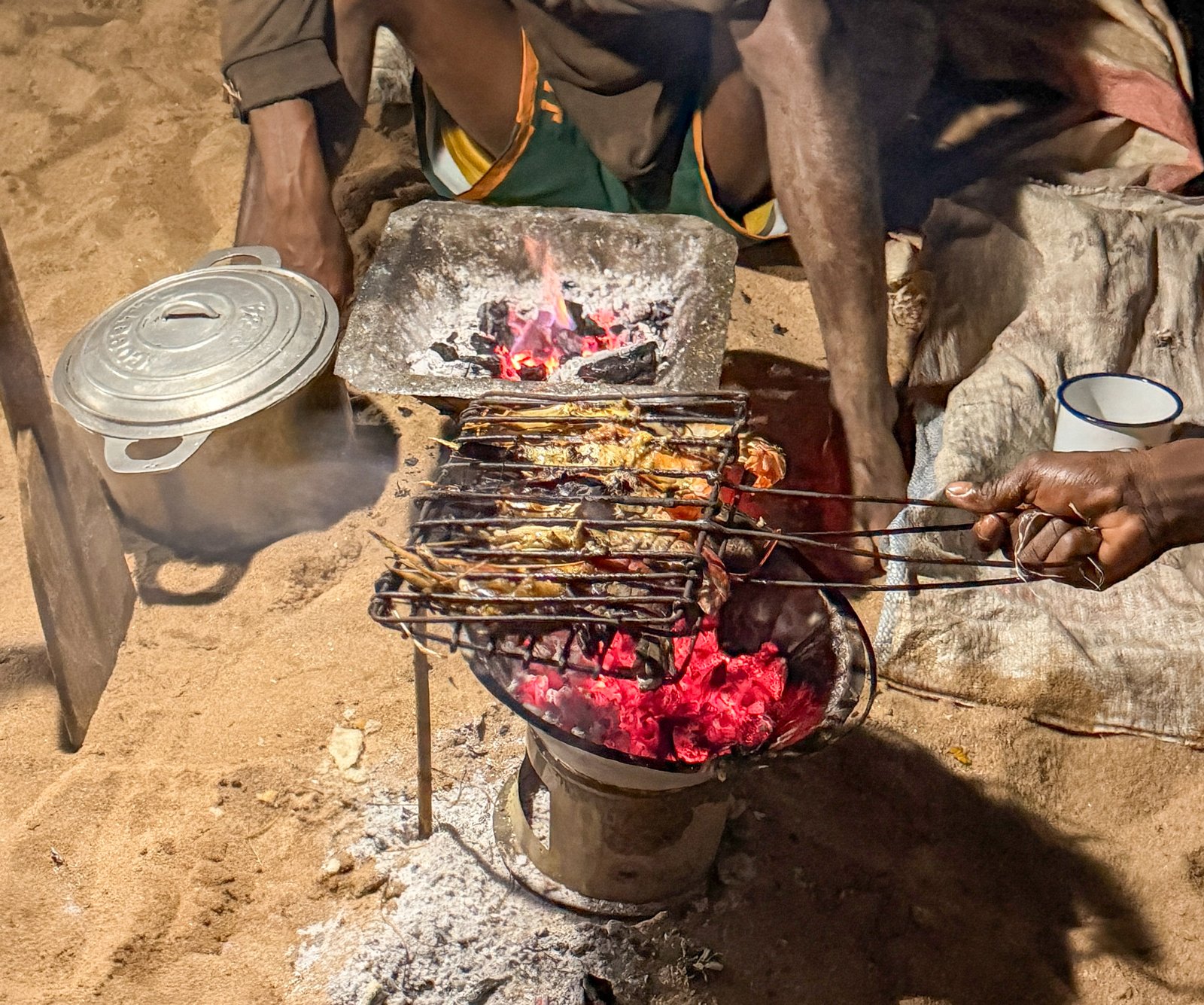
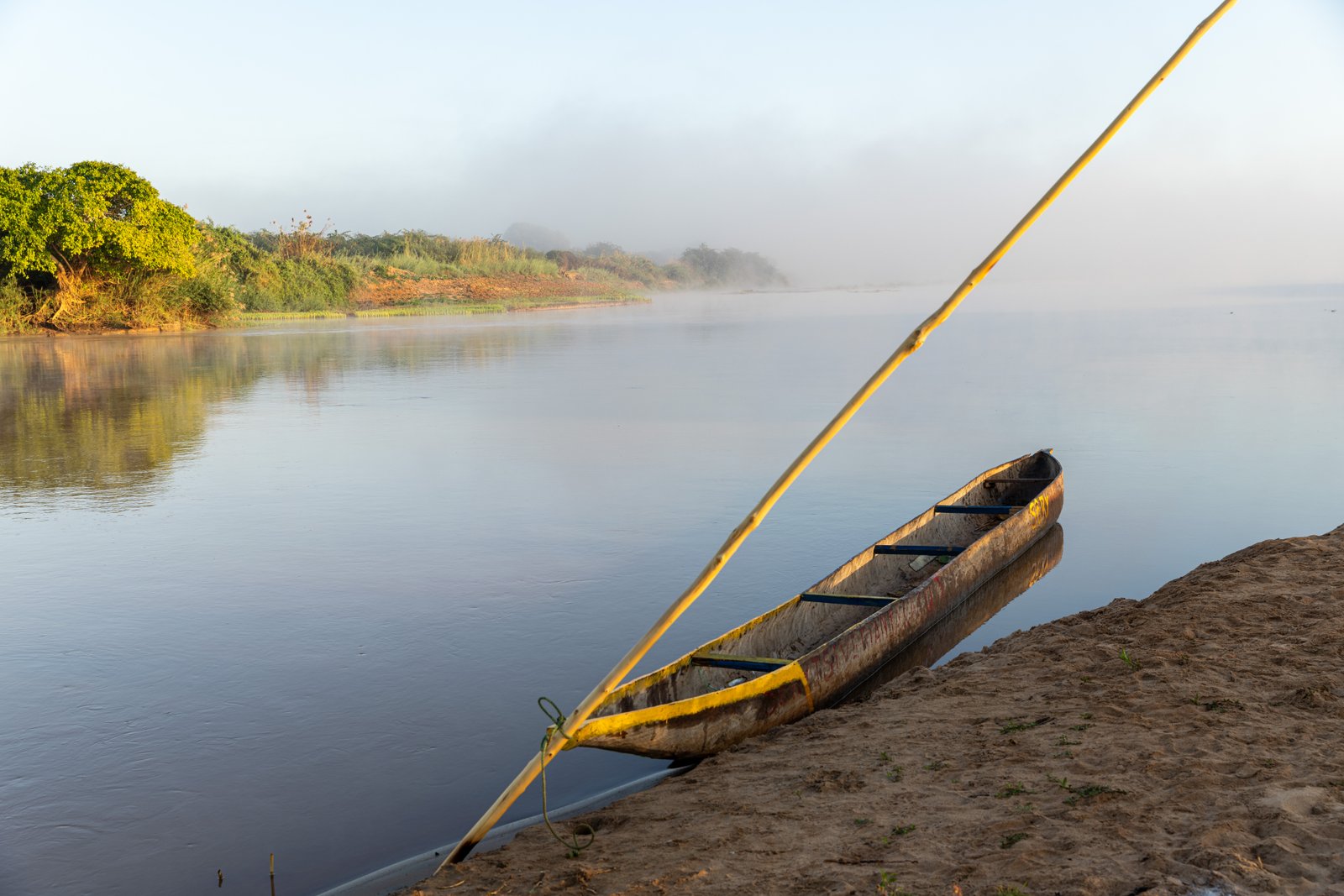
We had our earliest wake up yet with 6 AM breakfast and 6:45 departure from our hotel, The Princesse Tsiribihina. We had about an hour and 15 minutes to drive to get to where we would start our canoe trip (45 minutes on the pavement and another 30 minutes on a sandy road) where we finally reached a small village. We got our first view of what our canoe looked like, a dugout canoe also called a pirogue, commonly used amongst local people here. After packing up the canoe, we set off around 8:45 AM. We had comfortable seats with our sleeping pads as cushions and backpacks as a back rest. We were in the front with two paddlers in the back and JB in the middle. Both JB and the paddlers had small charcoal grills on which they would prepare food for us. The water was slow with minimal current and the paddlers spent most of the day working hard.
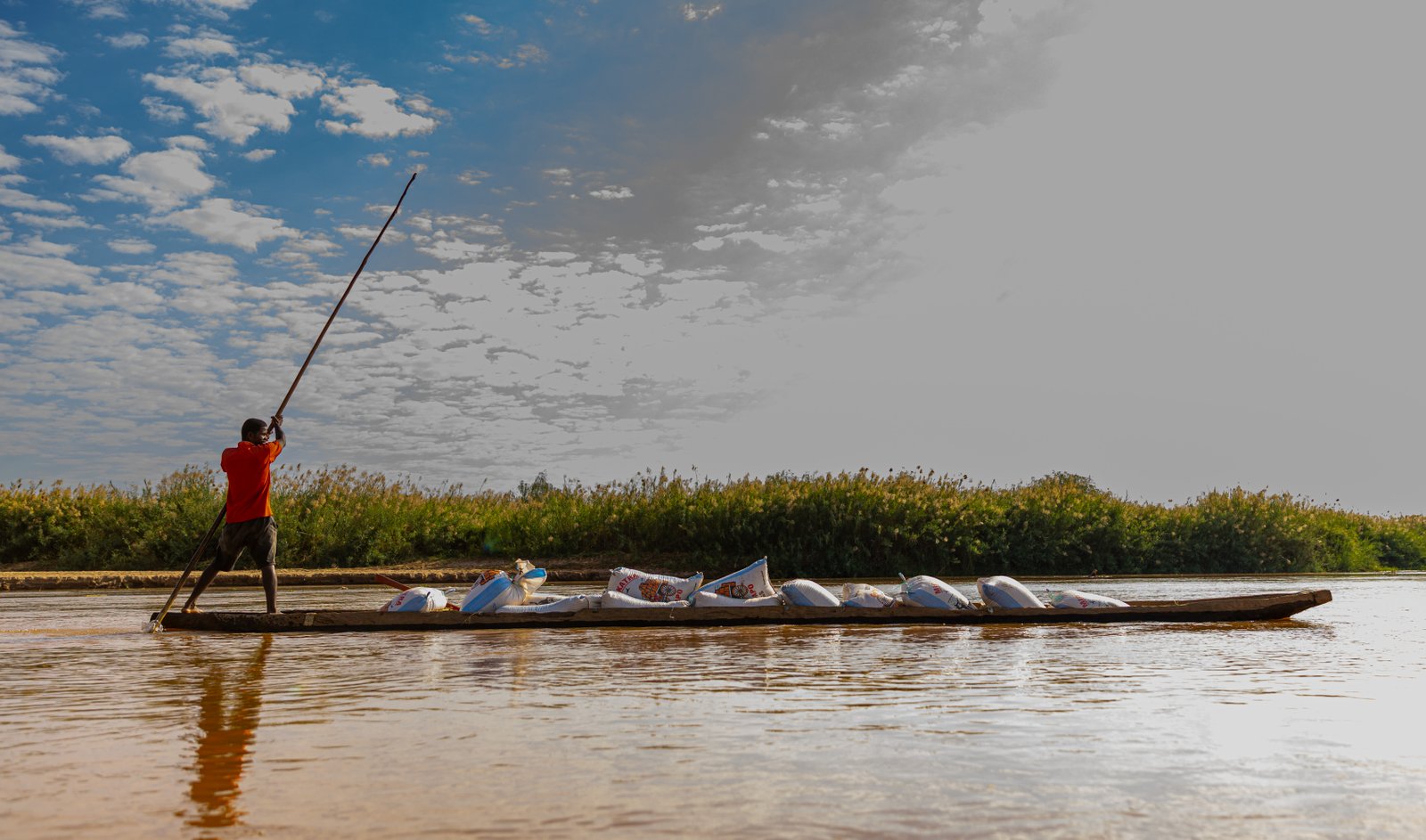
We paddled along the slow river in the open valley until we slowly made our way to a deeper canyon. We had a stop along the way at a makeshift village made of straw and bamboo on a sandbar that offered snacks, meals, and beverages to boaters. We got to pass by the boats headed upstream with many canoes being pushed by long poles against the current, as you can touch the bottom in many places. The water was low with a bit of a headwind, and we seemed a bit behind schedule.
We were told we would be going for a swim and to see a waterfall, and expected a not so nice pool to swim in. However, we arrived at a location that had beautiful clear water and multiple waterfalls, only a small walk in from the river. At the entrance, there were several lemurs hanging out in the trees to greet us. A small hike up the valley brought us to a 60 - 80 foot waterfall with a beautiful blue water pool. The water was not too cold and it was refreshing to swim. You could swim right up to the waterfall and even go behind it. We spent a small amount of time here swimming in the pool before we headed back into the boat to finish up the day.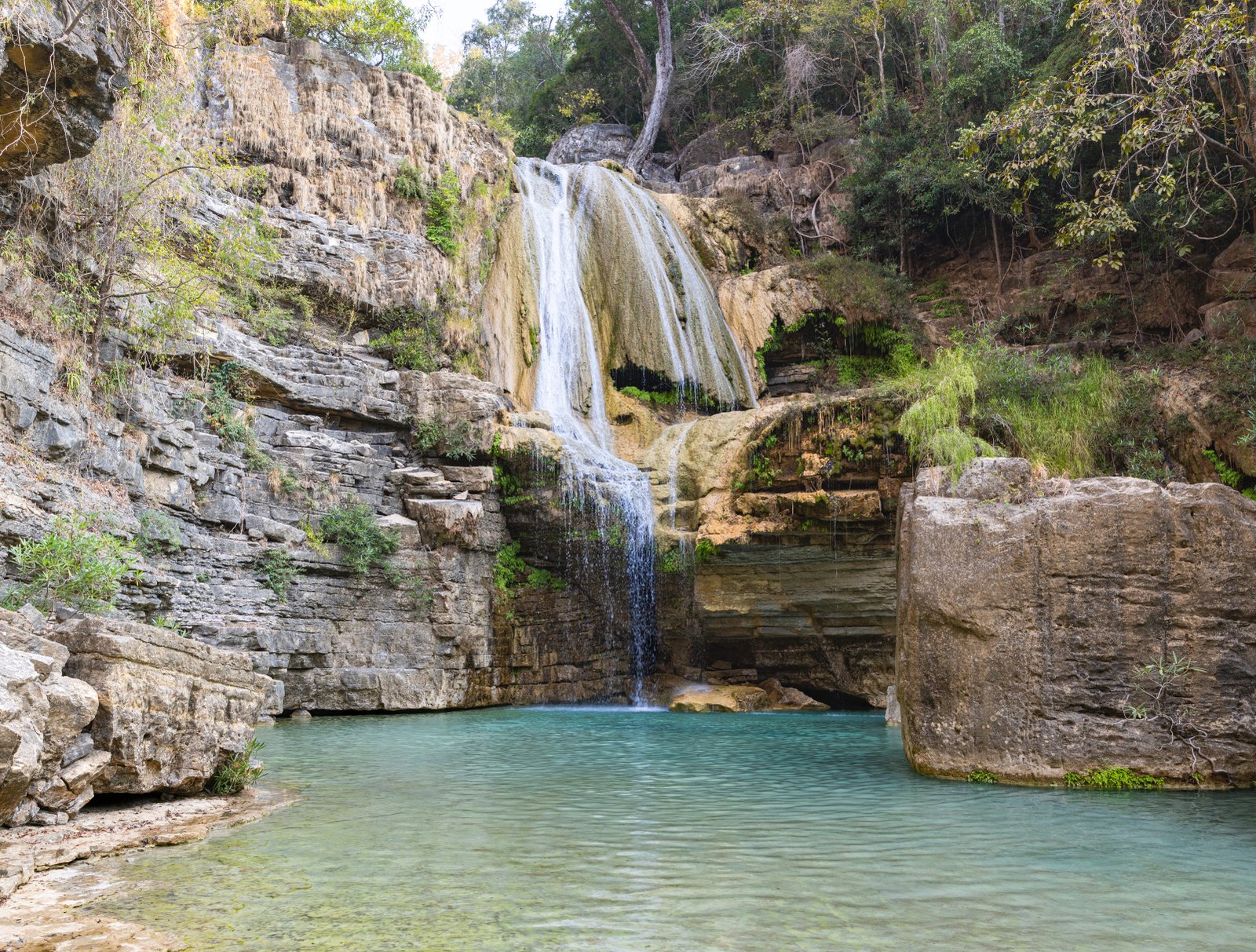
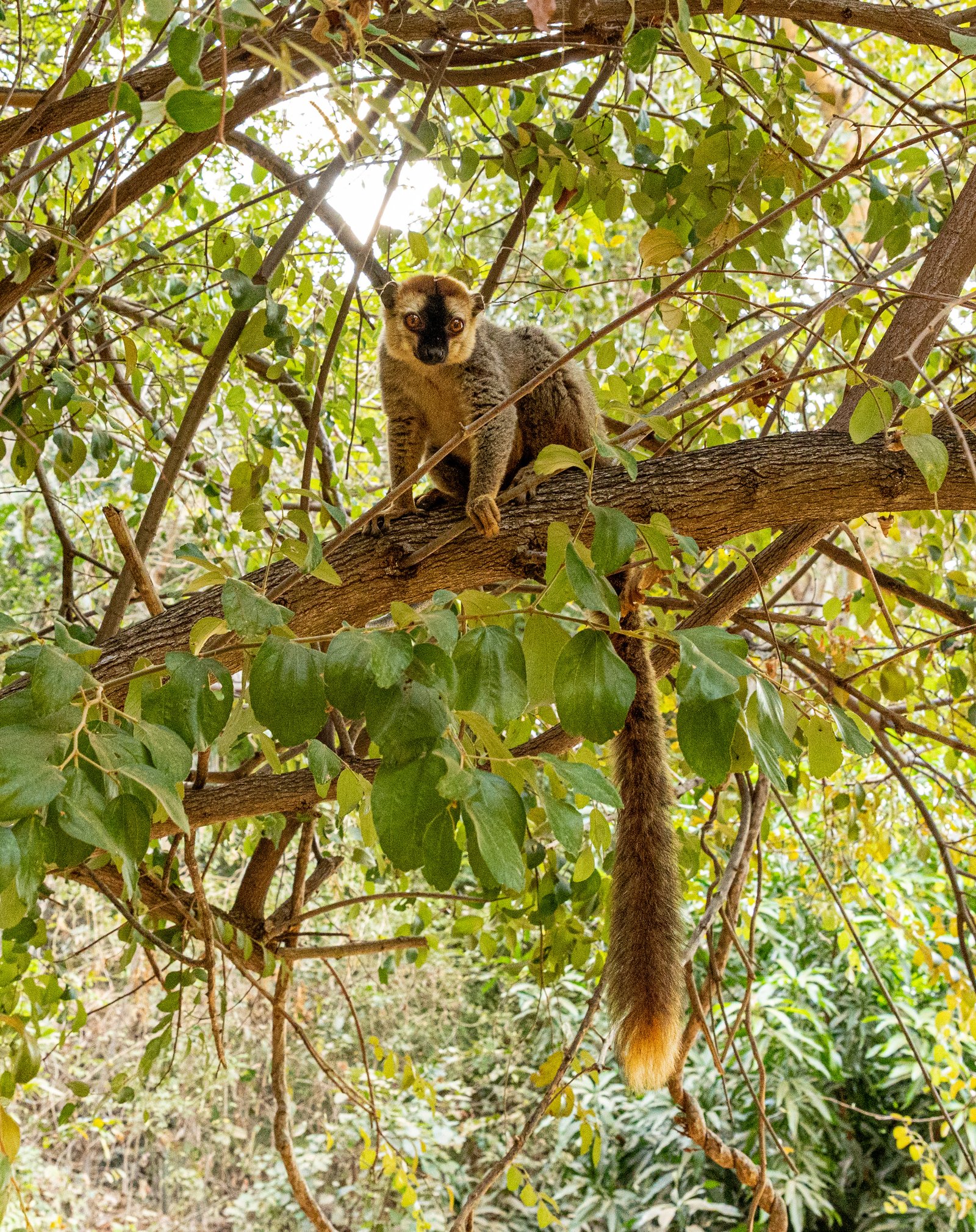
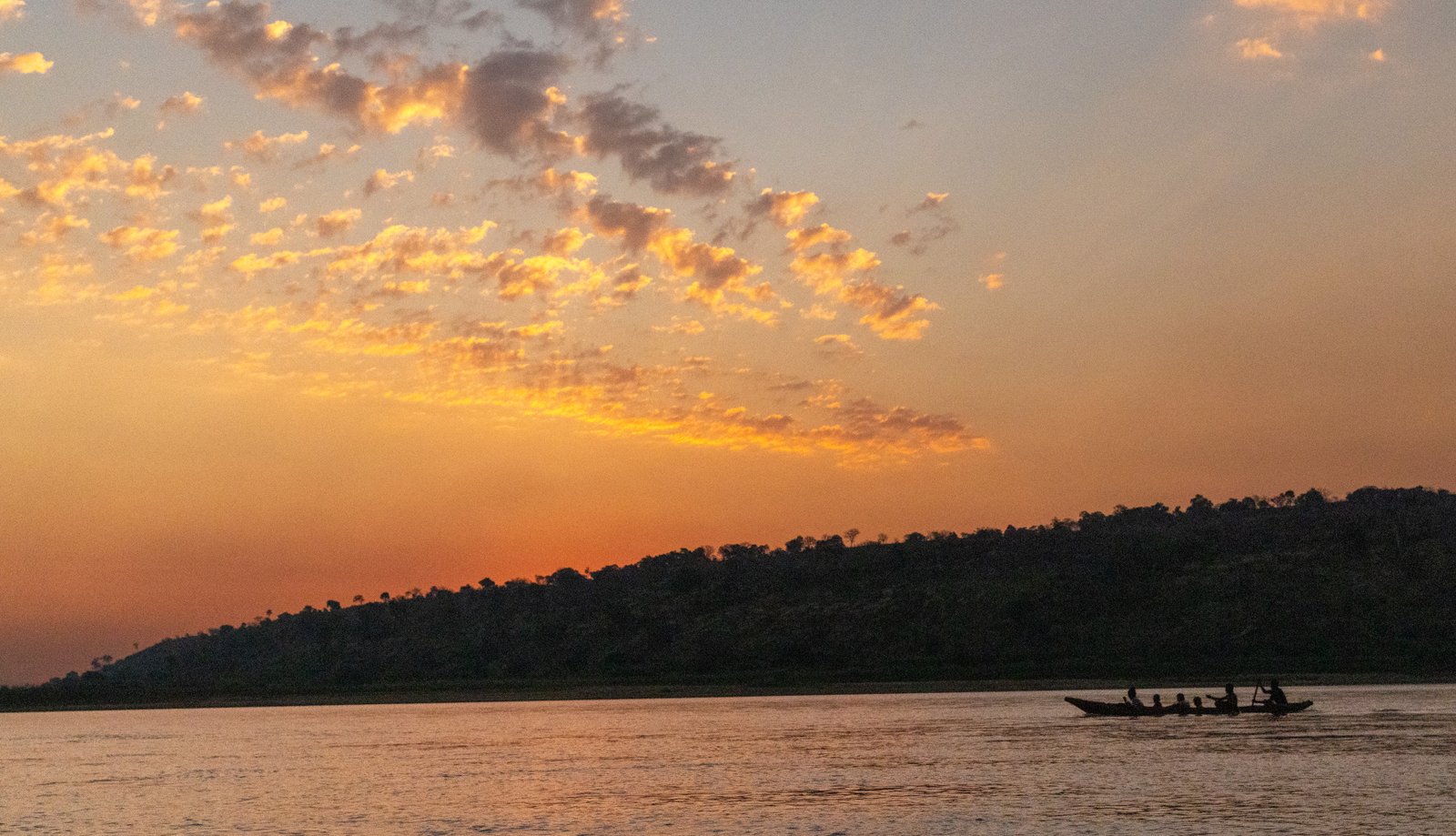
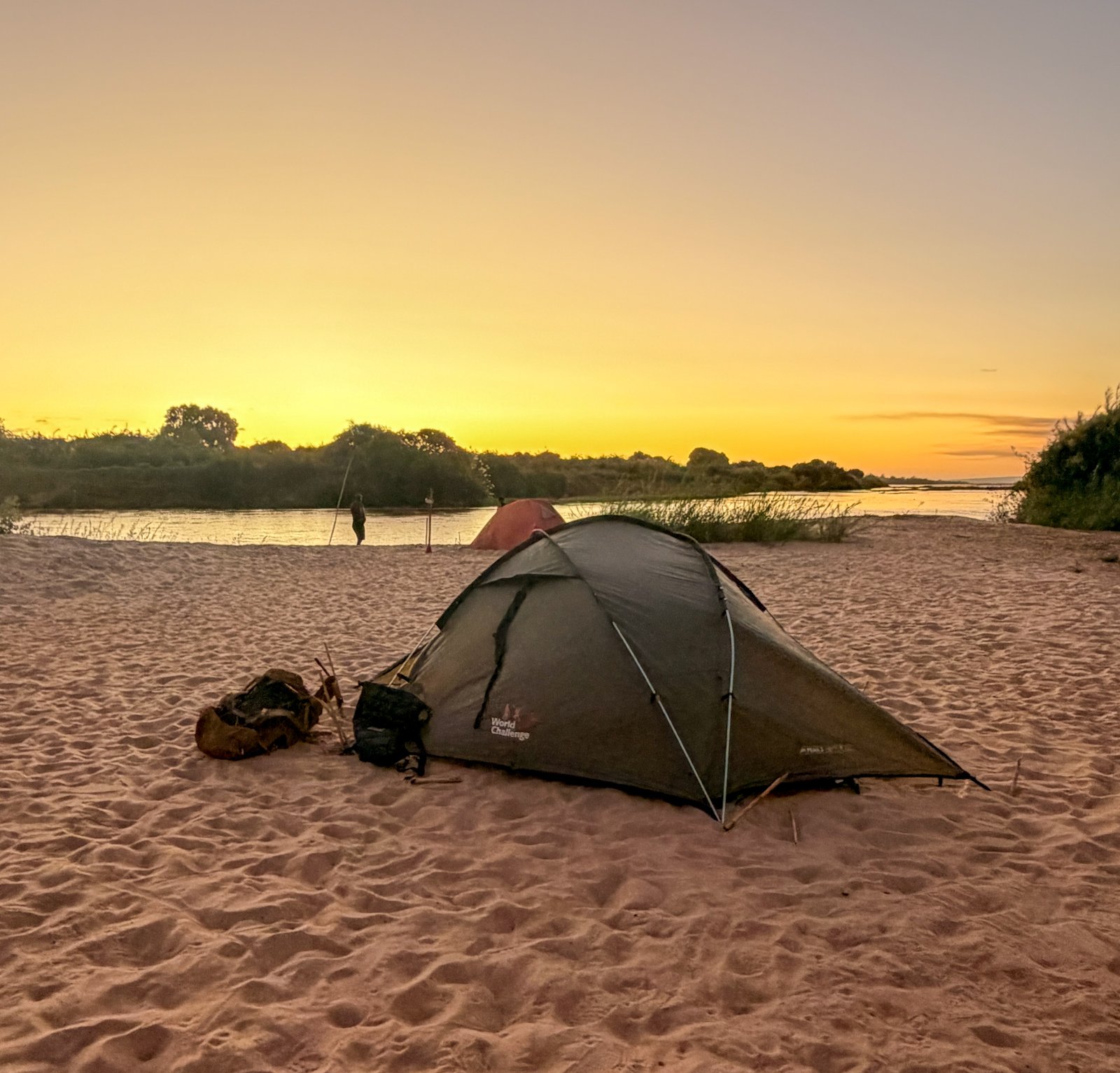
After the waterfall, we paddled for an additional 2 1/2 hours down the river trying to find a good sandbar to sleep on. We had a beautiful red sunset and eventually made our way to a sandbar at the end of the canyon. We set up our tent in the dying light and JB and the crew started to prepare dinner. We had a vegetable soup to start, but the main course stole the show. We had very large river prawns, almost the size of a small lobster. They were grilled and well prepared. JB sat with us and we had some good conversation over some more of his specially flavored rum. By then it was very late and we were ready for bed as we were told we should be up to get on the river by 6 AM. We would eat breakfast on the boat to save time.
As most of our Madagascar mornings have started, were up early, this time even before the sunrise. We were in the boat by 6:15 and paddling to the nearby village of Begidro. We spent a short time walking through the village as the inhabitants slowly rose to start their day. After that, we set out down the river for a long day to get to our final destination. We were served breakfast on the boat as we were paddling: coffee, yogurt, croissants, egg and even the homemade beignets with jam.
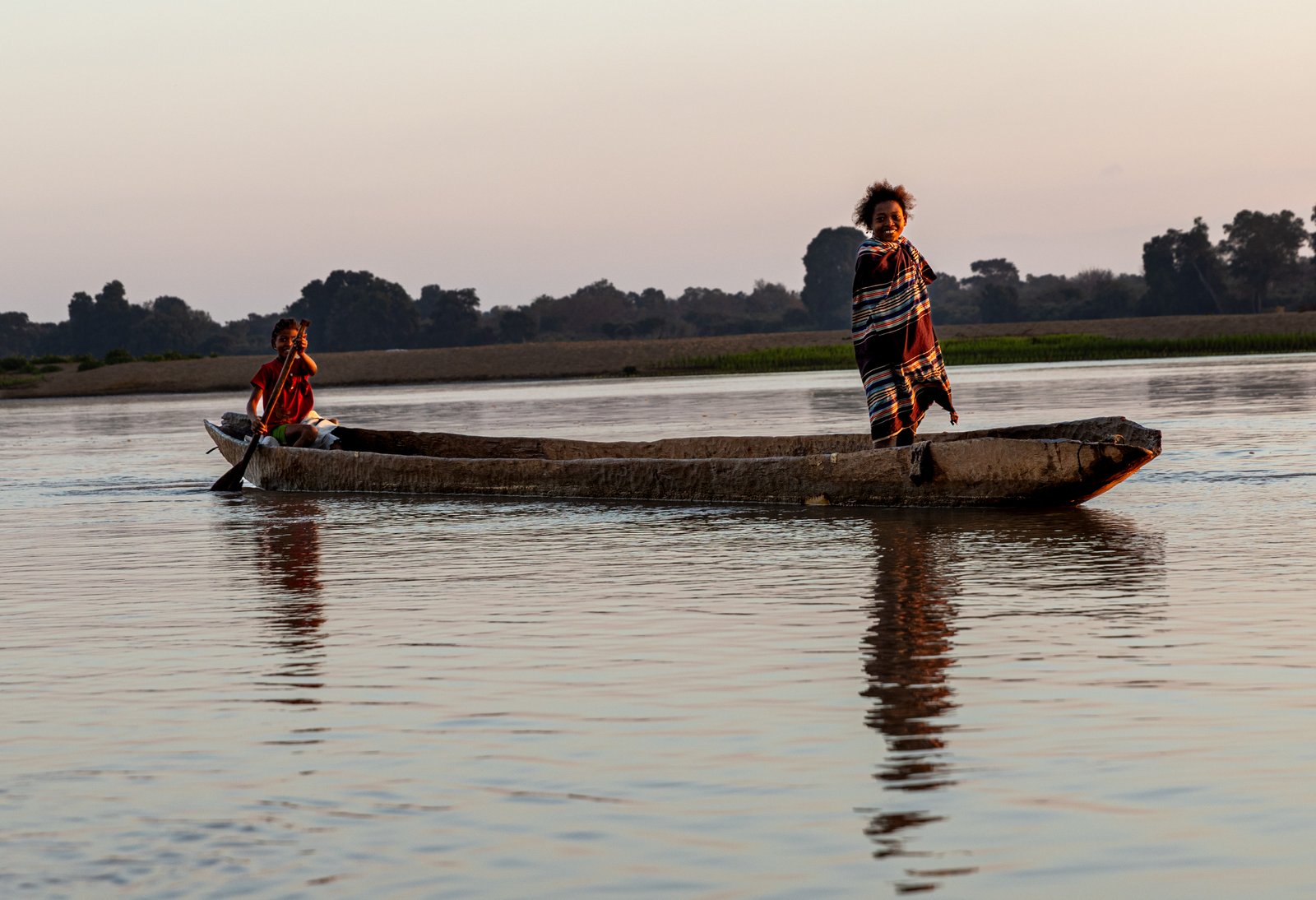
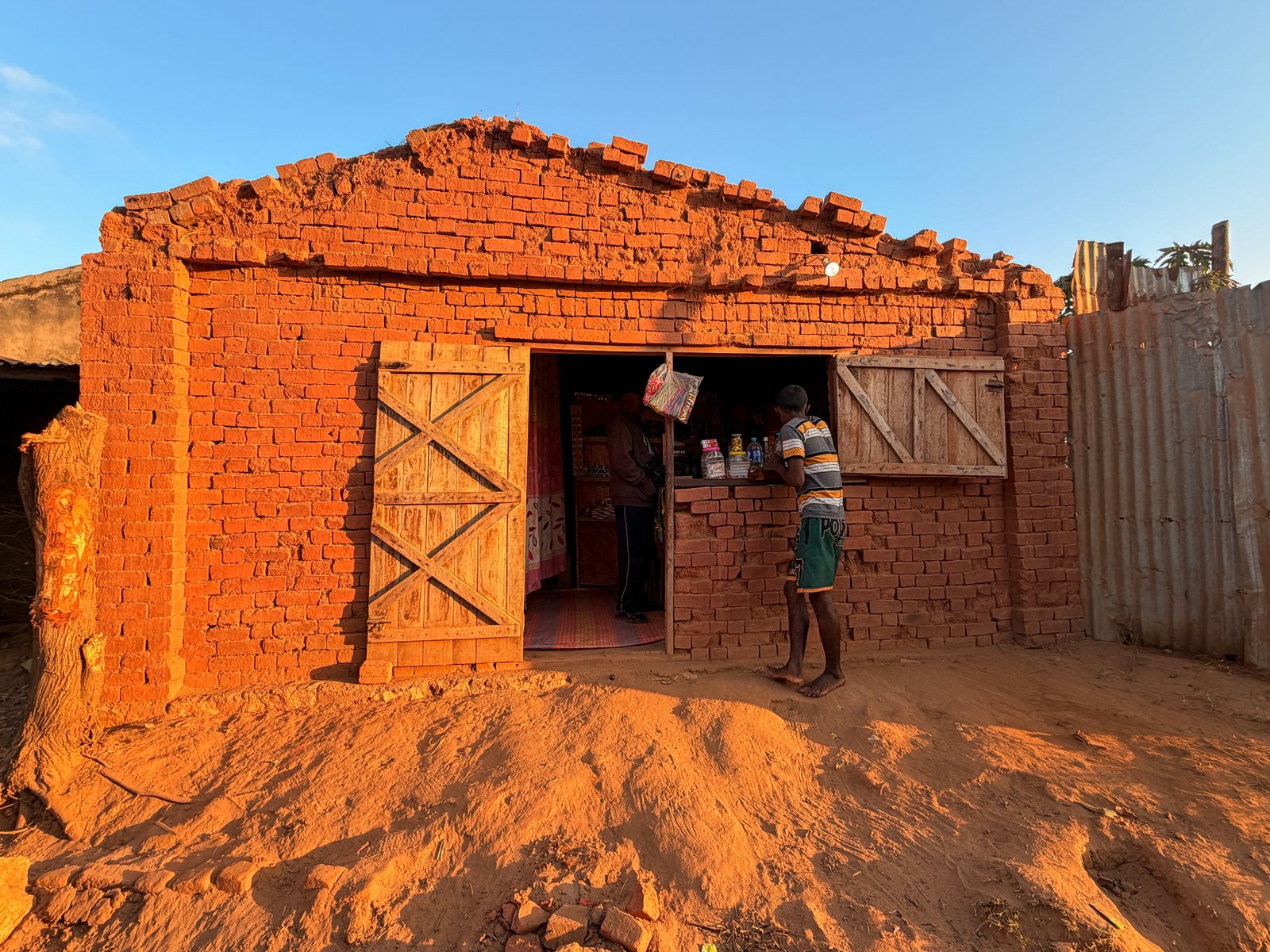
We again had sightseeing from the boat, passing by small villages and large sand bars with different birds and the occasional crocodile. We learned that the crocodiles used to be a big problem back 30 years ago, when locals couldn't live along the river due to a large crocodile population and many attacks. We had a nice stop for lunch on a sandbar where two local kids pulled up in their canoe. They seemed very curious about what we were doing and sat down very close by to watch. We weren’t too hungry and couldn’t finish all of our lunch, so decided to offer them our leftovers as well as all of our recycling items which they gladly accepted. They put the empty cans and bottles to use. Luckily, we had a few pieces of candy left to give them as well, which they were very happy about.
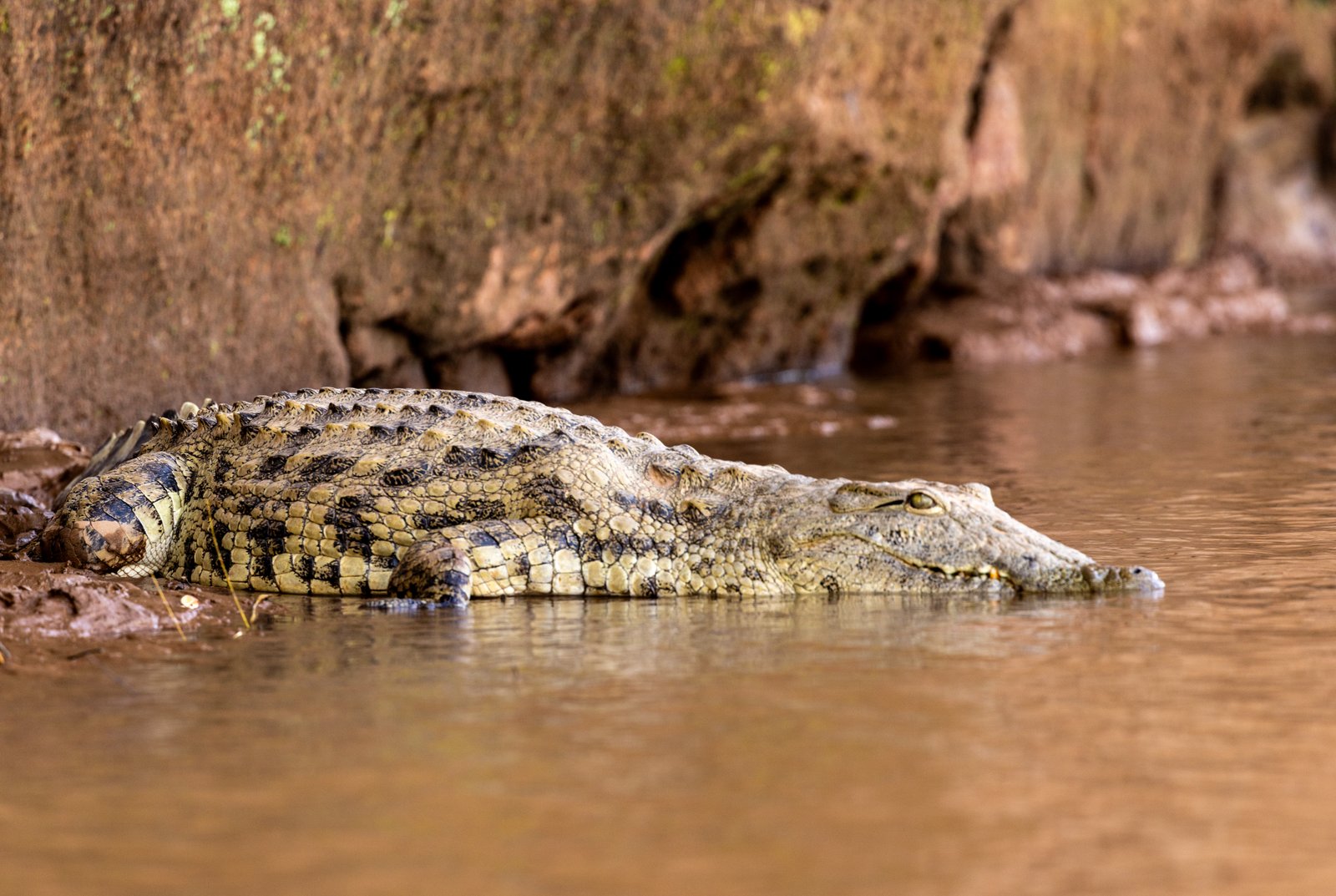
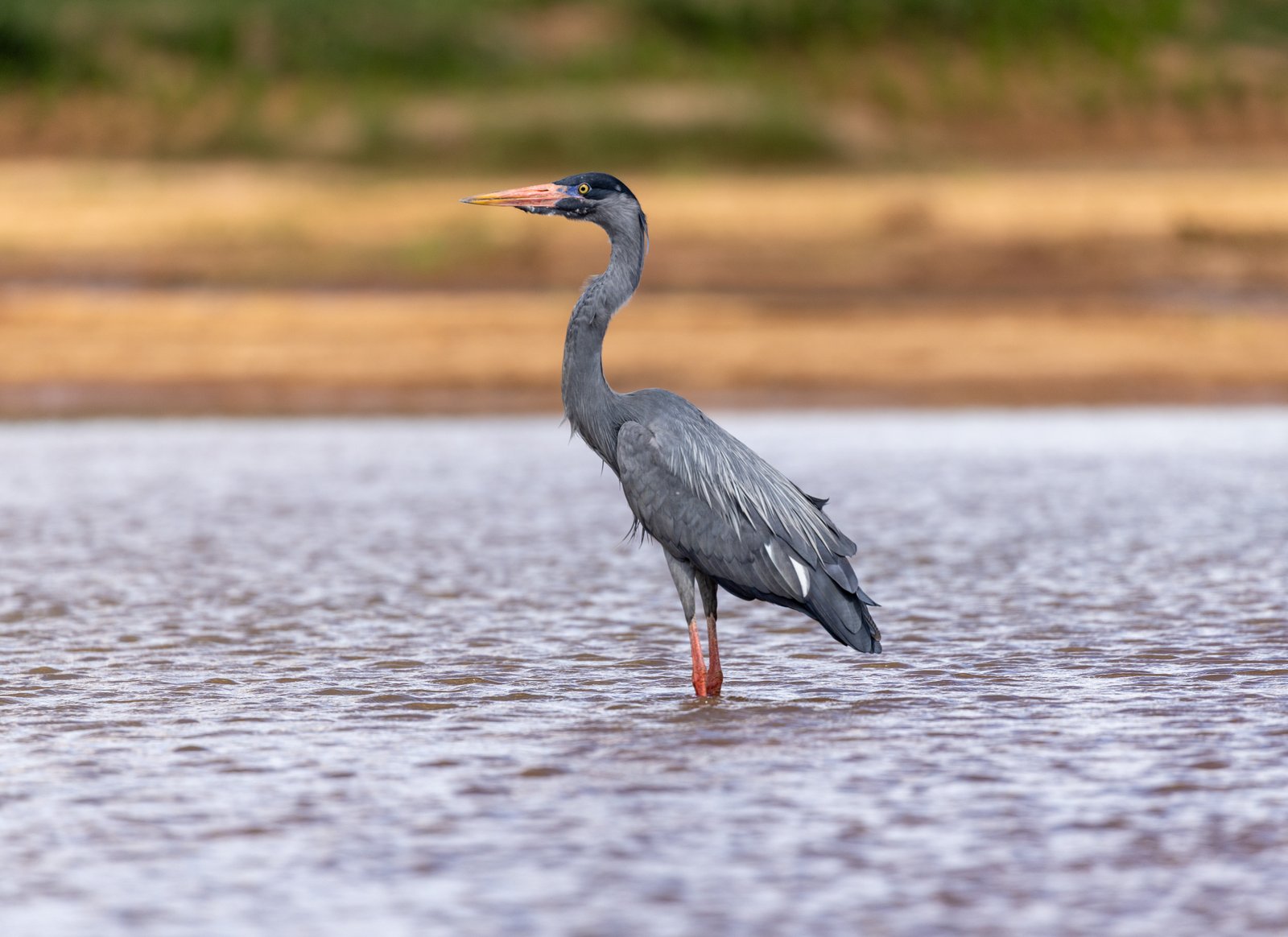
After lunch, we continued on for several more hours until we reached our final destination, the town of Tsarotana. Along the way we saw several crocodiles, one we were able to get extremely close to by staying very quiet. The crocodiles here are very scared of us and will jump into the water whenever a boat approaches. After reaching the village of Tsarotana, we spent some time exploring the village. JB was hoping to buy some things at the local store but we found out it was closed until 5pm. As we explored the village, a large group of kids followed along behind us, getting larger by the minute. They were asking questions and giggling, interested and happy to spend time with us. One boy asked if we would be interested in seeing his dance group perform local dances and we made an appointment for later that day to observe them.
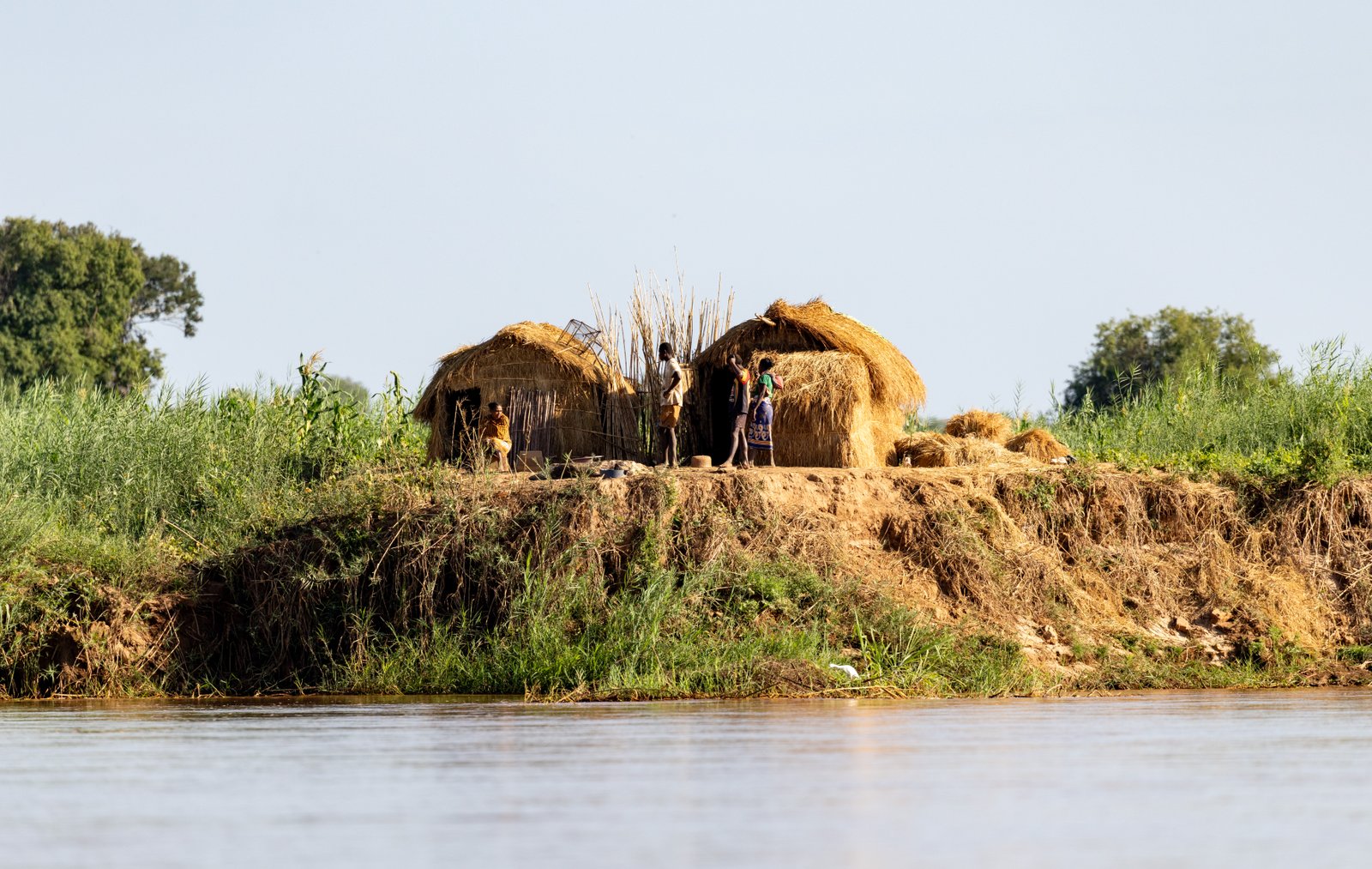
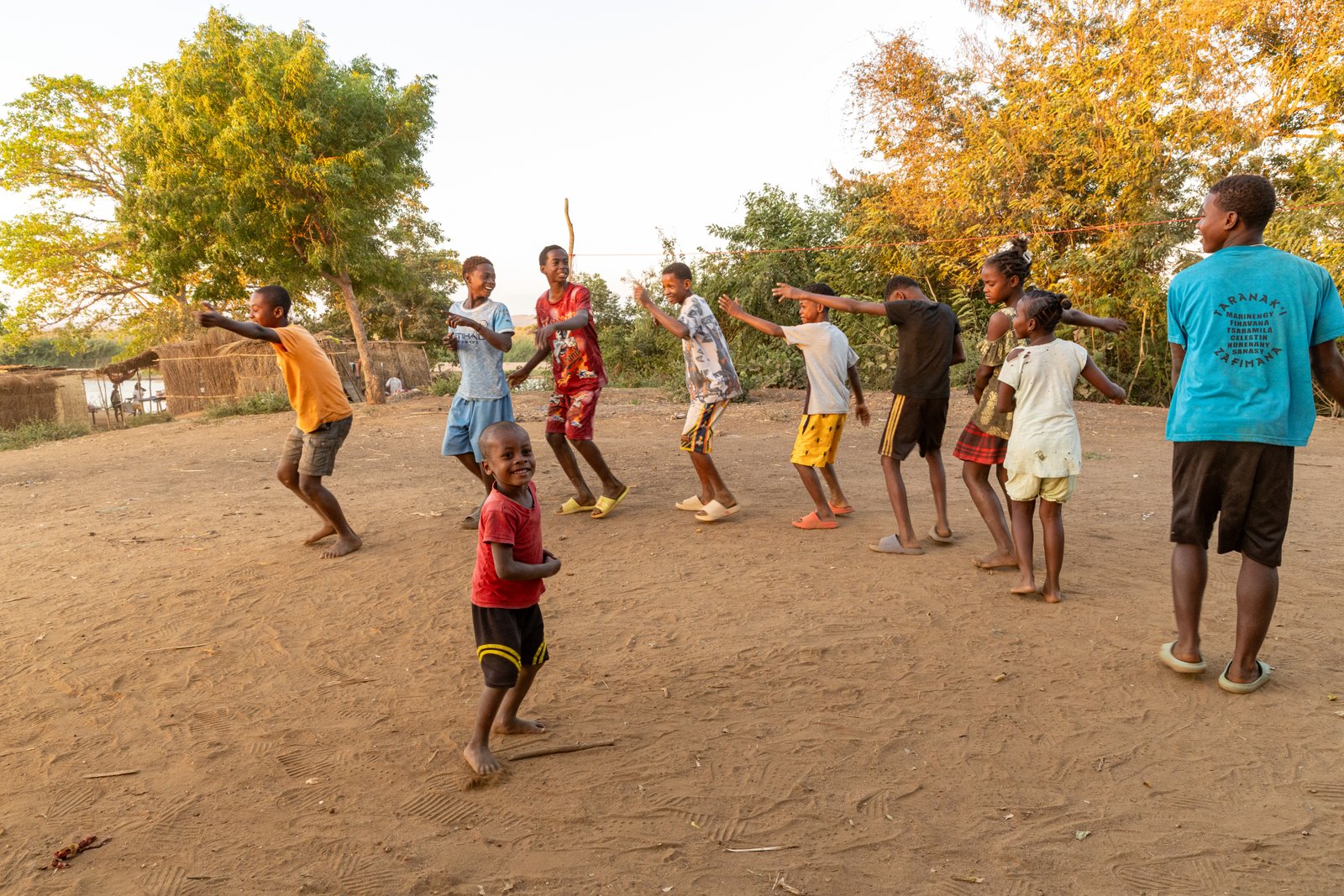
We paddled across to our sandbar on the opposite side from the village where we set up camp. After resting for only a short time, we got up and took the canoe back to see the dance show. The children were very excited to have us there and set up solar powered speakers. They played local songs and started to dance. We were invited to dance with them several times and it was a lot of fun for all. They were extremely amused at us dancing with them and thought it was hilarious! We returned to our camp via the canoe and had another wonderful dinner by JB consisting of noodle soup followed by rice with fresh fish for Jaimie and stewed pork for Bryan. Although dinner took some time, the meal was very good and afterwards we were happy to retire to the tent for bed after such a long day. We knew that tomorrow would be another long day in the car to get to Tsingy National Park.
Back to Top
Link to Madagascar Photo Galleries
Day 21-22: Drive to Bekopaka and Tsingy NP
We thought we were going to get a very good sleep after a long day of riding in the canoe, but it turned out there was very loud music coming from the village across the river from our campsite. We were hoping that it wouldn’t be an all night party, as we have experienced before in Madagascar. However, each time we woke up, the music was still playing. The music finally ended around 6 AM, just as we had to get up! With our breakfast set for 7 AM we reluctantly got out of bed and ready for the day. We heard from JB that the reason for the music was actually for a funeral, as common practice for some people here in Madagascar.
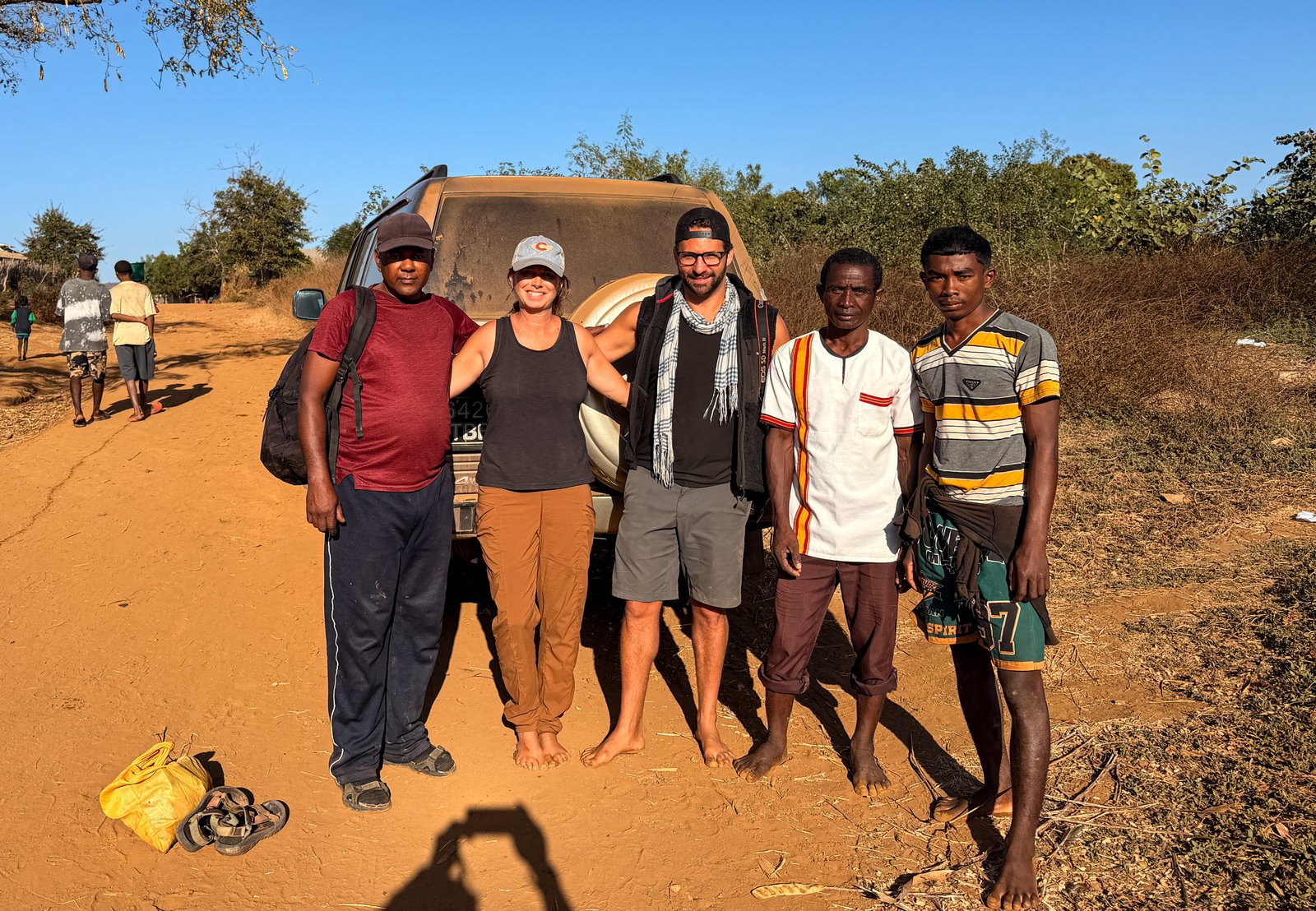
The village was as lively as ever early in the morning. We ate our breakfast at the campsite, packed up our things, and paddled over to the village where we said goodbye to our canoeists. We had an eventful drive, taking us the remainder of the day to get to Bekopaka, the gateway town to Tsingy National Park. Tsingy is a popular place for tourists to visit but we think people may not realize how hard it is to get to. So many people are making the grueling 8-10 hour drive there and back with only one day to see the park in between. Our situation was a bit better with only half the amount of driving there and maybe 2/3 of the driving on the way back.
Driving to Bekopaka
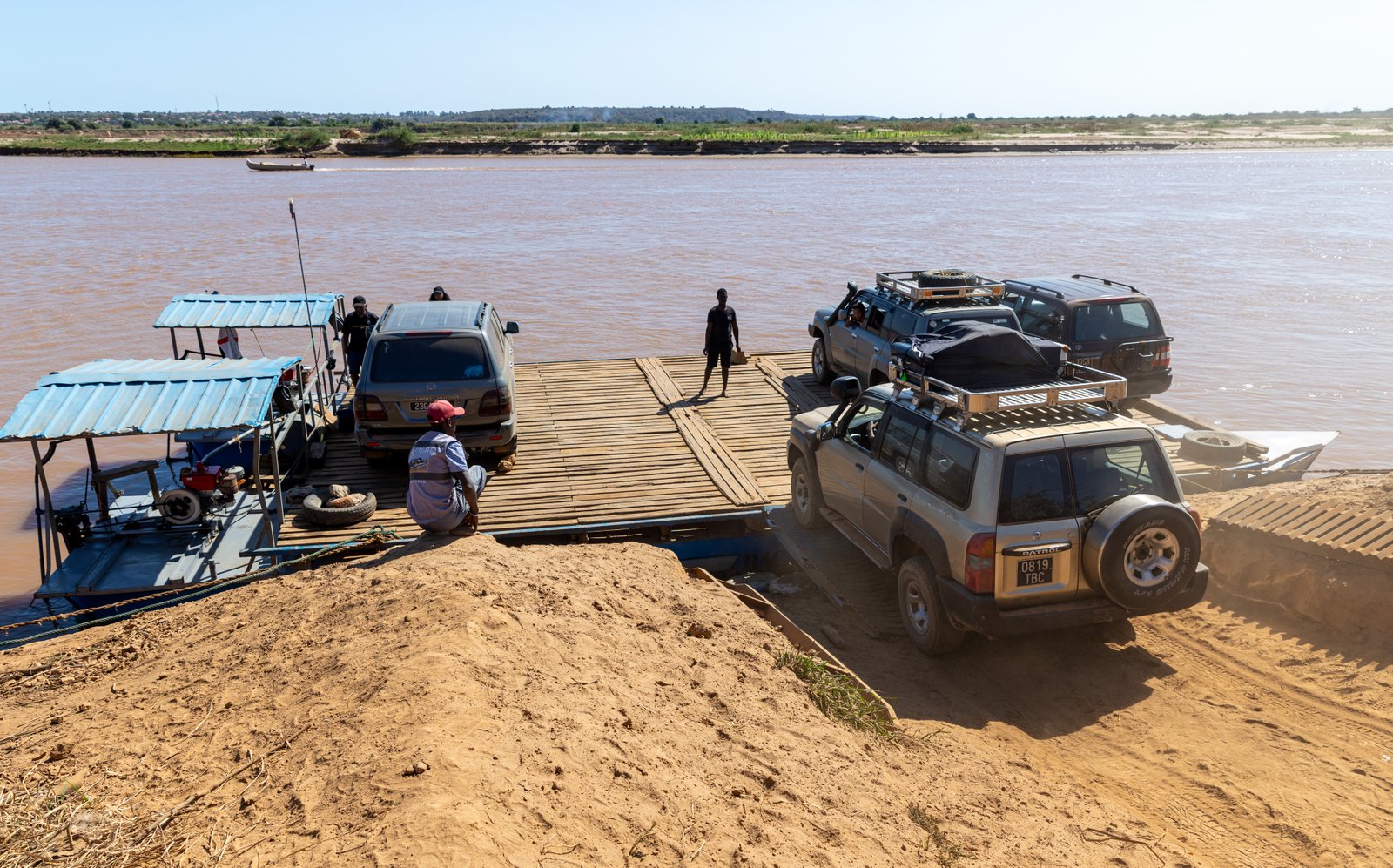
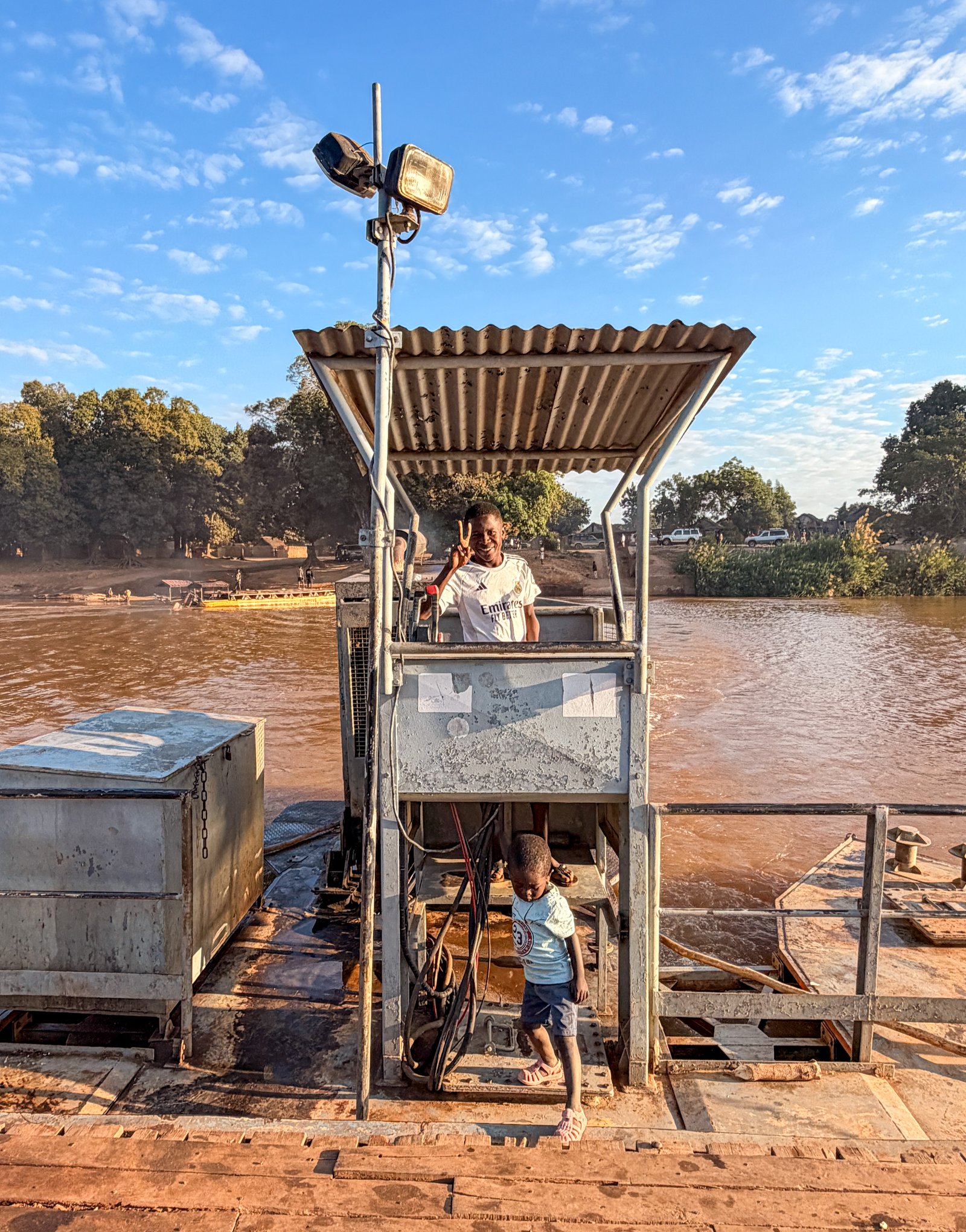
Michel was waiting with the car to pick us up in the morning in the small village across from our campsite. We drove out on the only road out of town, a very sandy dirt road, for 2 1/2 hours before reaching a river crossing. The river crossings are quite primitive here with a makeshift wooden ferry built upon two boats with motors. It will fit about five SUVs max. We were the last ones to arrive at an almost full ferry, so were lucky to get a spot without having to wait. Michel drove the car onto the ferry and soon we were on our way where we headed down river and then across to the other side, about a 30 minute ride. It was definitely a very unique experience.
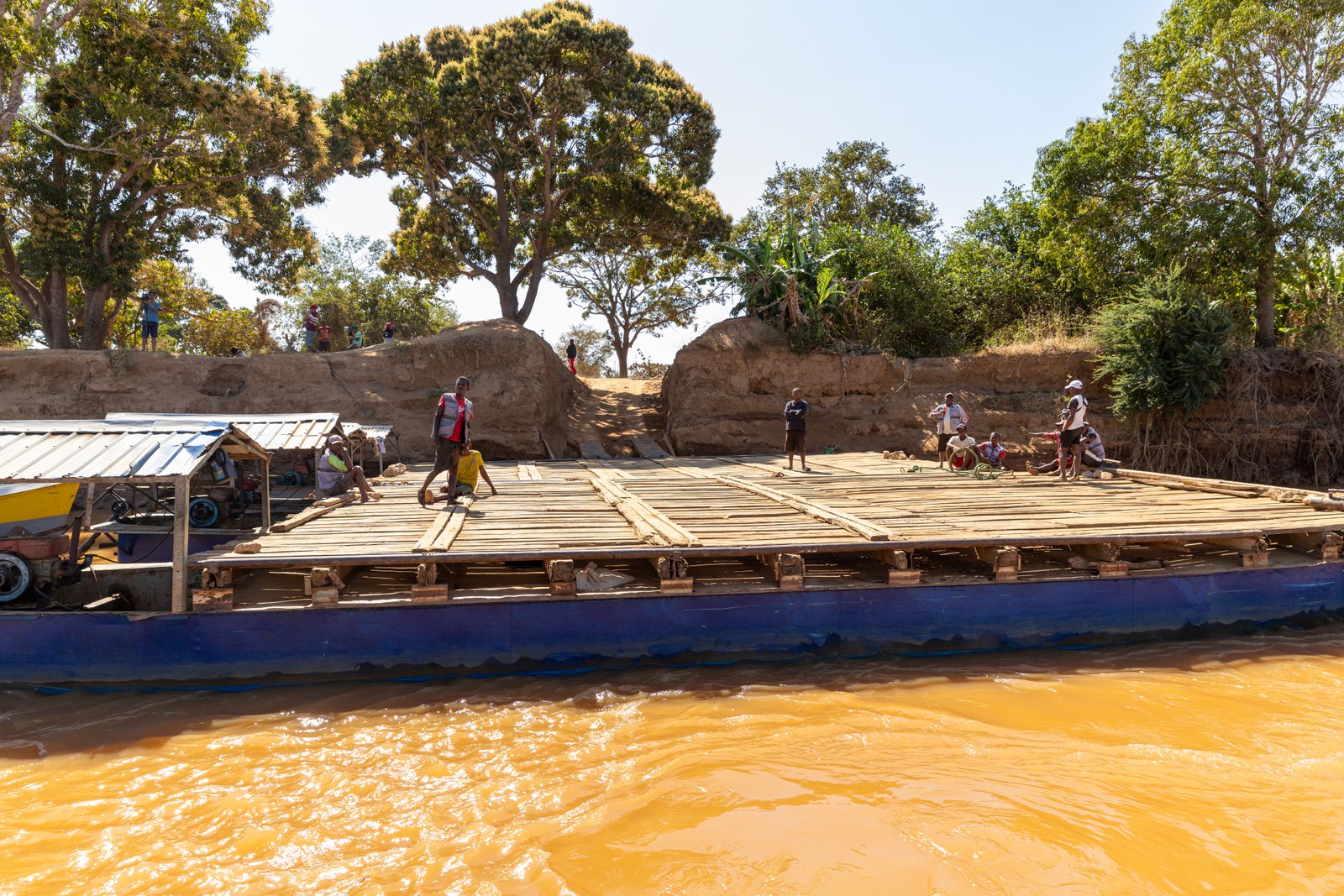
On the other side, we stopped for lunch at the Menabe Hotel where we had a delicious meal of chicken skewers with peanut sauce and a whole fish with coconut sauce. We took a brief tour around the town with JB, walking on foot through the market area and meeting some local kids. After that, we got back in the car and were on our way for another 4 to 5 Hour drive to Bekopaka, the gateway to Tsingy NP.
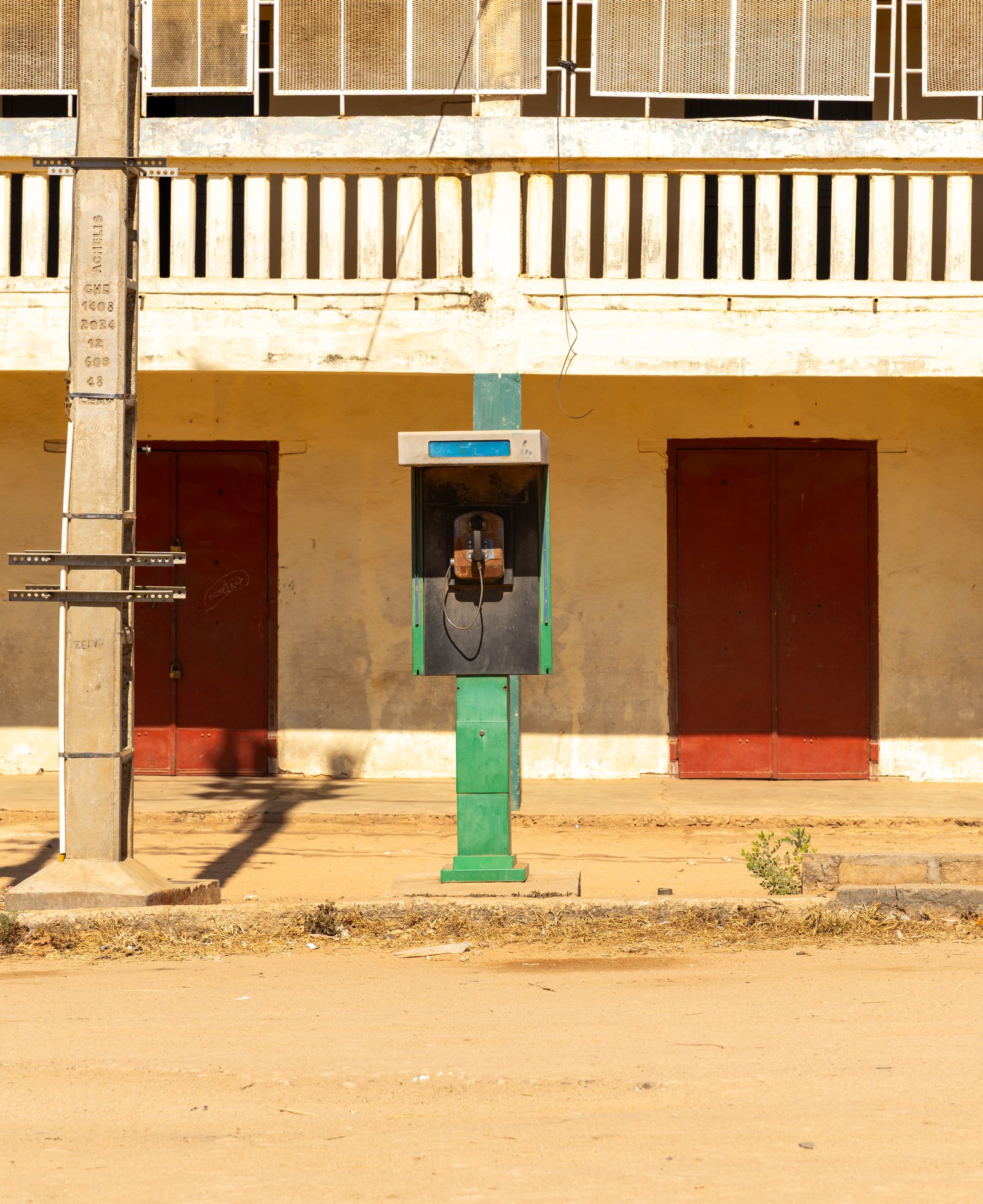
We settled in for the drive but after only 20 minutes of driving, we heard a loud noise come from the front of the car. Everyone got out to inspect and soon saw that there was something very wrong with the left front wheel. A local bus came passing by from the other direction and pulled over to help. The guy from the bus seemed very knowledgeable and with Michel and JB, they were able to take out some basic tools, jack up the car, remove the tire, and diagnose the problem. The problem was that part of the suspension holding the wheel had broken. We weren’t sure what would happen next as several vehicles passed by us. We joked about hopping onto the local transport, packed with locals in the back of a truck, to get us there.
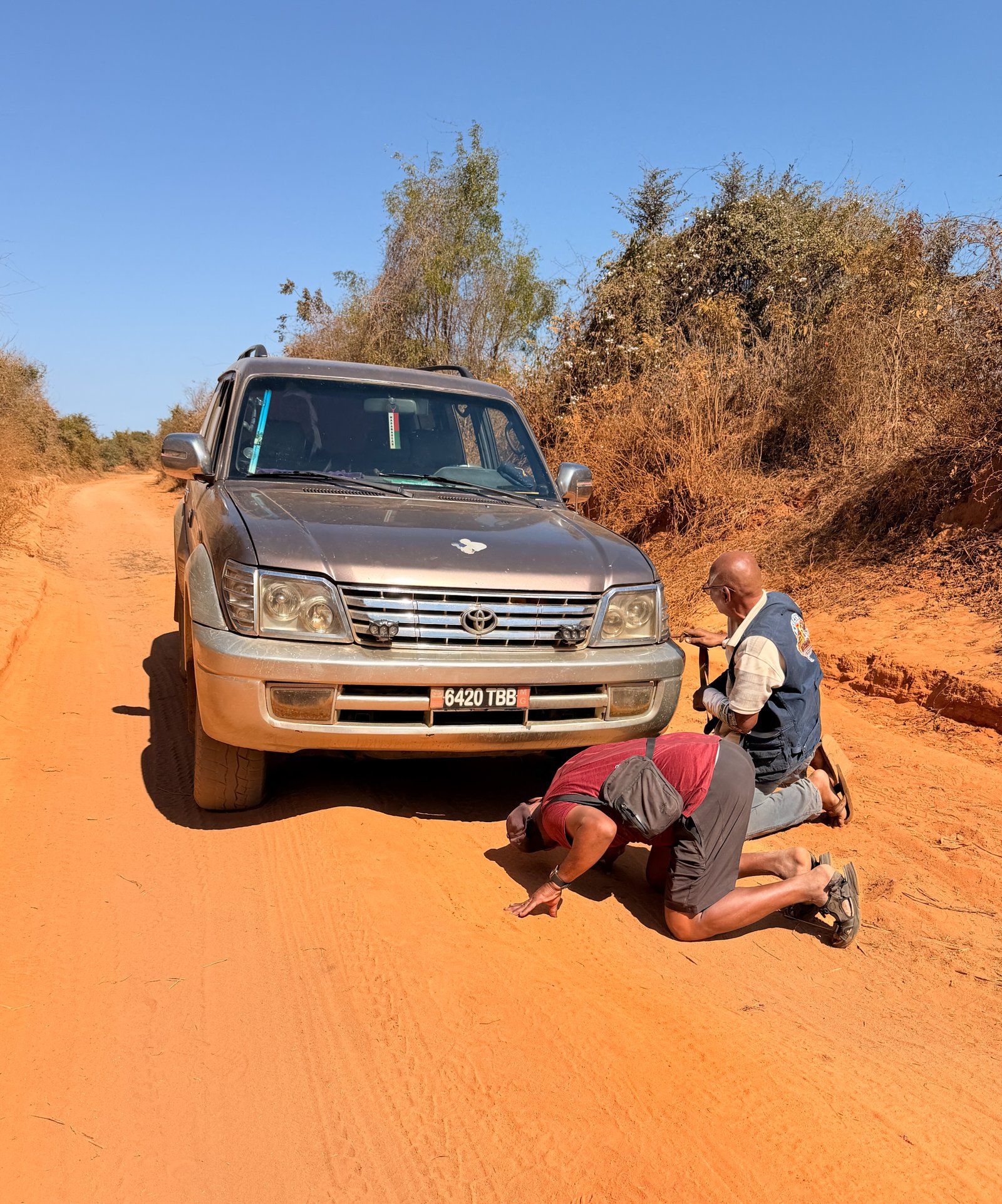
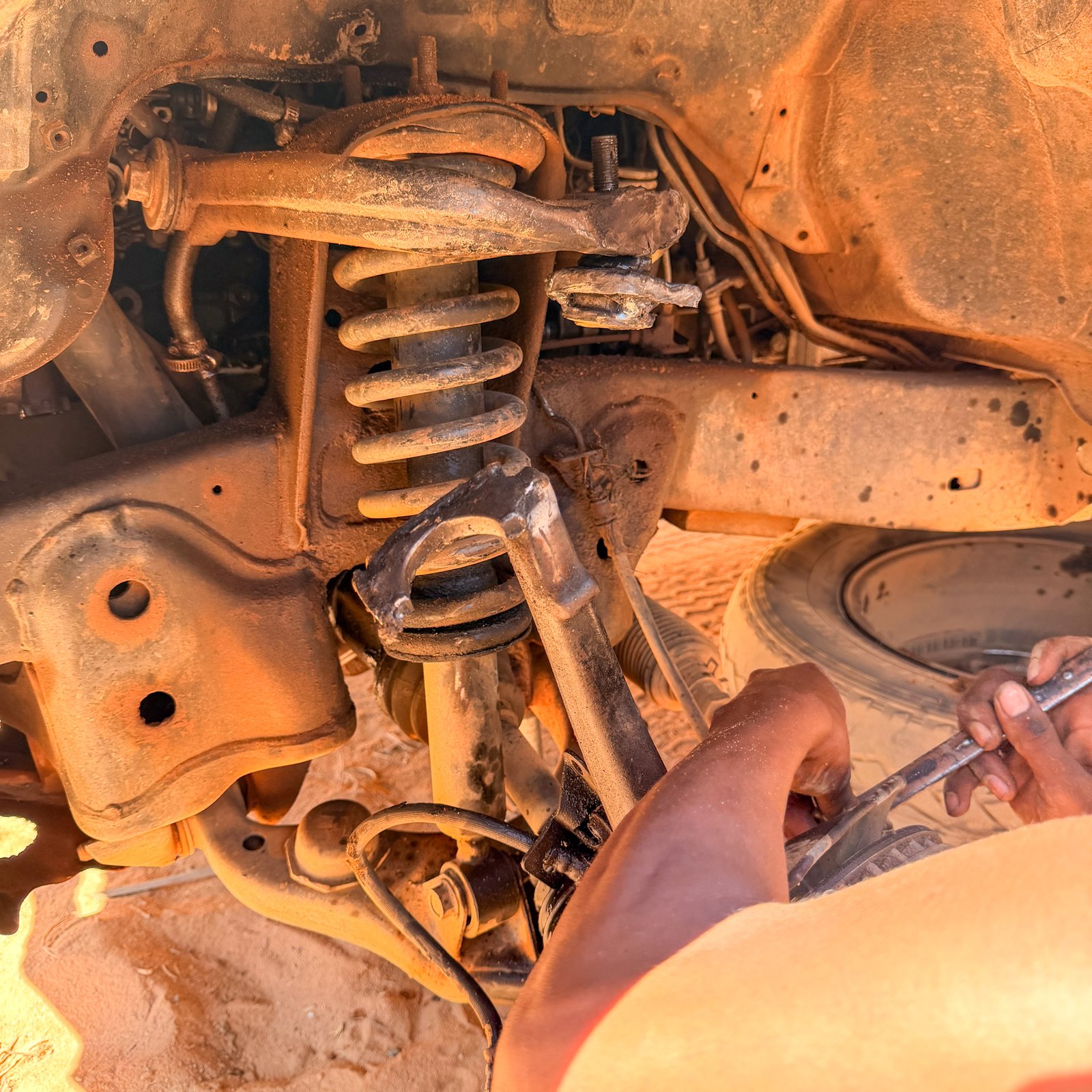
Luckily, a tourist vehicle stopped and they happened to have two empty seats. We were quickly told that we could get a ride with them and grabbed only part of our luggage before being rushed into the car. JB and Michel assured us they would be on their way and would see us later. We spent the next four hours in the car with our new friends from Scotland and their driver. We made our way down many sandy dirt roads, through a couple of very small villages, and finally to another shorter river crossing by a smaller car ferry. Finally, we arrived in Bekopaka where the driver was nice enough to bring us to our hotel, which was different from the other guests.
We settled into our room and had dinner at our hotel, Tanankoay Hotel, wondering if and when we would hear from Michel and JB. Soon enough, our guide for the national park tomorrow showed up and we spoke with him about the plan. We heard that JB and Michel were on their way and would supposedly be there by the morning. We went to bed and got ready for another busy day tomorrow.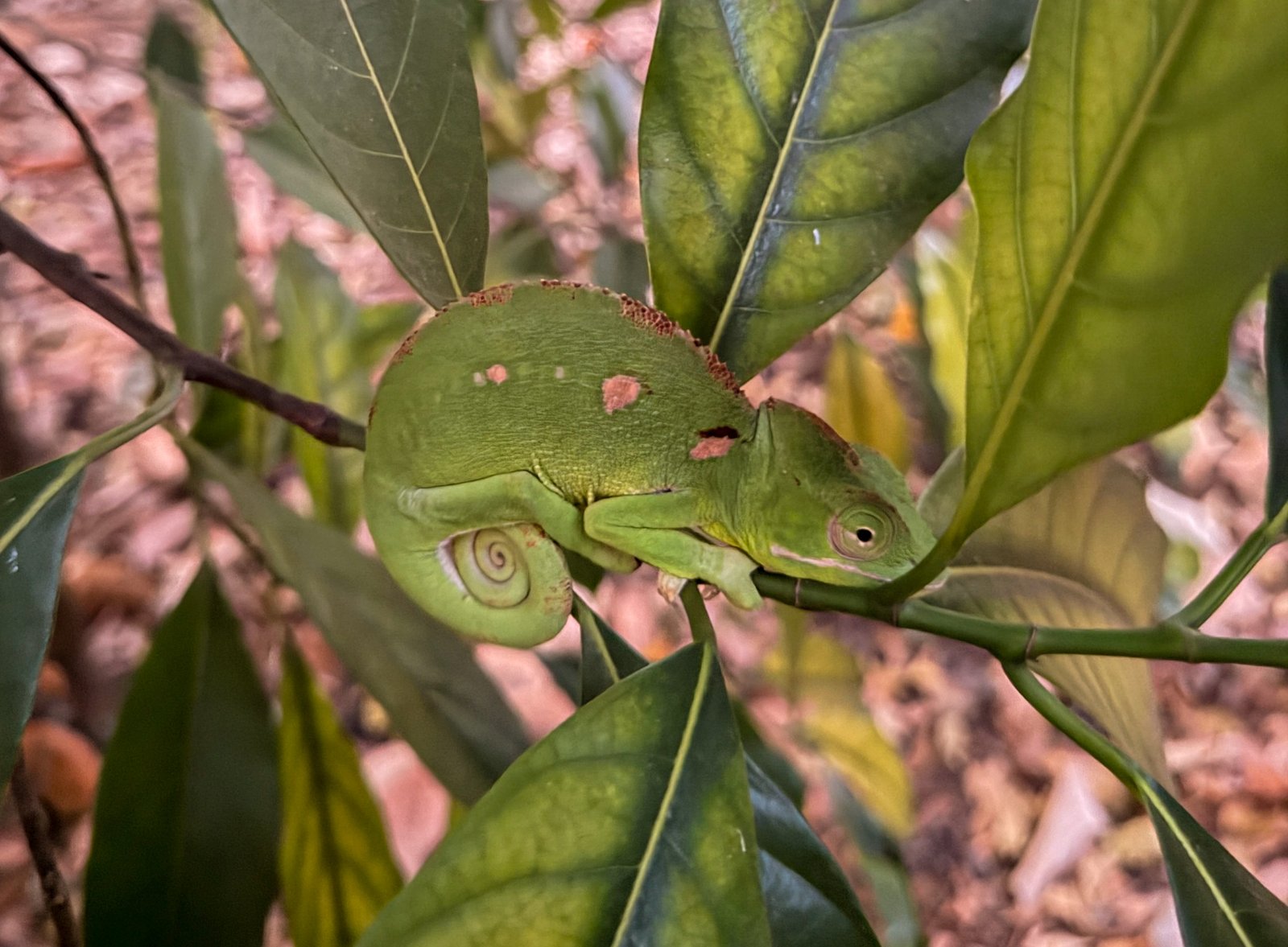
Manambolo Gorge
We awoke to the good news that JB and Michel had been able to fix the car and made their way up to our hotel, reaching it around 11pm. They had to do all of the fixes on the side of the dirt road where we broke down, getting a local welder to come from the town to weld back the part that broke. Amazing what they can do here!
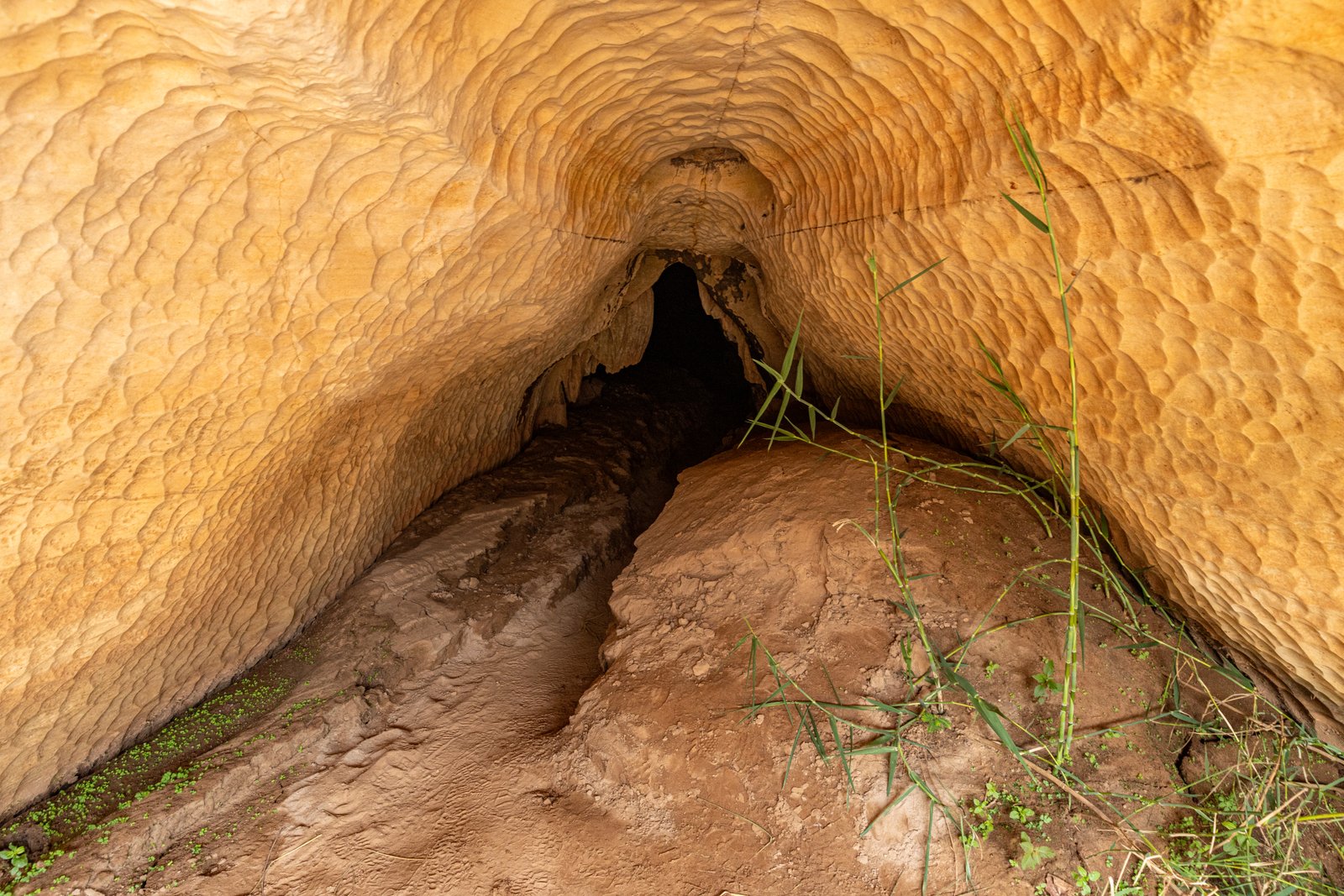
We had a quick breakfast and left the hotel by 7:15 for another day of adventure. The first activity was to take a double pirogue “catamaran” trip up the Manambolo river Gorge. We boarded the boat with our national Park guide and one canoeist who would push us up the river using a pole, as it is very shallow. We stopped at two different caves to explore, where we got out of the canoe and walked into large caverns inside the limestone walls. There were several different stalagmites and stalagtites to see, as well as a large hidden room inside the cave. We heard that in the rainy season, the cave is flooded much higher than where we were walking due to the level of the river.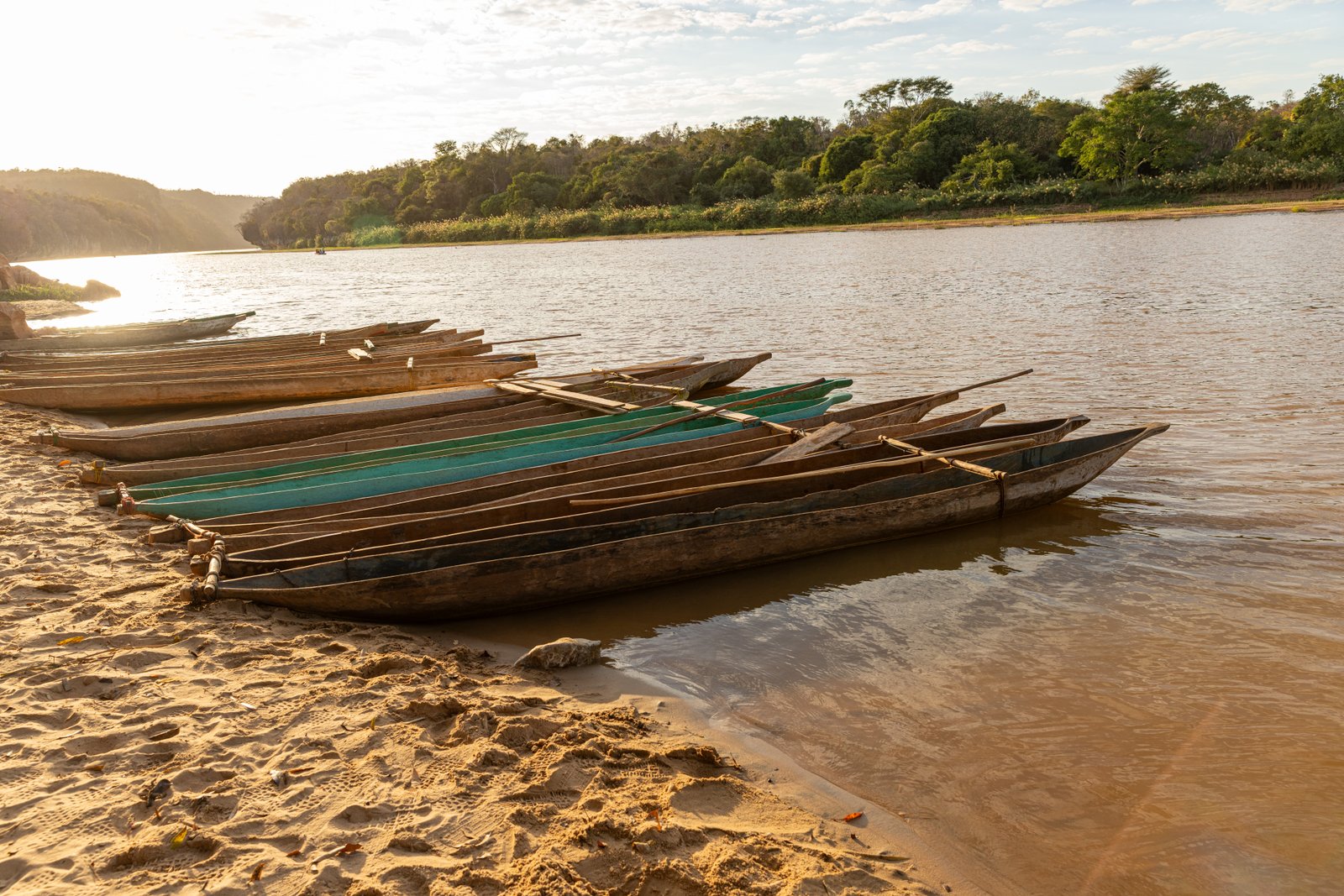
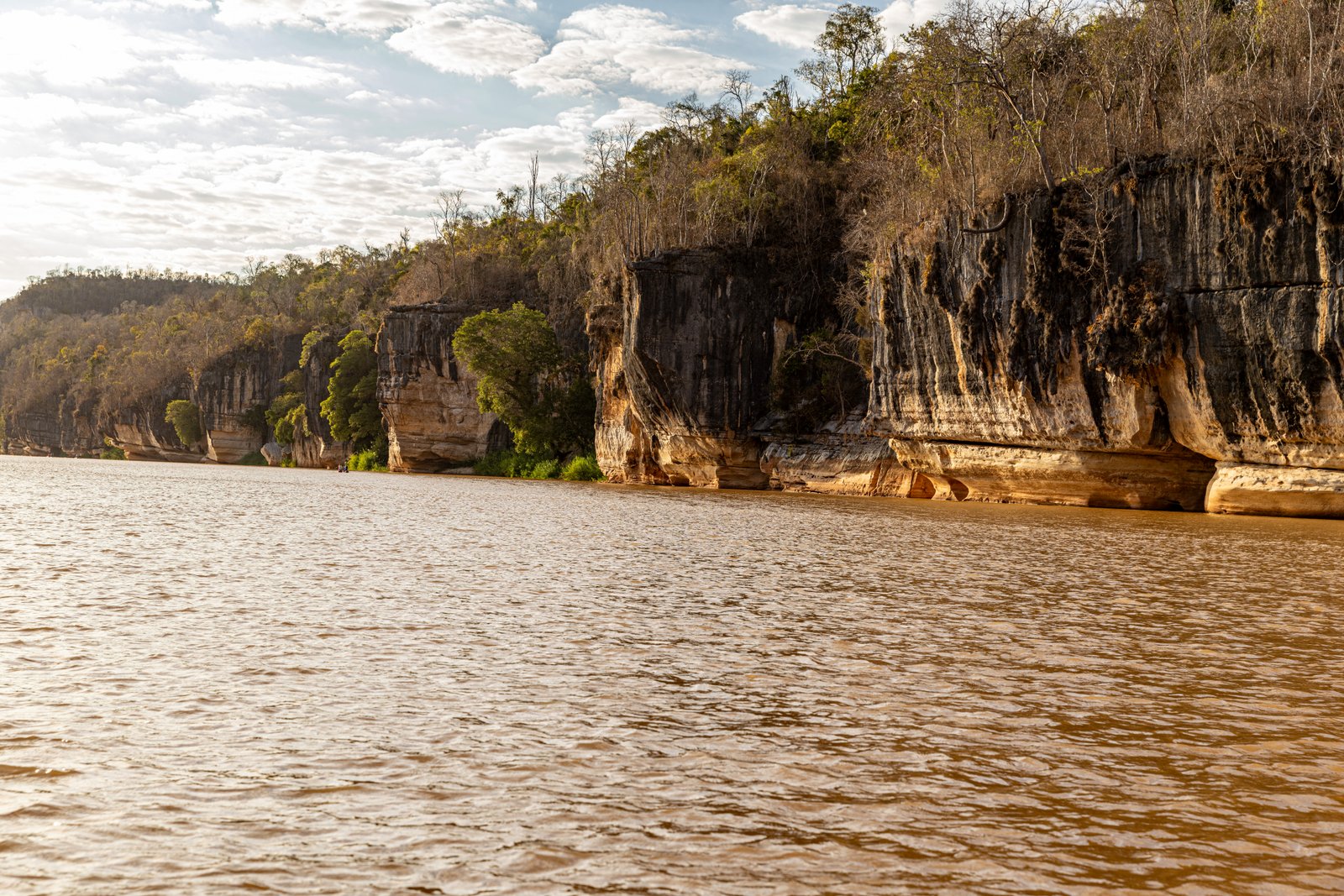
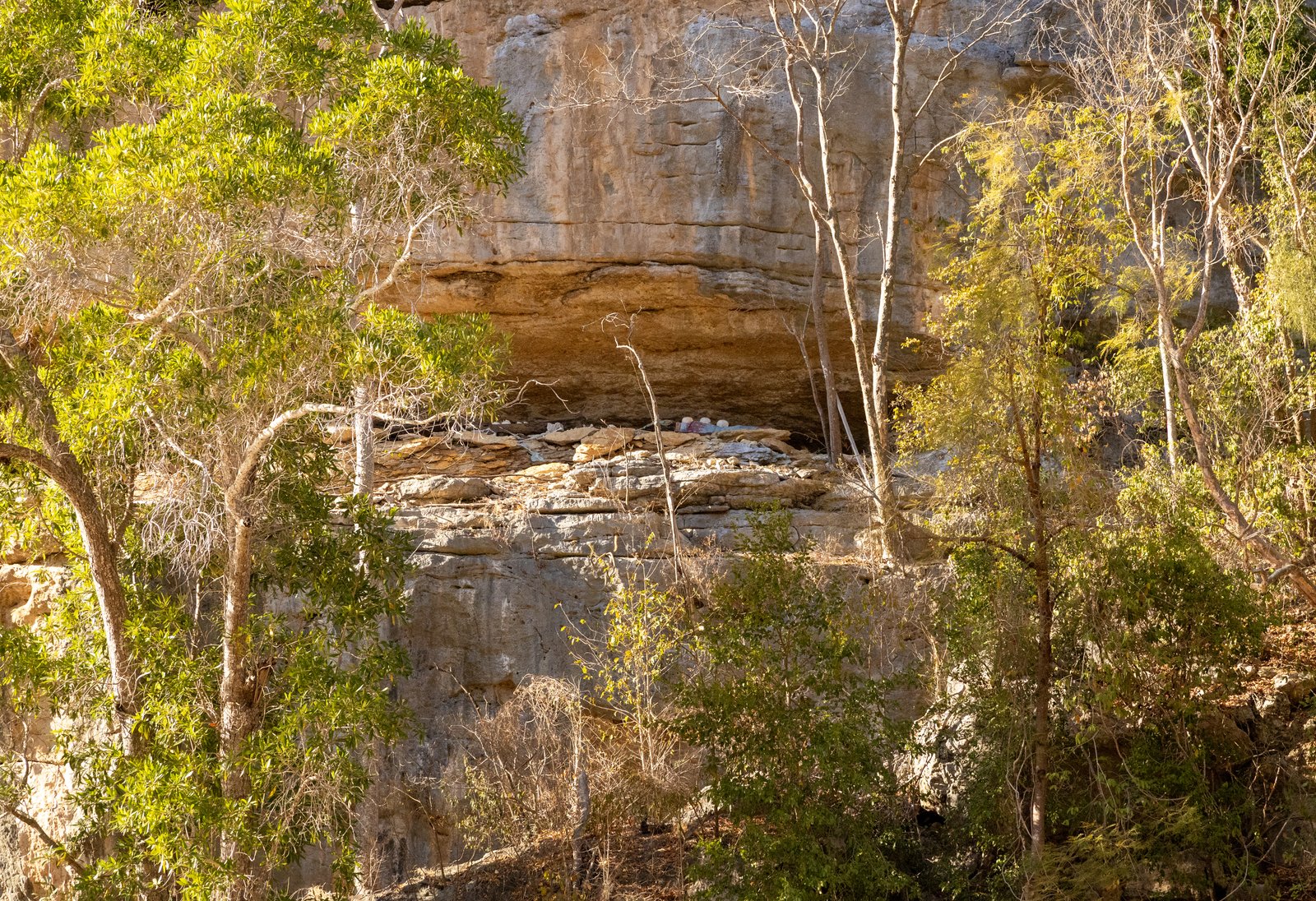
We continued upstream and observed a site where there were some ancient graves set into the canyon wall. There were skulls and tombs from over 500 years ago, but they were up on the cliff walls and hard to really see. Our short time on the river concluded with paddling back down the river where got back in the car to start our next activity.
Tsingy National Park
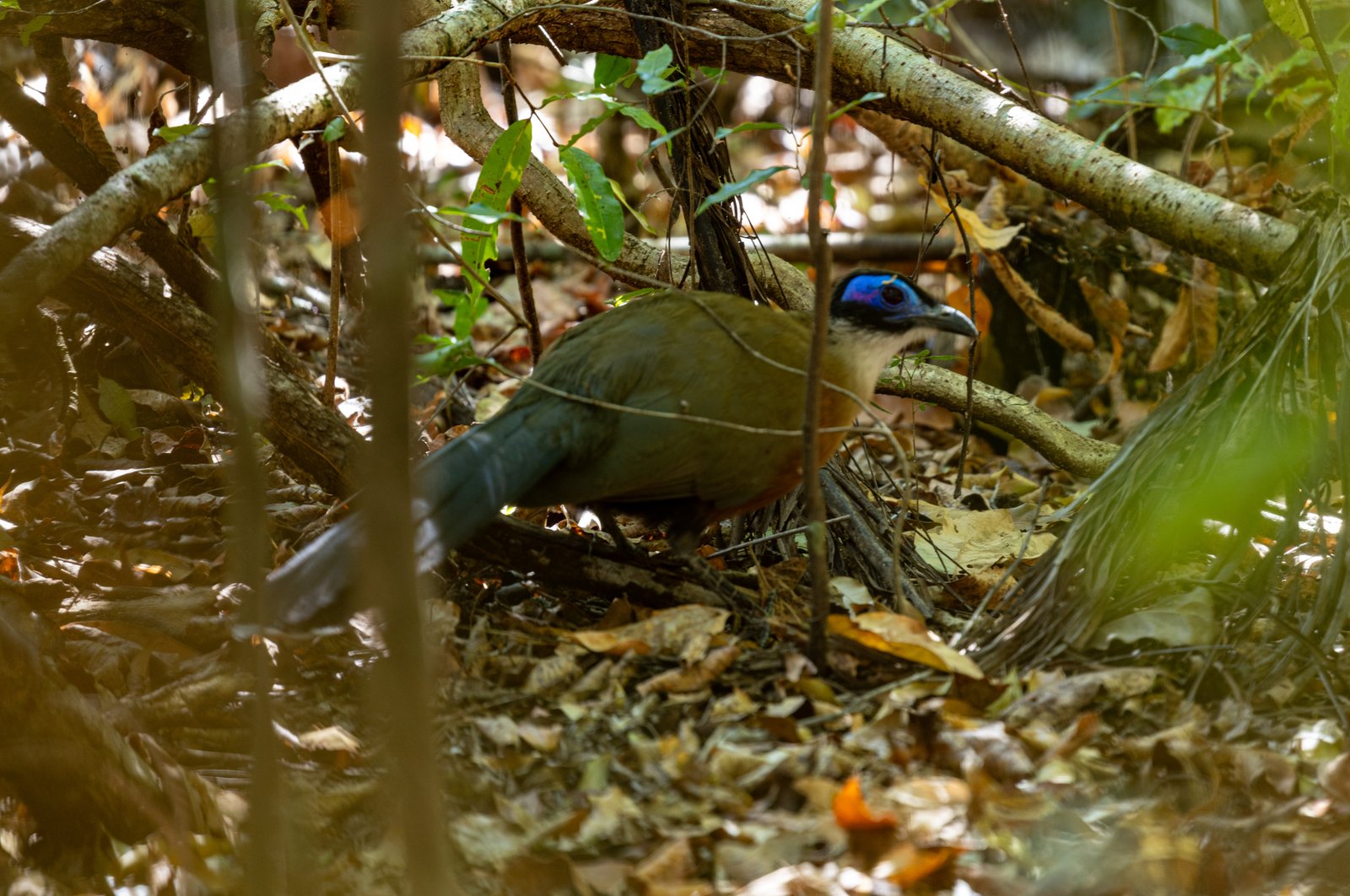
While all of the tourists stay in the town of Bekopaka, there is still another hour drive to get to the entrance of Tsingy National Park. The road was not very good and it was slow going. We arrived and got ready for a hike with the same NP guide and JB. The sun was quite hot, but luckily, we soon entered a dense forest where we were looking for wildlife. We were hoping to see a lemur, but unfortunately we did not.
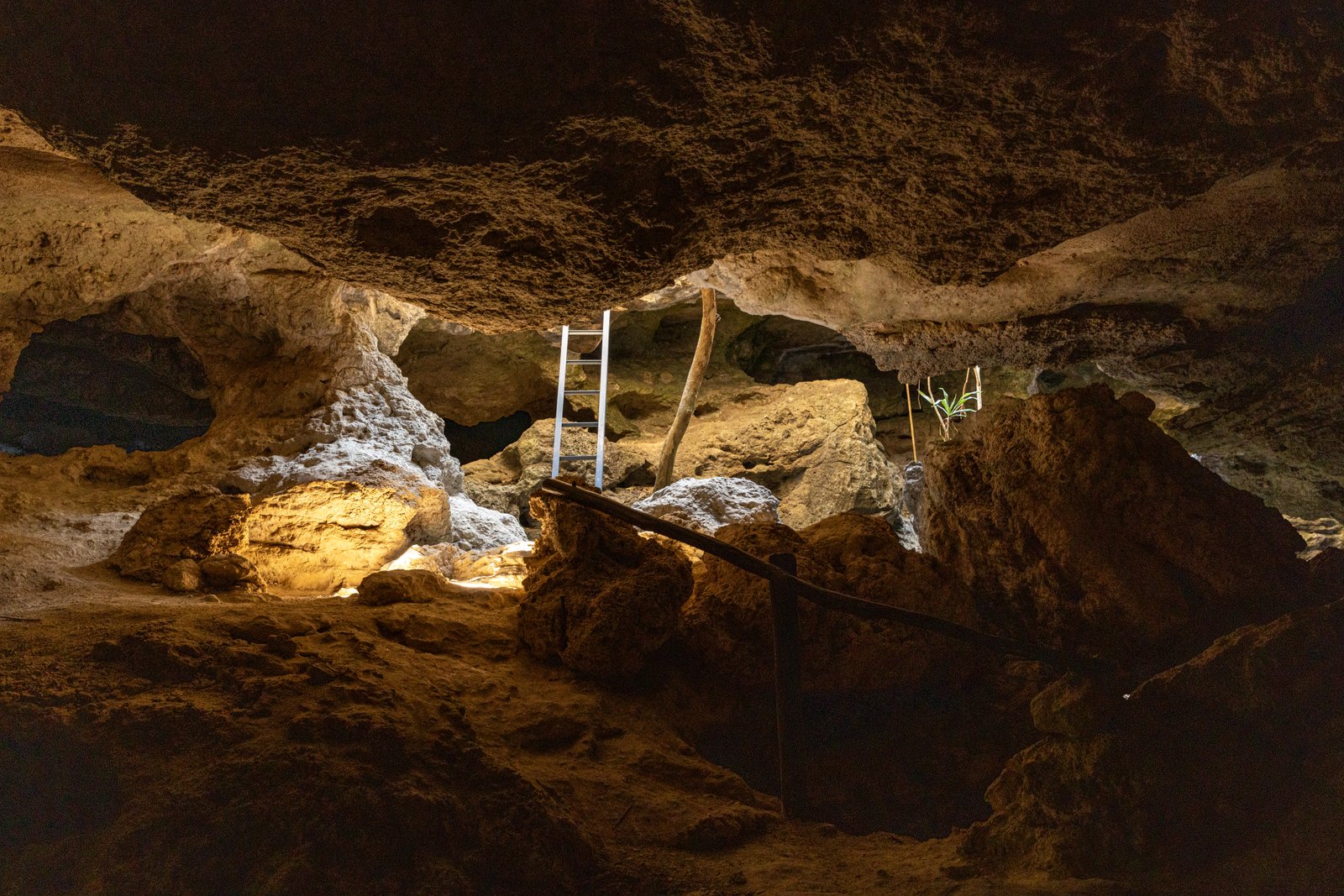
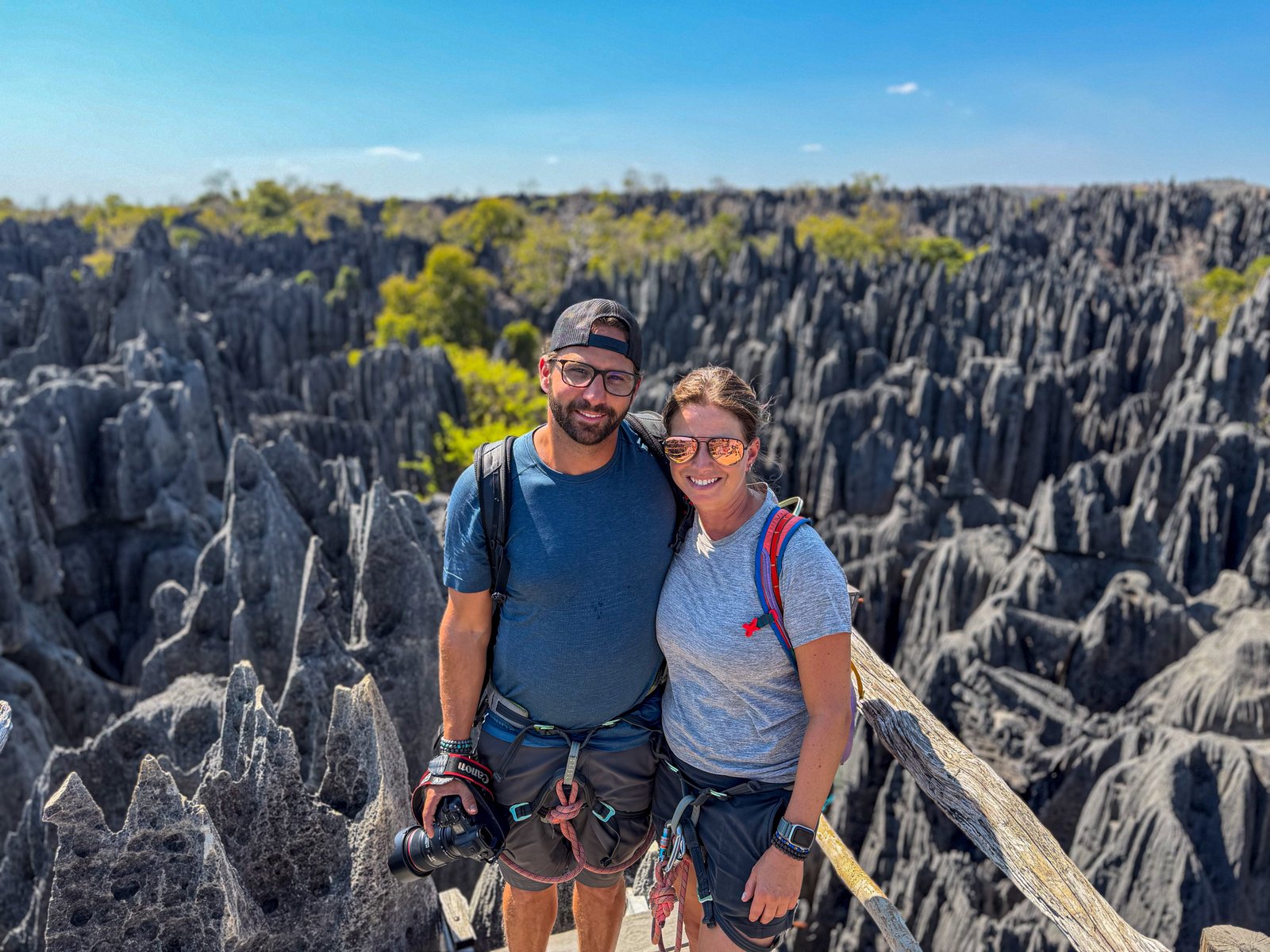
The forest gradually brought us to the edge of the limestone spires that Tsingy is famous for, also known as the spiny forest. We had been given a climbing harness at the beginning of the hike and were told we needed to put it on at that point. The path took us up into the rocks, using some ladders and stone steps screwed into the side of the rock. There were several areas of cables where we were asked to clip in and out as we got to the next cable. Overall, we didn't feel like this was necessary, but tried to comply, as it seemed mandatory.
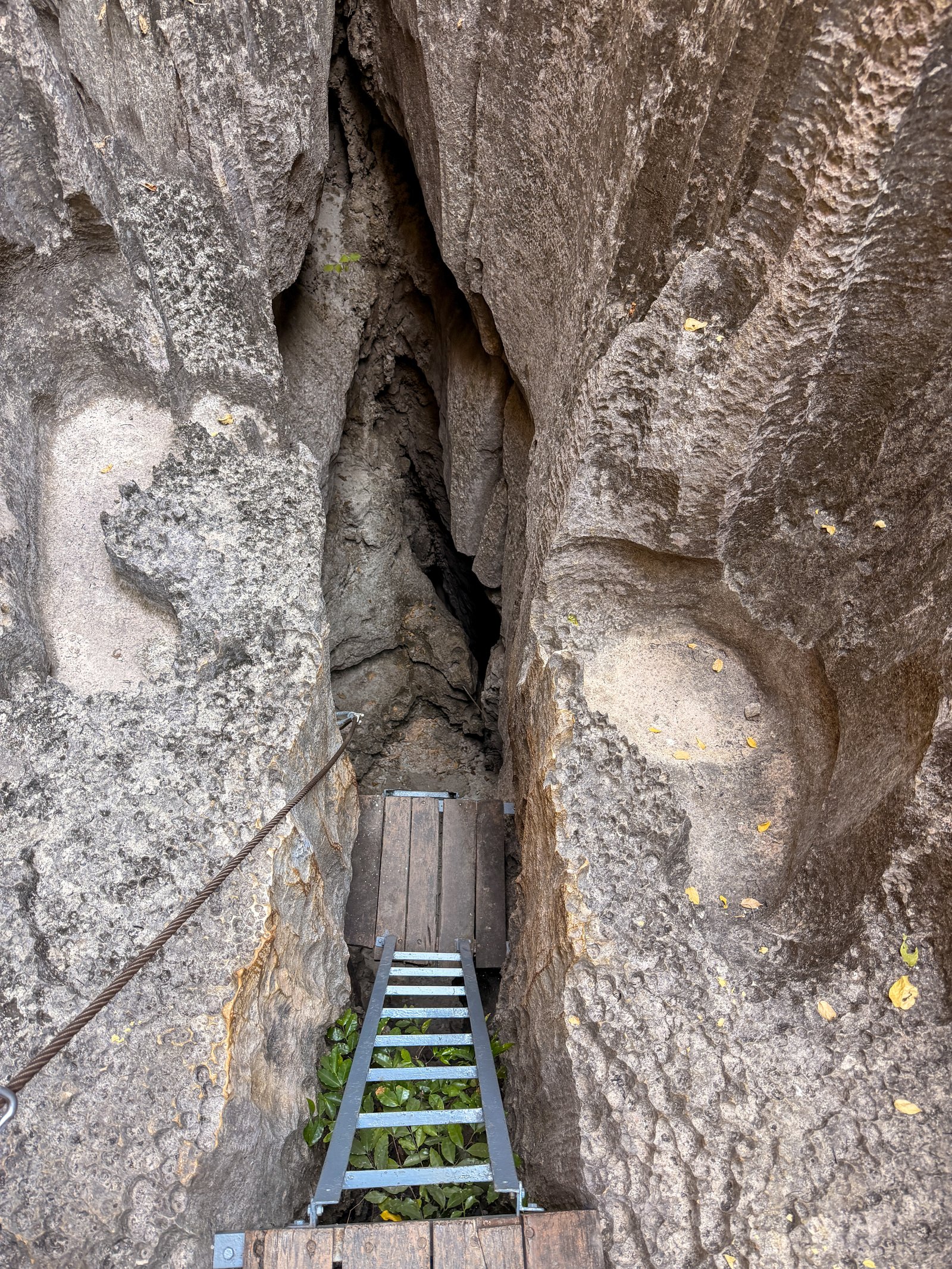
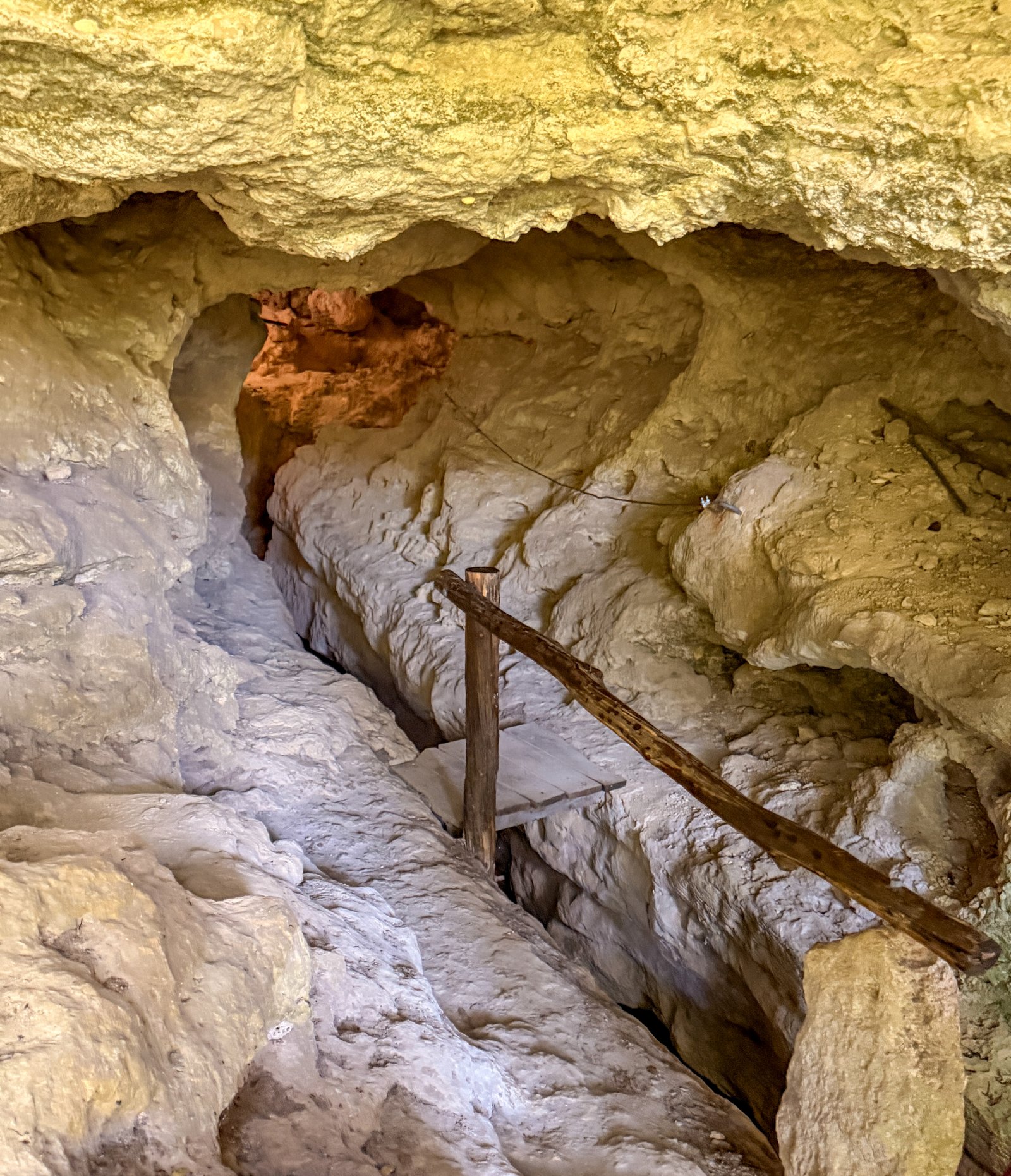
The climb took us up to the first viewpoint where we waited behind 1 or 2 groups to have our turn. The overlook had amazing views of the surrounding park and we were able to take our time there admiring it. After that we climbed down and back up, weaving through the spires to make it to the next overlook and the famous suspension bridge. We took turns going one at a time over the bridge. It was wobbly, but you also were required to clip in to a cable, so it wasn't worrysome.
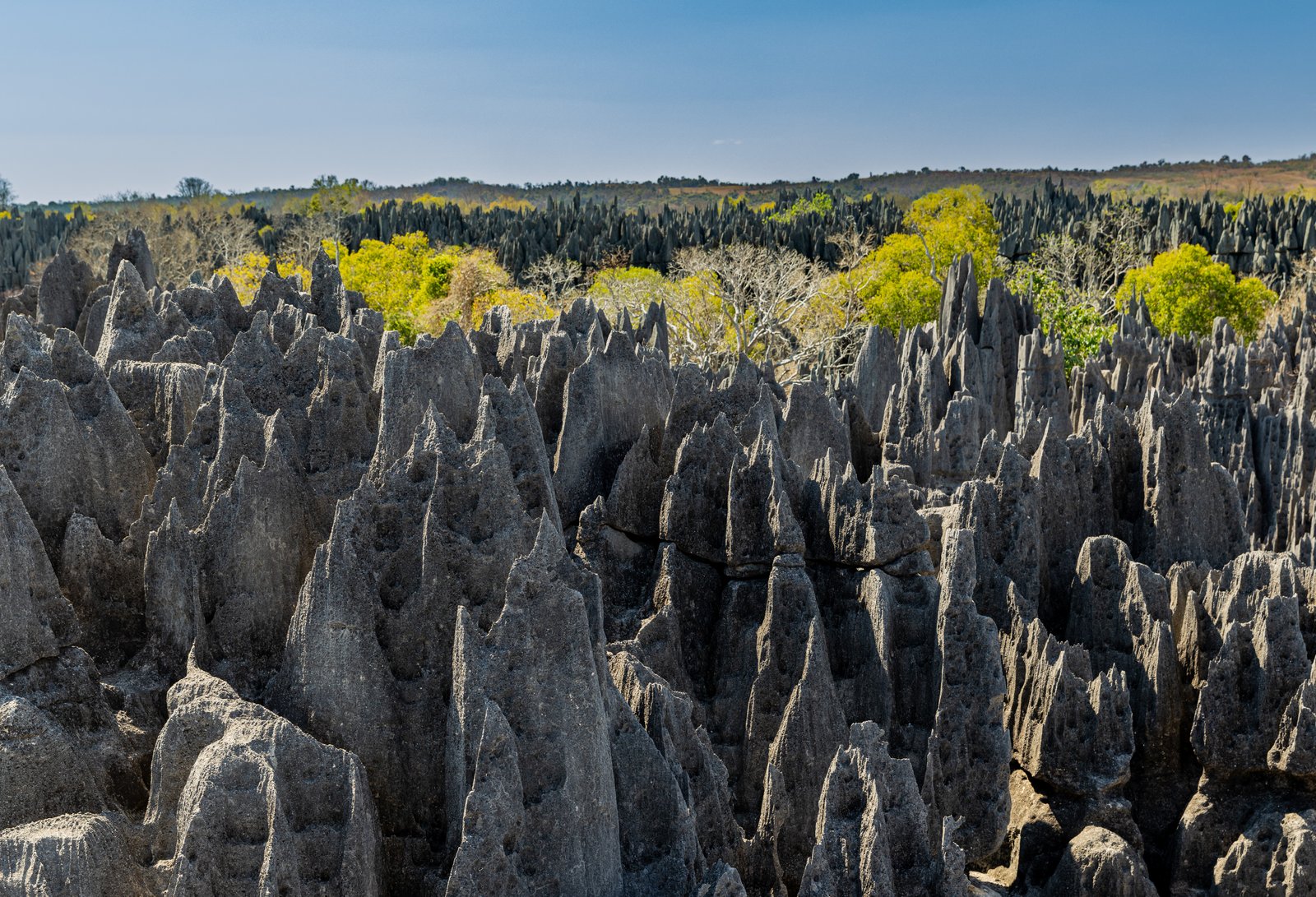
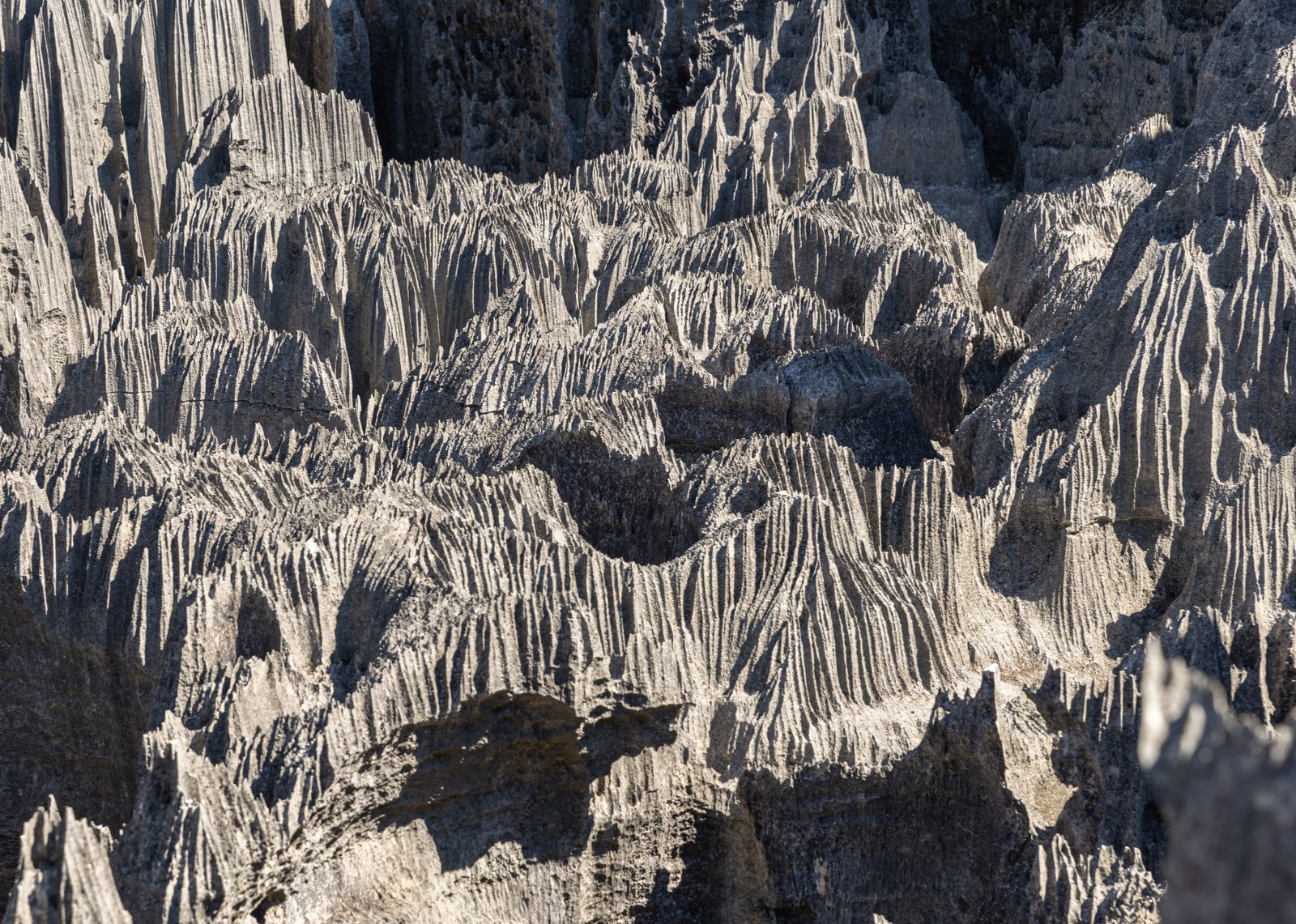
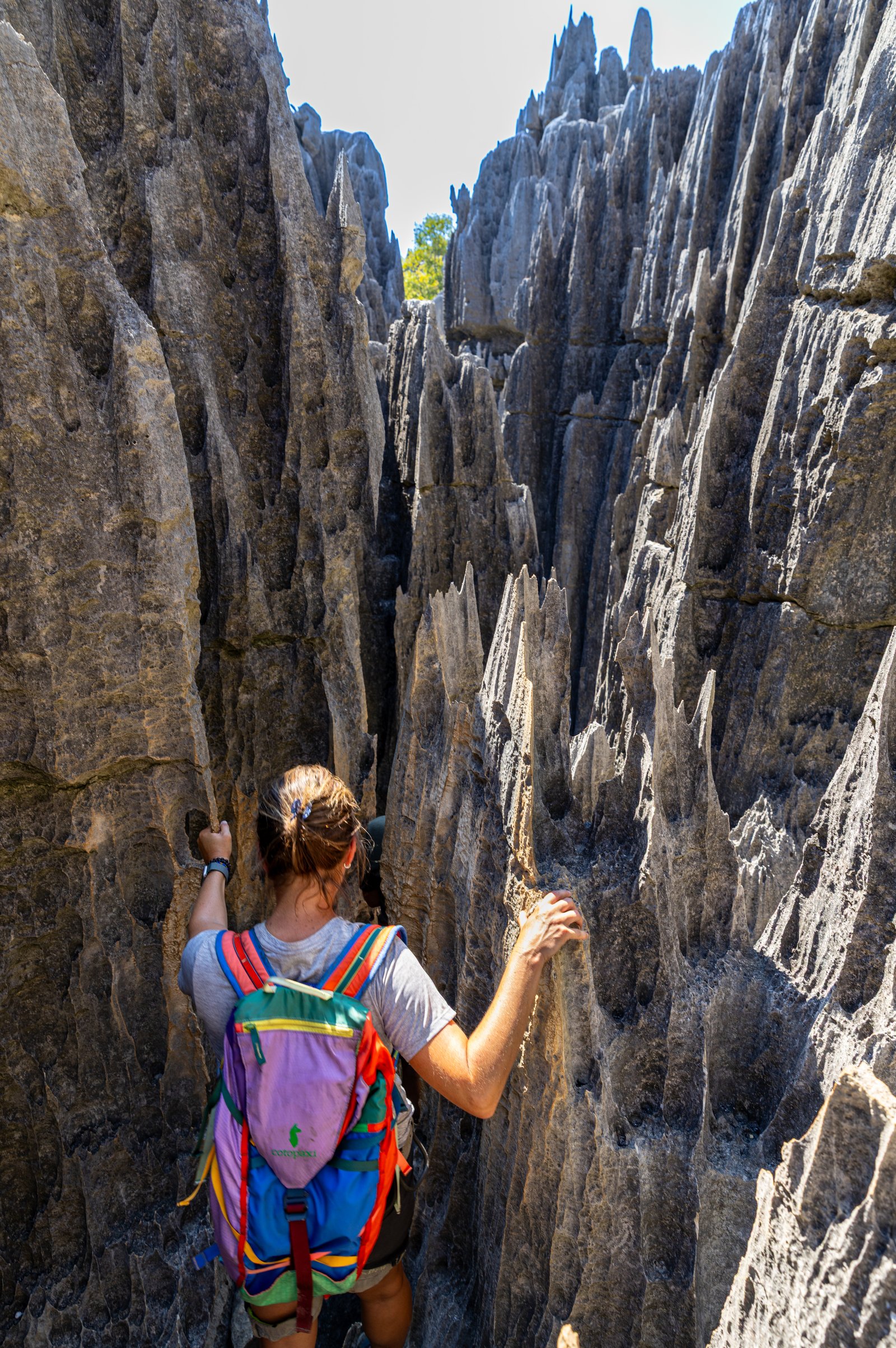
After the bridge, we headed down to hike deeper in between the spires and through several small tunnels. We stopped for a snack break and then were almost done, making our way out until we reached the trail we had come from. Over all, the hike was 2.5 miles when we made it back to the car for another hour ride out back to the hotel. We had some time to relax at our bungalow and explore the grounds at sunset. We even spotted a chameleon in the tree, which is harder than you would think. We had dinner and sampled some of the local rum while listening to the live entertainment that our hotel provided every night.
Back to Top
Link to Madagascar Photo Galleries
Day 23-25: Kirindy, Morondava & the Baobabs
We left the Tsingy area around 7:15am for the last long day of driving. After reaching Kirindy tonight, we would only have a few hours in the car remaining! We did the small river crossing and then it took us until noon to reach the larger river raft crossing. On our way, we started to have a different problem with the car. We were unable to downshift into 1st gear, which is used a lot when driving slowly on the rough roads. We had to stay in 2nd or otherwise would stall and have to restart. For some reason we could shift to 1st after turning the car off, but it required a slight downhill slope to start because of other electrical problems.
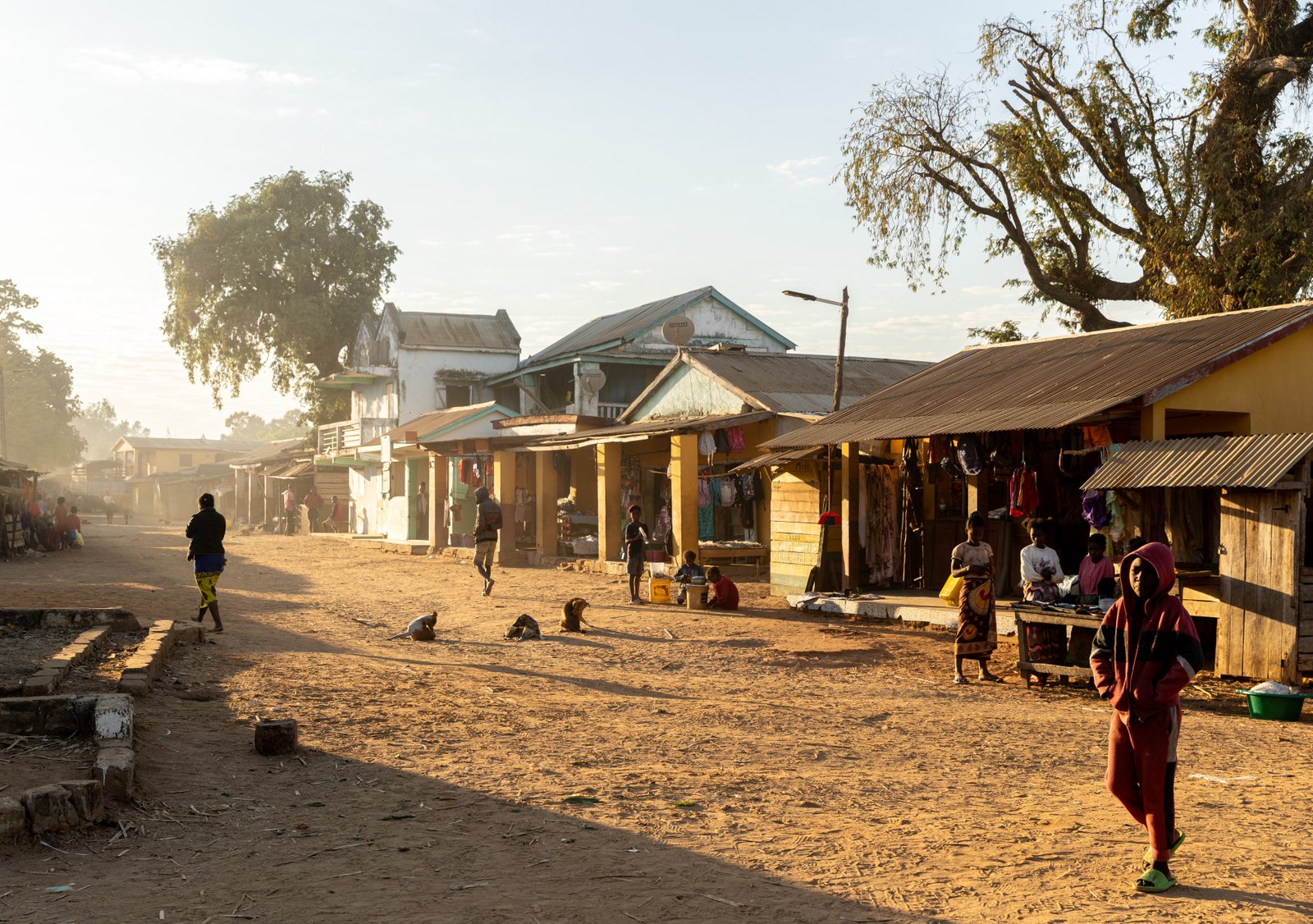
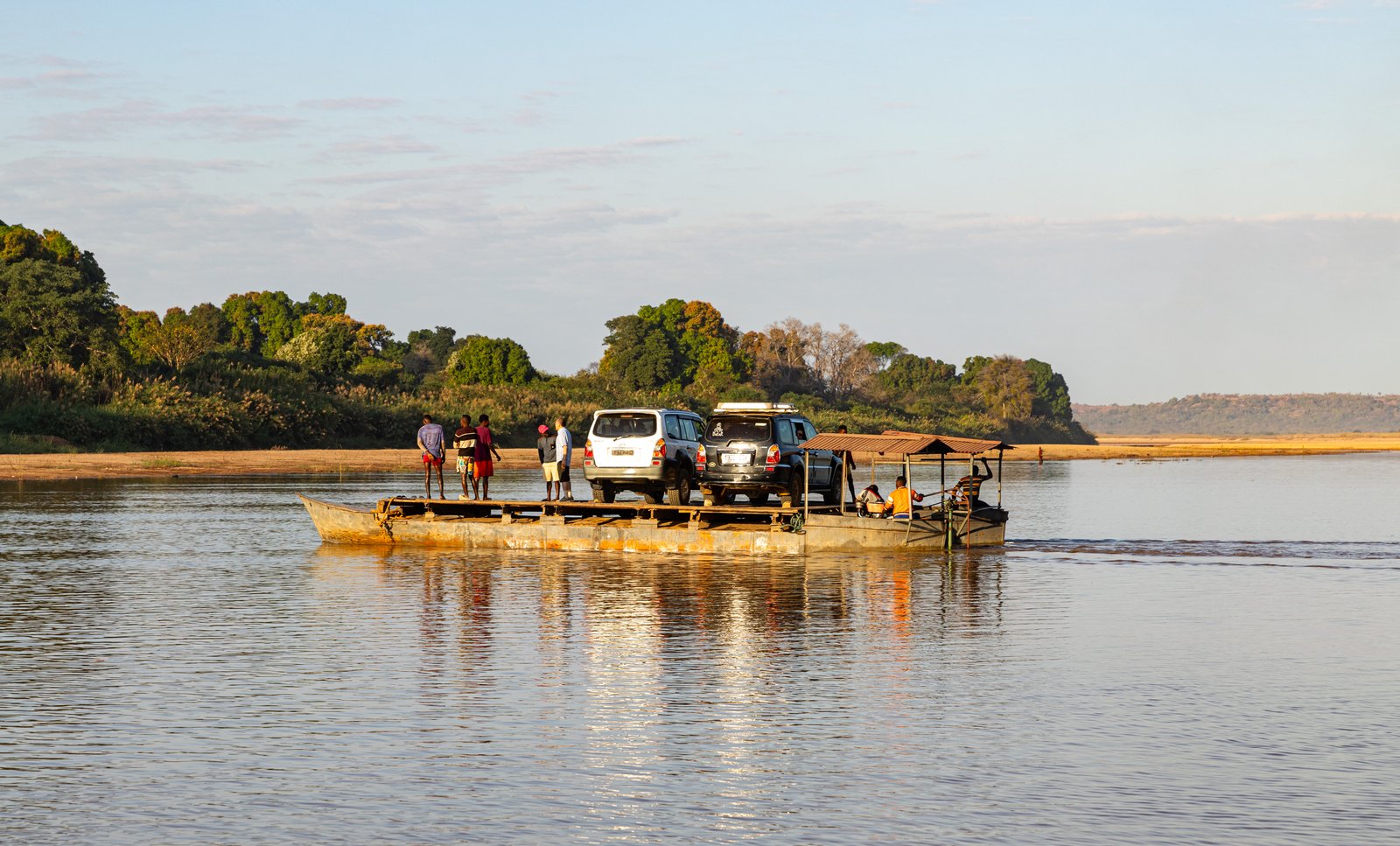
It was a slow and stressful drive but we somehow made it, had another delicious lunch at the Menabe Hotel, got the car both onto and off the ferry raft with careful driving by Michel. The ferry crossing, including loading and unloading, takes about 50 minutes. We had another 2 hours to drive down the sandy roads to get to Kirindy. At this point, we hadn't been on any paved roads in a very long time! We reached a large grove of baobab trees and stopped to fly the drone in the late afternoon light. Finally, we made it to Kirindy Forest Reserve where checked into our hotel, the Relais Du Kirindy. We went on a night hike to see nocturnal lemurs, had dinner at the hotel and got some sleep.
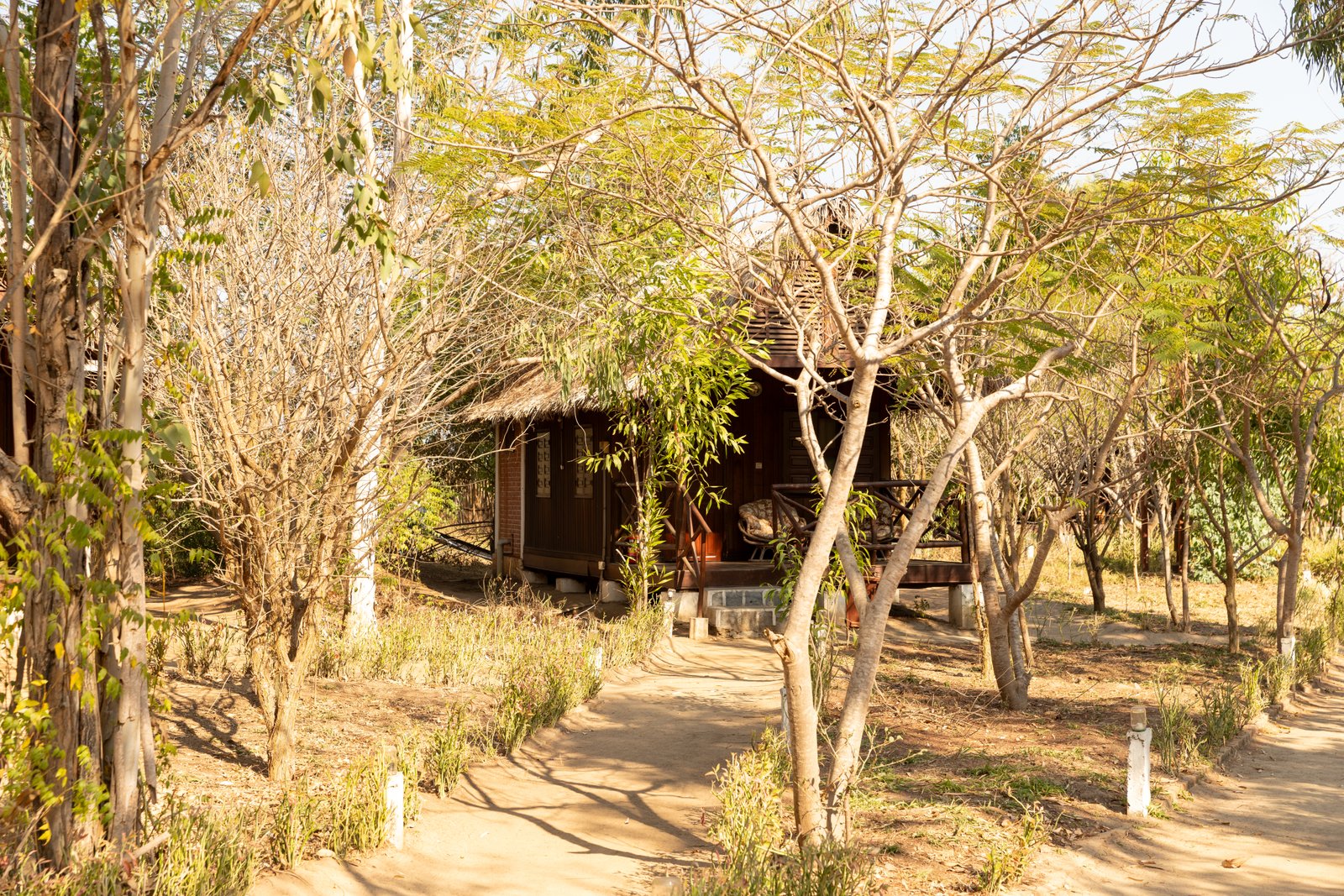
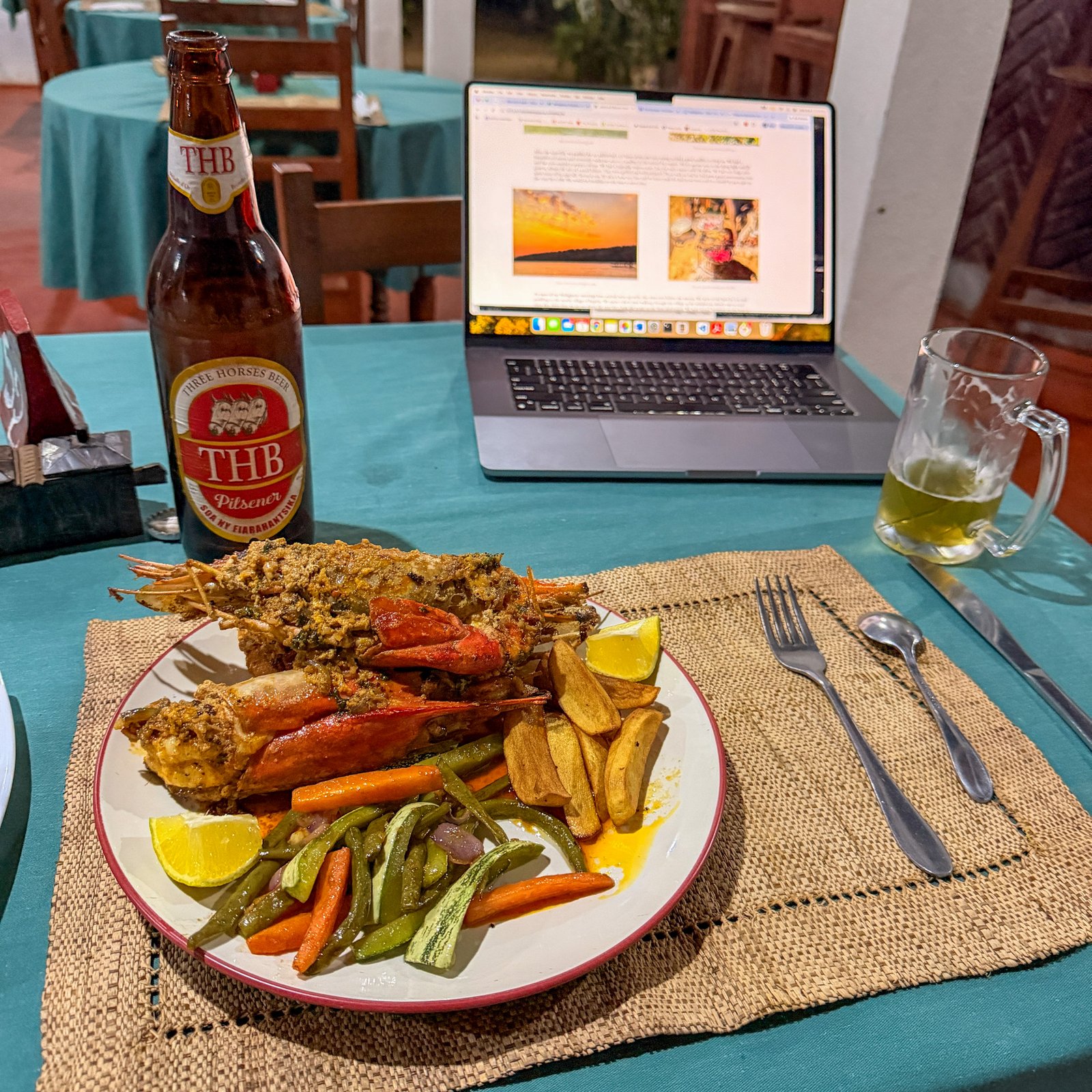
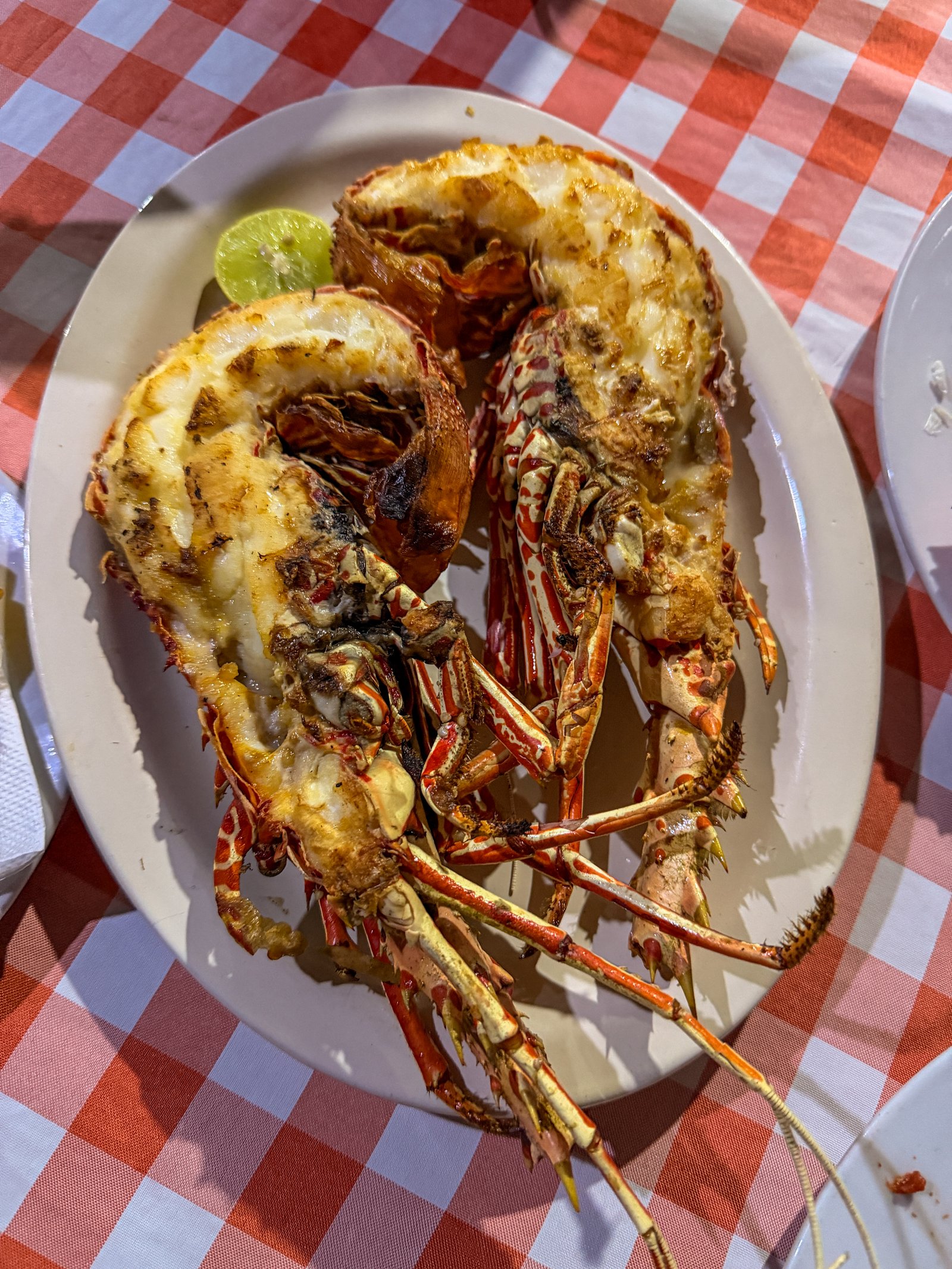
In the morning, we left for Morondava at 9:30am. This way,we could spend time at our beach hotel during the day and then head to the famous baobab avenue for sunset. We said our goodbyes to JB upon our arrival in Morondava and Michel was to take us for the sunset. For our last dinner, we had a feast of seafood at a restaurant nearby our hotel called Le Corail. We had a huge lobster, stuffed crab, shrimps in spicy sauce, and a bottle of wine for less than $50!
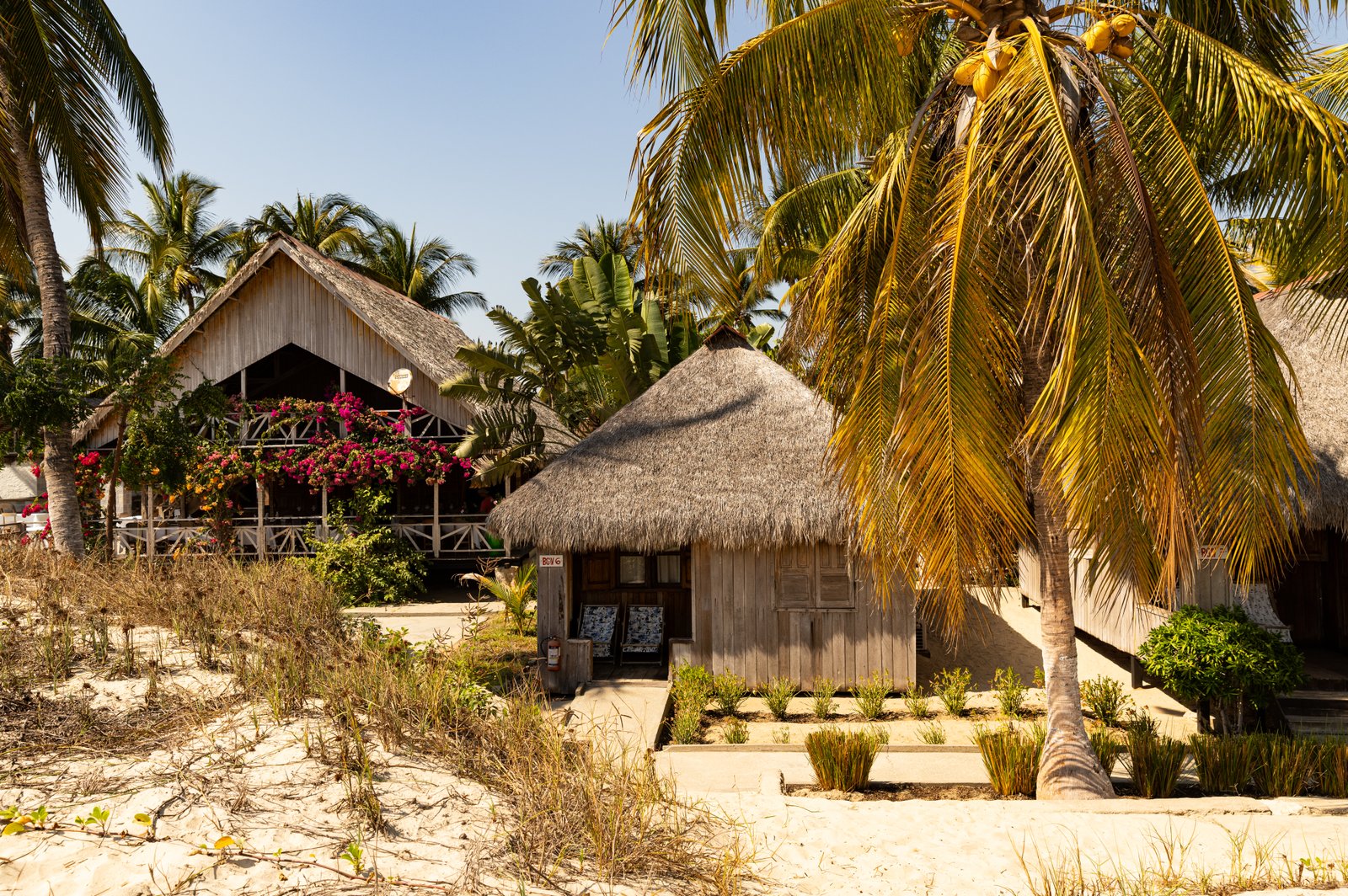
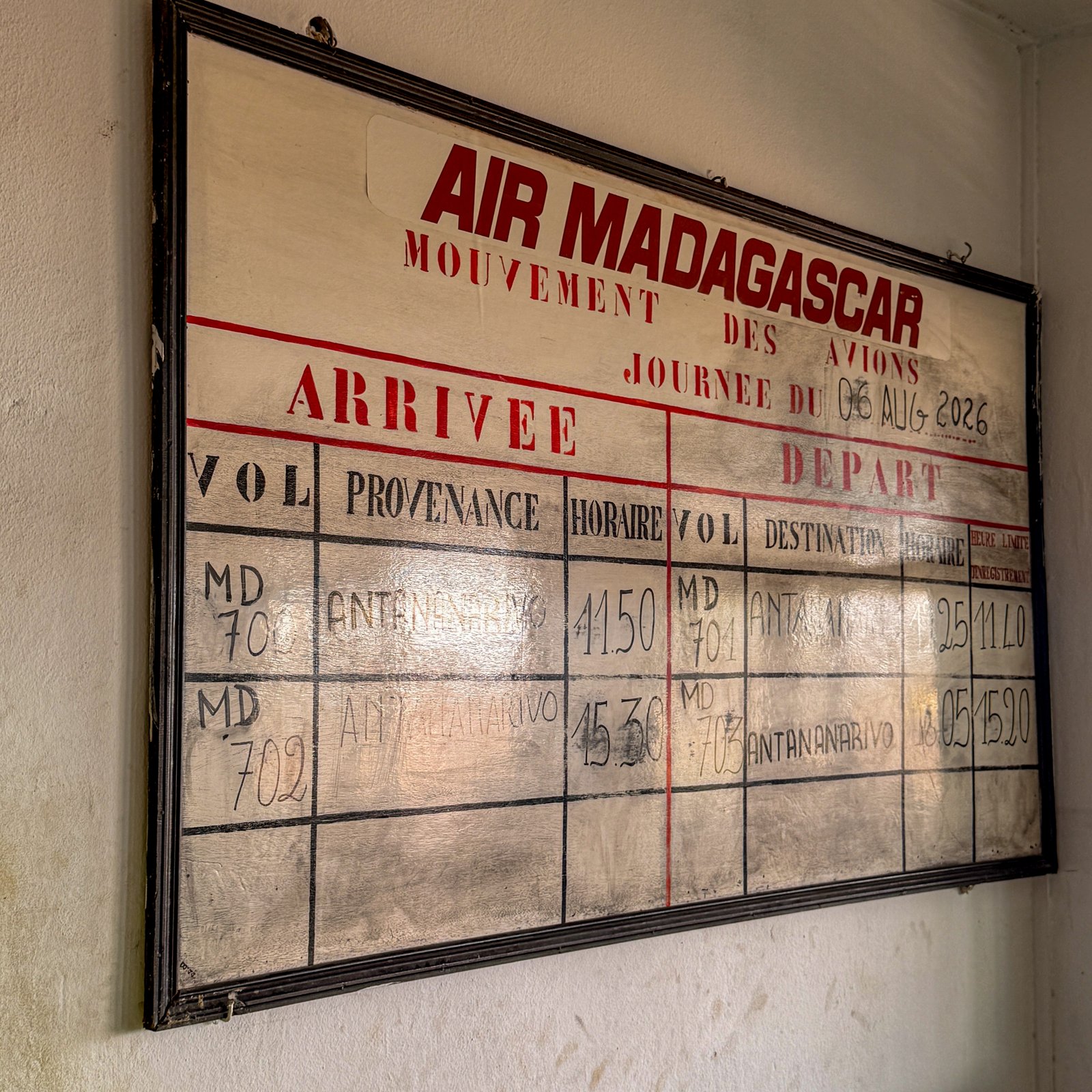
We were able to sleep in and relax on our final morning before repacking our things to get ready to fly back to Antananarivo, a quick 1 hour flight. Our last flight on Madagascar Airlines went on time and we got to Antananarivo with plenty of time to check in to our international flight to Mauritius (see our separate post on Mauritius for more info). For their lack of customer service and booking abilities, we have to say that Madagascar airlines was otherwise organized and all of our flights went smoothly.
Kirindy Forest Reserve
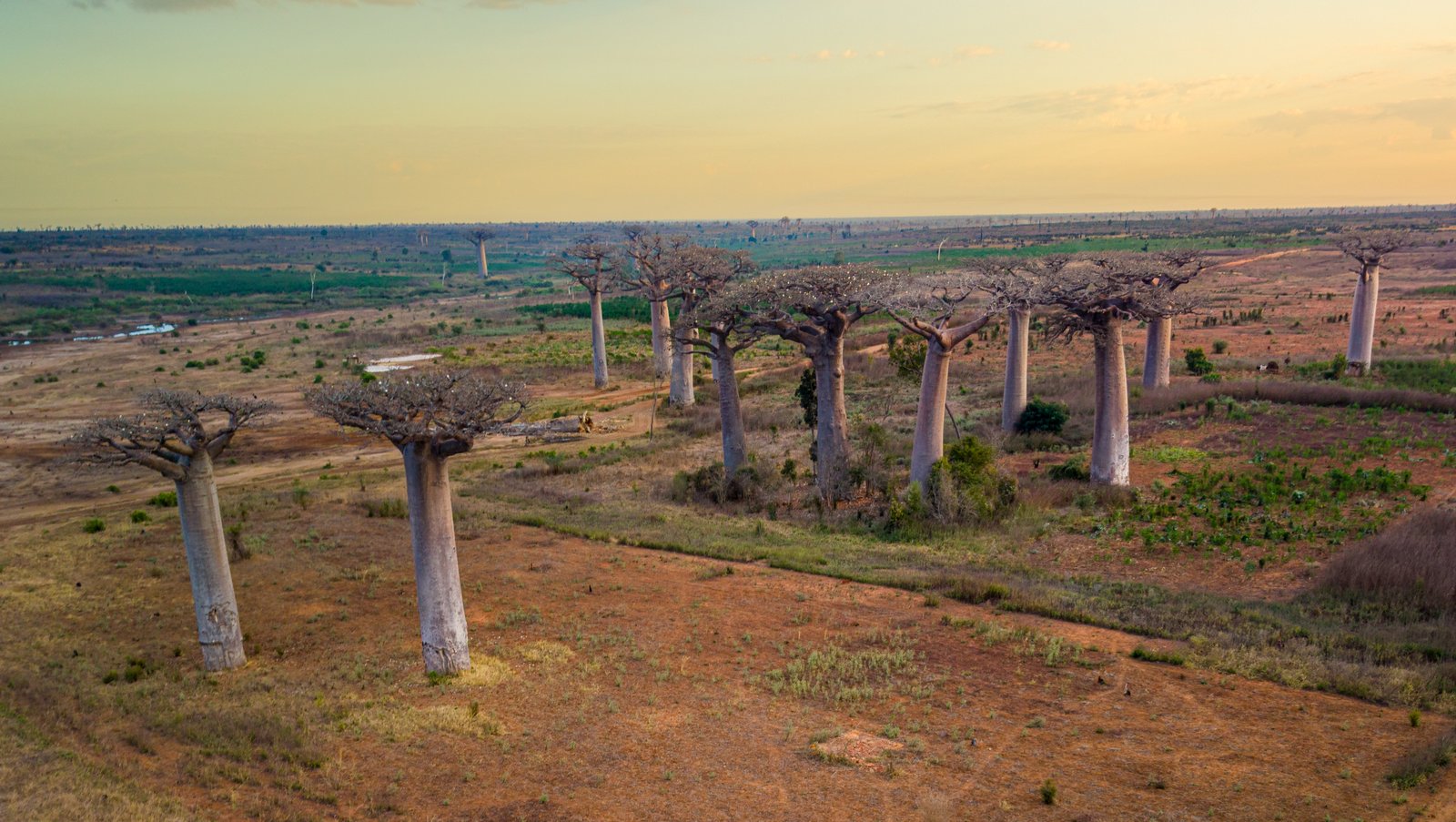
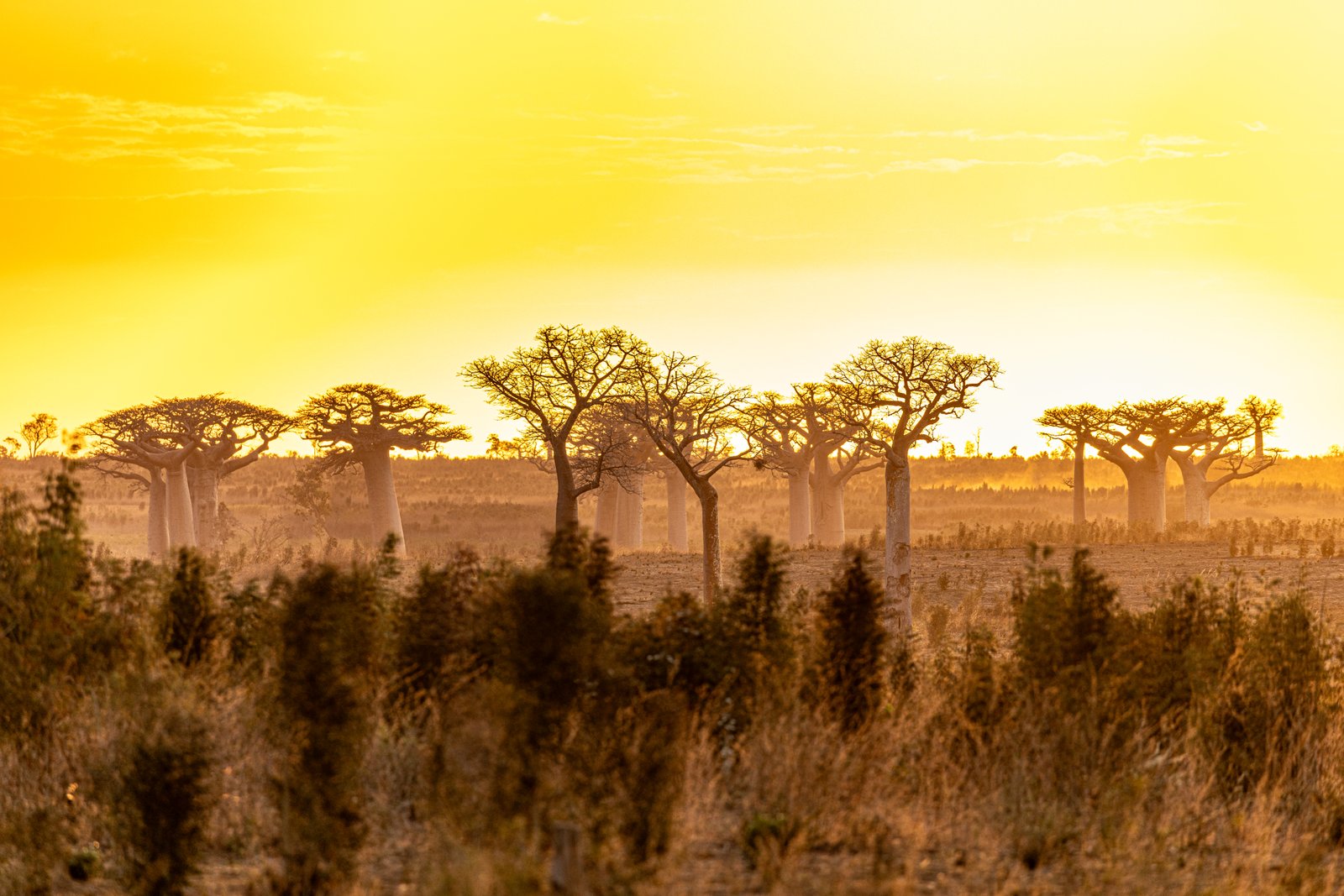
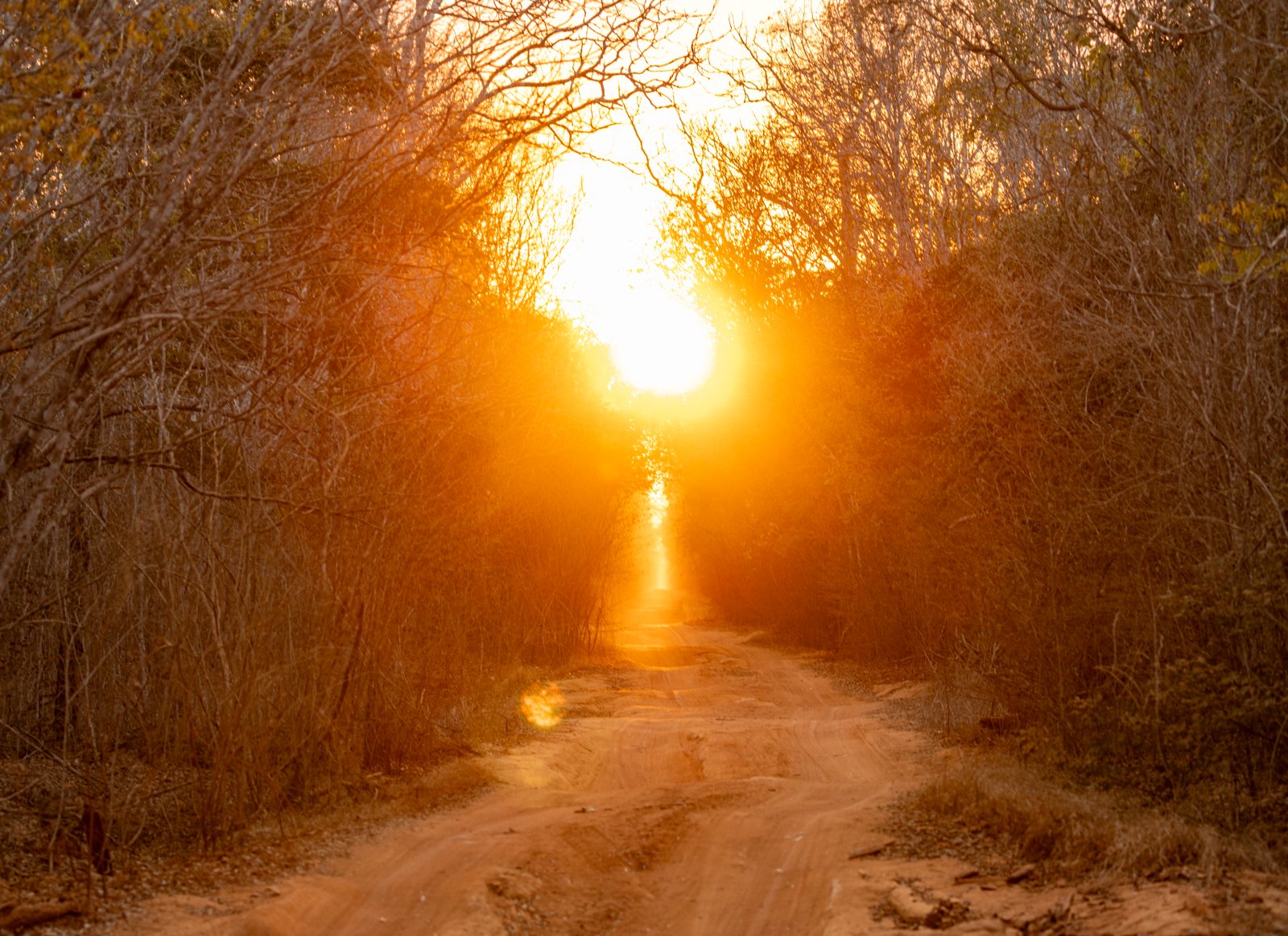
We set out for our night time visit to Kirindy Forest, a protected reserve with serveral types of lemurs and a chance to see the fossa. It was about a 20 minute drive to get there and along the way we had a spectacular sunset, stopping a few times to take pictures of the nearby baobab trees and the dust lined red dirt road. Once at the entrance, there were a lot of other tourists, but we were each assigned our own park guide to take us on the hike. After driving up the road another kilometer, we got out and started walking into the forest. From here, the tourists dispersed and we didn't run into too many people during our walk.
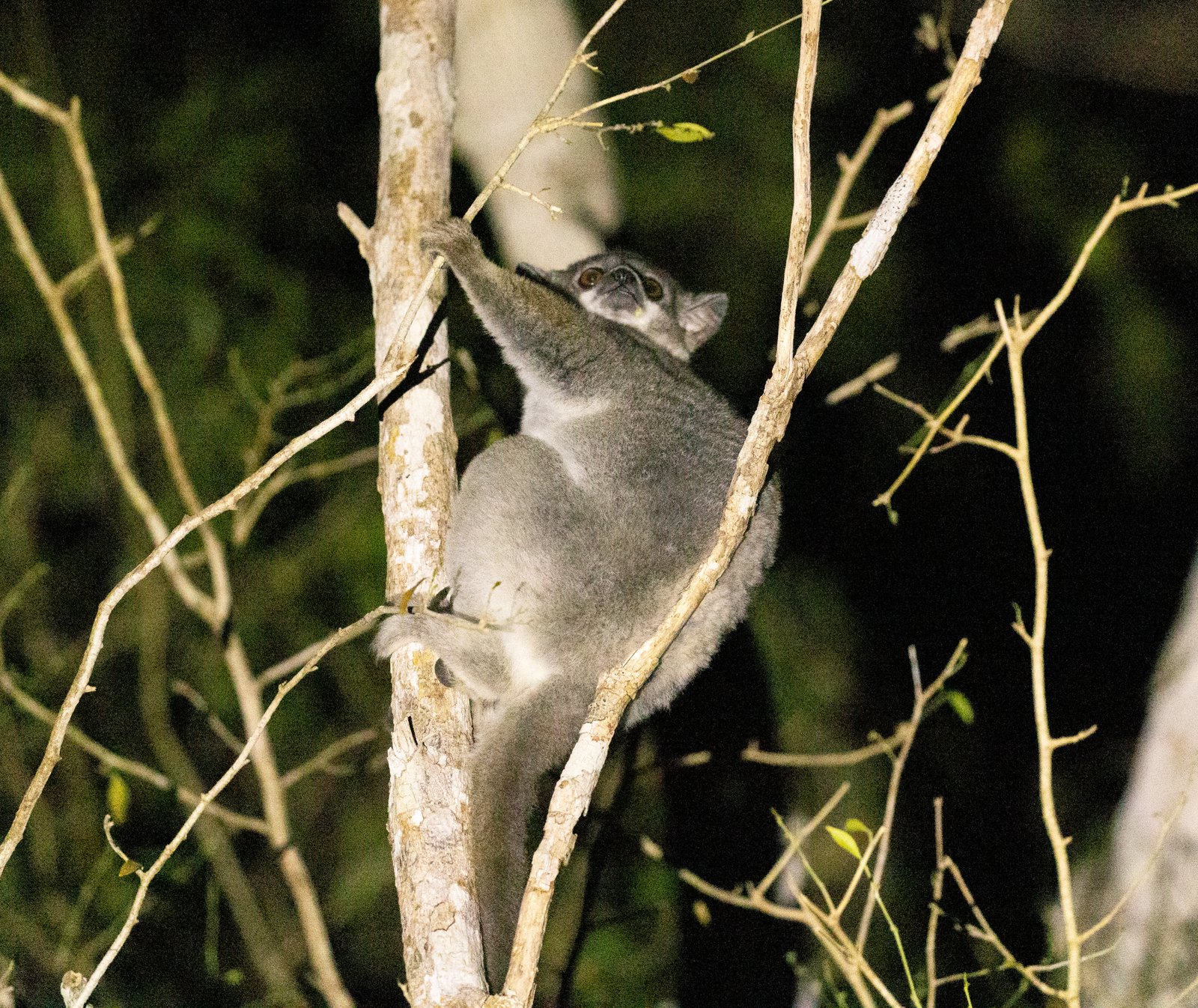
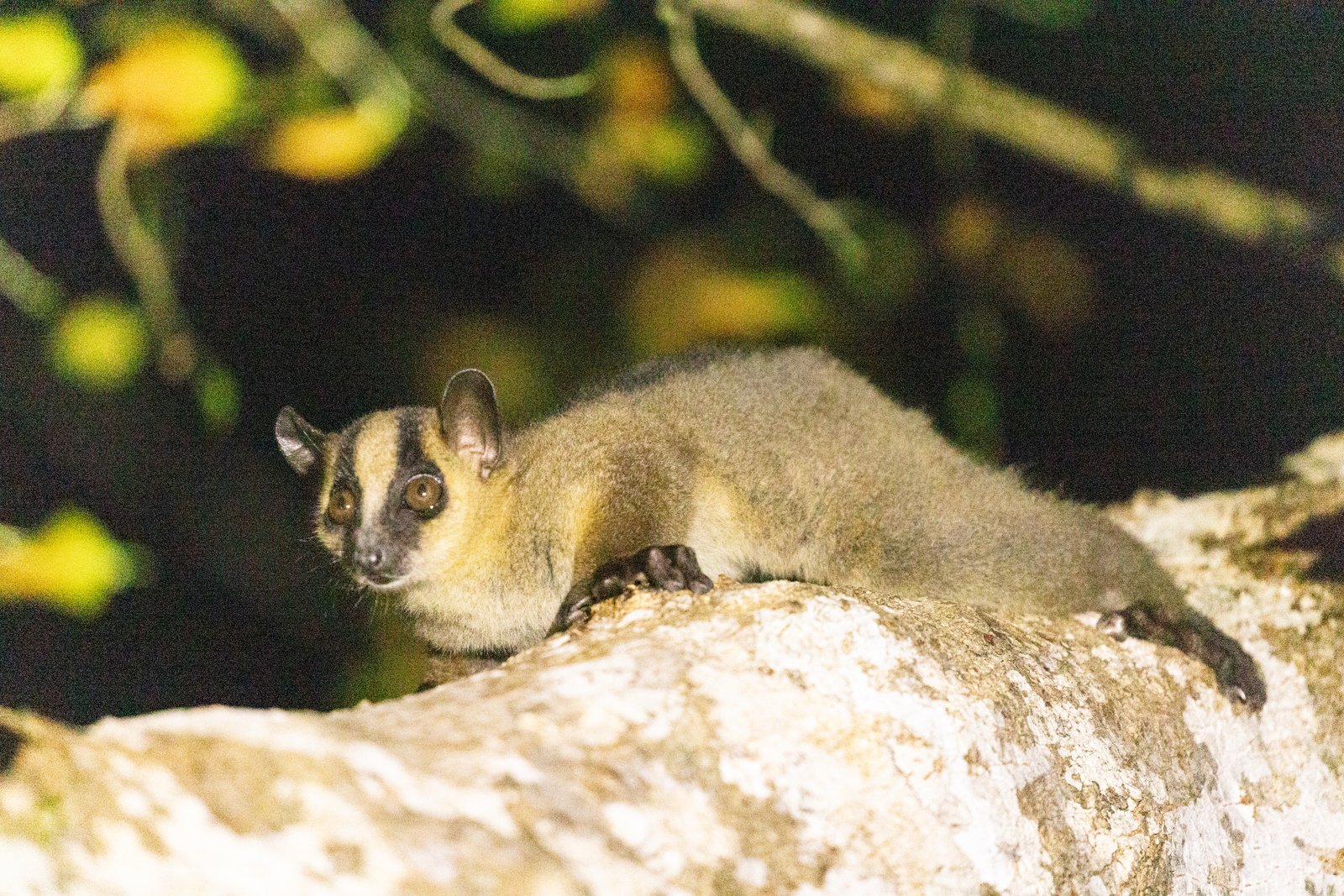
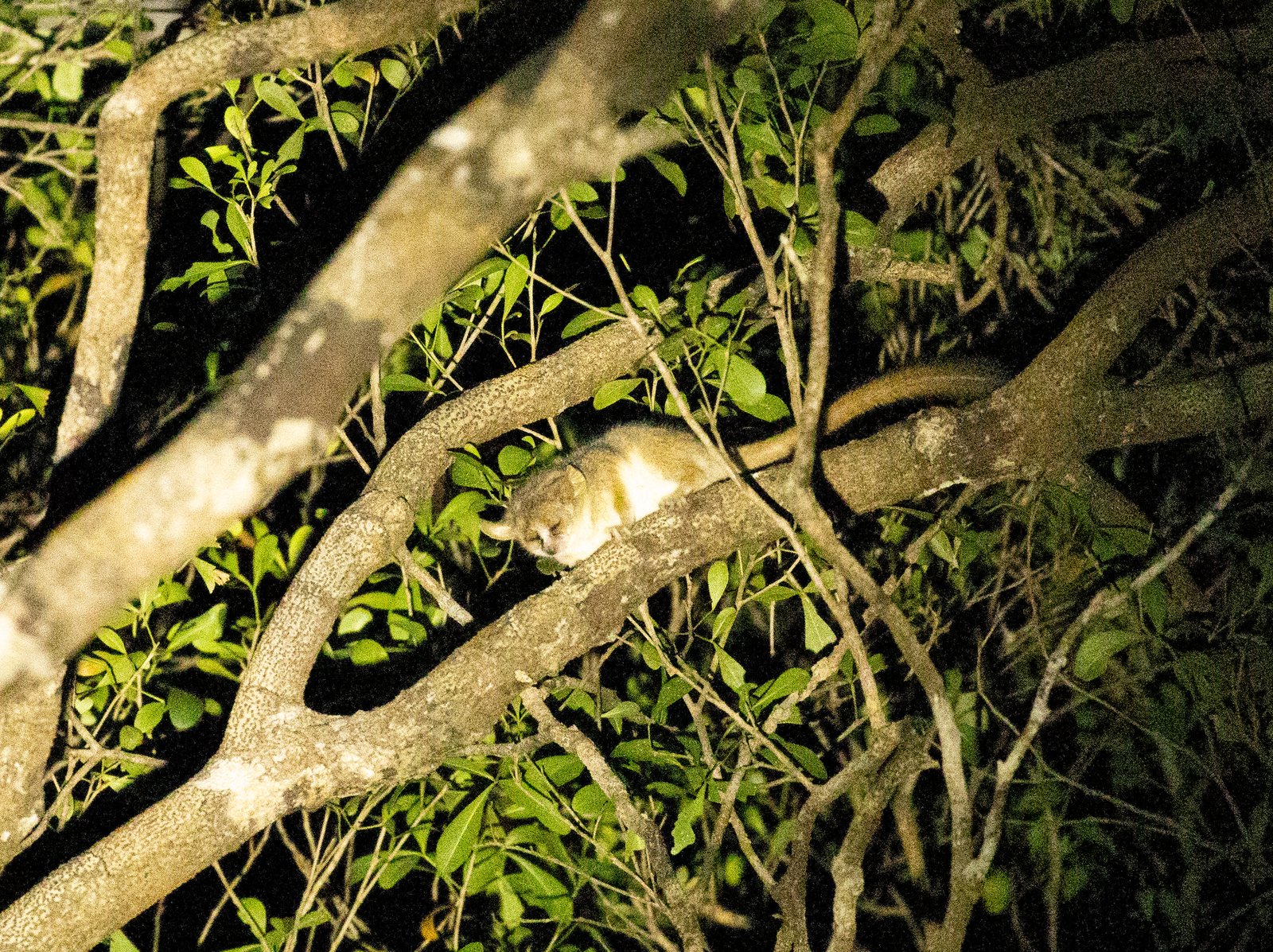
The Kirindy Forest is home to 8 different types of lemurs and the elusive fossa, apex predator of Madagascar. We were searching for 3 different nocturnal lemurs on our walk, and our guide was very skilled at spotting them. We first came across the red-tailed sportive lemur feeding on leaves in the tree. We found several more of these on our walk. Since the forest was dark, we used our headlamps to light only the path and tried to keep quiet while our guide searched for the animals. We saw a fork-marked lemur, known for its stipe along the back and two stripes on its face that resembles a fork. Then the grey mouse lemur, a very small species that lives in the holes of trees.

Our walk was a little less than a mile and about 70 minutes long. We were told that the fossa is usually only seen near the starting point camp, and so our guide looked around when we got back, but unfortunately, we weren't able to see one. We had already set our expectation that it was very fairly rare to see a fossa. You can also do a morning walk in the forest, but this was not on the plan for us.
Morondava and Avenue of the Baobabs
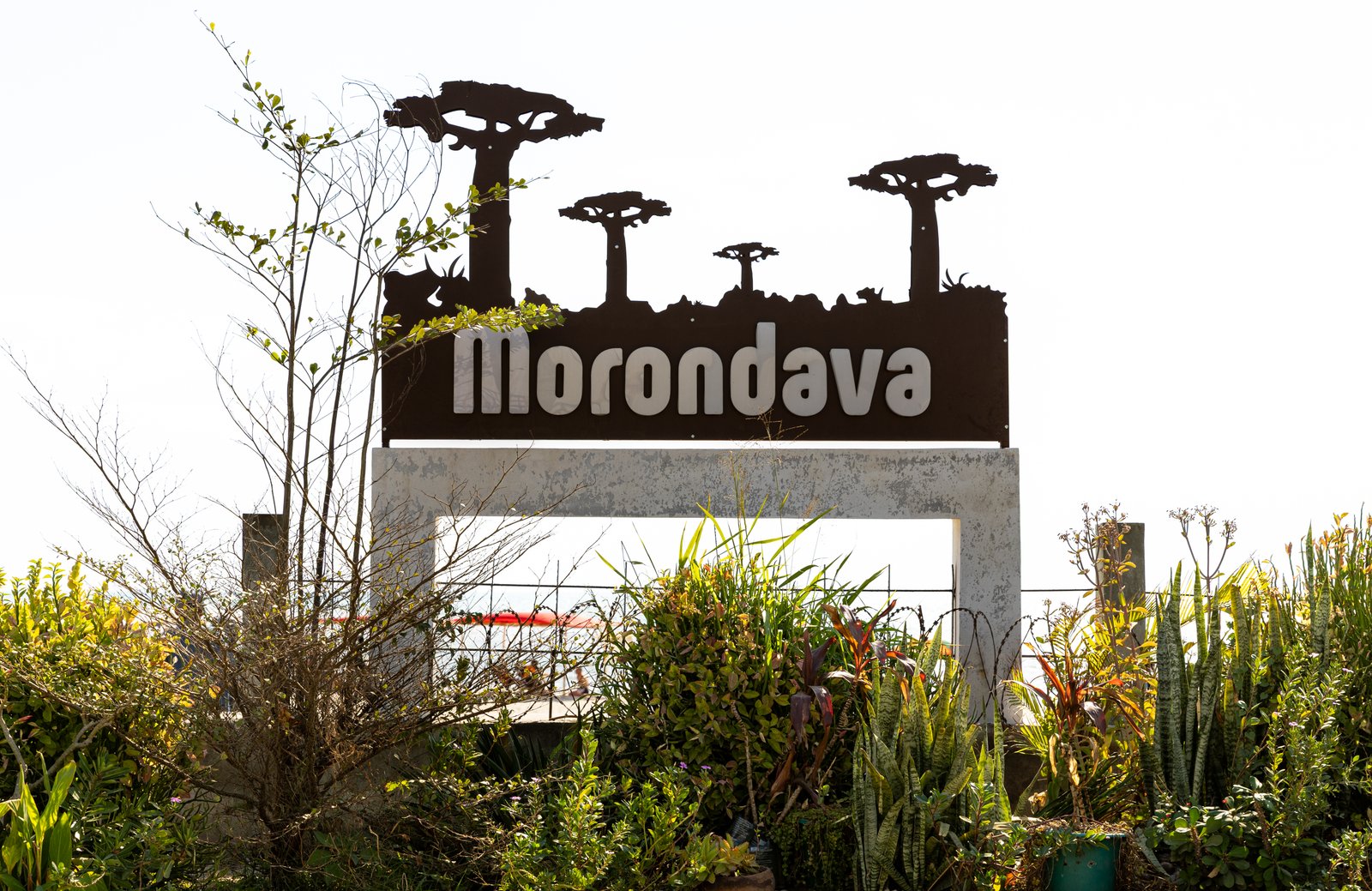
Morondava is a coastal hub town in Western Madagascar and is a popular destination of many tourists wishing to see the famous Avenue of the Baobabs. Many people take a flight here from Antananarivo. Otherwise, the drive from other Eastern destinations or the capital is a multi-day journey. Morondava features a bustling town with a large number of tour companies, a white sand beach, and many seafood restaurants. We stayed at the Le Renala beach bungalows which were large and comfortable. We walked along the beach and ate lunch at a seafood restaurant called Blue Soliel where we had a very large whole fish and some prawns. Lunch was slow but tasty, and we purchased a few final souveniers from the many sellers coming by while we were waiting.
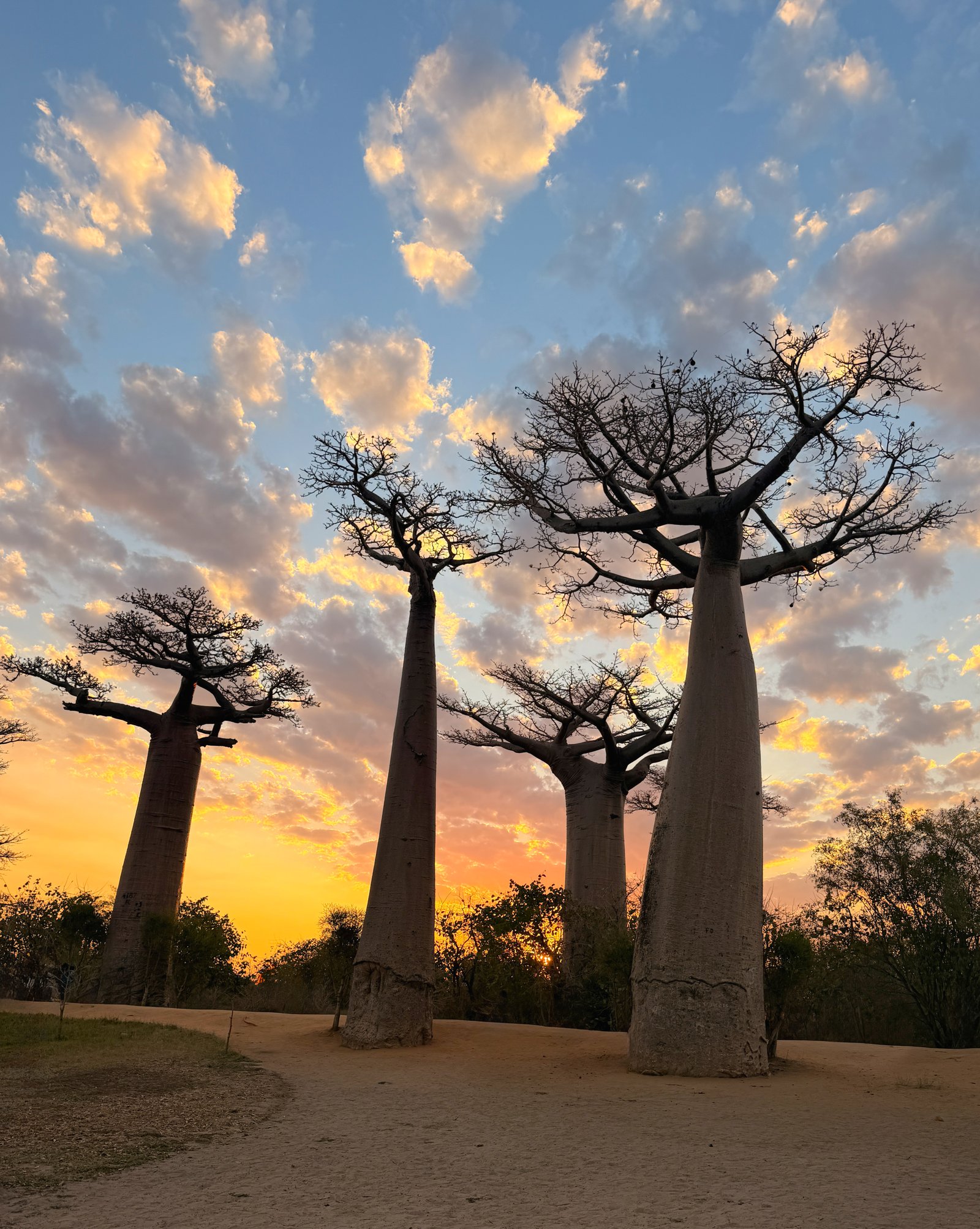
We met Michel at 4:30pm and set out for our baobab sunset. Unfortunately, on the way out of town, the problems with shifting gears escalated to the point of the car not being able to drive. We pulled over on the side of the road and Michel frantically called for help and soon told us a car was coming to pick us up. It was a sad way to have to say goodbye to Michel and we knew he was disappointed at not being able to take us. He will spend the next day getting the car fixed before making the long drive back to Ambalavao.
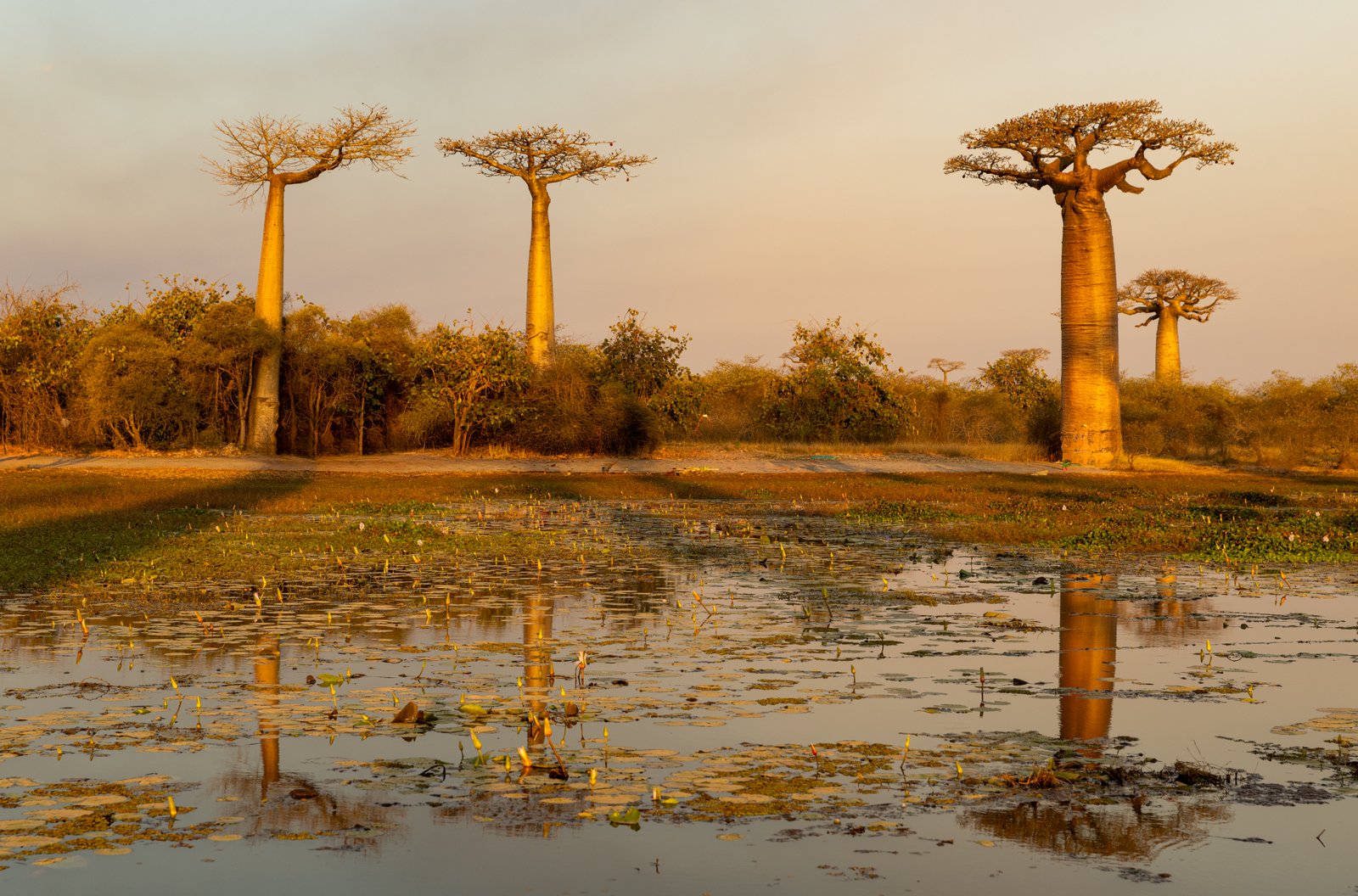
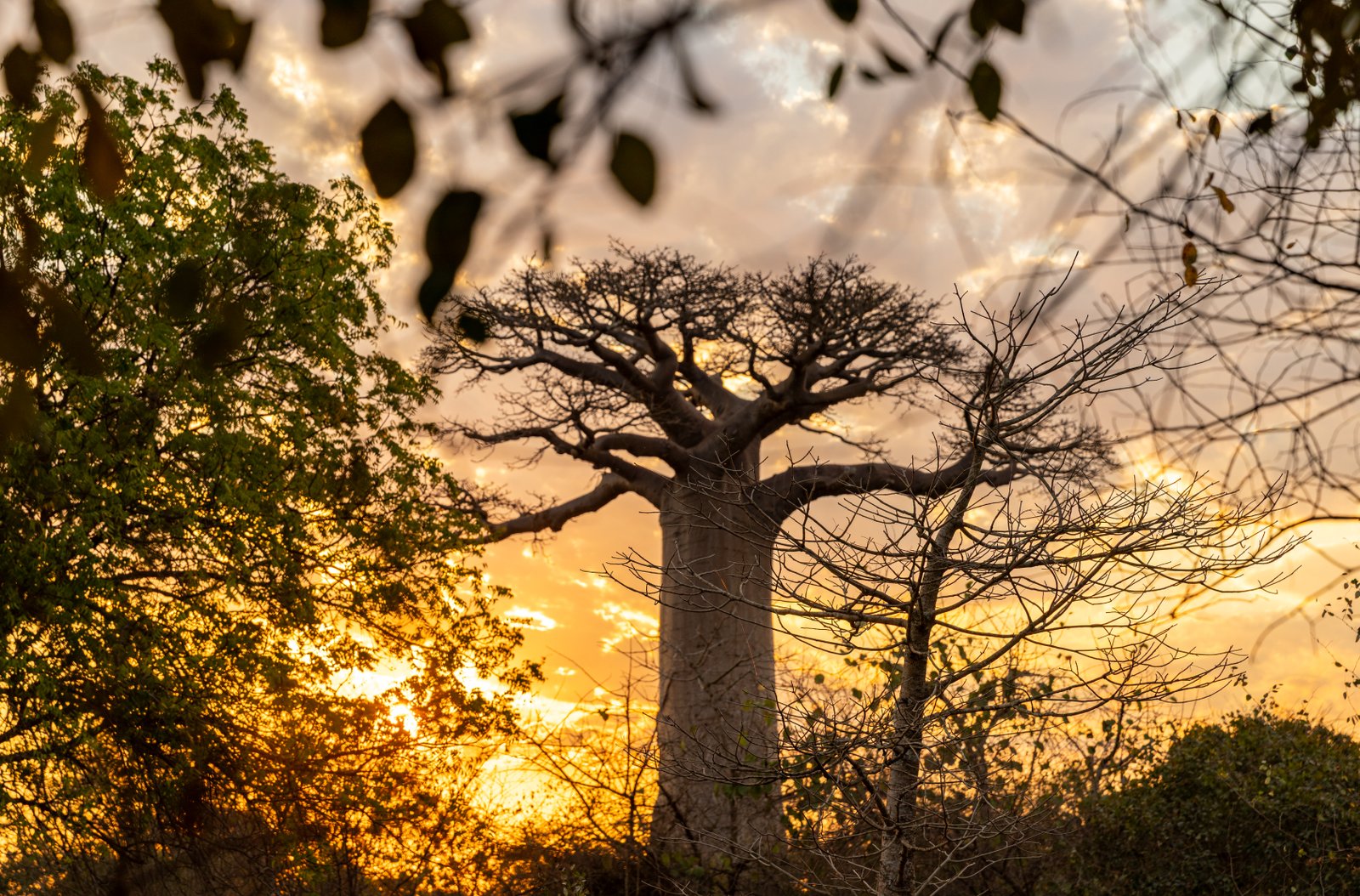
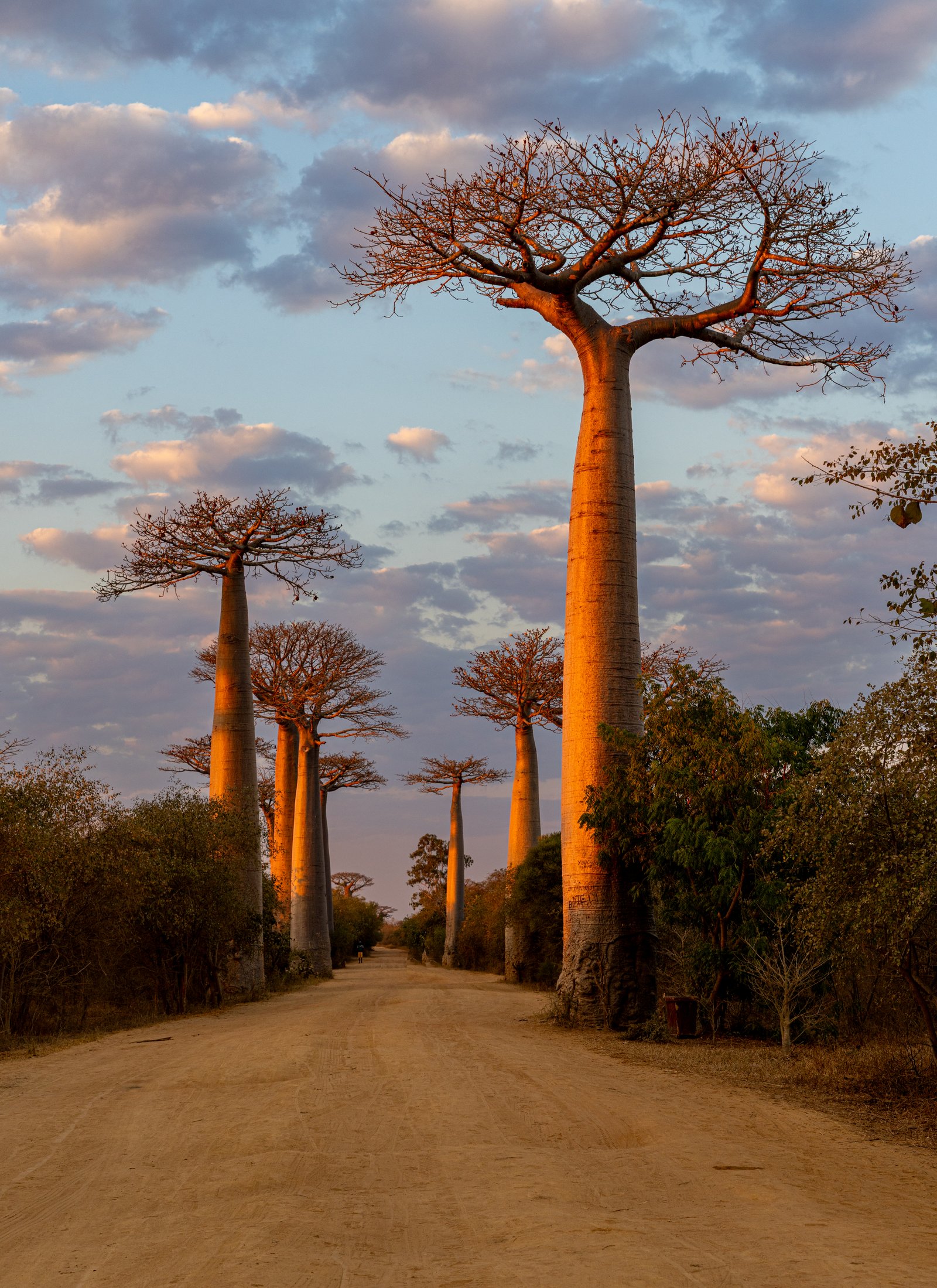
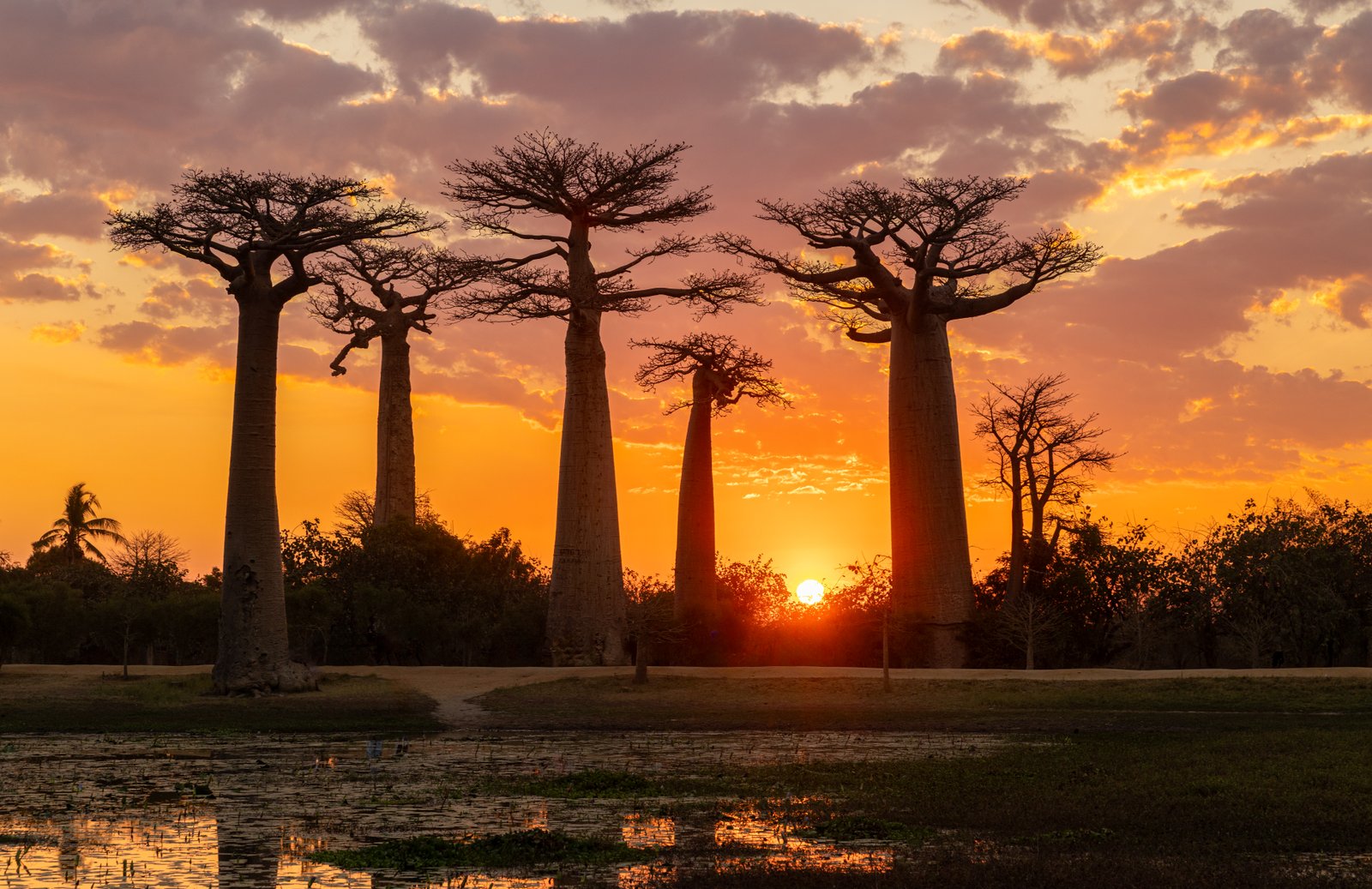
Once in the other car, we soon arrived to a very large number of tourists ready for the sunset. We walked down the middle of the Avenue of Baobabs, which is actually the main road, just with minimal traffic. It was a bit difficult to get pictures without people, but we walked further and got a few opportunities. Many people were sitting off to the side behind a small pond to watch the sunset. From there, you can see the sun setting behind and in between the trees. Baobabs are a sacred tree in Madagascar and can live more than 1,000 years, growing up to 150 feet around. They were truly impressive and it was an epic way to end our journey in Madagascar.
Back to Top
Link to Madagascar Photo Galleries
Final thoughts and tips...
If you're thinking about going to Madagascar, it is definitely a place worth exploring. With many diverse landscapes, unique plants and animals, and friendly and inviting people, Madagascar is an adventure seeker's dream. Being in Madagascar made us excited to explore more of Africa in the future. We know that getting around can be tough, but with some careful planning and flexibility, the people there know how to get it done. We saw plenty of families from Europe traveling with teenagers, as well as older retired couples. Please reach out to us to ask anything about our trip, we would be happy to help!
ATMs / Money
Cash is widely used and preferred, so it is a good idea to stock up when in a larger city with ATMs. We recommend taking out the max that you can from the ATM, perhaps even more than once depending on how many days you need to travel in between larger cities. As mentioned already, ATMs can be unreliable or out of cash especially on the weekends. We had about a 50/50 experience between ATMs giving us a decent amount (max 800k Ariary) and those giving more like 200k max or not working at all. Have a good storage plan to keep money safe, as you will be getting all 10k or if you're lucky, 20k bills from the ATM.
Anti-malarial medication
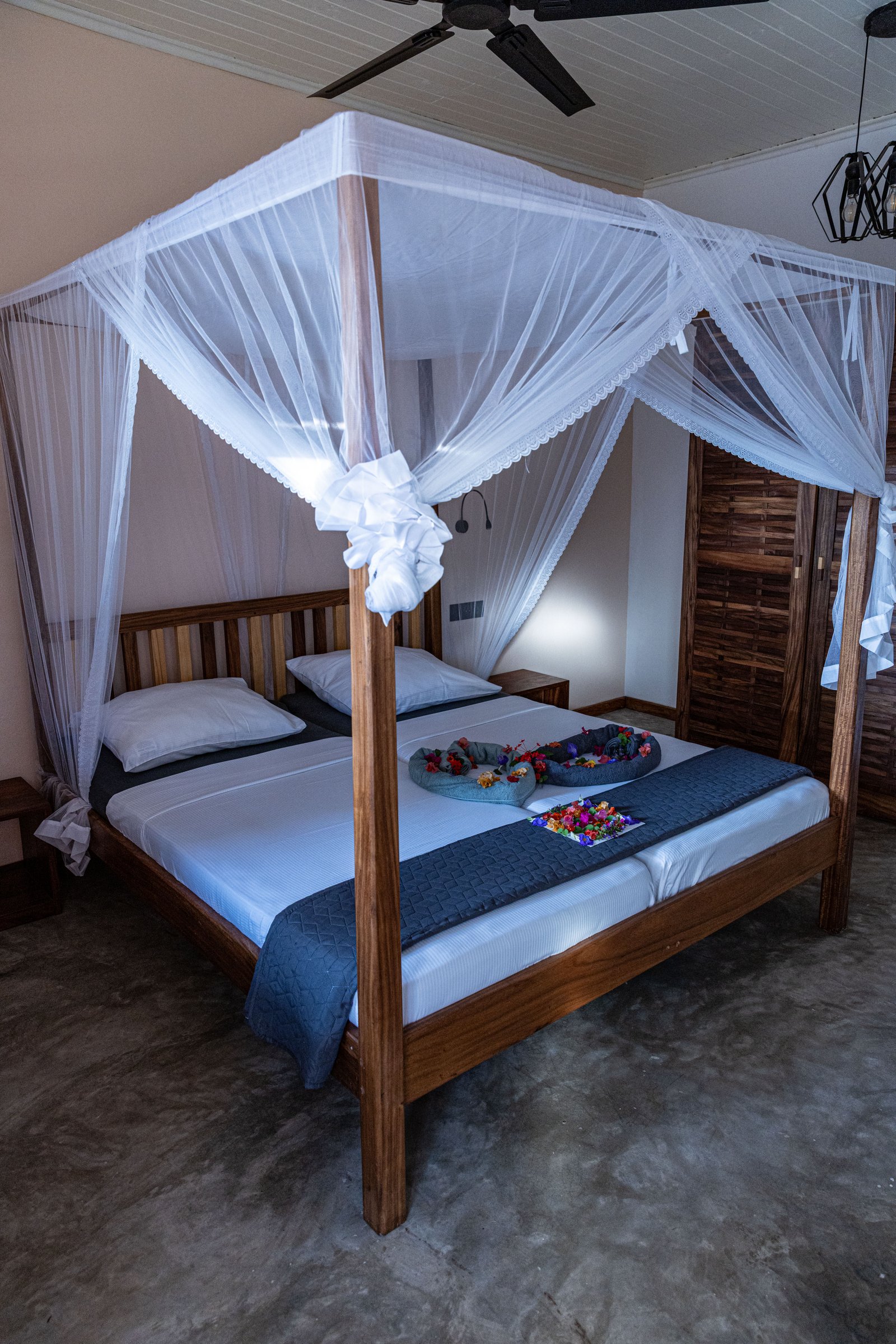
Madagascar is still a red zone on the world map for Malaria. It is recommended for all visitors to take anti-malarial medication for the entire journey. The medication we took was Malarone, and we found it to have little to no side affect. We tried to take it with a meal around the same time each day and you need to take it 2 days before and a week after you leave. This worked out perfectly for a 30 day supply. Most hotels will provide a mosquito net around the bed. We got lucky and actually didn't see too many mosquitos during our time there, but it was the dry season. It is always recommended to review any other vaccinations you may need before traveling abroad.
Food and Water Safety
We recommend using the utmost precaution for food and water safety. For example, only eat prepared food that is hot or freshly cooked, avoid street food unless prepared in front of you, avoid salad and other fruits or veggies that would be washed in the local water. Things with a peel are generally safe. Always drink bottled water, and use bottled water for brushing your teeth. Eat the local foods or the area and stick to more popular restaurants. This is one country that we were happy to have our guide tell us where to eat, as he was very concerned about keeping us safe. Use hand sanitizer before eating (and after handling money) and wash your hands when you can. Even so, expect some digestive discomfort, as it is bound to happen.
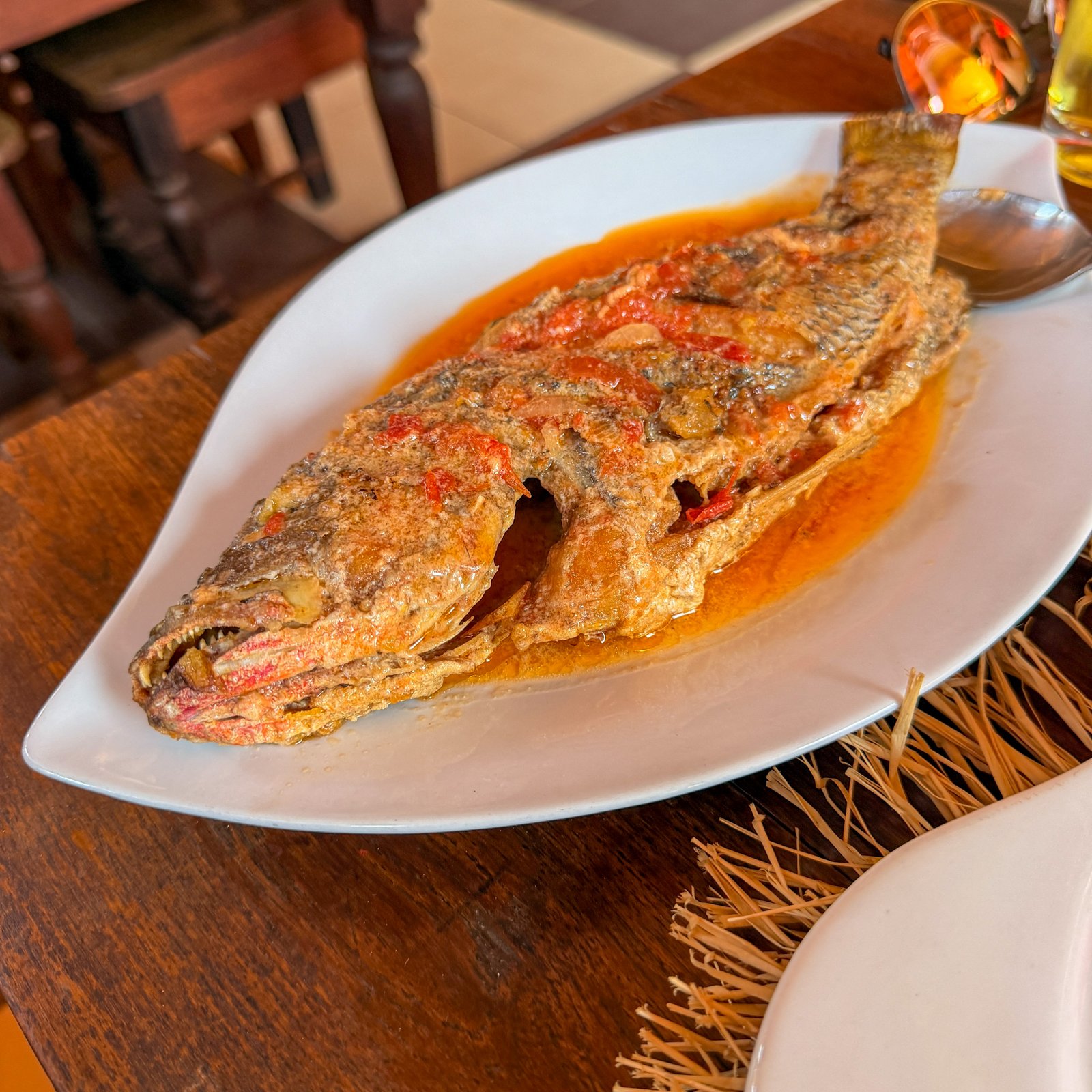
Helpful packing list additions
We brought a few extra items that turned out to be useful in Madagascar. A small rechargable power bank each: very useful on our multi-day hiking and canoe trips, and also good to have in case of low battery on long days in the car or potential lack of electricity at hotels. Hand sanitizer and alcohol wet wipes: always have nearby and try to use often. Toilet paper: always good to have a little in your pocket, as restrooms are hit or miss on having it. Head-lamp: used during camping, sunrise hike, cave adventures and potential lack of electricity in hotels in evening. Water tablets or steri-pen: we used the steri-pen to sterlizing water on our mountain camping trip as there was water running nearby (on the canoe trip we used bottled water). Extensive medical kit: we bring this on every trip but it is especially important when far from medical services. We have a wide variety of medications for anything you can think of, as well as bandages, wraps, etc. Microfiber towel: dries easily and packs up small. Great for the beach or stops at swimming holes.
Local guide vs big company tour
Hiring a local guide and driver is pretty much mandatory in Madagascar, however, there are many to choose from. We were super lucky with Michel and JB, and would highly recommend them (please contact us for their info!). We would love to send them more business. They were so knowledgeable, always concerned about our saftely and comfort, and they gave us so many extras that made the trip special. JB was always making up a batch of special rum as well as buying and handing out snacks. We were fed SO MUCH food on the camping and river trips, we kept joking with him that no one can eat that much food! Michel was an expert mechanic and was able to handle the roads and any unexpected car issues calmly and with ease.
We wanted to mention that we did see some larger tour groups (on the scale of 10-20 people). We couldn't help but look up their tour company and were in shock what they were paying per person for their trip. They didn't even have as many days or cover as much ground as we did. Plus, when driving, they were in a small bus and had to do their hikes and dine with the entire group. There is not that much luxury in Madagascar to justify the cost, as even the nicest hotels have their flaws. We do feel like the majority of people did have a local guide with SUV, like we did, and it makes for a much more personal experience.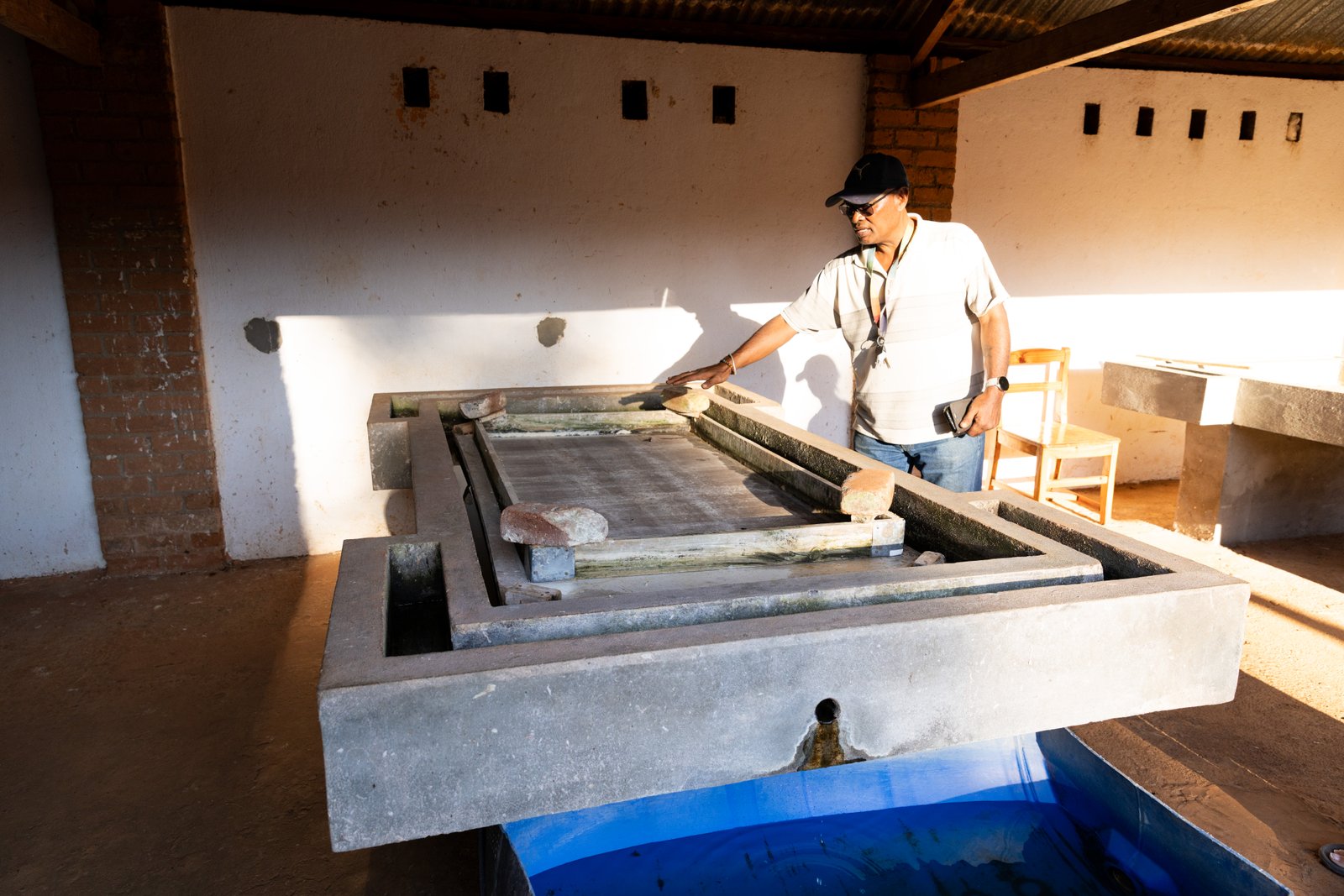
Grocery Store Availability
When in a larger town such as Tuliara, Antsirabe or Morodava, take your opportunity to seek out a large grocery store. Larger stores are good for stocking up on drinks, snacks and bottled water. Large groceries have beer and wine, while smaller markets may only have beer. Along the road, there will be many very small market shops or gas stations where you can pick up extra snacks or drinks.
Back to Top
Link to Madagascar Photo Galleries
Leave Us A Comment!
All Comments
Jackie
2026-07-25